
Key Takeaways
- Primary care is often the best first stop: your clinician can review symptoms, check related factors like blood pressure, thyroid, blood sugar, and medications, and coordinate any specialist referral.
- See a sleep doctor if you have loud snoring with gasping, witnessed breathing pauses, constant daytime tiredness, frequent trouble sleeping, unusual sleep behaviors, or sleepiness that affects driving or work.
- Before booking, confirm whether the doctor accepts new patients, whether you need a referral, your insurance coverage for visits and testing, and whether in-lab or home testing fits your situation.
- Track your sleep for one to two weeks, note bedtime, wake time, and awakenings, ask a bed partner about snoring or breathing pauses, and list all medications and supplements before your first visit.
Poor sleep is more than a nuisance. It can affect your focus, mood, weight, blood pressure, and safety on the road. The CDC reported that 30.5% of U.S. adults slept fewer than 7 hours per 24-hour period in 2024. That is a national figure, not a Tampa estimate, but it shows how common the problem is.
If you are searching for a sleep medicine doctor in Tampa, you probably want clear answers. Who treats sleep problems? When should you see a specialist? What happens during testing? This guide explains each step in plain language. It also shows how primary care can help you start, coordinate referrals, and manage the health issues that often connect to poor sleep.

What Is a Sleep Medicine Doctor?
A sleep medicine doctor diagnoses and treats conditions that interfere with sleep. These include sleep apnea, insomnia, excessive daytime sleepiness, and circadian rhythm or behavioral sleep disorders. Many sleep specialists also have training in pulmonary medicine, neurology, ENT, or behavioral health.
Sleep medicine is often a team effort. A sleep specialist may work with your primary care clinician, an ear, nose, and throat doctor, a neurologist, or a behavioral health provider. The goal is to find the root cause and build a plan that fits you.
Conditions Sleep Specialists Commonly Evaluate
- Obstructive sleep apnea: Breathing pauses or shallow breathing during sleep.
- Insomnia: Trouble falling asleep, staying asleep, or waking too early.
- Narcolepsy and other hypersomnolence disorders: Overwhelming daytime sleepiness despite enough sleep time.
- Parasomnias: Sleepwalking, sleep talking, or REM sleep behavior disorder.
- Circadian rhythm disorders: A body clock that runs out of step with your schedule.
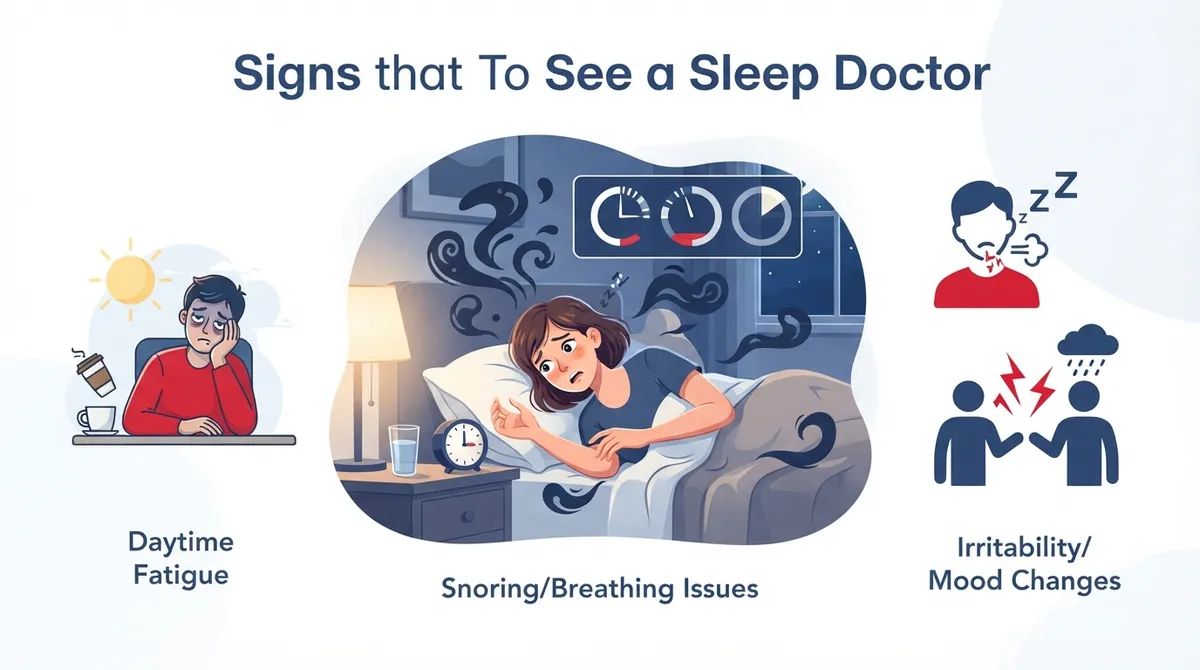
Signs You Should See a Sleep Doctor
Not every bad night needs a specialist. But some patterns deserve a closer look. Consider an evaluation if you notice any of the following:
- Loud snoring, especially with gasping or choking sounds.
- Pauses in breathing that a partner has witnessed.
- Constant tiredness during the day, even after a full night in bed.
- Trouble falling or staying asleep several nights each week.
- Unusual behaviors during sleep, such as walking or acting out dreams.
- Sleepiness that affects driving, work, or daily tasks.
If you are unsure whether your symptoms are serious, our guide on how to know when to see a doctor for poor sleep can help you decide.
Where Primary Care Fits In
Many people assume they must go straight to a specialist. In reality, primary care is often the best first stop. A primary care clinician can review your symptoms, check your medical history, and look for related issues. Weight, blood pressure, thyroid function, blood sugar, mood, and medications can all affect sleep.
Primary care can also decide whether a specialist visit is the right next step. If it is, your clinician can coordinate the referral and share your records so you do not start from scratch. For a deeper look at how these roles differ, read Primary Care vs. Sleep Specialist: Who Fixes Poor Sleep?
At InCare, our Tampa and Riverview clinics combine personalized primary care with advanced wellness services. We focus on prevention and whole-body health. That means we look at the full picture behind your fatigue, not only the symptom. You can see what patients say about their visits when you visit us on Google — InCare.
Sleep Care Options in the Tampa Area
Tampa has several hospital-based and private practice options for sleep care. Provider information identifies the following organizations. Services, clinicians, and policies can change, so confirm details directly before you book.
|
Organization |
What Provider Information Reports |
|---|---|
|
Tampa General Hospital Sleep Disorders Center |
Multidisciplinary program; in-lab and home sleep studies; care for adults and children |
|
USF Health Sleep Medicine |
Multidisciplinary approach to sleep disorders |
|
AdventHealth Sleep Center Tampa |
Identified as AASM-accredited; verify scope and status directly |
|
Tampa Pulmonary & Sleep Specialists |
Private practice offering pulmonary and sleep care |
What to Confirm Before You Book
- Whether the doctor is currently accepting new patients.
- Whether you need a referral from your primary care clinician.
- Whether your insurance plan covers the visit and any testing.
- Whether in-lab or home testing is offered for your situation.
- How long the wait is for the first appointment.
If you live south of Tampa, you may find our resource on how to find the best sleep doctor in Riverview useful. For a broader overview of facilities, see Looking for a Sleep Clinic in Tampa? 2026 Guide.
What Happens During a Sleep Evaluation
Your first visit usually starts with a detailed conversation. Expect questions about your sleep schedule, snoring, caffeine and alcohol use, medications, and daytime energy. You may fill out a sleep questionnaire. Your doctor may also examine your airway, neck, and weight.
From there, the doctor decides whether testing is needed. The choice depends on your symptoms and clinical assessment.
In-Lab vs. Home Sleep Testing
|
Feature |
In-Lab Sleep Study |
Home Sleep Test |
|---|---|---|
|
Where it happens |
Sleep center, overnight |
Your own bed |
|
What it monitors |
Brain activity, breathing, heart rate, oxygen, movement |
Mainly breathing, oxygen, and heart rate |
|
Best suited for |
Complex symptoms or suspected non-apnea disorders |
Straightforward suspected sleep apnea |
|
Limitations |
Less familiar setting |
Not appropriate for every patient or disorder |
Home testing is convenient, but it is not right for everyone. Your clinician will recommend the test that fits your symptoms and health history.
How Sleep Disorders Are Treated
Treatment is individualized. A plan that works for one person may not suit another. Common approaches include:
- Positive airway pressure (PAP): A device that keeps the airway open during sleep for people with sleep apnea.
- Cognitive behavioral therapy for insomnia (CBT-I): A structured program that changes sleep habits and thought patterns.
- Oral appliances or other therapies: Options for selected patients with sleep apnea.
- Medication: Used in selected cases under close supervision.
- Lifestyle changes: Regular sleep timing, weight management, and limiting alcohol before bed.
Follow-up matters. Your doctor will check how well treatment is working and whether you are using it consistently. Adjustments are common in the first few months.
Why Sleep and Overall Health Go Together
Sleep problems rarely exist alone. Untreated sleep apnea is linked with high blood pressure and heart strain. Poor sleep can also affect appetite hormones, blood sugar, and mood. Weight gain can worsen sleep apnea, and sleep apnea can make weight loss harder.
This is why coordinated care helps. If your sleep concerns overlap with weight, blood pressure, or metabolic health, your primary care team can address those pieces together. Learn more in our article on whether weight loss can help sleep apnea, or read about 12 ways untreated sleep apnea affects your health.
How to Prepare for Your First Sleep Appointment
- Track your sleep for one to two weeks. Note bedtime, wake time, awakenings, and daytime sleepiness.
- Ask a bed partner what they observe. Snoring, gasping, or movement can be important clues.
- List all medications and supplements. Some can affect sleep quality.
- Gather insurance details and any referral paperwork.
- Write down your questions. Ask about testing, treatment options, and follow-up.
Bringing this information helps your doctor reach a diagnosis faster and with more confidence.
Take the Next Step Toward Better Sleep
Finding a sleep medicine doctor in Tampa starts with understanding your symptoms and choosing the right path. Specialist centers offer deep expertise in testing and treatment. Primary care gives you a trusted partner who looks at your whole health and coordinates your next steps. Many patients benefit from both.
If you are tired of feeling tired, start with a conversation. Our team at InCare can evaluate your symptoms, review related health factors, and help you decide what comes next. Book Now to schedule a visit, or contact our team with questions. You can also follow our updates on Instagram, Facebook, and Tik Tok.
This article is for general education and does not replace personal medical advice. Always speak with a qualified clinician about your symptoms.
FAQs
Q: How do I find a sleep medicine doctor in Tampa?
A: Start by asking your primary care clinician for a recommendation and referral if needed. You can also research hospital-based and private sleep programs in the Tampa area. Always confirm current clinicians, insurance participation, and appointment availability directly.
Q: Do I need a referral to see a sleep specialist?
A: It depends on the provider and your insurance plan. Some practices require a referral, while others accept self-referred patients. Call the office and your insurer before booking to avoid surprises.
Q: Can I do a sleep study at home?
A: Home sleep testing is available for some patients, mainly those with suspected obstructive sleep apnea. It is not appropriate for every patient or every suspected disorder. A clinician determines whether home or in-lab testing is the better choice.
Q: Can a sleep medicine doctor help with insomnia?
A: Yes. Sleep specialists evaluate insomnia and may recommend cognitive behavioral therapy for insomnia, habit changes, or medication in selected cases. They also look for related issues, such as sleep apnea or mood concerns, that may be contributing.
Q: What should I bring to my first sleep appointment?
A: Bring a list of medications and supplements, your insurance card, any referral paperwork, and a record of your sleep patterns. Notes from a bed partner about snoring or breathing pauses can also help your doctor.