Key Takeaways
- MOTS-c is not FDA approved for any medical use as of 2026; no approved drug product, dose, or treatment indication exists despite marketing claims suggesting otherwise.
- Fewer than five human studies on MOTS-c exist with no Phase 2 or Phase 3 randomized trials published, meaning claims about weight loss, insulin sensitivity, or anti-aging effects lack solid human evidence.
- FDA compounding committee review is a nonbinding advisory vote separate from drug approval and does not confirm safety, effectiveness, purity, or authorized patient use.
- Unapproved peptide products carry real risks including unknown purity, unconfirmed dosing, injection complications, and unverified drug interactions that FDA-approved alternatives eliminate.
Search results and social media posts often claim MOTS-c is a breakthrough peptide for metabolism, aging, and weight control. Many wellness seekers ask a simple question: is MOTS-c FDA approved? The honest answer matters, especially if you are considering this compound as part of your health plan. Understanding the difference between marketing claims and regulatory facts can protect your health, your wallet, and your trust in the care you receive.
This article compares what is actually true about MOTS-c against what promotional materials often suggest. We will look at the science, the regulatory status, and what primary care providers want patients to know before trying any unapproved peptide. Whether you are a busy parent researching wellness options or a health-focused professional exploring advanced testing, this guide gives you clear, fact-based answers.
What Is MOTS-c and Why Is It Getting Attention?
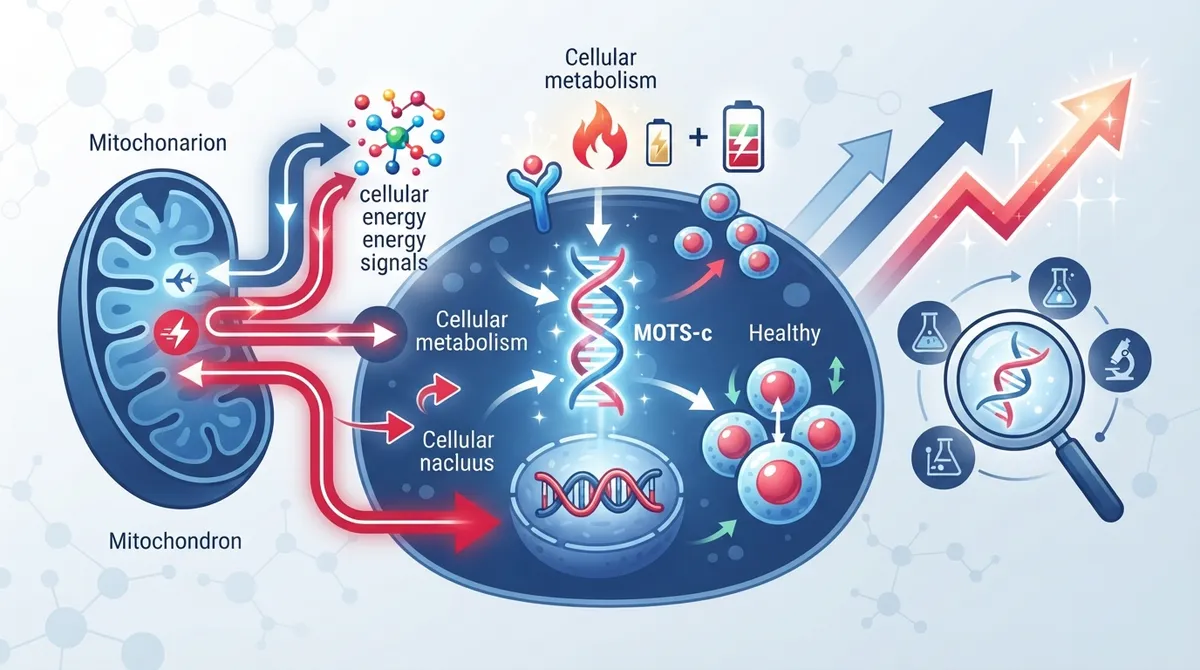
MOTS-c is a small peptide made inside your cells' mitochondria. Mitochondria are often called the powerhouse of the cell because they produce energy. Researchers discovered that MOTS-c may play a role in how your body uses glucose, manages insulin, and responds to stress.
Early lab and animal studies suggested MOTS-c might support metabolic health, healthy aging, and even bone strength. These findings created excitement in wellness circles. However, excitement in a lab setting does not always translate into proven human benefits or FDA-reviewed safety.
MOTS-c FDA Approved: Fact vs. Fiction
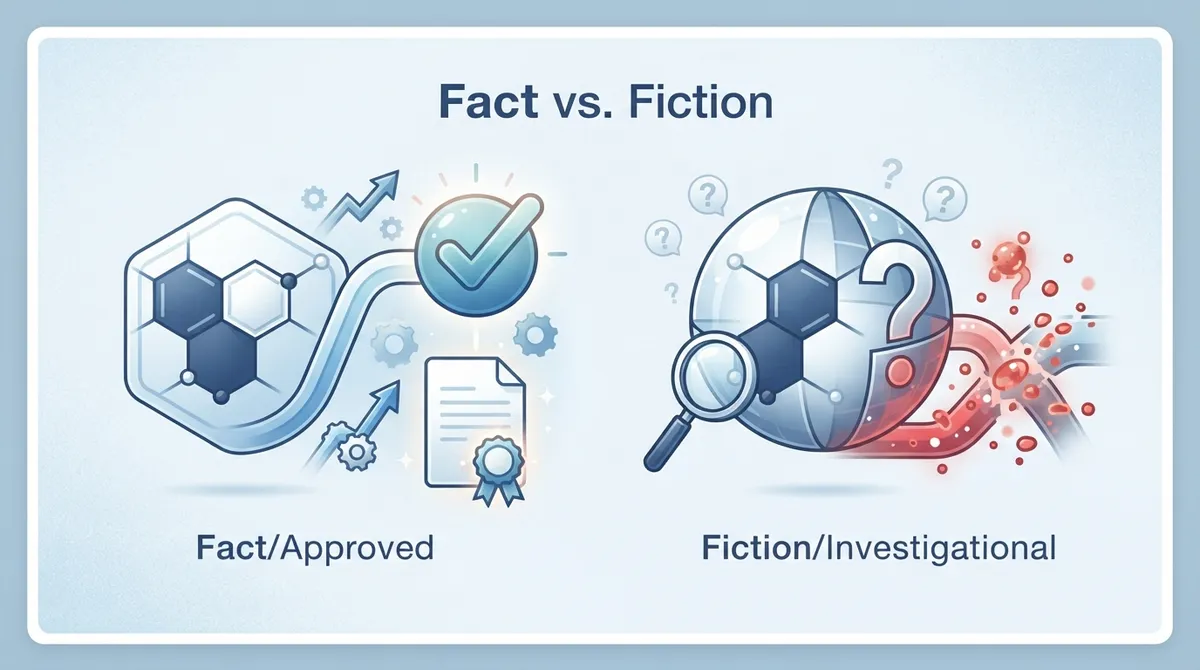
Let's address the core question directly. As of 2026, MOTS-c is not FDA approved for any medical use. No FDA-approved drug product contains native MOTS-c or MOTS-c acetate. There is no approved dose, no official prescribing information, and no confirmed treatment indication.
This table breaks down the comparison clearly:
|
Claim Often Made |
Actual Regulatory Status |
|---|---|
|
MOTS-c is FDA approved for weight loss |
False. Zero approved indications exist |
|
MOTS-c has an approved dosing chart |
False. No validated human dose has been established |
|
MOTS-c is legal because it is sold online |
Misleading. Many products are labeled research use only |
|
FDA reviewed MOTS-c for compounding |
Partially true. This is a separate process from drug approval |
Retrieved regulatory reports confirm zero FDA-approved indications and zero approved drug products containing MOTS-c as of 2026. This is an important distinction that many marketing pages blur or ignore entirely.
FDA Approval vs. Compounding Consideration: What's the Difference?
Many people confuse two very different FDA processes. Understanding this difference is key to making smart health decisions.
- FDA Drug Approval: This process requires large human trials proving a drug is safe and effective. It results in official prescribing information and approved uses.
- Compounding List Review: This is a separate, narrower process. It examines whether pharmacies may legally compound a substance under specific rules. It does not confirm safety or effectiveness.
Reports indicate the FDA's Pharmacy Compounding Advisory Committee reviewed MOTS-c, including free-base and acetate forms. The committee vote was reportedly 7 in favor, 5 opposed, and 2 abstentions. This advisory vote is nonbinding. It does not create FDA approval, and it does not authorize doctors to treat patients with MOTS-c as if it were an approved medicine.
What Does the Human Research Actually Show?
Most MOTS-c research so far comes from cell studies and animal models, not large human trials. This matters because results in mice do not always apply to people.
Retrieved sources identify fewer than five human studies involving MOTS-c or related compounds. One notable study looked at a MOTS-c analog called CB4211. Another involved a short, seven-day intravenous study of native MOTS-c that focused on safety and feasibility, not proof of effectiveness. No published Phase 2 or Phase 3 randomized trials of exogenous MOTS-c exist as of 2026.
This means there is no solid human evidence confirming MOTS-c improves insulin sensitivity, supports weight loss, or slows aging in real patients. Claims suggesting otherwise are getting ahead of the science.
MOTS-c vs. FDA-Approved Weight Loss Treatments
If you are exploring options for metabolic health or weight loss, it helps to compare unproven peptides against treatments that have gone through full FDA review.
|
Factor |
MOTS-c (Investigational) |
FDA-Approved Weight Loss Medications |
|---|---|---|
|
FDA Approval Status |
Not approved |
Approved after clinical trials |
|
Established Dosing |
None validated |
Clear, studied dosing guidelines |
|
Safety Monitoring |
Unknown long-term effects |
Documented side effect profiles |
|
Physician Oversight |
Often unregulated online sales |
Requires prescription and monitoring |
Patients interested in medically supervised options may want to learn more about weight loss programs that use approved treatments and physician guidance. InCare also offers insight into which GLP-1 medication may work best for your goals, based on approved science rather than unverified peptides.
Risks of Using Non-FDA-Approved Peptides
Choosing an unapproved product carries real risks. Understanding these risks helps you make safer choices for your health.
- Unknown purity: Products labeled "research use only" are not held to pharmaceutical manufacturing standards.
- No confirmed dosing: Without an approved dose, users may take too much or too little.
- Injection risks: Improper injection technique can cause infection or tissue damage.
- Drug interactions: Unapproved peptides may interact with medications you already take.
- Legal gray areas: Products marketed as "not for human use" are not authorized for patient administration.
Primary care clinicians recommend treating MOTS-c as investigational only. It should never replace FDA-approved treatments for diabetes, obesity, osteoporosis, or other diagnosed conditions.
How to Verify If a Peptide Product Is FDA Approved
Before trying any wellness product, follow these steps to check its regulatory status:
- Search the FDA's official drug database for the product name.
- Look for an FDA-approved label with prescribing information.
- Avoid products marked "research use only" or "not for human consumption."
- Ask your primary care provider whether the treatment has completed clinical trials.
- Check if the seller requires a prescription from a licensed physician.
If a product fails these checks, treat marketing claims with caution. Trusted public health resources and your doctor remain the best sources for accurate information.
Why Choose Evidence-Based Wellness Care Instead?
Wellness goals like better metabolism, healthy aging, and weight control are valid and important. The good news is that many FDA-approved and well-researched options exist to support these goals safely.
InCare offers science-backed services such as metabolic breath analysis to understand how your body burns energy, and DNA gene testing to personalize your health plan. These tools provide real data instead of unproven promises. For those in the Tampa and Riverview areas, our body composition analysis uses advanced imaging to track your progress accurately.
Patients curious about peptide therapy in general can also read about how InCare approaches peptide therapy responsibly, always under medical supervision and within legal guidelines.
What Should You Ask Your Doctor About MOTS-c?
If you are curious about MOTS-c, bring these questions to your next primary care visit:
- Is this treatment FDA approved for my condition?
- What human studies support its safety and effectiveness?
- Are there approved alternatives that could meet my goals?
- What are the risks if I choose to try it anyway?
- Will you monitor me if I decide to proceed?
A trusted primary care provider can help you weigh the evidence and avoid risky, unproven treatments. Learn more about primary care services that focus on prevention and long-term wellness.
The Bottom Line on MOTS-c and FDA Approval
MOTS-c remains an interesting research compound, not an approved medicine. The gap between early lab findings and confirmed human benefit is still wide. Choosing FDA-approved treatments, guided by a knowledgeable physician, offers a safer path toward your health goals.
At InCare, our providers, including Dr. Naveen Paddu, Dr. Pramjeet Ahluwalia, and Dr. Teshy John, are committed to evidence-based wellness care. We serve patients across Tampa and Riverview with a focus on prevention, transparency, and measurable results. You can explore our clinic locations to find the office nearest you.
Our community continues to grow, and we invite you to follow our latest health tips on Facebook, Instagram, and TikTok. You can also read what our patients say by visiting InCare on Google, where our Tampa and Riverview locations maintain strong patient satisfaction ratings.
If you have questions about MOTS-c, peptide therapy, or want a personalized wellness plan built on approved, proven science, our team is ready to help. Reach out to our care team today or schedule your appointment now to start your journey toward safer, smarter health decisions.
FAQs
Q: Is MOTS-c FDA approved for weight loss or diabetes?
A: No. MOTS-c has zero FDA-approved indications as of 2026. No FDA-approved drug product currently contains native MOTS-c or MOTS-c acetate, and there is no approved use for weight loss or diabetes management.
Q: Can a doctor legally prescribe MOTS-c in the United States?
A: MOTS-c has no FDA-approved prescribing information or validated dose, which limits legitimate prescribing options. Any use falls outside standard, approved medical practice and should be discussed carefully with a licensed physician.
Q: Is compounded MOTS-c legal or safe?
A: Compounding eligibility and FDA drug approval are separate legal questions. A nonbinding advisory committee vote on compounding MOTS-c does not confirm safety or effectiveness, and sterility, potency, and dosing remain unverified.
Q: What human clinical trials have studied MOTS-c?
A: Retrieved reports identify fewer than five human studies, including a short seven-day intravenous safety study and research on the analog CB4211. No Phase 2 or Phase 3 randomized efficacy trials for exogenous MOTS-c have been published as of 2026.
Q: Is MOTS-c the same as a GLP-1 medication?
A: No. MOTS-c is a mitochondria-derived peptide studied for metabolic and aging-related effects, while GLP-1 medications are FDA-approved drugs with established dosing, safety data, and clinical trial support for weight loss and diabetes.