
Key Takeaways
- MOTS-c is not FDA-approved for any condition and lacks completed human trials proving real-world benefit; marketing claims far exceed the actual scientific evidence available.
- Lab studies show MOTS-c may activate AMPK and support metabolic pathways, but these findings come from cell cultures and animal models, not large human clinical trials.
- Exercise naturally increases MOTS-c levels in humans, making regular physical activity a safer, evidence-backed approach than unapproved injectable peptides for engaging this pathway.
- Product quality, dosing, and long-term safety of MOTS-c sold online are unregulated and unproven; no standardized dose has been established or confirmed safe in humans.
- A Phase 2a human trial for MOTS-c in prediabetes is currently underway but incomplete; results from the CB4211 analog study cannot be applied to native MOTS-c since they are different molecules.
- Proven metabolic health options already exist through movement, nutrition, sleep, and medically supervised care backed by decades of solid evidence rather than early-stage research.
Wellness patients across Tampa and Riverview keep asking about MOTS-c. Social media posts promise better blood sugar, faster fat loss, and more energy. But what does the science actually say about mots-c cellular effects? This article breaks down what researchers have found in labs and animal studies, and why that evidence looks very different from a proven human treatment.
At InCare, our team believes patients deserve clear, honest answers about emerging peptides like MOTS-c. We combine that honesty with proven primary care and wellness services that already have strong safety records. Understanding the difference between promising lab data and real clinical results can protect your health and your wallet.
What Is MOTS-c and Where Does It Come From
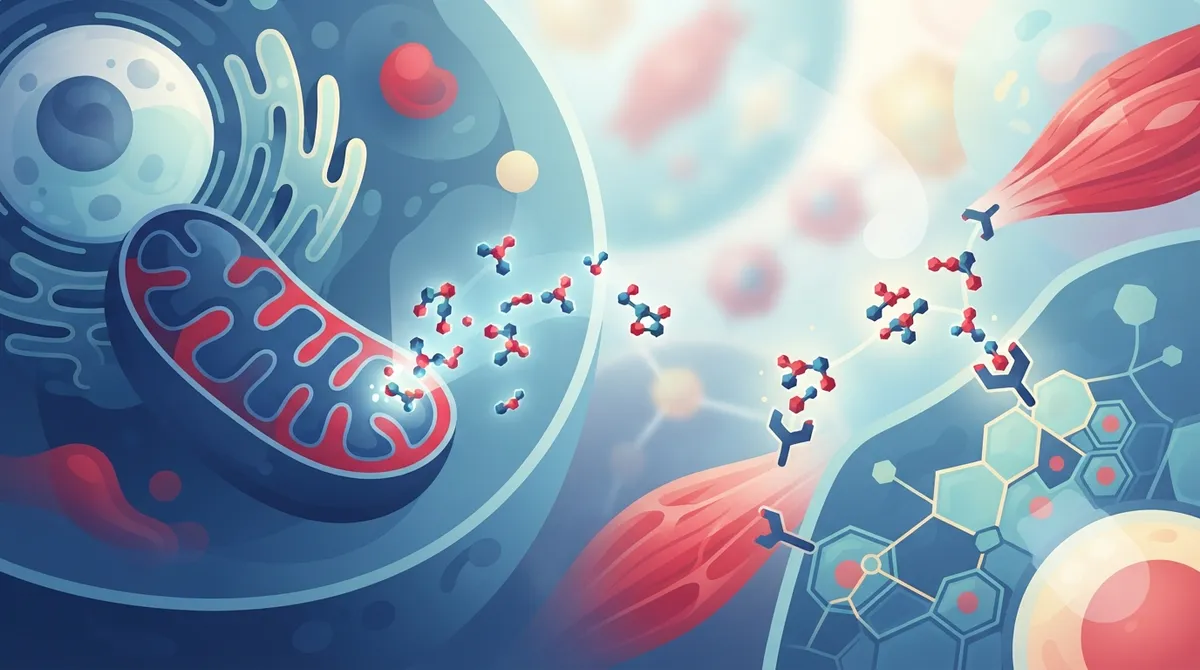
MOTS-c stands for mitochondrial open reading frame of the 12S rRNA type-c. It is a small chain of 16 amino acids. Unlike most proteins in your body, MOTS-c is made from instructions found in mitochondrial DNA, not the DNA in your cell's nucleus.
Scientists first described MOTS-c in 2015. A team led by researcher Changhan Lee published their findings in the journal Cell Metabolism. They identified MOTS-c as a signal that helps regulate insulin sensitivity and overall metabolic balance.
Mitochondria are often called the powerhouse of the cell. They turn food and oxygen into usable energy. MOTS-c appears to act as a messenger between these tiny energy factories and the rest of the cell. This is what makes it interesting to researchers studying metabolism and aging.
How MOTS-c Cellular Effects Work in Lab Studies
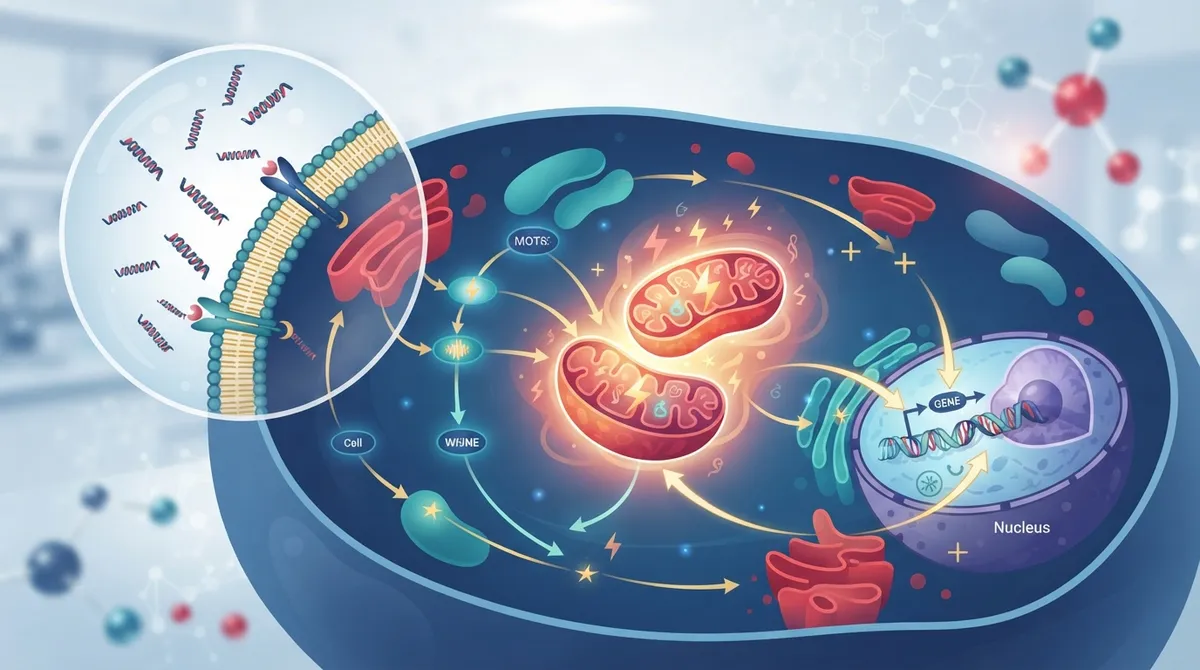
Most of what we know about mots-c cellular effects comes from cell cultures and animal models, not large human trials. Here is a simple breakdown of the main pathways researchers have studied.
AMPK Activation and Energy Sensing
AMPK is a switch inside cells that turns on when energy runs low. Think of it as your cell's low-battery alert system. Lab studies suggest MOTS-c can activate AMPK. This may help cells use glucose more efficiently and burn fat for fuel.
Folate and Purine Metabolism Changes
MOTS-c also appears to interact with the folate-methionine cycle. This is a chemical pathway your body uses to build DNA building blocks called purines. When MOTS-c disrupts this cycle slightly, it seems to create a stress signal. That signal then triggers AMPK activation described above.
Nuclear Signaling During Stress
Under metabolic stress, MOTS-c may travel from the cell's cytoplasm into its nucleus. Once there, it may help turn on genes tied to stress response and metabolism. Research has linked this movement to a protein called heat-shock factor 1, or HSF1. This protein helps cells adapt when conditions get tough.
Skeletal Muscle and Exercise Response
Your muscles seem to be a major target for MOTS-c. A 2021 study published in Nature Communications found that exercise increased natural MOTS-c levels in human participants. In mouse and cell models, MOTS-c was linked to better physical performance and stress adaptation.
This is one of the more encouraging findings so far. It suggests your body already makes more MOTS-c when you move more. That is a much safer path than injecting an unapproved product.
MOTS-c Research Summary Table
|
Research Area |
Study Type |
Key Finding |
Human Evidence Level |
|---|---|---|---|
|
AMPK Activation |
Cell and animal models |
May improve glucose uptake and fat burning |
Limited |
|
Insulin Sensitivity |
Animal models (2015 discovery study) |
Linked to better metabolic homeostasis |
Not established |
|
Exercise Response |
Human and mouse study (2021) |
Exercise raises natural MOTS-c levels |
Emerging |
|
Anti-Aging Claims |
Cell culture and animal studies |
Possible cellular stress adaptation |
Very limited |
|
CB4211 Analog (NAFLD) |
Early clinical trial, 88 participants |
No serious safety signal; liver-fat endpoint unclear |
Cannot be applied to native MOTS-c |
What the Human Evidence Actually Shows
This is where patients need to slow down. A research review indexed roughly 43 published studies on MOTS-c. Most of these are animal, cell, or review articles. Very few involve people, and none are large completed human trials proving real-world benefit.
There is one active registered study worth knowing about. A Phase 2a trial listed on ClinicalTrials.gov as NCT07505745 is testing 12 weeks of MOTS-c in adults with prediabetes and overweight or obesity. Registration on ClinicalTrials.gov simply means a study has been designed and listed. It does not mean the treatment works or is approved.
A separate small, unpublished report described 12 adults who received investigational MOTS-c. It mentioned changes in insulin resistance markers and fitness measures called VO2 max. Because this was never published as a peer-reviewed study, it should not be treated as solid proof of anything.
- MOTS-c was discovered in 2015 as a mitochondrial-derived peptide.
- Cell and animal studies suggest it may activate AMPK and support metabolic stress responses.
- Human exercise studies show natural MOTS-c levels rise with physical activity.
- A Phase 2a human trial is currently underway but not yet completed.
- No completed, peer-reviewed human trial has proven MOTS-c improves diabetes, weight, or longevity.
MOTS-c vs. CB4211: Why the Difference Matters
You may see marketing that points to a compound called CB4211 as proof that MOTS-c works. This is misleading. CB4211 is a lab-made analog, meaning it is a modified version built to act somewhat like MOTS-c, not the same molecule.
CB4211 was studied in 88 people with nonalcoholic fatty liver disease. Secondary reports say there was no clear safety concern. However, the primary goal of the study, reducing liver fat, did not clearly beat a placebo. These results cannot be used as proof that native MOTS-c is safe or effective for any condition.
Is MOTS-c FDA-Approved or Safe for Clinical Use
The short answer is no. MOTS-c is not approved by the FDA for diabetes, obesity, aging, athletic performance, or any other condition. There is no established dose, no confirmed long-term safety data, and no guarantee of product quality for injectable or supplement versions sold online.
- No FDA approval exists for any MOTS-c product marketed to consumers.
- Dosing has not been standardized or proven safe in humans.
- Product purity and sourcing vary widely and are largely unregulated.
- Long-term risks, including effects on other organs, remain unknown.
- Marketing claims often outpace what the actual research supports.
If you are considering any peptide therapy, it is worth discussing your goals with a licensed provider first. Our team at InCare, including Dr. Naveen Paddu, Dr. Pramjeet Ahluwalia, and Dr. Teshy John, can walk you through what is realistic versus experimental.
Better-Supported Options for Metabolic Health
While MOTS-c research continues, primary care already offers tools with strong safety records. These options are backed by years of data, not early-stage lab studies.
Lifestyle Foundations That Work Now
- Regular physical activity, which appears to naturally raise endogenous MOTS-c levels.
- Balanced, whole-food nutrition to support stable blood sugar.
- Consistent, quality sleep to support hormone balance and recovery.
- Weight management through supervised, evidence-based programs.
- Smoking cessation, which improves cardiovascular and metabolic outcomes.
- Approved medical treatments for diagnosed diabetes or cardiometabolic disease.
If you want to explore medically supervised support, our weight loss programs use proven, physician-guided methods. We also offer DNA gene testing and metabolic breath analysis to help you understand your body's actual metabolic patterns, not guesses based on unproven peptides.
How InCare Approaches Emerging Peptide Trends
Patients in Tampa and Riverview often bring us questions about trending compounds like MOTS-c. We take a straightforward approach. We explain what the research shows, what it does not show, and what options are actually proven to help.
Our peptide therapy program in Tampa focuses on treatments with a stronger evidence base and appropriate medical oversight. We also provide body composition analysis using advanced imaging so you can track real changes in your body over time, rather than relying on anecdotal claims.
Comprehensive care matters here. Our Riverview primary care team and Tampa providers work together to build a plan around your actual health history, labs, and goals. This includes cancer screenings, chronic disease management, and preventive visits, not just the latest trending compound.
Questions to Ask Before Trying Any Experimental Peptide
Before spending money on MOTS-c or similar products, it helps to ask a few direct questions.
- Is this treatment approved by the FDA for my specific condition?
- What human clinical trial data exists, and was it peer-reviewed?
- Who is manufacturing this product, and how is quality verified?
- What are the known side effects, and who has studied them long-term?
- Would a proven, approved treatment achieve the same goal more safely?
If a provider cannot answer these questions clearly, that is a warning sign. Trusted providers, including those at InCare, will always explain the limits of current evidence honestly.
Bringing It All Together
The mots-c cellular effects studied so far are genuinely interesting from a scientific standpoint. AMPK activation, folate-purine signaling, and exercise-linked increases in MOTS-c all point to a fascinating area of metabolic research. But interesting lab findings are not the same as a proven treatment you can safely use today.
For now, the smartest path toward better metabolic health is the one backed by decades of solid evidence: movement, nutrition, sleep, and medically supervised care. You do not need to wait on unproven peptides to start improving your health this year.
Our patients often share their experiences after switching to evidence-based care. You can visit us on Google — InCare to read real reviews from people in Tampa and Riverview. You can also follow our updates on Facebook, see wellness tips on Instagram, or catch quick health facts on Tik Tok.
If you have questions about MOTS-c, metabolic health, or which wellness services are actually right for you, our team is ready to help. Reach out to our care team today, or go ahead and book your appointment now to start building a health plan based on real evidence, not trends.
FAQs
Q: What is MOTS-c and how does it affect cells?
A: MOTS-c is a 16-amino-acid peptide made from mitochondrial DNA. In lab and animal studies, it appears to activate AMPK, a pathway that helps cells manage energy, glucose use, and stress responses. Human clinical evidence for these effects remains limited.
Q: Does MOTS-c improve insulin sensitivity or blood sugar?
A: Animal studies from the original 2015 discovery research suggest MOTS-c may support insulin sensitivity and metabolic balance. However, no completed human trial has confirmed this benefit, so it should not be considered a proven blood sugar treatment.
Q: Can exercise naturally increase MOTS-c levels?
A: Yes. A 2021 study published in Nature Communications found that physical activity increased natural MOTS-c expression in human participants. This makes regular exercise a safer, evidence-supported way to engage this pathway compared to unapproved injectable products.
Q: Is MOTS-c FDA-approved or available as a prescription treatment?
A: No. MOTS-c is not FDA-approved for diabetes, obesity, aging, or any other condition. There is no established dosing, confirmed long-term safety profile, or approved prescription form available at this time.
Q: What is the difference between MOTS-c and the analog CB4211?
A: CB4211 is a lab-modified version of MOTS-c studied in a small clinical trial for fatty liver disease. Its results cannot be applied directly to native MOTS-c, since the two compounds are chemically different and were tested in separate populations.