
Key Takeaways
- MOTS-c is investigational and not FDA-approved for any medical use, with most research conducted in animals rather than humans, making a complete contraindications list impossible and necessitating caution-based clinical guidance.
- Six key contraindications exist: pregnancy/breastfeeding, diabetes on glucose-lowering medications, kidney/liver/heart disease, active cancer/autoimmune disease, peptide hypersensitivity history, and use without verified product sources due to lack of standardization and purity controls.
- Products sold online labeled 'research use only' are unregulated for human consumption, meaning purity, dosage accuracy, and contamination risks cannot be confirmed, making sourcing verification critical before any consideration of use.
- Athletes are banned from using MOTS-c by the World Anti-Doping Agency as an AMPK activator, risking both health complications and competitive penalties without formal sport-specific medical clearance.
Peptide therapies like MOTS-c have become a hot topic among wellness-minded patients in Tampa and Riverview. Many people hear about mitochondrial peptides on social media or from friends chasing better energy and metabolic health. But before anyone considers this compound, it is critical to understand who should avoid it and why. This guide breaks down the mots-c contraindications that matter most, using the latest research and safety guidance available in 2026.
MOTS-c is a small peptide made of 16 amino acids. It comes from a part of your mitochondria called the 12S rRNA region. Researchers are studying it for its role in cellular energy and metabolic function. However, MOTS-c is still investigational. It is not approved by the FDA for any medical use. That single fact shapes almost everything patients need to know about its safety profile.
At InCare, our team believes patients deserve clear, honest information before trying any emerging therapy. This article walks through the six most important contraindications tied to MOTS-c, along with practical guidance on what to do if you are curious about metabolic wellness options that are backed by stronger evidence.

Why MOTS-c Contraindications Are Hard to Define
Most approved medications come with a detailed list of contraindications. These lists exist because large clinical trials tested the drug in thousands of people over months or years. MOTS-c has not gone through that process yet.
According to the Alzheimer's Drug Discovery Foundation, most MOTS-c research so far has happened in animals, not humans. The United States Anti-Doping Agency reported in 2024 that no completed human trials had established safe use conditions for MOTS-c. There is also no long-term safety data available. This means doctors cannot give you a fully confident list of who should never use it. Instead, clinicians rely on caution, known biology, and exclusion criteria from early research studies to guide recommendations.
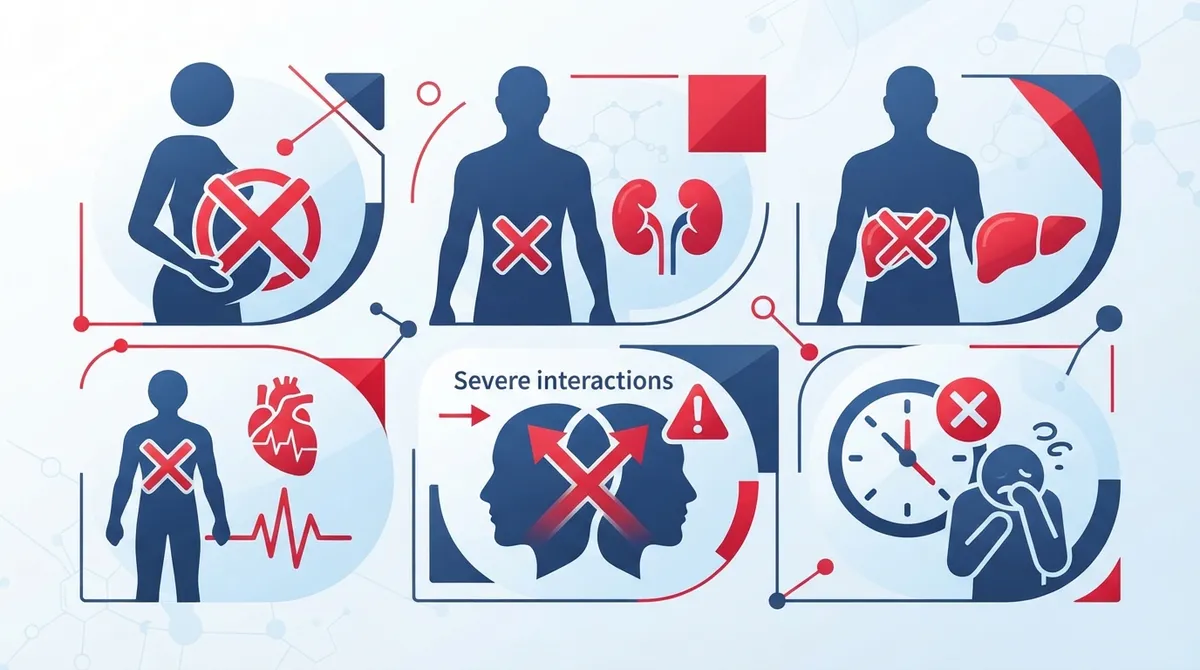
6 Key MOTS-c Contraindications to Understand
Because MOTS-c lacks robust human safety data, primary care providers treat several groups as high risk. Below are the six situations where MOTS-c should be avoided or approached only under close medical supervision.
1. Pregnancy and Breastfeeding
There is no human reproductive safety data for MOTS-c. This means nobody knows how it might affect a developing baby or a nursing infant. Any woman who is pregnant, breastfeeding, or planning to become pregnant should avoid this peptide entirely. This is one of the clearest and most consistent mots-c contraindications across investigational study protocols listed on ClinicalTrials.gov.
2. Diabetes and Glucose-Lowering Medications
MOTS-c appears to interact with AMPK, a pathway involved in how your body manages blood sugar. This raises concern for people using insulin, sulfonylureas, or other glucose-lowering drugs. Combining these medications with an unregulated peptide could cause unpredictable blood sugar swings, including dangerous hypoglycemia. Anyone managing diabetes should speak with a primary care provider before considering any experimental peptide.
3. Kidney, Liver, or Heart Disease
People with significant organ disease are typically excluded from early peptide research. That means there is almost no safety information for these groups. Patients with reduced kidney function, liver disease, or cardiovascular conditions face unknown risks if they use MOTS-c outside of a monitored clinical trial.
4. Active Cancer or Autoimmune Disease
Because MOTS-c affects cellular energy pathways, its impact on abnormal cell growth or immune activity is not well understood. Patients with active malignancy or autoimmune conditions should not use MOTS-c without a full evaluation. This is especially important for anyone already working through a cancer screening process or ongoing treatment plan.
5. History of Peptide Hypersensitivity
Some patients report allergic reactions to peptide-based therapies. Since MOTS-c is not standardized or FDA-regulated, product purity can vary widely between suppliers. Anyone with a known sensitivity to peptides should treat MOTS-c as a high-risk option.
6. Use Without Verified Product Source
This last item is not a medical condition, but it is just as important. MOTS-c products sold online are often labeled "for research purposes only." These products are not regulated for human use. Buying from an unverified source means you cannot confirm purity, dosage accuracy, or contamination risk. This alone should be treated as a contraindication for casual or self-directed use.
Reported Side Effects and Safety Signals
Because human trials are limited, most safety information comes from early studies, related peptide research, and patient reports outside formal clinical settings. Reported or theoretically possible side effects include:
- Injection-site redness, swelling, or irritation
- Allergic or immune reactions
- Changes in heart rate or palpitations
- Trouble sleeping or insomnia
- Fever
- Low blood sugar, especially in people on diabetes medications
A related peptide analogue called CB4211 was tested in a short human study. Researchers noted persistent injection-site reactions. However, findings from a related compound cannot prove what happens with native MOTS-c. This gap in direct evidence is exactly why caution matters so much right now.
MOTS-c Study Exclusion Criteria: A Useful Reference
Clinical trial protocols often exclude certain patients to protect their safety. While these exclusions are not the same as official contraindications, they offer helpful insight into where researchers see the highest risk. The table below summarizes common exclusion categories found in investigational MOTS-c study designs.
|
Patient Group |
Reason for Caution |
|---|---|
|
Pregnant or breastfeeding individuals |
No human reproductive safety data available |
|
Diabetes on glucose-lowering medication |
Possible interaction with AMPK and blood sugar control |
|
Uncontrolled hypertension or recent cardiac event |
Unknown cardiovascular effects |
|
Significant liver or kidney disease |
Underrepresented in early research; unclear clearance and metabolism |
|
Active malignancy |
Unclear effect on cell growth pathways |
|
History of peptide hypersensitivity |
Risk of allergic or immune reaction |
How InCare Approaches Emerging Wellness Therapies
Patients often come to InCare asking about trending peptides they saw online. Our providers, including the team featured on our providers page, believe in giving patients real answers, not hype. When a therapy lacks FDA approval and strong human trial data, we say so clearly.
Instead of guessing with unregulated products, InCare focuses on evidence-based tools for metabolic health. This includes metabolic breath analysis, DNA gene testing, and body composition tracking. These tools give patients real data about their metabolism without relying on unproven peptides. For patients specifically interested in peptide therapy done safely, our peptide therapy program in Tampa offers physician-guided options with proper screening.
Steps to Take Before Considering MOTS-c
If you are still curious about MOTS-c despite the contraindications, take these steps first:
- Schedule a visit with a primary care provider to review your full medical history
- Disclose all current medications, especially diabetes drugs
- Ask about your kidney, liver, and heart health status through basic lab work
- Confirm whether you have any known peptide allergies
- Avoid products labeled "research use only" for personal use
- Discuss safer, evidence-based alternatives for your wellness goals
This process protects your health and helps your provider guide you toward options with a stronger safety record. Our weight loss and wellness programs are built on this same principle of using proven tools first.
Athletes Should Take Extra Caution
MOTS-c is listed under Section 4.4 of the World Anti-Doping Agency's prohibited list as an AMPK activator. It is banned at all times, both in and out of competition. Athletes subject to testing should avoid MOTS-c completely unless they receive formal, sport-specific medical clearance. Using it without this guidance risks both health complications and serious competitive penalties.
Why Regulatory Status Matters So Much
MOTS-c is not FDA-approved for any medical condition. Products marketed as peptides online often carry disclaimers stating they are for research purposes only. This label is not just a formality. It reflects the fact that manufacturers have not proven these products are safe or effective for human use. Buying from an unverified source adds another layer of risk on top of the biological unknowns already discussed.
Patients researching wellness trends often find conflicting information across forums and social media. That is why working with a licensed clinic matters. Our team can review current research, including sources like ClinicalTrials.gov study protocols, to help you separate marketing claims from medical fact.
Final Thoughts on MOTS-c Safety
MOTS-c represents an interesting area of metabolic research, but it is not ready for routine use. The six contraindications outlined here, pregnancy, diabetes medication use, organ disease, active cancer, peptide allergies, and unverified sourcing, cover the situations where risk clearly outweighs any potential benefit right now. Until more human trials are completed, treating MOTS-c as investigational is the safest approach.
If you want expert guidance on metabolic health, weight management, or safe peptide therapy options, our team is ready to help. You can get in touch with our team to ask questions about your specific health history, or you can go ahead and schedule your visit today at one of our Tampa or Riverview locations. Patients across the Tampa Bay area also follow our updates and wellness tips on Facebook, Instagram, and TikTok for the latest health guidance. You can also read what real patients say by visiting our Google Business Profile for InCare, where the clinic maintains a strong reputation for honest, patient-first care in both Riverview and Tampa.
FAQs
Q: Is MOTS-c safe for human use?
A: MOTS-c safety has not been established in human clinical trials. Most research remains preclinical, so doctors treat it as investigational rather than a proven therapy. Patients should avoid routine use until more human safety data becomes available.
Q: Is MOTS-c FDA-approved or legal to obtain from a compounding pharmacy?
A: MOTS-c is not FDA-approved for any medical use. Products sold online or labeled as research peptides do not meet the same quality or safety standards as approved medications, so obtaining it does not guarantee it is safe or effective.
Q: Can MOTS-c be used with insulin, metformin, semaglutide, or tirzepatide?
A: Combining MOTS-c with glucose-lowering medications raises concerns about unpredictable blood sugar changes. Patients on these medications should avoid MOTS-c outside a properly monitored clinical study and discuss any interest with their primary care provider first.
Q: Is MOTS-c safe during pregnancy or breastfeeding?
A: No, MOTS-c should be avoided during pregnancy and breastfeeding. There is no human reproductive safety data available, so the potential risks to a developing baby or nursing infant remain unknown.
Q: What should someone do if they develop low blood sugar, palpitations, or severe injection-site swelling after using MOTS-c?
A: Anyone experiencing these symptoms should seek medical attention right away. Contact a primary care or urgent care provider promptly, since these reactions may signal a serious complication that needs professional evaluation.