
Key Takeaways
- Tesamorelin is FDA-approved only to reduce excess abdominal fat in adults with HIV-associated lipodystrophy; using it for general visceral fat or weight loss is off-label.
- Tesamorelin is weight-neutral, so the scale may barely change, and visceral fat loss reverses after treatment stops.
- In HIV studies, visceral fat fell about 13.1% at 26 weeks and 17.5% at 52 weeks, and only about two-thirds of participants had a clinically meaningful response.
- Tesamorelin carries real risks, including higher blood glucose, fluid retention, IGF-1 changes, and warnings for active cancer and pregnancy, so monitoring is essential.
- Before considering tesamorelin, get a medical history review, medication check, baseline labs, and body composition measurement, with referral to an HIV specialist or endocrinologist if needed.
- For most adults, nutrition changes, regular aerobic and strength exercise, better sleep, stress management, and treating metabolic conditions are the first-line approach to lowering visceral fat.
Belly fat that will not budge is a common reason Tampa adults visit a clinic. Many have heard that tesamorelin can shrink deep abdominal fat, and some ask their doctor to recommend tesamorelin for visceral fat in Tampa. That is a fair question. It also deserves an honest, careful answer.
Tesamorelin is a real, FDA-approved prescription drug. But its approval is narrow. It is not approved as a general fat-loss or weight-loss treatment. Whether it fits you depends on your health history, your labs, and your goals.
This guide covers six facts every patient should know before asking about tesamorelin. It also explains how a primary care team in Tampa can help you decide what is safe, what is proven, and what to try first. If you are comparing options, you may also find our overview Is Tesamorelin Right for Reducing Belly Fat? helpful.

Fact 1: Tesamorelin Has a Narrow FDA-Approved Use
Tesamorelin (brand name Egrifta SV) is a growth hormone-releasing factor analog. In plain terms, it signals the body to release more of its own growth hormone. The FDA approved it to reduce excess abdominal fat in adults with HIV-associated lipodystrophy.
That is the full approved use. It is not approved for general obesity, general visceral fat, or weight loss in people without HIV-associated lipodystrophy. This matters when you search for a Tampa clinic that will recommend tesamorelin for visceral fat. A clinic being willing to prescribe a drug does not widen what the FDA has approved.
A responsible clinic will tell you this up front. It will also explain that any use outside the approved purpose is called off-label use.
What "Off-Label" Really Means
Off-label prescribing is legal and common in medicine. A doctor may use a drug for a reason the FDA has not formally reviewed. But the benefits and risks are less well known for that use. Honest off-label care includes a clear talk about what is proven, what is not, and what could go wrong.
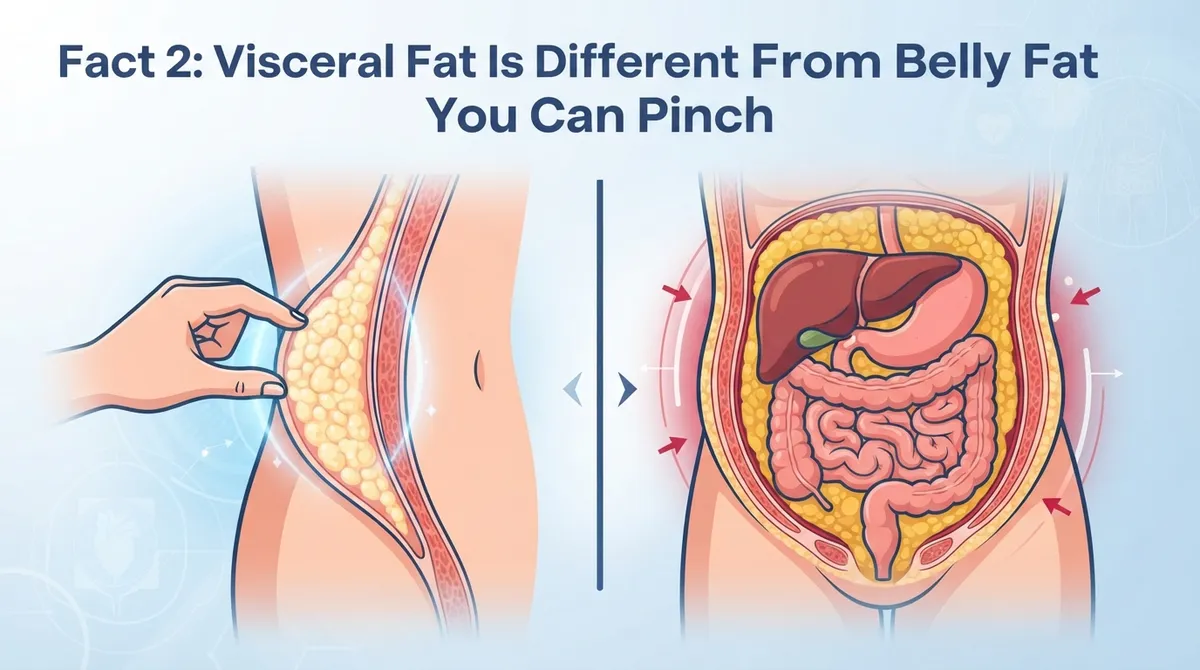
Fact 2: Visceral Fat Is Different From Belly Fat You Can Pinch
Visceral fat sits deep inside the abdomen, around organs like the liver and intestines. Subcutaneous fat sits just under the skin. You can pinch the second kind. You cannot pinch the first.
Visceral fat matters because it is linked to higher risk of type 2 diabetes, heart disease, and fatty liver. A larger waist can be a warning sign, but waist size alone does not tell the whole story. Two people with the same waist can carry very different amounts of visceral fat.
This is why measurement matters. At InCare, tools such as body composition analysis can give a clearer picture than a bathroom scale. Knowing your starting point helps you and your clinician judge whether any treatment is working.
Fact 3: The Research Comes From a Specific Group of Patients
The strongest evidence for tesamorelin comes from studies in people with HIV and excess central fat. NIH HIV clinical guidance describes the key numbers. In Phase 3 studies, tesamorelin 2 mg daily was linked to a 13.1% drop in visceral adipose tissue (VAT) from baseline over 26 weeks. That was a 15.4% relative reduction compared with placebo.
The same guidance reports a 17.5% VAT reduction from baseline through 52 weeks. Most of the loss happened in the first six months. About two-thirds of participants had a clinically meaningful drop, which means response is not universal.
|
Study Measure |
Reported Result |
|---|---|
|
VAT change at 26 weeks (vs. baseline) |
13.1% reduction |
|
VAT change at 26 weeks (vs. placebo) |
15.4% relative reduction |
|
VAT change at 52 weeks (vs. baseline) |
17.5% reduction |
|
Participants with a meaningful response |
About two-thirds |
These figures apply to the people studied. They should not be assumed to hold for adults without HIV or lipodystrophy. Anyone promising you a set result is overstating the evidence.
Fact 4: Tesamorelin Reduces Visceral Fat, Not Body Weight
The FDA label describes tesamorelin as having a weight-neutral effect. That means your scale weight may barely change. The drug is studied for shrinking visceral fat, not for lowering total body weight.
This is a key difference from medicines built for weight loss. If your goal is to lose pounds, tesamorelin is not designed for that. If you want to explore evidence-based weight care, our weight loss program and the guide What Makes Medical Weight Loss Different From Dieting? explain the options in plain language.
It also helps to know that the fat loss reverses after treatment stops. NIH guidance notes that the effect fades once the drug is discontinued. Tesamorelin is not a one-time fix.
Fact 5: Safety and Monitoring Come First
Tesamorelin is given by subcutaneous injection, following the current product labeling and a qualified clinician's instructions. Like any prescription drug, it carries risks that need monitoring.
Key Risks to Discuss With Your Clinician
- Blood sugar changes: The label warns of increased glucose and possible diabetes risk. Glucose checks matter.
- Fluid retention: This can show up as swelling, joint pain, or carpal tunnel symptoms.
- IGF-1 effects: Tesamorelin can raise IGF-1, so levels may need tracking.
- Active cancer: The label warns about active malignancy.
- Pregnancy: The drug should not be used during pregnancy.
- Allergic reactions: Hypersensitivity is possible.
- Long-term heart safety: The FDA label states that long-term cardiovascular safety has not been established.
These points are why this is a medical decision, not a wellness shortcut. A good evaluation looks at your medications, metabolic risk, and personal and family history before anything is prescribed.
Fact 6: A Primary Care Visit Is the Right First Step
Before asking any Tampa clinic to recommend tesamorelin for visceral fat, start with a root-cause review. A primary care clinician can sort out why your abdominal fat has built up and whether tesamorelin is even a reasonable question for you.
A thoughtful visit usually covers these steps:
- Medical history review: Includes HIV status, diabetes risk, liver health, and past cancer history.
- Medication check: Some drugs, hormones, and conditions affect belly fat.
- Baseline testing: Fasting glucose, A1C, lipids, liver enzymes, and sometimes IGF-1.
- Body composition measurement: A direct look at visceral and total fat.
- Referral when needed: An HIV specialist or endocrinologist may be the better fit.
Our guide to primary care explains how this whole-person approach works. You can also learn how a clinician reads your numbers in What Happens During an Annual Physical Exam?
Who May Actually Qualify for Tesamorelin?
The clearest candidates are adults with HIV-associated lipodystrophy and excess abdominal fat. For them, tesamorelin is an approved, label-supported option, and care is often shared with an HIV specialist.
For adults without HIV, the picture is different. Evidence and benefit-risk balance are less established. Any use would be off-label, and it should never be sold as a routine or guaranteed visceral-fat solution.
|
Situation |
Where Tesamorelin Stands |
|---|---|
|
HIV-associated lipodystrophy with excess abdominal fat |
FDA-approved use |
|
General visceral fat, no HIV |
Off-label; evidence less established |
|
Weight loss goal |
Not an approved purpose; weight-neutral effect |
|
Pregnancy or active cancer |
Label warnings apply; generally not appropriate |
What Works for Visceral Fat Besides Tesamorelin?
For most adults, the first line of care does not involve tesamorelin at all. Several well-supported steps can lower visceral fat and the health risks tied to it.
- Nutrition changes: Fewer ultra-processed foods, more protein and fiber, and steady meal timing.
- Regular exercise: A mix of aerobic activity and strength training helps reduce deep abdominal fat.
- Better sleep and stress care: Poor sleep and high stress can push fat toward the midsection.
- Treating metabolic conditions: Managing blood sugar, blood pressure, and cholesterol lowers overall risk.
- Approved weight-loss medicines: When appropriate, physician-guided options can help.
You can go deeper on related topics in 12 Doctor-Backed Ways to Decrease Body Fat in 2026 and Why Is Visceral Fat Loss So Hard to Track at Home? For a broader look at how clinics approach this area, see peptide therapy in Tampa.
How to Choose a Tampa Clinic for This Conversation
Not every clinic handles this topic the same way. When you meet with a provider, look for these signs of careful, honest care:
- They explain the FDA-approved use before discussing anything else.
- They order baseline labs and measure body composition.
- They discuss risks, not just benefits.
- They are open to referring you to a specialist.
- They never promise a guaranteed result.
InCare is built around this kind of prevention-first, technology-supported care. With locations in Tampa and Riverview, our team combines primary care, metabolic breath analysis, and body composition tracking so decisions rest on your own data. You can meet our physicians on the providers page or see our locations. Patients often share their experience on Google, and you can visit us on Google — InCare to read what neighbors in Tampa say about their visits.
You can also follow our clinic updates on Instagram, Facebook, and TikTok for practical health tips from our team.
Questions to Bring to Your Appointment
Come prepared. These questions help you get clear answers:
- Do I have a medical reason that fits the FDA-approved use of tesamorelin?
- If not, what are the risks and unknowns of off-label use for me?
- What tests do I need before and during treatment?
- What happens to my visceral fat if I stop?
- What lifestyle or approved treatments should I try first?
Asking these questions shows you are an engaged patient, and a good clinician will welcome them.
The Bottom Line on Tesamorelin and Visceral Fat
Tesamorelin is a legitimate medicine with a narrow, well-defined approval. It can reduce visceral fat in adults with HIV-associated lipodystrophy, but it is weight-neutral, its effect fades after stopping, and it carries real monitoring needs. For everyone else, it is an off-label discussion that calls for caution and a thorough medical review.
The smartest first move is a personalized evaluation, not a quick prescription. If you are ready to understand what is driving your belly fat and which options are safe and proven for you, our team is here to help. Book Now to schedule a visit, or contact InCare with questions about care in Tampa and Riverview.
FAQs
Q: Is tesamorelin FDA-approved for visceral fat in people without HIV?
A: No. The FDA approved tesamorelin to reduce excess abdominal fat in adults with HIV-associated lipodystrophy. Use in people without HIV is off-label, and the evidence and benefit-risk balance are less established.
Q: Does tesamorelin cause weight loss?
A: Not typically. The FDA label describes a weight-neutral effect, meaning it targets visceral abdominal fat rather than total body weight. Your scale may not change much even if visceral fat drops.
Q: What are the main side effects and risks of tesamorelin?
A: Key concerns include higher blood glucose and diabetes risk, fluid retention such as swelling and joint pain, and effects on IGF-1. The label also warns about active cancer, pregnancy, and allergic reactions, and long-term heart safety has not been established.
Q: Does visceral fat return after stopping tesamorelin?
A: Yes, the fat-reducing effect reverses after treatment is discontinued, according to NIH HIV clinical guidance. This is why ongoing lifestyle changes and medical follow-up matter.
Q: Can a Tampa primary care clinic prescribe tesamorelin?
A: A primary care clinician can evaluate your history, labs, and risks and decide whether tesamorelin is appropriate or whether a referral to an HIV specialist or endocrinologist is better. Patients should ask whether their use fits the approved indication or is off-label.