Key Takeaways
- Low testosterone must be confirmed with a repeat fasting morning blood test, since about 30% of men with an initial low result test normal on retesting.
- Symptoms like fatigue, low libido, and low mood overlap with sleep apnea, thyroid disease, depression, and diabetes, so a full evaluation should come before any treatment.
- Testosterone therapy treats diagnosed deficiency only, not general aging or tiredness, and men planning children soon should raise fertility concerns before starting.
- Guidelines call for monitoring testosterone and hematocrit at 3 to 6 months, again at 12 months, then yearly, so ask any clinic for a written follow-up schedule.
- Ask clinics whether they investigate the cause of low levels with LH and FSH testing, who supervises your care, and what the total monthly cost includes.
- Daily habits like 7 to 9 hours of sleep, strength training, weight management, and stress control can meaningfully support testosterone and energy alongside any therapy.
Many men notice changes they cannot explain. Energy drops. Sex drive fades. Mood shifts, and workouts stop paying off. If this sounds familiar, you may be searching for a mens wellness hormone clinic in Riverview, Florida. That is a smart first step, but the next steps matter more.
Hormone care works best when it starts with a careful medical review, not a quick fix. Low testosterone is real and treatable, yet the same symptoms can come from sleep problems, stress, thyroid disease, or diabetes. A good clinic tests first, finds the cause, and only then talks about treatment.
This guide explains what men's hormone care involves, how diagnosis should work, what to ask a clinic, and how to compare your options in Riverview in 2026. Whether you are a busy professional, a young father, or a man focused on proactive health, you will leave knowing what good care looks like.

What a Men's Wellness Hormone Clinic Does
A men's wellness hormone clinic evaluates how hormones affect your health, energy, mood, and body. Testosterone gets the most attention, but a thorough clinic also looks at thyroid function, blood sugar, cholesterol, and other markers that shape how you feel.
Common services include:
- Symptom review and a full medical history
- Blood testing for testosterone and related hormones
- Screening for conditions that mimic low testosterone
- Treatment when a true deficiency is confirmed
- Follow-up visits and lab monitoring
The best clinics treat hormones as one piece of whole-body health. That is why many men do better with a practice that also offers primary care, lab work, and wellness testing under one roof. InCare serves Riverview and Tampa with this connected approach.

Symptoms That May Lead You to Seek an Evaluation
Several symptoms can prompt a hormone check. None of them prove low testosterone on their own.
- Lower sex drive or fewer morning erections
- Erectile difficulties
- Ongoing fatigue that rest does not fix
- Low mood, irritability, or poor focus
- Loss of muscle mass or strength
- Increased body fat, especially around the waist
These signs overlap with many other conditions. Poor sleep, stress, depression, and metabolic disease can all cause them. If you are unsure where to start, read when to see a doctor for low libido to understand which signs deserve attention.
How Low Testosterone Is Diagnosed
Diagnosis is where quality care shows. The Endocrine Society recommends diagnosing hypogonadism only when two things are true: you have compatible symptoms or signs, and your testosterone is consistently and clearly low on accurate testing.
Why One Blood Test Is Not Enough
A single result can mislead. The Endocrine Society guideline notes that about 30% of men whose first testosterone result is low have a normal result when the test is repeated. For that reason, a repeat test is standard practice.
Testosterone also follows a daily rhythm. It is highest in the morning. Guidelines call for a repeat fasting morning total testosterone measurement to confirm a low result. A clinic that starts treatment after one afternoon blood draw is skipping an important safeguard.
Understanding the Numbers
A figure near 300 ng/dL is often discussed as a threshold in clinical guidance, including in the Endocrine Society's 2026 statement. But no single cutoff decides your diagnosis. Your symptoms, repeat results, and overall health all count.
Finding the Cause
If low testosterone is confirmed, the next step is finding out why. Clinicians typically measure luteinizing hormone (LH) and follicle-stimulating hormone (FSH). These results help separate problems in the testes from problems in the pituitary gland or hypothalamus. Understanding the cause shapes the best treatment plan.
What to Expect at Your First Appointment
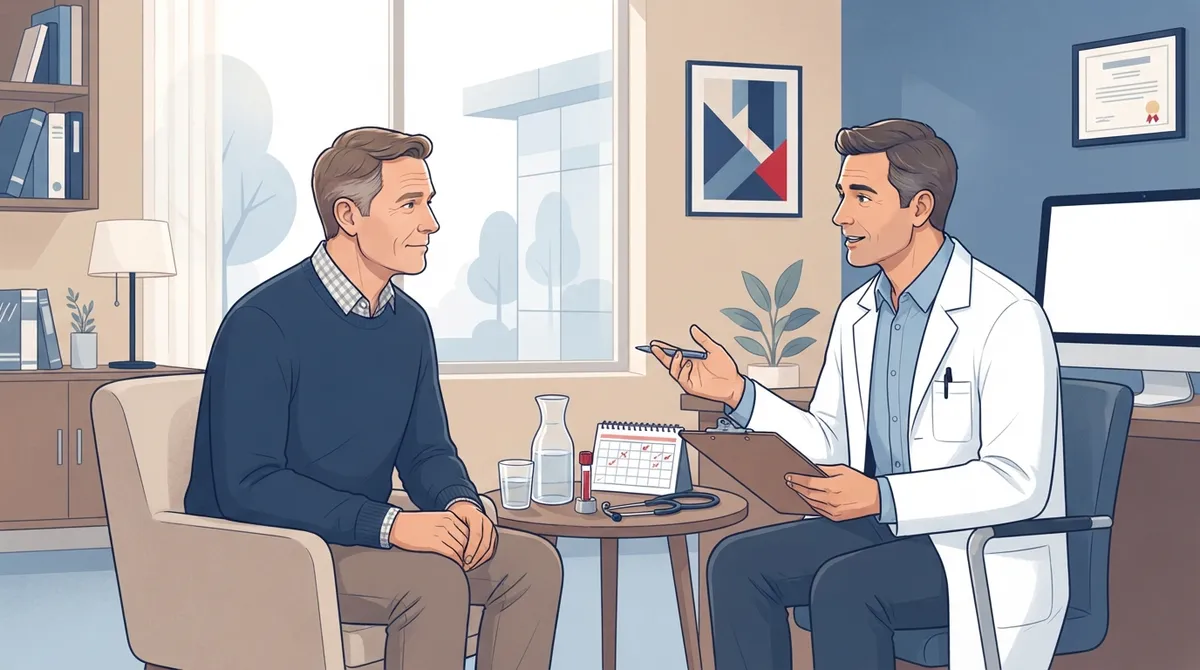
A strong first visit follows a clear order. Here is what the process usually looks like:
- Health history and symptom review. Your clinician asks about energy, sleep, mood, sexual function, medications, and family history.
- Physical exam. This checks blood pressure, weight, and other signs related to hormone health.
- Morning lab work. Testing is scheduled for a fasting morning draw when possible.
- Repeat testing if needed. A low first result is confirmed before any diagnosis is made.
- Cause investigation. Additional labs look for the reason behind low levels.
- Plan and follow-up. You and your clinician discuss options, risks, and a monitoring schedule.
If you want to prepare, our guide on how to get TRT bloodwork the right way walks through what labs involve.
Is Testosterone Therapy Right for Everyone?
No. Testosterone therapy treats diagnosed testosterone deficiency. It is not a general remedy for aging, tiredness, or wellness optimization in men whose levels are normal. A responsible clinic will tell you this plainly.
Who May Need Extra Caution
Some situations call for caution or specialist input before starting therapy:
- Men planning to have children soon, because testosterone can suppress sperm production
- Certain prostate concerns
- Elevated hematocrit (thick blood)
- Untreated severe sleep apnea
- Uncontrolled heart failure
- A recent heart attack or stroke
Fertility deserves special mention. Many men are surprised that testosterone therapy can lower sperm counts. If you want children in the near future, say so at your first visit. Other options may fit you better.
Sleep apnea is another common hidden factor. It can lower testosterone and cause fatigue on its own. If you snore or wake tired, see our guide on how to choose a sleep apnea doctor in Riverview.
Why Follow-Up and Monitoring Matter
Starting treatment is only the beginning. Ongoing care is what keeps therapy safe and effective. Guideline-based follow-up checks how well your symptoms respond, looks for side effects, confirms you are taking treatment as planned, and tracks testosterone levels and hematocrit.
The Endocrine Society describes monitoring testosterone and hematocrit at 3 to 6 months, again at 12 months, and then yearly. Timing can change based on your treatment type and health. A clinic should give you a clear schedule in writing.
Missed follow-up is a common problem. Our article on TRT follow-up mistakes Riverview patients should avoid explains how to stay on track.
How to Compare Hormone Care Options in Riverview
Riverview men have several paths. Some clinics focus only on hormones. Telehealth providers advertise low monthly prices. Primary care practices offer hormone testing as part of broader care. Listings and advertising are a place to start, but they are not independent proof of quality.
One telehealth listing, for example, advertises testosterone therapy starting at $199 per month. That is a provider-specific advertised price, not a local average. Always confirm what the price includes, such as labs, visits, and medication.
|
Care Option |
Typical Strength |
What to Verify |
|---|---|---|
|
Primary care practice |
Whole-body view, labs, long-term relationship |
Hormone experience and monitoring plan |
|
Hormone-focused clinic |
Specialized focus on hormone therapy |
Clinician credentials, repeat testing, pricing |
|
Telehealth provider |
Convenience and flexible scheduling |
In-person labs, exam access, follow-up schedule |
|
Endocrinologist or urologist |
Specialist depth for complex cases |
Wait times and referral needs |
For a deeper checklist, see how to choose a men's hormone clinic in Riverview and what to look for in a TRT clinic.
Questions to Ask Any Clinic
Bring these questions to your first call or visit:
- Do you confirm low testosterone with a repeat morning test?
- Will you investigate the cause of low levels?
- Who prescribes and supervises my care, and what are their credentials?
- How does treatment affect fertility?
- What is your monitoring schedule?
- What is the total monthly cost, including labs and visits?
Clear, direct answers signal a clinic that puts safety first. Vague answers or pressure to start treatment on day one are red flags. Our overview of who provides medically supervised TRT in Tampa Bay offers more guidance.
Why Primary Care Is a Strong Starting Point
Hormones do not work alone. Blood pressure, blood sugar, weight, sleep, and mood all connect to how you feel. A primary care team sees the full picture and can order the right tests in the right order.
This matters for the busy men who most often seek care. If you juggle work, family, and training, one coordinated practice saves time. You can handle labs, screenings, and follow-up in one place rather than chasing separate offices.
InCare combines primary care, wellness testing, and personalized planning for men in Riverview and Tampa. With a 4.8-star Google rating across 359 reviews, patients often mention the friendly staff and thoughtful care. You can visit us on Google — InCare to read what patients say. If you are weighing your options, our guide to highly rated primary care in Riverview can help you compare.
Lifestyle Steps That Support Healthy Hormones
Treatment is not the only tool. Daily habits strongly influence testosterone and energy. Before or alongside any therapy, consider these steps:
- Aim for seven to nine hours of quality sleep
- Strength train several times a week
- Manage weight, since excess body fat can lower testosterone
- Limit alcohol and avoid tobacco
- Address chronic stress
For some men, weight loss alone improves symptoms. If this applies to you, explore what a weight management clinic does. You can also follow InCare on Instagram for wellness tips, or find us on Facebook and TikTok. For trusted background reading, the Endocrine Society testosterone therapy guideline is the reference many clinicians follow.
Take the Next Step With Confidence
A strong mens wellness hormone clinic in Riverview follows a clear path: listen to your symptoms, confirm results with repeat morning testing, find the cause, treat only when it is truly needed, and monitor you over time. That approach protects your health and gives you real answers instead of guesses.
If you are ready to find out what is behind your symptoms, InCare is here to help. Our team provides personalized primary care and wellness services for men in Riverview and Tampa. Book Now to start your evaluation, or contact our team with questions about your first visit.
FAQs
Q: Where can I find a men's hormone or wellness clinic in Riverview, Florida?
A: Riverview has primary care practices, hormone-focused clinics, and telehealth providers. InCare offers men's hormone evaluation as part of its primary care and wellness services. Always verify clinician credentials, current address, pricing, and monitoring practices before booking.
Q: How is low testosterone diagnosed?
A: Diagnosis requires compatible symptoms plus consistently low testosterone on accurate testing. The Endocrine Society recommends confirming a low result with a repeat fasting morning total testosterone test. About 30% of men with an initial low result test normal on repeat, so one test is not enough.
Q: Is testosterone therapy appropriate for fatigue or aging alone?
A: No. Testosterone therapy treats diagnosed testosterone deficiency, not general aging or nonspecific tiredness. Fatigue can come from sleep apnea, thyroid problems, depression, or diabetes, so a full evaluation should come first.
Q: Can testosterone therapy affect fertility?
A: Yes. Testosterone therapy can suppress sperm production and is generally not recommended for men planning to have children in the near term. Tell your clinician about family plans before treatment begins so alternatives can be considered.
Q: What follow-up is needed during testosterone therapy?
A: Guidelines describe monitoring testosterone levels and hematocrit at 3 to 6 months, again at 12 months, and then annually. Visits also review symptom response, side effects, and treatment adherence. Your clinic should give you a written schedule.