Key Takeaways
- The FDA issued a safety communication on October 30, 2024, after adverse events from NAD+ injections, including severe chills, shaking, vomiting, and fatigue, linked to excessive endotoxin exposure.
- Clinic NAD+ is usually compounded rather than an FDA-approved finished drug, so compounded products skip the agency's premarket review for safety, effectiveness, and quality.
- Human evidence for IV NAD+ is thin: studies are small, short, and mostly uncontrolled, with no proven benefit for energy, focus, or anti-aging and no established safe long-term dose.
- Before any infusion, ask who compounds the NAD+, whether it is suitable for sterile injection, how it is prepared and tested, and what the plan is if you have a reaction.
- Seek prompt medical care for severe chills or shaking, repeated vomiting, marked weakness, trouble breathing, or chest pain after an infusion; call 911 for breathing trouble or chest pain.
- Pregnant or breastfeeding people, those with heart, kidney, or liver disease, people on prescription medicines, and people in cancer treatment should consult a licensed clinician first.
NAD+ therapy has moved from biohacker circles into mainstream wellness clinics. Ads promise more energy, sharper focus, and slower aging. If you are a busy professional, a young parent, or a health-minded person who likes to optimize, you may be asking a fair question: is NAD+ therapy safe?
The honest answer is mixed. NAD+ is a natural molecule your body already makes. But that does not prove that an IV drip or injection of it is safe or useful. In 2026, the human research is still thin, and the U.S. Food and Drug Administration (FDA) has raised specific concerns about how some NAD+ injections are made.
This guide explains what NAD+ is, what the evidence says, what the FDA warned about, and how to protect yourself. It will help you ask better questions before you book any infusion.
What Is NAD+ and Why Is It Popular?
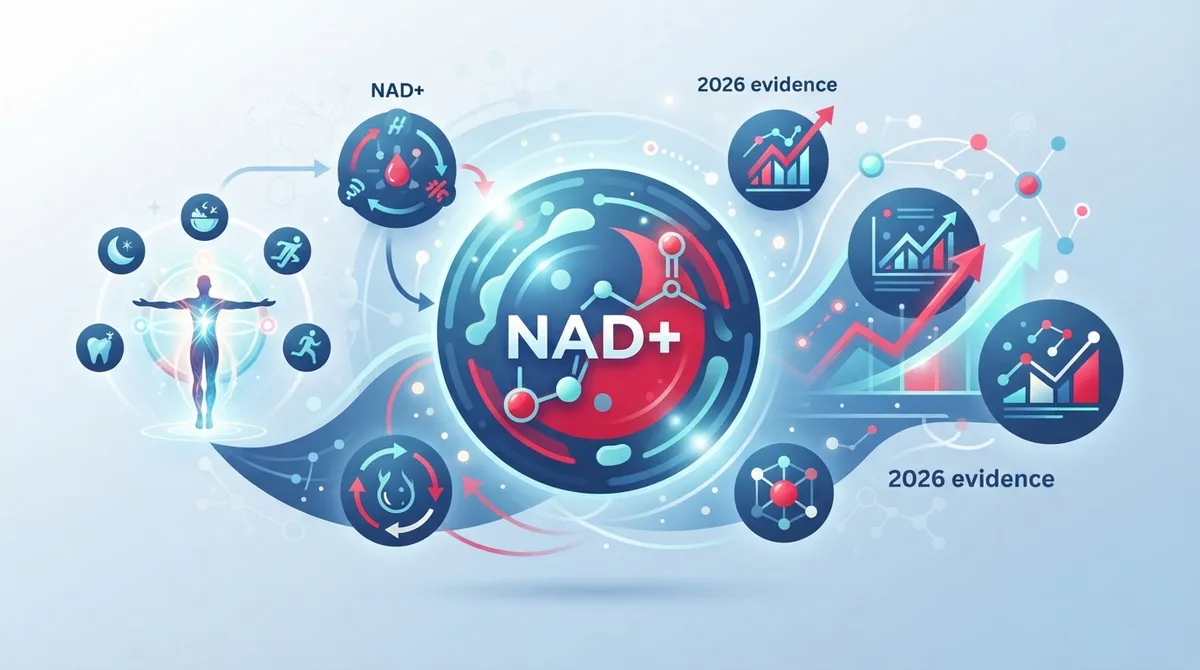
NAD+ stands for nicotinamide adenine dinucleotide. It is a coenzyme found in every cell. It helps your cells turn food into energy and supports many routine cell processes.
Levels of NAD+ appear to fall with age. That observation fuels much of the marketing around NAD+ therapy. The logic sounds simple: if levels drop as we age, then adding NAD+ back should help us feel younger.
Biology is rarely that simple. A molecule can be vital inside your cells without being effective when given as an infusion. Its biological role does not prove that NAD+ infusions improve energy, thinking, aging, or any other wellness result in people.
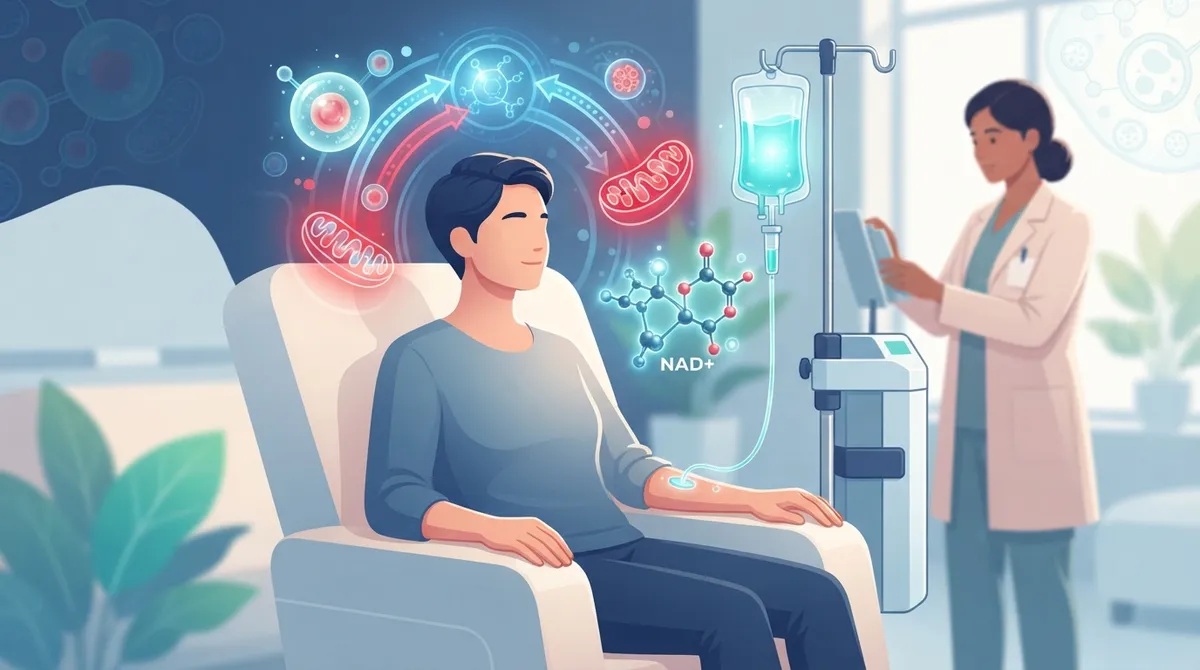
Is NAD+ Therapy Safe? The Short Answer
Is NAD+ therapy safe? It may be tolerated by some people when prepared properly and given by a licensed clinician. But safety is not well proven, and benefits are uncertain. Here is the plain summary:
- Human evidence is limited. Most IV NAD+ studies are small, short, and uncontrolled.
- Product quality matters. Clinic-offered NAD+ is usually a compounded product, not an FDA-approved drug.
- The FDA has issued a warning. It linked some NAD+ injections to reactions consistent with endotoxin exposure.
- Long-term safety is unknown. No one can state a proven safe dose or schedule for routine wellness use.
So the question is not just "is the molecule safe?" It is "is this specific product, made this specific way, safe and useful for me?"
What Does the Research Actually Show?
The human data on IV or injectable NAD+ is sparse. A 2026 narrative review of intravenous NAD+ and related compounds found that randomized, placebo-controlled trials of IV NAD+ were lacking. The authors concluded the evidence was not enough to establish effectiveness, the best dose, or long-term safety for routine wellness use.
One example shows how small the research base is. A 2018 open-label, uncontrolled pilot study, cited in that review, enrolled just eight healthy adults aged 70 to 80. There was no placebo group. That kind of study can suggest ideas, but it cannot prove that a treatment works or is safe.
|
Evidence Question |
Current Status in 2026 |
|---|---|
|
Large randomized placebo-controlled trials of IV NAD+ |
Lacking |
|
Proven benefit for energy, focus, or anti-aging |
Not established |
|
Best dose or infusion rate |
Not established |
|
Long-term safety for routine wellness use |
Unknown |
|
FDA approval of compounded NAD+ injections |
Not approved as finished drugs |
In short, the absence of proof does not mean NAD+ therapy is dangerous. It means no one can promise you that it is safe or that it works.
What Did the FDA Warn About?
The most important safety news came from the FDA. On October 30, 2024, the agency issued a safety communication about NAD+ injectable drugs. It reported adverse-event reports that included:
- Severe chills
- Shaking
- Vomiting
- Fatigue
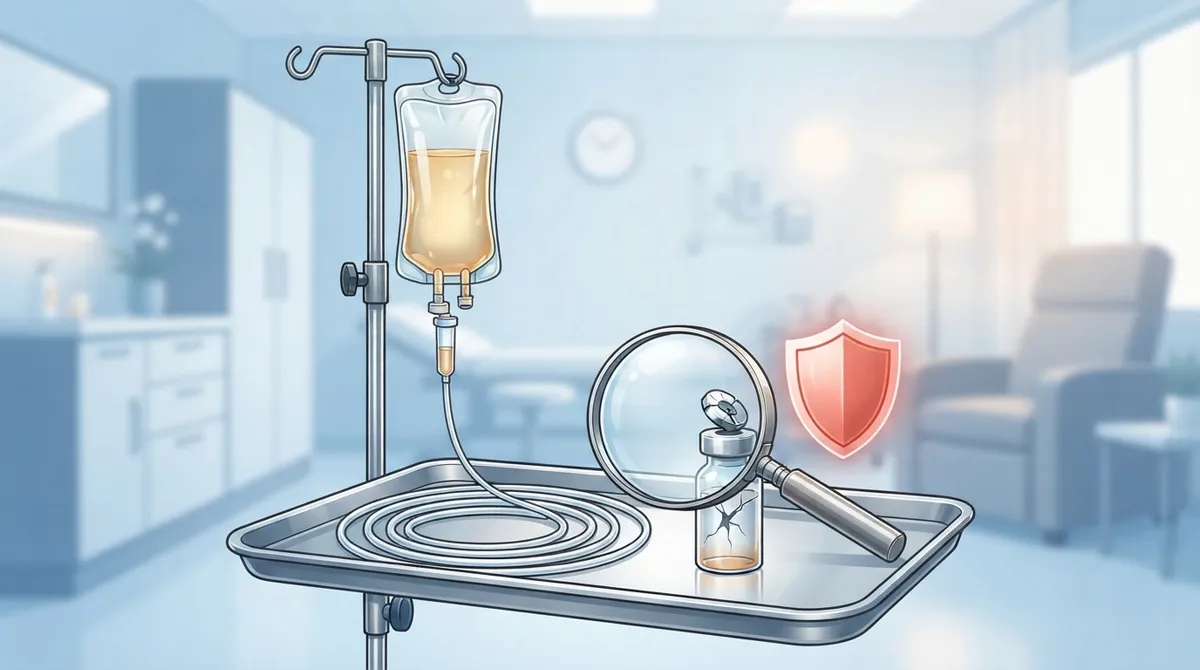
Some patients needed medical treatment. The FDA said these reactions were consistent with excessive exposure to endotoxins. Endotoxins are fragments from bacteria that can cause strong reactions when they enter the bloodstream.
The agency also reminded compounders that ingredients labeled as food-grade are not suitable for sterile injectable products without proper processing. Microbial or endotoxin contamination can harm patients. This is why where your NAD+ comes from matters as much as the molecule itself.
Why Compounded NAD+ Is a Safety Issue
NAD+ drips and shots at wellness clinics are generally compounded. That means a pharmacy mixes them, rather than a manufacturer producing an FDA-approved finished drug.
Compounded drugs do not go through the FDA's premarket review for safety, effectiveness, and quality that approved drugs receive. This does not make every compounded product unsafe. Many are made carefully. But it does mean you should ask more questions.
Good questions to ask any provider include:
- Who compounds the NAD+, and are they a licensed, inspected pharmacy?
- Is the ingredient suitable for sterile injection, and can you see testing records?
- How is it prepared, stored, and delivered?
- What is the infusion rate, and why was it chosen?
- What is the plan if I have a reaction during or after the infusion?
A trustworthy clinic will answer these questions clearly and without pressure.
Possible Side Effects of NAD+ Infusions
Limited human evidence points to several infusion-related effects. These can include:
- Nausea
- Abdominal discomfort or cramping
- Flushing
- Chest discomfort
Any IV treatment also carries general procedure risks. These include infection, bruising, and leakage of fluid into the tissue around the vein. Contaminated product, as noted by the FDA, adds another layer of risk.
Many people report that slower infusion rates are easier to tolerate. But there is no proven best rate, so this should be guided by a licensed clinician and not by a marketing script.
When to Get Medical Help After an Infusion
Most mild effects pass quickly. But some symptoms should never be brushed off. Seek prompt medical care if you have any of the following during or after an NAD+ infusion:
- Severe chills or shaking
- Repeated vomiting
- Marked weakness
- Trouble breathing
- Chest pain
These signs can point to a serious reaction. Call 911 for breathing trouble or chest pain. For other concerns, a clinic with urgent care access can assess you quickly.
Who Should Be Extra Careful?
No group has been proven safe or unsafe in formal studies, so caution is wise for everyone. You should be especially careful and talk with a licensed clinician first if you:
- Are pregnant or breastfeeding
- Have heart, kidney, or liver disease
- Take regular prescription medicines
- Have a history of strong reactions to IV treatments
- Have cancer or are in cancer treatment
Pregnant and breastfeeding patients are not studied in NAD+ research, so the safe choice is to avoid it unless a physician advises otherwise. If you take daily medicines, it is smart to review them with your doctor, and tools like these prescription management tips can help you keep your list organized.
NAD+ Supplements vs. IV Infusions
Many people ask whether oral NAD+ precursors are safer than infusions. Supplements skip the needle and the sterile preparation risk. That removes some hazards. But supplements bring their own questions, including product quality, dose accuracy, and limited proof of benefit.
|
Factor |
IV or Injectable NAD+ |
Oral Precursor Supplements |
|---|---|---|
|
Needle or IV access risks |
Yes |
No |
|
Sterile compounding risk |
Yes |
Not applicable |
|
Strong proof of wellness benefit |
Not established |
Not established |
|
Product quality varies |
Yes |
Yes |
|
Doctor oversight recommended |
Yes |
Yes |
Neither option has been proven to deliver the big claims in many ads. Be wary of anyone who says otherwise.
How to Judge Marketing Claims
Some claims about NAD+ sound exciting. Here is a simple way to test them:
- Ask for the human study. Animal and cell research does not prove results in people.
- Check the study type. Look for placebo-controlled trials with many participants.
- Watch for guarantees. No honest clinician can guarantee results from NAD+.
- Look for balance. A good provider talks about limits and risks, not only benefits.
If a clinic cannot explain the evidence in plain words, take that as a warning sign.
A Smarter Path to Energy and Healthy Aging
Many people look at NAD+ because they feel tired, foggy, or worried about aging. Those are real concerns. But fatigue often has a clear, treatable cause that an infusion will not fix.
A thorough check can uncover issues like thyroid problems, low iron, vitamin deficiency, poor sleep, hormone changes, or blood sugar trouble. Starting with a full workup is often more useful than guessing. Services like DNA gene testing, metabolic breath analysis, and body composition analysis can give measurable data about your health, so your plan is based on facts and not trends.
If you are curious about wellness drips more broadly, you can read about IV hydration and vitamin drips and the common mistakes that hurt results. For a wider view of everyday prevention, see how to make preventive care work for your health.
Why Medical Supervision Matters
The safest way to explore any wellness therapy is through a clinic that practices real medicine. That means taking a full history, reviewing your medicines, checking your labs, and being honest about what is and is not proven.
At InCare, our approach is built on prevention and whole-body health, using advanced testing and personalized plans across our Tampa and Riverview locations. Our team of providers starts with your goals and your health history, then recommends only what makes sense for you. If you are unsure about a treatment you saw online, we can help you sort fact from hype. You can also see what patients say by visiting our InCare reviews on Google, or learn more about what a wellness clinic does.
We also share health tips and clinic updates on Instagram, TikTok, and Facebook.
Key Takeaways
- NAD+ is a real, natural molecule, but infusion benefits are not proven in people.
- Most IV NAD+ research is small, short, and uncontrolled.
- Clinic NAD+ is usually compounded, not FDA-approved.
- The FDA warned about endotoxin-related reactions after NAD+ injections.
- Product source and sterile preparation are major safety factors.
- Always talk with a licensed clinician before starting.
Final Thoughts
So, is NAD+ therapy safe? It depends on the product, the preparation, the provider, and your own health. Right now, the evidence does not support bold claims about anti-aging or energy, and long-term safety is unknown. That does not mean you must fear it. It means you should approach it with care, curiosity, and a doctor in your corner.
If you want a clear, honest conversation about your energy, aging, or wellness goals, book an appointment with InCare today, or contact our team with your questions. We will help you build a plan that is safe, personal, and based on real evidence.
FAQs
Q: Is NAD+ IV therapy FDA-approved?
A: No. NAD+ injections and infusions offered at wellness clinics are generally compounded preparations, not FDA-approved finished drugs. Compounded drugs do not receive the FDA's premarket review for safety, effectiveness, and quality.
Q: What are the side effects of NAD+ infusions?
A: Reported effects include nausea, abdominal cramping, flushing, and chest discomfort. IV access also carries general risks such as infection, bruising, and fluid leaking into nearby tissue.
Q: What did the FDA warn about regarding NAD+ injections?
A: On October 30, 2024, the FDA reported adverse events after NAD+ injections, including severe chills, shaking, vomiting, and fatigue. The agency linked these reactions to concerns about excessive endotoxin exposure and warned against using food-grade ingredients in sterile injectables.
Q: Does NAD+ therapy have proven anti-aging or energy benefits?
A: No. Human studies of IV NAD+ are small, short, and mostly uncontrolled. A 2026 review found the evidence insufficient to establish effectiveness, best dosing, or long-term safety for routine wellness use.
Q: What symptoms after an NAD+ infusion need urgent care?
A: Seek prompt medical help for severe chills or shaking, repeated vomiting, marked weakness, trouble breathing, or chest pain. Call 911 for breathing difficulty or chest pain.