Key Takeaways
- No supplement has been proven to extend lifespan in healthy adults; supplements are evidence based mainly for correcting a documented deficiency or meeting a clear medical need.
- The USPSTF recommends against beta-carotene and vitamin E for preventing heart disease or cancer, and beta-carotene can raise lung cancer risk in smokers.
- Large pooled trials found no significant effect of vitamin D on all-cause mortality (odds ratio 0.96), so it is best used when a blood test shows a deficiency.
- Core habits such as not smoking, regular physical activity, a balanced diet, good sleep, and timely screenings have stronger evidence for healthy aging than any supplement.
Search for longevity supplements and you will find bold promises. Labels claim to slow aging, boost cellular energy, and add years to your life. But what longevity supplements are evidence based? The honest answer from primary care is more careful than the marketing. No supplement has been proven to extend lifespan in healthy adults. Some supplements do have strong evidence for a specific need, such as correcting a documented deficiency.
That difference matters. A supplement that fixes a low nutrient level is not the same as a pill that slows aging. This guide shows you how to judge the evidence yourself. You will learn what the best research says, which popular products lack human proof, and how to build a plan that truly supports healthy aging. Whether you are a busy parent, a wellness-focused professional, or someone just starting to think about prevention, these steps will help you spend wisely and stay safe.

What Does Evidence-Based Really Mean for Longevity?
When people ask what longevity supplements are evidence based, they often mean "which pills help me live longer." Real evidence is stricter than that. To be evidence based, a supplement should improve outcomes that matter in people like you. Those outcomes include fewer diseases, less disability, and lower risk of death.
Many claims rely on weaker proof. These include results in mice, changes in a lab marker, or studies that only show an association. A person who takes supplements may also exercise more, eat better, and see a doctor regularly. That makes it hard to know what caused the benefit.
Strong Evidence vs. Weak Evidence
|
Type of Evidence |
How Strong Is It? |
What It Can Tell You |
|---|---|---|
|
Large randomized controlled trials in humans |
Strongest |
Whether a supplement changes disease or death rates |
|
Small human trials |
Moderate |
Early safety and short-term effects |
|
Observational studies |
Weak |
Patterns only, not proof of cause |
|
Changes in lab markers |
Weak |
May not mean better health |
|
Animal or cell studies |
Weakest |
Ideas worth testing, not proof |
Keep this ladder in mind. Most trendy longevity products sit near the bottom of it.
What the Largest Reviews Show About Supplements
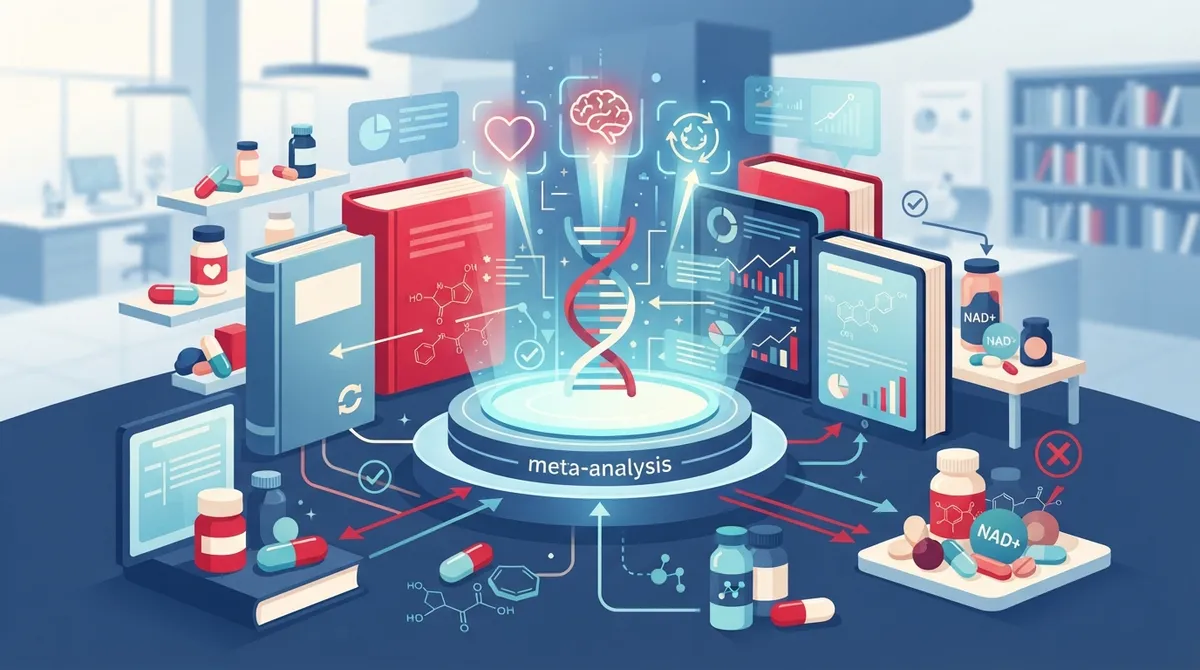
The best starting point is the U.S. Preventive Services Task Force (USPSTF). In 2022, it reviewed 84 studies, including 78 randomized controlled trials, on vitamins, minerals, and multivitamins. The goal was to see if they prevent heart disease or cancer in healthy adults.
The findings were clear but nuanced:
- Multivitamins and most single or paired nutrients: The evidence was insufficient to recommend for or against them. This is a gap in evidence, not proof that they never work.
- Beta-carotene: The Task Force recommends against it for preventing heart disease or cancer. It can raise lung cancer risk in people at higher risk, such as smokers.
- Vitamin E: The Task Force also recommends against it, since no net preventive benefit was shown.
These recommendations apply to non-pregnant adults without known deficiencies. They do not apply to children, people who are pregnant or may become pregnant, or people with known nutritional deficiencies.
How to Evaluate Vitamin D for Longevity
Vitamin D is one of the most popular supplements for healthy aging. The research is worth understanding, because it shows how evidence works in practice.
The USPSTF evidence review pooled data from many large trials. Vitamin D did not show a clear benefit for living longer or preventing major disease in the general population:
|
Outcome |
Result |
Trials / Participants |
|---|---|---|
|
All-cause mortality |
Odds ratio 0.96 (not significant) |
27 trials, 117,082 people |
|
Cancer incidence |
Odds ratio 0.98 (not significant) |
19 trials, 86,899 people |
|
Cancer mortality |
Odds ratio 0.94 (not significant) |
9 trials, 100,465 people |
|
Cardiovascular mortality |
Odds ratio 0.96 (not significant) |
9 trials, 98,422 people |
|
Cardiovascular events |
Odds ratio 1.00 (no difference) |
7 trials, 74,925 people |
This does not mean vitamin D is useless. It can be the right choice if a blood test shows you are deficient, or if you have a specific medical reason. The takeaway is simple. Vitamin D is a tool for a documented need, not a proven lifespan booster for everyone. For more detail on dosing and safety, see the NIH Office of Dietary Supplements vitamin D fact sheet.
Popular Longevity Products and Their Evidence Gaps
Many of the products sold as anti-aging do not yet have strong human data. Here is a fair way to think about them.
- NMN and NAD+ boosters: Interest is high, but proof that they extend life or prevent disease in people is lacking.
- Resveratrol: Early lab and animal findings were exciting. Human trials have not shown it adds years to life.
- Multivitamins: Evidence is insufficient for preventing heart disease or cancer in healthy adults.
- High-dose antioxidants: Vitamin E and beta-carotene are not recommended for prevention.
These products are not always dangerous. But "not proven" is different from "proven." Be wary of any label that promises more than the science shows. Our team has explored the broader topic in longevity in primary care and cellular aging treatments backed by science.
When a Supplement Is Appropriate
A supplement can be a smart, evidence-based choice in the right situation. The key is a clear reason for using it. Common examples include:
- A lab-confirmed deficiency, such as low vitamin D, vitamin B12, or iron
- Pregnancy or planned pregnancy, when specific nutrients are recommended
- Diets that leave out whole food groups, such as strict vegan diets
- Medical conditions or medicines that reduce nutrient absorption
In these cases, the supplement treats a known need. That is very different from taking a pill hoping to slow aging. A doctor can help you tell the two apart.
How to Review Any Supplement Step by Step
Use this simple checklist before you buy. You can bring it to your next appointment.
- Name the goal. Ask what you want the supplement to do. "Live longer" is too vague. "Fix low vitamin D" is specific.
- Check the ingredients and dose. Read the full label. Some products contain many ingredients at doses that differ from those studied.
- Look for human outcome data. Search for trials showing fewer diseases, less disability, or lower death rates, not just lab marker changes.
- Review safety and interactions. Supplements can interact with prescription medicines and cause harm at high doses.
- Confirm a real need. Ask whether a blood test or diagnosis supports using it.
- Share the list with your doctor. Include every vitamin, herb, and powder you take.
This process protects both your health and your budget. It also keeps you from using supplements in place of care that works.
What Truly Moves the Needle on Healthy Aging
Supplements should never replace the basics. These habits have the strongest track record for protecting long-term health:
- Not smoking, and getting help to quit if you do
- Staying up to date on vaccines
- Getting recommended screenings on time
- Regular physical activity
- A nutritious, balanced diet
- Good sleep
- Managing blood pressure, cholesterol, and blood sugar
If you are choosing between a costly supplement stack and a missed screening, the screening wins. Our guides on preventive health care and a longer life and which screenings adults should get every year can help you plan. You can also learn how preventive care works for your health.
How Personalized Testing Supports Smarter Choices
A one-size-fits-all supplement plan rarely fits anyone well. Personal data helps you decide what you truly need. At InCare, our Tampa and Riverview clinics combine primary care with advanced tools. These include DNA gene testing, metabolic breath analysis, and body composition analysis. Together with routine lab work, they give a clearer picture of your health.
For some patients, IV hydration and vitamin drips may also be discussed when there is a clear clinical reason. Our clinicians review your goals, history, and medications before suggesting anything. Many patients start with an annual wellness visit to set a baseline. You can also meet our providers to learn who will guide your care.
Safety Tips for Smokers and Higher-Risk Adults
Some groups need extra caution. Smokers and people at higher risk for lung cancer should avoid beta-carotene supplements. They can increase cancer risk instead of lowering it.
People who take blood thinners, diabetes medicines, or other prescriptions should check with a clinician before adding any supplement. Pregnant people, children, and anyone with a known deficiency need individual guidance as well. When in doubt, ask first. A short conversation can prevent a harmful interaction.
Make Your Next Step a Conversation, Not a Purchase
So, what longevity supplements are evidence based? The most accurate answer is that no supplement is proven to extend life in healthy adults. Supplements do have a place when they treat a documented deficiency or meet a clear medical need. Your best defense against hype is a simple question: what is the evidence, and is it for people like me?
InCare offers a personalized approach to prevention in Tampa and Riverview. You can see what patients say when you visit us on Google — InCare, and follow our updates on Instagram, Facebook, and TikTok. Ready to build a plan based on your own labs and goals? Book your visit now, or contact our team with questions.
FAQs
Q: Are any supplements proven to extend lifespan in humans?
A: No supplement has been established as a general way to extend lifespan in healthy adults. Some supplements are evidence based for a specific deficiency or clinical need, but that is different from slowing aging.
Q: Should healthy adults take a multivitamin for longevity?
A: The USPSTF found insufficient evidence to recommend for or against multivitamins to prevent heart disease or cancer in healthy, non-pregnant adults. This reflects a gap in research rather than proof of harm, so the decision is best made with your clinician.
Q: Does vitamin D supplementation help people live longer?
A: Large pooled trials found no statistically significant difference in all-cause mortality with vitamin D (odds ratio 0.96). It may still be appropriate if you have a deficiency or another specific medical reason.
Q: Are NMN, NAD+, and resveratrol supported by human trials?
A: Interest in these products is strong, but good human evidence showing longer life or lower disease risk is lacking. Early lab and animal results should not be treated as proof that they work in people.
Q: How can a primary care clinician tell whether I need a supplement?
A: A clinician reviews your diet, health conditions, medications, and lab results to look for a deficiency or other clear indication. They also check the exact ingredients and dose, and screen for interactions or side effects.