Key Takeaways
- Low testosterone diagnosis requires both compatible symptoms and consistently low levels, confirmed by two separate early-morning blood tests; a single low result or symptoms alone are not enough.
- The American Urological Association suggests total testosterone below 300 ng/dL as a reasonable cutoff, with repeat morning testing to confirm the result.
- Testosterone therapy is not right for everyone; men planning to have children soon should avoid it, as it can affect fertility, and people with certain cancer risks, untreated severe sleep apnea, or recent heart attack or stroke need more evaluation first.
- After starting therapy, testosterone should be rechecked to confirm an appropriate level, then monitored every 6 to 12 months along with symptoms, side effects, and key health markers.
Feeling tired, flat, or just not like yourself can be frustrating. Many men in their 30s, 40s, and beyond notice lower energy, a weaker sex drive, or slower recovery after workouts. Some wonder if low testosterone is the cause. That question deserves a careful answer, not a guess.
A good low testosterone clinic in Riverview, Florida should do more than hand out a prescription. It should listen to your symptoms, confirm your lab results, look for underlying causes, and explain every treatment choice in plain language. It should also plan follow-up care, because hormone health is never a one-time fix.
This guide explains how low testosterone is diagnosed, what tests to expect, how treatment decisions are made, and why a primary care setting like InCare is a strong place to start. Whether you are a busy professional, a young dad, or a wellness-minded patient who likes data, you will learn what a quality evaluation looks like in 2026.

What Does a Low Testosterone Clinic Actually Do?
A low testosterone clinic evaluates men who may have testosterone deficiency, also called hypogonadism. The best clinics follow national guidelines. They do not diagnose based on symptoms alone or on a single blood draw.
In a primary care and wellness setting, the visit usually includes these core steps:
- A detailed review of your symptoms and medical history
- A physical exam and a review of your current medications
- Early-morning blood tests to measure testosterone
- Repeat testing to confirm any low result
- Tests to look for the cause of low levels
- A discussion of treatment options, risks, and monitoring
This approach matters because many symptoms of low testosterone overlap with other health problems. Poor sleep, thyroid disease, depression, diabetes, and obesity can all cause similar complaints. A thorough clinic looks at the whole picture.
Which Symptoms Should Prompt a Testosterone Evaluation?
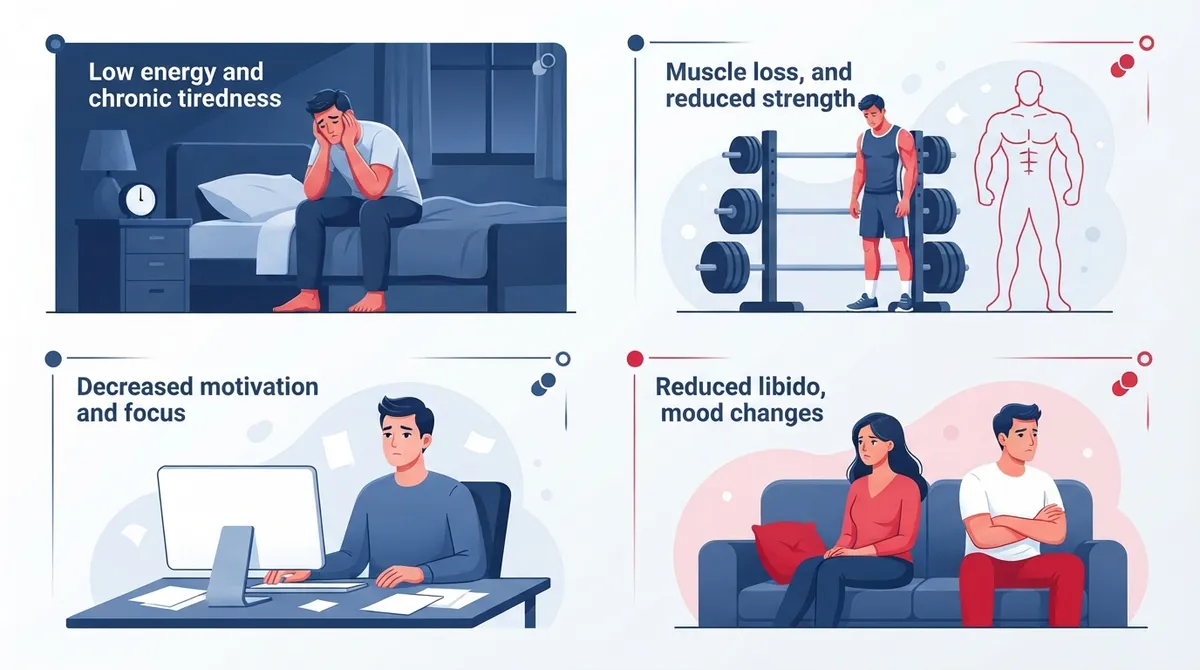
Certain symptoms may lead a clinician to check your hormone levels. None of them prove low testosterone on their own. They are simply reasons to start a conversation.
Common symptoms include:
- Reduced sex drive
- Erectile difficulties
- Low energy or ongoing fatigue
- Depressed or irritable mood
- Loss of muscle mass or strength
- Increased body fat, especially around the waist
- Fertility problems
If several of these sound familiar, a visit to your primary care team is a smart next step. You can also read more about common causes in our guide on how to find what causes low sex drive in men.
How Is Low Testosterone Diagnosed?
Diagnosis is the most important part of the process. Getting it right protects you from unnecessary treatment and from missing another health issue.
Symptoms Plus Consistently Low Levels
The Endocrine Society recommends diagnosing hypogonadism only when compatible symptoms or signs appear alongside consistently and clearly low testosterone. In other words, you need both pieces. A low number without symptoms is not enough. Symptoms without a low number are not enough either.
The Two-Test Rule
The American Urological Association (AUA) recommends using a total testosterone level below 300 ng/dL as a reasonable cutoff, together with symptoms or signs. It also recommends two separate early-morning measurements to confirm the result. Testosterone levels naturally rise and fall, and they are highest in the morning. A single test can be misleading.
The Endocrine Society also advises repeating a morning fasting measurement and using accurate lab methods. In some cases, free testosterone may be useful. This can apply when total testosterone sits near the lower limit or when proteins that bind hormones may be altered.
|
Guideline Source |
Key Recommendation |
|---|---|
|
American Urological Association |
Total testosterone below 300 ng/dL with symptoms or signs; confirm with two early-morning tests |
|
Endocrine Society |
Diagnose only with compatible symptoms plus consistently low levels; repeat a morning fasting test |
What Tests Look for the Cause of Low Testosterone?
Finding the reason behind low testosterone is just as important as confirming it. A clinician may order luteinizing hormone (LH) to help tell whether the problem starts in the testicles or in the brain's signaling system. Other tests depend on your history and results.
Your care team may also review factors such as:
- Weight and body composition
- Blood sugar and diabetes risk
- Sleep quality and possible sleep apnea
- Medications that affect hormones
- Stress, alcohol use, and activity level
This is where whole-body care pays off. At InCare, tools like body composition analysis and metabolic breath analysis can add useful context about your metabolism and overall health. Many patients also like the data-driven feel of this approach.
What Are the Treatment Options?
Treatment depends on the cause, your goals, and your overall health. Testosterone therapy is one option, but it is not the only one.
Lifestyle and Root-Cause Care
For some men, improving sleep, losing excess weight, managing stress, and treating other conditions can raise testosterone or improve symptoms. Weight and testosterone are closely linked. Carrying extra body fat can lower testosterone, and low testosterone can make weight gain easier. A supervised weight loss program may be a helpful part of the plan.
Testosterone Therapy
When diagnosis is confirmed and therapy fits your situation, a clinician can discuss options and explain the risks. You can learn more about the process in our article on testosterone replacement therapy at InCare. Men over 40 may also find our guide to TRT for men over 40 useful.
Who Should Avoid Testosterone Therapy?
Testosterone therapy is not right for everyone. A responsible clinic screens for risks before starting. The Endocrine Society recommends against starting therapy in men who plan to have children soon, because treatment can affect fertility.
Other situations call for avoiding therapy or doing more evaluation first:
- Certain prostate or breast cancer risks
- Elevated hematocrit (a high red blood cell level)
- Untreated severe sleep apnea
- Uncontrolled heart failure
- A recent heart attack or stroke
- Clotting disorders such as thrombophilia
If you want to start a family, tell your clinician early. There may be other ways to support your hormones that protect fertility. A good provider will walk you through those choices honestly.
Why Follow-Up and Monitoring Matter
Treatment does not end after the first prescription. The AUA recommends checking testosterone after therapy begins to confirm an appropriate level. After that, levels should be measured every 6 to 12 months while you stay on treatment.
Monitoring also looks at how you feel, any side effects, and key health markers. The Endocrine Society notes that, for men who choose prostate-risk monitoring, risk should be assessed before treatment and again 3 to 12 months after starting. A urology referral may be needed if certain PSA changes or abnormal exam findings appear in the first year. You can read more about screening in our post on key things men should know about prostate exams.
This steady follow-up is a big reason to choose a primary care clinic. Your doctor already knows your history, your other medications, and your long-term health goals.
Why Choose a Primary Care Clinic for Hormone Care?
Hormone health connects to nearly everything else in your body. Heart health, blood sugar, sleep, mood, and weight all play a role. A standalone clinic that only treats one number can miss the bigger picture.
InCare combines primary care with advanced wellness services under one roof. That means your testosterone evaluation can sit alongside primary care, preventive screenings, and metabolic testing. For patients who prefer a modern experience, virtual visits are also available. Compare this model with our look at primary care versus a standalone low-T clinic.
Other benefits of the InCare approach include:
- Evidence-based diagnosis that follows national guidelines
- Coordinated care instead of fragmented visits
- Advanced tools such as DNA gene testing for personalized insights
- Preventive focus, including cancer screening
- Friendly, attentive staff, reflected in a 4.8 out of 5 Google rating
Finding Care in Riverview, Florida
The name Riverview applies to communities in several states, so it is smart to confirm you are looking at the right one. InCare serves Riverview, Florida, at 11922 Boyette Rd, and also has a Tampa location. You can review all InCare locations and meet the providers who deliver your care.
Patients often tell us they value a clinic where they feel heard. You can see what our InCare patients say on Google. We also share wellness updates on Instagram, Facebook, and TikTok.
Before any visit, always confirm services and clinician credentials directly with the clinic. This is a good habit with any healthcare provider.
How to Prepare for Your Visit
A little preparation makes your appointment more useful. Try these steps:
- Write down your symptoms and when they started.
- List all medications and supplements you take.
- Note your sleep habits, exercise, and stress level.
- Tell your clinician if you plan to have children.
- Ask about morning lab timing so your blood draw is accurate.
Bring your questions, too. Ask about confirmation testing, risks, follow-up schedules, and what happens if therapy is not the right fit.
Take the Next Step Toward Clearer Answers
If low energy, low drive, or changes in mood have been wearing on you, you do not have to guess. A careful evaluation can tell you whether low testosterone is the cause or whether something else needs attention. With the right guidance, you can choose a plan that fits your health, your goals, and your life.
InCare offers thoughtful, whole-body care for men in Riverview and Tampa. Book your appointment today to start a guideline-based testosterone evaluation, or contact our team with any questions. Your health deserves a clear plan and a team that follows through.
FAQs
Q: Where can I find a low testosterone clinic in Riverview?
A: InCare serves Riverview, Florida, at 11922 Boyette Rd, and also has a Tampa location. Because Riverview exists in several states, confirm the state and the clinic's services before you book.
Q: How is low testosterone diagnosed, and do I need more than one blood test?
A: Yes. Guidelines call for compatible symptoms plus consistently low levels. The American Urological Association recommends two separate early-morning tests, with total testosterone below 300 ng/dL as a reasonable cutoff.
Q: Can testosterone therapy affect fertility?
A: It can. The Endocrine Society recommends against starting therapy in men who plan to have children in the near term. Tell your clinician about family plans so they can suggest safer options.
Q: How often do I need lab monitoring while on testosterone therapy?
A: Testosterone should be checked after therapy starts to confirm an appropriate level, then every 6 to 12 months during treatment. Your clinician will also monitor symptoms, side effects, and other health risks.
Q: What symptoms should prompt a testosterone evaluation?
A: Reduced sex drive, erectile difficulties, low energy, depressed mood, loss of muscle mass, and fertility problems are common reasons. These symptoms can also have other causes, so testing and a full evaluation are essential.