
Key Takeaways
- Gastrointestinal side effects (nausea, diarrhea, constipation, vomiting) are dose-dependent and most common during dose escalation, but typically improve over time as the body adjusts.
- Higher doses significantly increase side effect risk: nausea occurs in 28.6% at 4mg versus 42.4% at 12mg, and discontinuation rates range from 4.1% to 11.3% depending on dose level.
- Retatrutide is still investigational without FDA approval, meaning long-term safety, contraindications, drug interactions, and risks during pregnancy or surgery remain unanswered.
- A temporary dose-dependent increase in resting heart rate typically peaks around week 24 then declines, requiring baseline cardiovascular monitoring before treatment begins.
- Skin sensitivity changes (dysesthesia) occurred in 7% of trial participants versus 1% of placebo group, though cases were mild and often resolved without stopping treatment.
- Avoid purchasing retatrutide from unapproved online sources or compounding pharmacies, as quality, dosing accuracy, and safety oversight cannot be guaranteed outside properly supervised clinical research.
Retatrutide has become one of the most talked-about topics in weight loss and metabolic health circles. If you have heard about this investigational medication and want to understand its side effects before making any decisions, you are in the right place. This guide breaks down what clinical trials have shown, using clear language you can actually use.
Whether you are a busy parent researching options for better health, a wellness-focused professional exploring cutting-edge treatments, or someone simply curious about the next generation of weight management tools, understanding retatrutide side effects matters. At InCare, our providers believe informed patients make safer choices. This article explains the science in plain terms and shows you how to stay safe while learning about this emerging treatment.

What Is Retatrutide?
Retatrutide is an investigational once-weekly injectable medicine. It works by activating three different receptors in your body: GIP, GLP-1, and glucagon. Researchers are studying it for obesity, weight-related health conditions, and type 2 diabetes.
It is important to understand that retatrutide is not yet an approved treatment. This means it does not have an official prescribing label. Its long-term safety profile is still being studied. If you are curious about current, approved weight loss options, our weight loss program team can walk you through medically supervised choices available today.
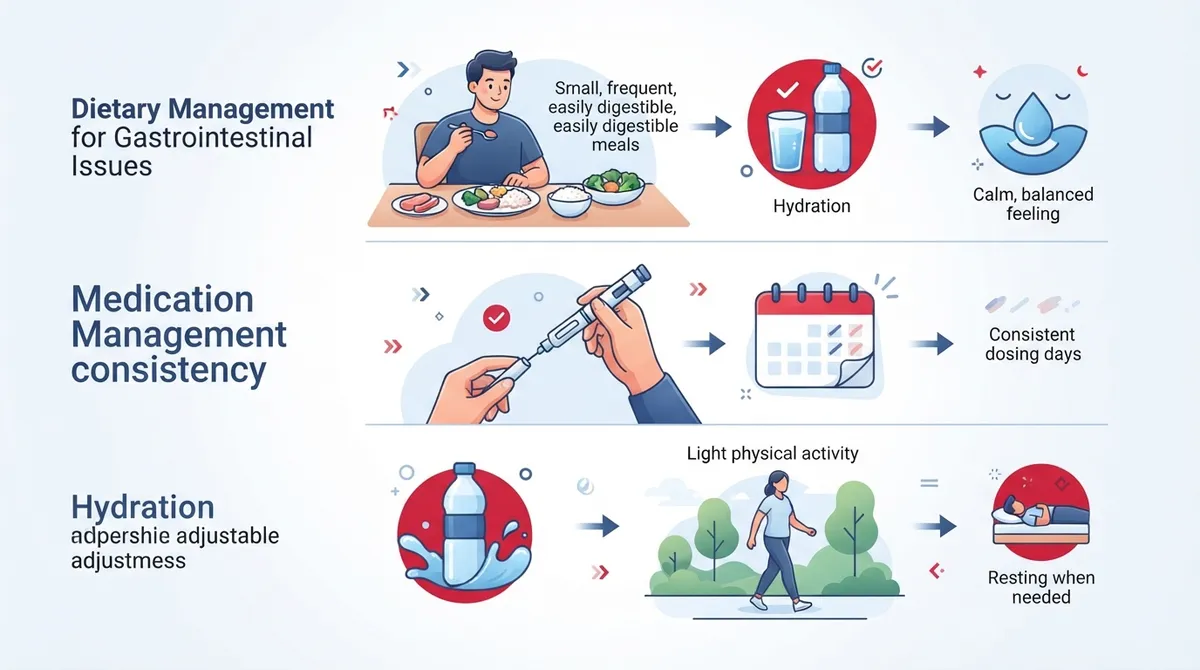
Common Retatrutide Side Effects
Clinical trials have given us a clear picture of what most people experience. The most frequent side effects involve the digestive system. These symptoms are usually mild to moderate and tend to fade as your body adjusts.
Gastrointestinal Symptoms Reported in Trials
- Nausea
- Diarrhea
- Constipation
- Vomiting
- Reduced appetite
- Abdominal discomfort
These symptoms show up most often during dose escalation, the period when a patient's dose is gradually increased. Over time, most people report these effects becoming less frequent and less severe.
Trial Data on Digestive Side Effects
Numbers from published research help put this in perspective. In the phase 2 obesity trial, adverse events occurred in about 73% to 94% of retatrutide participants, compared with 70% of those given a placebo (Jastreboff et al., New England Journal of Medicine, 2023). Rates were highest among people taking the 8-mg and 12-mg doses.
More recent phase 3 results from the TRIUMPH-1 study, reported by Eli Lilly in 2026, offer more detail by dose level:
|
Side Effect |
4 mg |
9 mg |
12 mg |
Placebo |
|---|---|---|---|---|
|
Nausea |
28.6% |
38.4% |
42.4% |
14.8% |
|
Diarrhea |
25.2% |
34.1% |
32.0% |
13.5% |
|
Constipation |
23.8% |
25.9% |
26.1% |
10.9% |
|
Vomiting |
10.6% |
22.8% |
25.3% |
4.8% |
As you can see, side effects generally increase with higher doses. This is why medical supervision matters so much with any investigational or prescription weight loss treatment. Learn more about how our providers approach dosing and monitoring for approved therapies.
How Dosing Affects Side Effect Severity
Research has shown that starting dose matters a lot. In the phase 2 obesity trial, using a lower 2-mg starting dose instead of a 4-mg starting dose helped reduce stomach-related side effects. This finding highlights why gradual dose increases, guided by a clinician, tend to work better than jumping straight to a higher dose.
Discontinuation rates also tell an important story. In the phase 2 trial, 6% to 16% of retatrutide participants stopped treatment due to side effects, compared with 0% of the placebo group. In TRIUMPH-1, discontinuation ranged from 4.1% at the 4-mg dose to 11.3% at the 12-mg dose, versus 4.9% with placebo.
Heart Rate Changes: What Trials Found
One less commonly discussed effect is a temporary rise in resting heart rate. The phase 2 obesity trial found a dose-dependent increase in heart rate among participants. This increase tended to peak around week 24 of treatment and then decline afterward.
This finding is a good reminder that any GIP/GLP-1/glucagon receptor medication needs baseline heart health checks. A thorough evaluation, including blood pressure and heart rate monitoring, should happen before starting any such treatment. Our primary care team routinely performs these baseline assessments for patients considering metabolic therapies.
Understanding Dysesthesia and Skin Sensitivity
A less familiar but notable finding involves changes in skin sensation. Some trial participants reported dysesthesia, a term for altered skin feeling. This can include tingling, burning, prickling, or general increased sensitivity.
In the phase 2 trial, cutaneous hyperesthesia or skin-sensitivity events were reported in 7% of retatrutide participants, compared with just 1% of those on placebo. None of these cases were classified as severe or serious. Most resolved on their own even while treatment continued. Still, this signal is worth discussing with a clinician if you experience it.
Steps to Take If You're Considering Retatrutide
If you are interested in this type of therapy, following a careful process matters. Here are the steps we recommend before considering any triple-receptor agonist medication:
- Schedule a comprehensive health evaluation. This should include blood work, heart rate, blood pressure, and a review of your full medical history.
- Discuss your weight and metabolic health goals openly. A clear conversation helps your provider recommend the safest, most effective approved options.
- Ask about approved alternatives first. Since retatrutide remains investigational, FDA-approved GLP-1 medications may be a more appropriate starting point for many patients.
- Only participate in supervised research if considering retatrutide directly. Avoid purchasing unapproved products online or through compounding sources without medical oversight.
- Set up regular follow-up visits. Ongoing monitoring helps catch side effects early and adjust your plan as needed.
Our team can help you understand which weight management options make sense for your health profile. You can explore related therapies through our guide to weight loss injections or review how GLP-1 medications compare for 2026.
Warning Signs That Require Immediate Medical Care
While most side effects are mild, some symptoms need prompt medical attention. Do not try to manage these at home. Contact a healthcare provider right away if you experience any of the following:
- Persistent vomiting or diarrhea that will not stop
- Inability to keep fluids down or stay hydrated
- Severe or ongoing abdominal pain
- Symptoms suggesting gallbladder disease, such as pain in the upper right abdomen
- Signs of an allergic reaction, including swelling, rash, or trouble breathing
- Fainting or heart palpitations
- Signs of severe low blood sugar, especially if combined with diabetes medications
If any of these symptoms occur, seeking urgent evaluation is the safest choice. Our urgent care team in Tampa and Riverview is equipped to assess sudden symptoms quickly, without the long wait times often seen at emergency rooms.
Why Retatrutide's Investigational Status Matters
Because retatrutide does not yet have an approved prescribing label, several important safety questions remain unanswered. Its contraindications, drug interactions, and long-term risks are not fully established. This includes uncertainty around:
- Pregnancy safety
- Pancreatitis risk
- Gallbladder complications
- Thyroid tumor risk
- Safe management before surgery
Until regulatory approval is confirmed, these risks should not be assumed to match those of already-approved GLP-1 medications. This is why buying retatrutide from unapproved online sources or compounding pharmacies carries real risk. Quality, dosing accuracy, and safety oversight cannot be guaranteed outside of properly supervised clinical research.
Comparing Retatrutide to Established Weight Loss Options
Many patients ask how retatrutide side effects compare to those of currently approved treatments. Here is a general comparison based on published trial data:
|
Factor |
Retatrutide (Investigational) |
Approved GLP-1 Medications |
|---|---|---|
|
FDA Approval Status |
Not yet approved |
Approved for specific uses |
|
Common Side Effects |
Nausea, diarrhea, constipation, vomiting |
Similar GI symptoms reported |
|
Long-Term Safety Data |
Limited, still under study |
More established over time |
|
Prescribing Label |
None yet |
Established with defined guidance |
|
Access |
Clinical trials only |
Available through licensed providers |
This comparison shows why many patients and providers currently favor approved treatments while retatrutide research continues. If you want to explore proven, medically supervised weight loss support today, our team offers guidance on choosing the best injection for weight loss in 2026.
How InCare Supports Your Wellness Journey
At InCare, we combine advanced diagnostic tools with hands-on medical expertise. Our Tampa and Riverview locations offer services ranging from body composition analysis to DNA gene testing, helping you make informed decisions about your health.
Our providers, including Dr. Naveen Paddu, Dr. Pramjeet Ahluwalia, and Dr. Teshy John, focus on whole-body optimization and preventive care. We believe every patient deserves clear, honest information about emerging treatments like retatrutide, along with safe, proven paths forward.
Curious what other patients say about their experience? You can visit us on Google — InCare to read reviews from real patients in Tampa and Riverview. We also stay connected with our community through Facebook, Instagram, and TikTok, where we share wellness tips and clinic updates.
Making an Informed Decision About Retatrutide
Understanding retatrutide side effects is an important step if you are researching future weight loss options. The most common effects are digestive, dose-related, and often improve over time. Less common signals, like heart rate changes and skin sensitivity, deserve attention but have generally been mild in trials so far.
Because retatrutide remains investigational, the safest path is working with a knowledgeable healthcare team. This ensures you get accurate information and appropriate monitoring, whether you are exploring current approved therapies or asking questions about future options.
Ready to talk with a provider about safe, medically supervised weight loss and wellness options? Book your appointment today and take the next step toward better health. You can also get in touch with our team if you have questions about any of our services in Tampa or Riverview.
FAQs
Q: What are the most common side effects of retatrutide?
A: Clinical trials show that gastrointestinal symptoms are most common, including nausea, diarrhea, constipation, and vomiting. These symptoms are typically mild to moderate and occur most often during dose escalation periods.
Q: Are retatrutide side effects worse at higher doses?
A: Yes, trial data confirms that gastrointestinal side effects are dose-related. In TRIUMPH-1 phase 3 results, nausea occurred in 28.6% of patients at 4 mg compared to 42.4% at the 12 mg dose, showing a clear pattern of increased side effects at higher doses.
Q: Does retatrutide cause an increased heart rate?
A: Research from the phase 2 obesity trial identified a dose-dependent increase in resting heart rate. This increase typically peaked around week 24 of treatment and then declined, making baseline cardiovascular monitoring an important part of care.
Q: Is retatrutide FDA-approved, and is it safe to buy online?
A: Retatrutide remains investigational and does not currently have FDA approval or an established prescribing label. Patients should avoid purchasing unapproved online or compounded versions and should only access this medication through appropriately supervised clinical research.
Q: What warning signs require urgent medical care while taking retatrutide?
A: Persistent vomiting or diarrhea, inability to stay hydrated, severe abdominal pain, signs of gallbladder disease, allergic reactions, fainting, palpitations, or symptoms of severe low blood sugar all require prompt medical evaluation rather than self-management.