
Key Takeaways
- Many popular weight loss injections, including semaglutide (Wegovy) and tirzepatide (Zepbound), are taken once weekly, but liraglutide (Saxenda) is daily, so your prescription determines your schedule.
- Doses start low and increase gradually over several weeks, such as Wegovy's 0.25 mg for four weeks, so never change your dose or add extra doses on your own.
- Pick one consistent injection day each week, rotate injection sites, and track doses with a phone reminder to avoid missed or repeated shots.
- If you miss a weekly dose, check your medication guide or ask your clinician or pharmacist rather than doubling up on your next shot.
If you are considering a prescription weight loss injection, one of the first questions is simple: how often do you take it? Many people ask, "are weight loss injections weekly?" The short answer is that many popular options are, but not all of them. The schedule depends on the exact medication your clinician prescribes.
This matters for busy professionals, young families, and wellness-minded adults who want a plan that fits real life. A once-a-week shot is easy to remember. A daily shot asks for a different routine. Knowing the difference before you start helps you set realistic expectations and avoid mistakes.
In this guide, you will learn which injections are weekly, which are daily, and how to follow a safe weekly routine. You will also see how doses change over time and what to do about side effects. For a deeper look at the weekly format, see this overview of weekly weight loss injections in Tampa.

Are Weight Loss Injections Weekly? The Short Answer
Many commonly prescribed weight loss injections are taken once a week. According to U.S. FDA prescribing information, semaglutide (Wegovy) and tirzepatide (Zepbound) are both once-weekly medicines. However, liraglutide (Saxenda) is a daily injection.
So the honest answer is this: weight loss injections are often weekly, but the category does not decide the schedule. Your specific prescription does. That is why you should always follow the directions on your own label and medication guide, not a general rule.
Why the Weekly Format Is So Popular
Weekly dosing is popular because it is simple. You pick one day, take your shot, and move on with your week. There are no daily reminders and fewer chances to forget.
These medicines belong to a class often called GLP-1 based therapies. If you want to understand the science, read about what GLP-1 is and how it works.
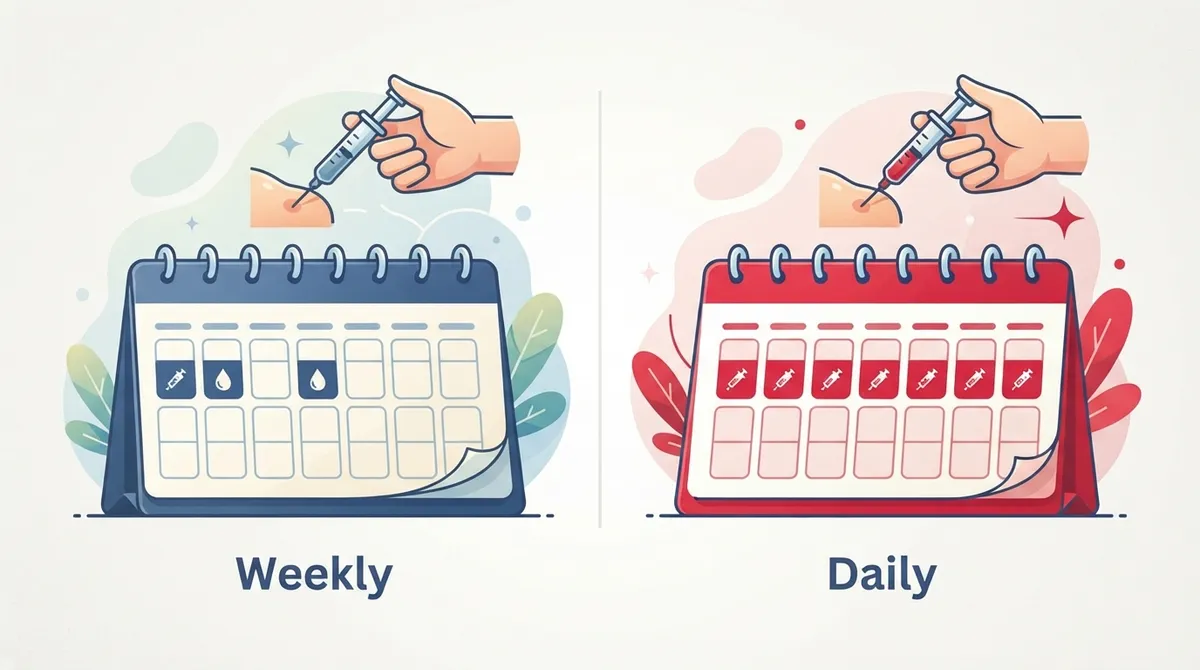
Weekly vs. Daily Injections: A Side-by-Side Comparison
The table below shows how common prescription injections compare, based on FDA labeling. Use it as a general guide, and always confirm details with your clinician.
|
Medication |
Active Ingredient |
How Often |
Starting Dose |
Usual Maintenance Dose |
|---|---|---|---|---|
|
Wegovy |
Semaglutide |
Once weekly |
0.25 mg for 4 weeks |
1.7 mg or 2.4 mg weekly (2.4 mg recommended in the cited label) |
|
Zepbound |
Tirzepatide |
Once weekly |
2.5 mg for 4 weeks |
5 mg, 10 mg, or 15 mg weekly |
|
Saxenda |
Liraglutide |
Once daily |
0.6 mg daily |
3 mg daily |
Notice that the starting dose is not the long-term dose. Treatment begins low and moves up in steps. That slow climb is part of the plan, not a sign that something is wrong.
How to Follow a Weekly Injection Routine
Once your clinician prescribes a weekly injection, a steady routine makes the treatment easier and safer. Follow these steps.
- Pick one day each week. Choose a day that is easy to remember, such as Sunday morning or Wednesday evening.
- Take it at any time of day. Weekly injections are generally taken on the same day each week, at any time, with or without meals.
- Choose your injection site. Common sites are the abdomen, thigh, or upper arm. Follow the instructions for your specific pen or device.
- Rotate your site. Using a different spot each week helps reduce skin irritation.
- Track each dose. Use a phone reminder or calendar so you never lose count.
- Store the medicine correctly. Check your medication guide for storage rules, since they vary by product.
If you are new to injections, learning proper technique helps. This guide on how to inject tirzepatide the right way covers the basics in plain language.
Tips for Busy Schedules
- Set a recurring phone alarm for your injection day.
- Pair the shot with a weekly habit, like meal planning.
- Keep a spare pen or supplies where you will see them.
- Tell a partner or family member your injection day for backup reminders.
Why Doses Start Low and Increase Over Time
Weekly injections do not start at the full dose. Your clinician raises the dose gradually over several weeks. This approach helps limit stomach-related side effects.
For example, Wegovy begins at 0.25 mg once weekly for four weeks, then increases at four-week intervals under the FDA schedule. Zepbound begins at 2.5 mg weekly for four weeks before the dose goes up. Saxenda, the daily option, starts at 0.6 mg and rises in weekly steps.
Because each product has its own plan, you should never change your dose on your own. Do not take extra doses to speed up results. Do not switch between daily and weekly schedules without guidance from your prescriber. To learn more about how long results can take, see how long tirzepatide takes to work.
What to Expect: Common Side Effects
Like any prescription medicine, weight loss injections can cause side effects. The most common ones with GLP-1 based medicines affect the digestive system.
- Nausea
- Diarrhea
- Vomiting
- Constipation
- Abdominal discomfort
These effects are often strongest when you start or raise a dose. Eating smaller meals and staying hydrated can help, but you should always report persistent or severe symptoms to your clinician. For practical tips, read about managing semaglutide's gastrointestinal side effects.
Why Medical Review Comes First
Before starting, a clinician should review your medical history, your other medicines, and any product-specific warnings. This step protects your safety. It also helps match you with the right medication and schedule.
What If You Miss a Weekly Dose?
Missing a dose is common, and the right response depends on the product. Missed-dose instructions differ between medications, so you should check your medication guide or ask your clinician or pharmacist.
Do not guess or double up on your next shot. A quick call to your care team is the safest path. If you are unsure, it is always better to ask first than to risk taking too much.
Injections Are Only Part of the Plan
FDA labeling describes these medicines as adjuncts to a reduced-calorie diet and increased physical activity for eligible patients. In other words, the shot supports your habits. It does not replace them.
The best results come from combining medication with balanced eating, movement, sleep, and regular follow-up. That is why many patients do better with a clinic that offers ongoing support rather than a one-time prescription. You can explore why this approach helps in 11 reasons medical weight loss clinics work better in 2026.
A primary care team can also look at the bigger picture. That includes blood sugar, blood pressure, hormones, and other factors that affect weight. Learn more about this in 14 ways a primary care doctor aids weight loss.
Choosing the Right Weight Loss Partner in Tampa Bay
The right clinic makes weekly injections safer and more effective. Look for a team that offers a full medical review, clear dosing plans, and regular check-ins. At InCare, patients in Tampa and Riverview receive personalized weight loss care built around prevention and whole-body health. Our approach combines medical expertise with advanced tools like body composition analysis and metabolic testing, so your plan reflects your real needs.
You can see what patients say about their experience when you read InCare reviews on Google. We also share wellness updates on Instagram, Facebook, and TikTok.
If you want to compare options before you decide, this guide on how to choose the best injection for weight loss can help. You may also want to review how tirzepatide and semaglutide compare.
Conclusion
So, are weight loss injections weekly? Many are, including semaglutide (Wegovy) and tirzepatide (Zepbound), but liraglutide (Saxenda) is daily. Your own prescription and the current product label decide your schedule. Start low, increase slowly, rotate your injection site, and never change your dose without your prescriber.
The safest path is a medically supervised plan that pairs your injection with nutrition, activity, and follow-up care. Ready to find out which option fits you? Book your weight loss consultation with InCare today, or contact our team with any questions.
FAQs
Q: Are weight loss injections taken every week?
A: Many are. Semaglutide (Wegovy) and tirzepatide (Zepbound) are once-weekly injections, according to FDA labeling. However, liraglutide (Saxenda) is taken daily, so your specific prescription determines your schedule.
Q: What day and time should I take a weekly weight loss injection?
A: Weekly injections are generally taken on the same day each week, at any time of day, with or without meals. Choose a day that is easy to remember and follow the instructions for your specific device.
Q: How long does it take to increase the dose of a weight loss injection?
A: Treatment starts at a low dose and increases gradually over several weeks. For example, Wegovy starts at 0.25 mg weekly for four weeks, and Zepbound starts at 2.5 mg weekly for four weeks before increases begin.
Q: What should I do if I miss a weekly weight loss injection?
A: Missed-dose instructions differ by product, so check your medication guide or ask your clinician or pharmacist. Do not double up on your next dose without guidance from your prescriber.
Q: Do weight loss injections need to be combined with diet and exercise?
A: Yes. FDA labeling describes these medicines as adjuncts to a reduced-calorie diet and increased physical activity for eligible patients. They are prescription treatments, not substitutes for individualized medical care.