

Key Takeaways
- Verify a PCP accepts your exact insurance plan and is taking new patients by calling the office, since online directories can be outdated.
- A good PCP match depends on more than distance: check appointment access, hours, telehealth, refill and results communication, and on-site services.
- Ask before booking how the practice handles urgent concerns and after-hours advice, referrals to specialists, and whether you will see the same clinician each visit.
- Primary care is not just for sick days; a PCP plans screenings, vaccines, and prevention based on your age, history, and risk factors.
- Access can be limited: about 20% of the U.S. population lives in primary care shortage areas, so start your search early and ask about waitlists, nurse practitioners, and telehealth as backups.
- Bring your insurance card, photo ID, medication and supplement list, past records, and family health history to your first visit, and treat it as a trial you can change if the fit is poor.
Searching for a primary care physician near me sounds simple. In practice, the closest office is not always the right fit. You want a clinician who accepts your insurance, has openings, communicates clearly, and can guide your health for years. A good match makes it easier to stay on top of screenings, manage health conditions, and get help fast when something feels wrong.
Access also varies by community. HRSA reported 8,830 primary medical Health Professional Shortage Area (HPSA) designations as of September 30, 2026. These cover about 102.3 million people. Nationally, only about 46.75% of estimated primary care need is met in those areas. That makes careful, early planning worth your time.
This guide walks you through each step. You will learn what a primary care physician does, how to build a shortlist, which questions to ask, and how to book your first visit with confidence. Whether you are a busy parent, a young professional, or someone who wants advanced wellness support, these steps apply to you.
What a Primary Care Physician Actually Does
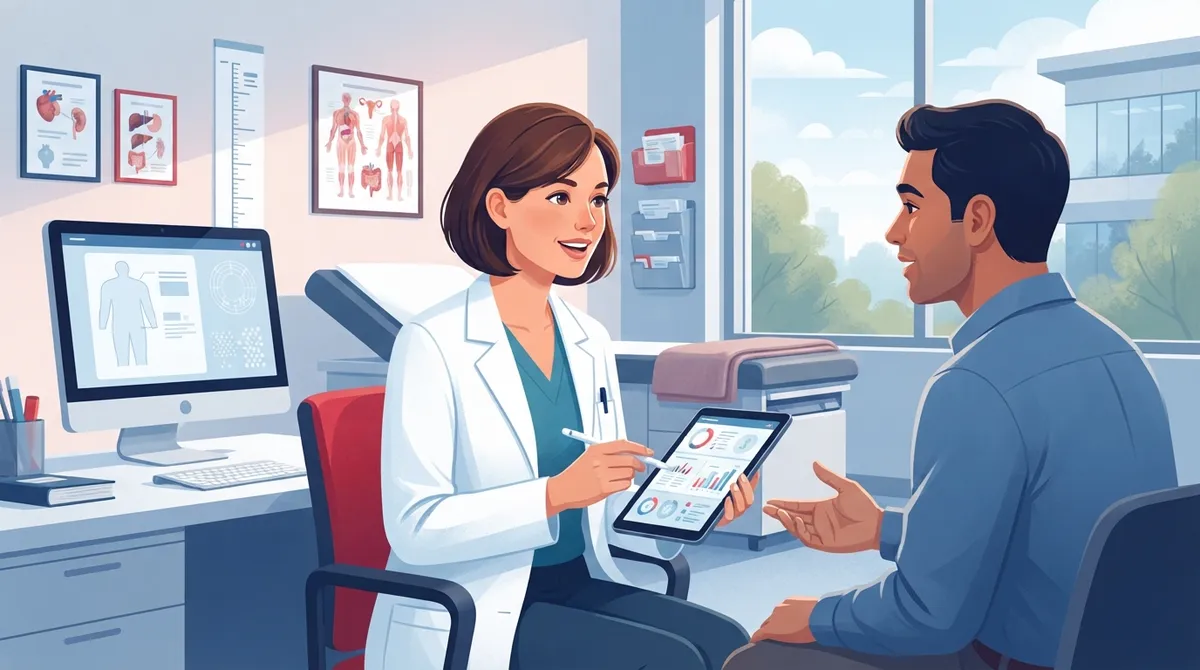
A primary care physician (PCP) is the clinician you see first for ongoing care. Your PCP looks at the whole picture of your health instead of one problem at a time. For a deeper look at the role, see what a primary care physician does for your health.
Primary care typically includes:
- Routine and preventive care, such as exams, vaccines, and screenings
- Evaluation of new symptoms like fatigue, pain, or infections
- Management of long-term conditions such as diabetes and high blood pressure
- Referrals and coordination with specialists
Primary care can come from family physicians, general internists, nurse practitioners, and physician assistants. The exact mix depends on the practice and state rules. Always confirm a clinician's credentials and role when you book.
PCP vs. Primary Care Provider
The terms are often used interchangeably. A "physician" is an MD or DO. A "provider" can also include nurse practitioners and physician assistants. Both can deliver excellent primary care. What matters is that the clinician is qualified, accessible, and a good fit for you.

How to Find a Primary Care Physician Near Me: Step by Step
Follow these steps to move from a broad search to a confirmed appointment.
- Check your insurance directory. Start with your insurer's online provider search. Filter by specialty (family medicine or internal medicine) and by your ZIP code.
- Call the office to verify. Directories can be outdated. Ask the practice if it accepts your exact plan and if it is taking new patients. Then confirm with your insurer.
- Map the distance. Consider the drive from both home and work. A slightly longer trip may be worth it for better hours or services.
- Compare access and services. Review hours, same-day options, telehealth, and on-site testing.
- Read reviews and credentials. Look for patterns about wait times, listening, and follow-up.
- Book a first visit. Treat it as a trial. You can always change if the fit is wrong.
If you need help locating openings, this guide on finding doctors accepting new patients near you can save time.
What to Compare Beyond Distance
Distance matters, but it should not be your only factor. The table below shows what to weigh and why it matters.
|
Factor |
What to Ask |
Why It Matters |
|---|---|---|
|
Insurance |
Do you accept my specific plan? |
Prevents surprise bills |
|
New patient status |
Are you accepting new patients? |
Saves time on dead ends |
|
Appointment access |
How soon can I be seen? Do you offer same-day visits? |
Affects care when you are sick |
|
Hours |
Are there early, late, or weekend hours? |
Fits work and family schedules |
|
Telehealth |
Can I do virtual visits? |
Adds convenience for follow-ups |
|
Communication |
How do you handle refills, results, and messages? |
Builds continuity between visits |
|
Services |
What can you do on site? |
Reduces extra trips and referrals |
|
Language and accessibility |
Do you offer language support and an accessible office? |
Ensures you can fully take part in your care |
Questions to Ask Before You Book
A short phone call can reveal a lot. These questions help you judge how the practice runs day to day.
- How do you handle urgent concerns and after-hours advice?
- How are prescription refills and test results shared?
- How do you manage referrals to specialists?
- Which labs and hospitals do you work with?
- Will I see the same clinician at each visit?
These answers affect continuity and convenience. A practice that handles these details well usually delivers smoother care. For more red flags and green flags, read 7 signs you've found the right primary care practice.
Match the Practice to Your Life Stage
Different people need different things from a primary care office. Here is how to match your needs.
Busy Families
Parents need flexible scheduling and care that covers every age. Look for a practice that sees both adults and children. Family-focused care reduces the number of offices you must juggle. Learn more about family primary care and why it matters.
Tech-Savvy Professionals and Young Adults
If you value speed and convenience, prioritize online booking, virtual visits, and digital messaging. Many young adults skip a PCP until something goes wrong. Setting up care early gives you a baseline and a trusted place to turn. If you are unsure whether you need one, see do you need a PCP.
Wellness-Focused Patients
Some patients want more than basic checkups. They want prevention, performance, and long-term optimization. Look for a clinic that offers services such as DNA gene testing, body composition analysis, and cancer screening alongside everyday primary care.
Women Without an Established Provider
Many women see an OB/GYN for reproductive care but lack a primary care home. A PCP can cover wellness visits, screenings, and whole-body concerns. Ask whether the practice offers comprehensive wellness exams. This article on what happens during an annual wellness visit explains what to expect.
Why Preventive Care Should Be Part of Your Search
Primary care is not only for sick days. A PCP helps you plan screenings, vaccines, and healthy habits based on your age, history, and risk factors. Recommendations change over time, so ongoing guidance matters.
Billing can also differ by visit type. A preventive visit may be billed differently from a visit that evaluates symptoms or includes extra testing. Ask the office how it handles this so you can plan ahead. Your insurer can also confirm what counts as preventive under your plan.
To get the most from these visits, review how to make preventive care work for your health.
Why Access Can Be Hard: Understanding Shortage Areas
HRSA designates Health Professional Shortage Areas where primary care access is limited. These can cover geographic areas, specific populations, or facilities. They are not only rural.
- HRSA's dashboard shows about 20% of the U.S. population lives in primary medical care HPSAs.
- A 2025 comparison reported 8,467 designations covering about 92.3 million people, up from 7,718 designations and about 76.3 million people in 2024.
- The Rural Health Information Hub reported that 66.33% of primary care HPSAs were in rural areas as of September 2024. It also cited preventive-visit use of 35% in rural areas versus 45% in urban areas.
These figures are designation measures. They do not count everyone who cannot get care. Still, they show why you should start your search early and have backup options. If your first-choice practice is full, ask about waitlists, nurse practitioners, and telehealth.
Prepare for Your First Appointment
A little preparation makes your first visit more useful. Bring these items:
- Your insurance card and a photo ID
- A list of current medications, vitamins, and supplements
- Past medical records, test results, or imaging if you have them
- Your family health history
- A short list of questions or concerns
If you need records from a previous doctor, follow these steps for a medical records request. For a full walkthrough of what to expect, see new patient appointment: what to expect and how to prepare.
Mistakes to Avoid When Choosing a PCP
Even careful patients slip up. Watch out for these common errors:
- Choosing only by distance and ignoring hours or services
- Trusting a directory without calling to confirm
- Skipping questions about communication and refills
- Waiting until you are sick to look for care
- Staying with a poor fit instead of switching
For a longer list, read 7 mistakes to avoid when choosing a primary care doctor near me.
A Local Option in Tampa and Riverview
If you live in the Tampa Bay area, InCare offers a personalized approach to primary care. The clinic combines advanced technology with medical expertise. Services include primary care, urgent care, cancer screenings, weight loss programs, metabolic breath analysis, IV hydration, and more. It operates from Riverview and Tampa, with virtual visits available.
Patients can learn about the care team on the providers page and view locations before booking. InCare holds a 4.8 out of 5 rating on Google, and you can read InCare reviews on Google. For a closer look at the clinic's approach, see InCare primary care and how to find a primary care clinic in Tampa and Riverview. You can also follow the team on Instagram, Facebook, and TikTok for wellness tips and updates.
Conclusion: Make the Call and Build Your Care Home
Finding a primary care physician near me works best when you look past the map. Verify insurance, confirm openings, compare access and communication, and match the practice to your needs. Then book a first visit and see how it feels. A strong PCP relationship pays off in earlier answers, better prevention, and calmer decisions when health issues arise.
Ready to take the next step? Book Now to schedule your visit with InCare, or contact our team with any questions about services, insurance, or new patient availability.
FAQs
Q: How do I find a primary care physician near me who accepts my insurance?
A: Start with your insurer's online provider directory and filter by specialty and ZIP code. Then call the practice to confirm it accepts your exact plan and is taking new patients, since directories can be outdated. It is also wise to verify network status with your insurer.
Q: What is the difference between a primary care physician and a primary care provider?
A: A primary care physician is an MD or DO, such as a family medicine or internal medicine doctor. A primary care provider is a broader term that can also include nurse practitioners and physician assistants. Both can deliver ongoing, first-contact care depending on the practice and state rules.
Q: What should I bring to my first primary care appointment?
A: Bring your insurance card, photo ID, a list of medications and supplements, past medical records, and your family health history. A short list of questions helps you make the most of the visit.
Q: Does health insurance cover an annual wellness or preventive visit?
A: Many plans cover preventive visits, but coverage depends on your specific plan. A visit that also evaluates symptoms or includes extra testing may be billed differently. Call the office and your insurer ahead of time to confirm what is covered.
Q: Can I see a nurse practitioner or physician assistant for primary care?
A: Yes. Nurse practitioners and physician assistants can provide primary care in many practices, depending on state rules. Confirm the clinician's credentials and role when you book, and ask how they work with the supervising physician.


