
Key Takeaways
- A "peptide stack with GLP-1" is a loose marketing term, not a defined medical treatment, and no major guideline endorses any specific stack of GLP-1 medicines with other peptides.
- Sort every proposed ingredient into FDA-approved medicine, compounded product, other wellness peptide, or research-use-only item, since only approved products have been reviewed for safety and quality.
- Combining products makes side effects harder to trace and interactions harder to predict, because many added peptides have little or no formal human interaction data.
- Never reconstitute, mix, or adjust injectable doses on your own; small math errors can produce doses several times too high, so confirm all dosing with your clinician and pharmacy.
- Verify the source of every injectable: ask which licensed pharmacy prepared it, the exact concentration, and never buy products labeled "research use only" for personal injection.
- Seek prompt care for severe or persistent abdominal pain, repeated vomiting, dehydration, post-injection swelling or trouble breathing, or a neck lump with trouble swallowing.
Few wellness phrases cause as much confusion as "peptide stack with GLP-1." If you live in the Tampa area, you have likely seen ads, social posts, or word-of-mouth claims about combining weight loss injections with other peptides for faster results. The idea sounds efficient. The reality is more complicated.
A "peptide stack with GLP-1" is not a defined medical treatment. It is a loose marketing term. It usually describes pairing a GLP-1 medicine, such as semaglutide or tirzepatide, with one or more other peptides sold for weight loss, recovery, or general wellness. No major guideline endorses a specific stack.
This guide shows you how to evaluate a peptide stack with GLP-1 in Tampa in a safe, informed way. You will learn what the term means, what the evidence says, which questions to ask, and how clinician-led care protects you. Whether you are a busy parent, a wellness-focused professional, or someone new to primary care, these steps will help you make a confident decision.

What Does a Peptide Stack With GLP-1 Actually Mean?
Peptides are short chains of amino acids. Your body makes many of them naturally. Some peptides act as hormones, and some act as signals for healing or appetite. GLP-1 itself is a natural gut hormone that helps regulate blood sugar and hunger.
GLP-1 receptor agonists copy that hormone. Semaglutide is one example. Tirzepatide is a related medicine that also acts on a second hormone pathway called GIP. Both have FDA-approved products for specific uses.
The word "stack" comes from fitness and biohacking culture. It means using several compounds together. In this setting, a stack might pair a GLP-1 medicine with other peptides marketed for fat loss, muscle recovery, or energy.
Here is the key point. Approval of one ingredient does not prove that a combination is safe or effective. Each added product changes the overall picture.
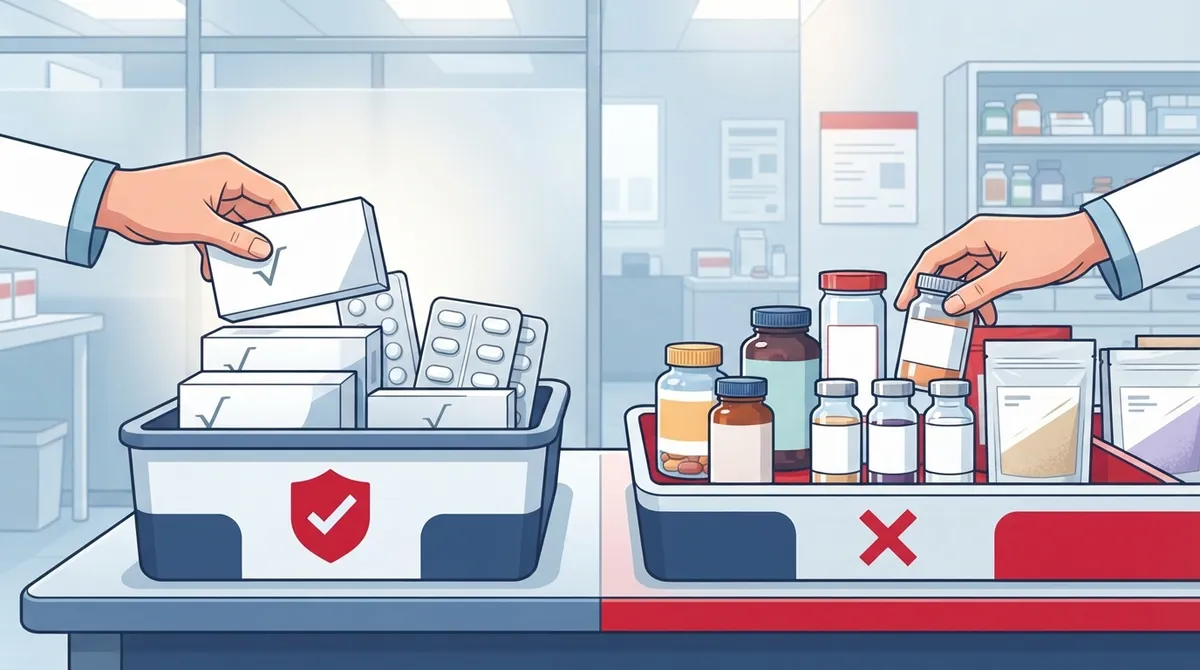
Step 1: Separate FDA-Approved Medicines From Everything Else
The first step in evaluating any peptide stack with GLP-1 in Tampa is sorting each ingredient into the right category. Not all peptides carry the same level of evidence or oversight.
|
Category |
Examples |
What It Means for You |
|---|---|---|
|
FDA-approved GLP-1 or GIP/GLP-1 products |
Semaglutide and tirzepatide brand products |
Reviewed for specific indications, with known safety data |
|
Compounded versions |
Pharmacy-prepared semaglutide or tirzepatide |
Not FDA-approved; not reviewed for safety, effectiveness, or quality before marketing |
|
Other wellness peptides |
Peptides sold for recovery, anti-aging, or energy |
Evidence varies widely; many lack strong human trial data |
|
Research-use-only products |
Items labeled "not for human consumption" |
Not intended for patient use; quality is unverified |
Ask your provider to place every item in a proposed plan into one of these rows. If a clinic cannot do this clearly, that is a warning sign.
Step 2: Understand What the Evidence Supports
The strongest evidence applies to GLP-1 medicines used alone, under medical supervision. The World Health Organization issued a 2025 obesity guideline that conditionally supports long-term use of GLP-1 receptor agonists or GIP/GLP-1 dual agonists for adults living with obesity. That guidance rests on trials of liraglutide, semaglutide, and tirzepatide. Those trials ran from 26 to 240 weeks, with a median of 52 weeks.
Notice what the guideline does not say. It does not recommend an unspecified peptide stack. It also describes long-term treatment as continued use for at least six months, and it applies to adults with obesity, not to everyone who wants to lose a few pounds.
When a marketing claim says a stack "boosts" GLP-1 results, ask for the human studies behind it. Animal data, small case reports, and testimonials are not the same as controlled trials. Our guide on GLP-1 peptide therapy versus traditional diet plans offers more context on how these approaches compare.
Step 3: Know the Added Risks of Combining Products
Every medicine carries side effects. GLP-1 medicines commonly cause gastrointestinal effects such as nausea, vomiting, diarrhea, and constipation. When you add other peptides, three problems can appear.
- Harder side effect tracking: If you feel unwell, neither you nor your clinician can tell which product caused it.
- Unknown interactions: Many peptides have little or no formal interaction data.
- Compounding of dosing errors: More vials and more injection schedules raise the chance of mistakes.
These risks are not theoretical. A clinician should review your full medication list, medical history, contraindications, and monitoring needs before any treatment begins. Those who have a history of pancreatitis, certain thyroid conditions, or kidney problems need especially careful review. For a broader look at safety, see our article on whether GLP-1 is safe for weight loss.
Step 4: Check the Source and Sterility of Every Product
Sourcing is one of the biggest safety issues in the peptide market. The FDA states that compounded drugs are not FDA-approved. The agency does not review them for safety, effectiveness, or quality before they reach patients. Compounding is generally meant to meet a patient-specific need that an approved drug cannot meet. It is not a blanket substitute for an approved product.
The FDA has also reported dosing errors with compounded injectable semaglutide, including cases that required hospitalization. Separately, its safety update cited 990 adverse-event reports tied to compounded semaglutide and more than 730 tied to compounded tirzepatide as of May 31, 2026. The FDA cautions that such reports do not prove causation and may be underreported. Even so, they show why sourcing matters.
Use this checklist before accepting any injectable:
- Ask whether the product is an FDA-approved medicine or a compounded preparation.
- Ask which licensed pharmacy prepared and dispensed it.
- Ask for the exact concentration and how many units equal one dose.
- Confirm who teaches you to draw up and inject the product.
- Never buy products labeled "research use only" for personal injection.
If you want a deeper look at one popular peptide, read our overview of BPC-157 safety for wellness patients.
Step 5: Never Reconstitute or Adjust Doses on Your Own
Many online peptide products arrive as powder that must be mixed with a liquid. This step is where errors happen. A small math mistake can lead to a dose that is several times too high.
Patients should not independently combine, reconstitute, or adjust injectable products. Dosing and administration should always be confirmed with the prescribing clinician and the dispensing pharmacy. If a product comes with unclear instructions, stop and call your provider before using it.
This rule applies to people who feel confident with injections too. Experience with one product does not carry over to another with a different concentration.
Step 6: Ask the Right Questions at Your Tampa Consultation
A good consultation is a two-way conversation. You are not just buying a service. You are choosing a medical partner. Bring this list to your first visit.
- Which exact medicines are you proposing, and are they FDA-approved?
- What is the evidence for each ingredient, and for the combination?
- What labs or screening will you order first?
- How will you monitor side effects, and how often will we follow up?
- What happens if I want to stop?
- What nutrition, activity, and sleep support comes with the plan?
Be cautious if a clinic promises specific weight loss numbers, uses urgent sales pressure, or avoids discussing risks. Availability in a local clinic does not prove clinical evidence or FDA approval.
Step 7: Build a Foundation of Evidence-Based Obesity Care
Medication works best as one part of a bigger plan. A strong program in the Tampa area should include several pieces working together.
|
Program Element |
Why It Matters |
|
|---|---|---|
|
Baseline labs and health screening |
Finds conditions that affect medicine choice and safety | |
|
Body composition and metabolic testing |
Tracks fat and muscle, not just scale weight |
|
|
Nutrition guidance |
Supports protein intake and muscle preservation |
|
|
Physical activity plan |
Protects lean mass and supports long-term maintenance |
|
|
Scheduled follow-up |
Allows dose changes and early side effect management |
Technology can make this process more precise. At InCare, tools such as body composition analysis and metabolic breath analysis help clinicians see what is happening inside your body. This data guides decisions instead of guesswork.
Step 8: Know the Warning Signs and When to Call Your Clinician
Mild nausea early in treatment is common. Some symptoms need prompt medical attention. Contact your clinician right away if you experience any of the following:
- Severe or persistent abdominal pain, especially pain that spreads to your back
- Repeated vomiting or an inability to keep fluids down
- Signs of dehydration, such as dizziness or very dark urine
- Swelling, hives, or trouble breathing after an injection
- A lump or swelling in the neck, or trouble swallowing
Call 911 or go to an emergency department for severe allergic reactions or trouble breathing. Keep a simple log of doses, symptoms, and any new supplements. This record helps your clinician spot patterns quickly.
Why Clinician-Led Care Matters in Tampa
Stacking products is easy to market and hard to manage safely. A clinician-led approach slows the process down in the right ways. It starts with your history, your goals, and your labs. It then selects the simplest effective plan, not the longest list of products.
For many patients, this means starting with a single, appropriate GLP-1 option and measuring results before adding anything else. If a second therapy is ever considered, it should have a clear reason, a monitoring plan, and a stopping rule. You can learn more about how these medicines work in our guide to choosing the best injection for weight loss, and review realistic budgeting in our article on weight loss injection costs.
InCare offers physician-supervised care at its Tampa and Riverview locations, combining primary care, medical weight loss, and wellness services under one roof. Our team can review your goals, explain what is and is not supported by evidence, and build a plan around your health. You can read what patients say by visiting InCare on Google, or follow our updates on Instagram.
For a broader look at peptide care in the area, our overview of peptide therapy in Tampa explains how we approach this category with safety first. You can also meet the InCare providers who guide each plan.
Conclusion
A peptide stack with GLP-1 in Tampa may sound like a shortcut, but the term has no standard medical definition. The best path is a careful one. Sort every ingredient by approval status, confirm the evidence, verify the source, and never adjust injectables on your own. Pair any medication with nutrition, movement, and regular follow-up.
Most importantly, work with a clinician who explains the risks as clearly as the benefits. That approach protects your health and gives you the best chance of lasting results.
Ready to talk through your options with a care team that puts evidence first? Book Now to schedule a consultation, or contact InCare with any questions before your visit.
FAQs
Q: What does "peptide stack with GLP-1" mean?
A: It is a loosely used wellness phrase, not a defined medical treatment. It usually means combining a GLP-1 or GIP/GLP-1 medicine, such as semaglutide or tirzepatide, with other peptides marketed for weight loss, recovery, or wellness. No major guideline endorses a specific stack.
Q: Is it safe to combine other peptides with semaglutide or tirzepatide?
A: Safety depends on the exact products, doses, and your health history, and the evidence for combinations is not established. Combining medicines can add side effects and make problems harder to trace. A clinician should review your medications, history, and monitoring needs before any combination.
Q: Are peptide stacks with GLP-1 medications FDA-approved?
A: No peptide stack as a combination has been established by FDA approval. Semaglutide and tirzepatide have FDA-approved products for specific indications, but that does not prove that combining them with other peptides is safe or effective. Compounded products are also not FDA-approved.
Q: What should I ask a Tampa provider before starting a GLP-1 or peptide treatment?
A: Ask whether each product is FDA-approved or compounded, which pharmacy supplies it, and what evidence supports it. Also ask about lab testing, side effect monitoring, follow-up visits, and nutrition and activity support.
Q: What are the warning signs to watch for with GLP-1 medicines?
A: Seek prompt care for severe or persistent abdominal pain, repeated vomiting, signs of dehydration, swelling or hives after an injection, or a neck lump with trouble swallowing. Common mild effects include nausea and diarrhea, but worsening symptoms should always be reported to your clinician.