Key Takeaways
- Florida Blue HMO networks differ by plan: a doctor in one Florida Blue network is not automatically in another, so match the provider to your exact plan name on your ID card.
- HMO plans generally use a primary care provider (PCP) to coordinate care and may require PCP referrals for specialists, while PPO plans usually offer more flexibility with less restrictive referrals.
- Before booking, verify network status using the online directory, call the doctor's office, and confirm with Florida Blue using the number on your ID card, since directories can be outdated.
- Ask about your copay, whether your deductible applies to routine visits, and whether preventive screenings are covered at no cost under your specific plan.
- Out-of-network non-emergency care is often not covered under an HMO, so choosing an in-network doctor helps avoid large unexpected bills.
- Choose an HMO for coordinated care and predictable costs, or a PPO if you want broader provider choice and direct specialist access and can accept potentially higher costs.
Finding the right doctor is one of the biggest steps in using your health insurance well. If you are shopping for Florida Blue HMO doctors, you probably have a few questions. Who is in my network? Do I need a referral? What will I pay? Meanwhile, many people wonder whether a PPO plan would give them more freedom.
This guide compares Florida Blue HMO plans with Florida Blue PPO plans. It explains how each one handles primary care, specialists, referrals, and costs. It also shows how to verify that a doctor is in your network before you book. Always confirm details in your own plan documents, since benefits vary by plan.
Whether you are a busy parent, a young professional, or someone focused on prevention and wellness, the right plan structure can save time and money. Let's break it down in plain terms.
What Are Florida Blue HMO Doctors?
Florida Blue HMO doctors are clinicians who take part in the network for your specific HMO plan. Current Florida Blue HMO options include plans such as myBlue, BlueCare, and SimplyBlue. The exact network and benefits depend on the plan you choose.
In general, an HMO uses a primary care provider (PCP) as the main point of contact for your care. Your PCP handles routine and sick visits. This doctor can also order tests, coordinate referrals, and help with prior authorizations when they are required.
A key point to remember: a doctor who joins one Florida Blue network is not automatically in every Florida Blue network. Always confirm the exact plan and network with both the online directory and the doctor's office.
Florida Blue HMO vs. PPO: Side-by-Side Comparison
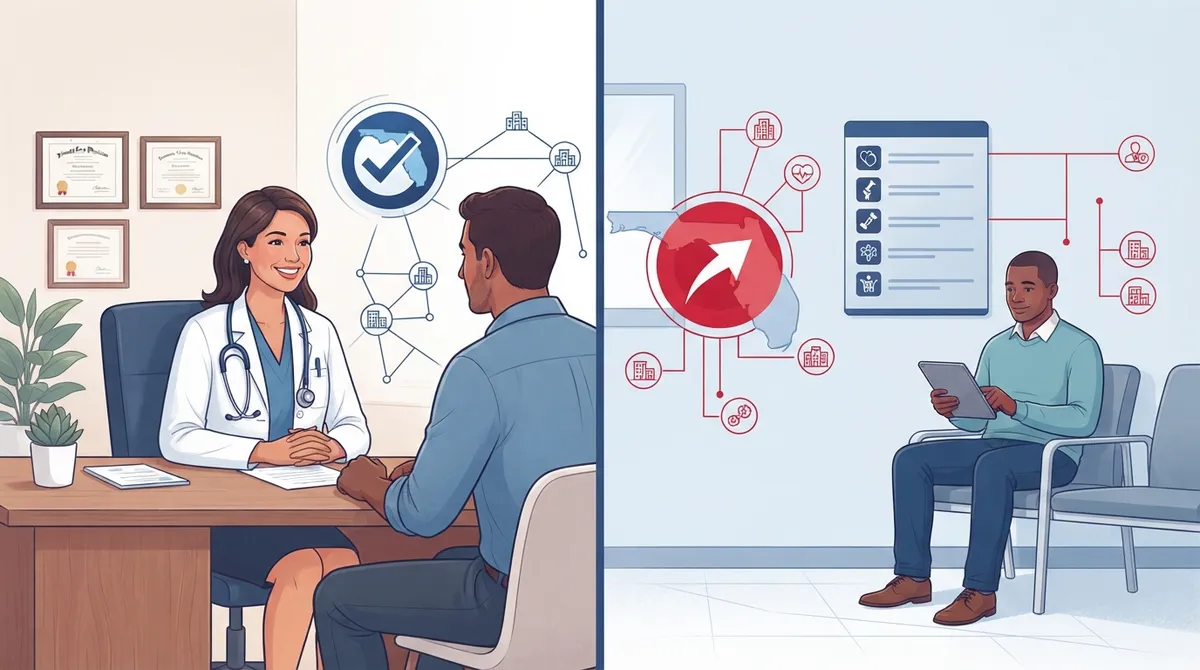
An HMO and a PPO both help pay for care. They differ in how much choice you have and how you reach specialists. The table below shows common differences. Your own plan documents have the final word.
|
Feature |
Florida Blue HMO |
Florida Blue PPO |
|---|---|---|
|
Primary care provider |
Generally used to coordinate care |
Often not required |
|
Network use |
In-network care generally required for non-emergency services |
More flexibility, with different costs in and out of network |
|
Referrals |
May be required for some services; varies by plan |
Typically less restrictive |
|
Out-of-network care |
Often not covered except emergencies or as plan terms provide |
May be partly covered at a higher cost |
|
Example plans |
myBlue, BlueCare, SimplyBlue |
BlueOptions |
In short, an HMO tends to emphasize coordination and staying in network. A PPO tends to emphasize flexibility. Neither is better for everyone. The best choice depends on how you use healthcare.
How HMO Plans Handle Primary Care
With an HMO, your PCP is the hub of your care. This can be a real advantage. One doctor knows your history, your medications, and your goals. That makes it easier to spot patterns, catch problems early, and avoid repeated tests.
A strong PCP relationship supports prevention. Routine screenings, vaccines, and chronic condition management all start in the primary care office. For a deeper look at this role, read what a primary care physician does for your health.
Florida Blue also describes some cost-saving options at designated Value Choice Providers. Certain plans may offer reduced-cost primary care or other services at these providers. Eligibility and cost-sharing rules apply, so check your plan first.
How PPO Plans Handle Primary Care
PPO plans usually give you more room to choose. You may be able to see a specialist without first visiting a PCP. You may also see out-of-network providers, though you will likely pay more.
That flexibility can help people who travel often or want direct access to specialists. However, it can also lead to scattered care. Without one doctor guiding the big picture, records and treatment plans can become fragmented. The article on fragmented care vs. coordinated care explains why that matters.
Even with a PPO, having a trusted primary care doctor is wise. Many PPO members still pick a PCP for ongoing support.
Referrals, Specialists, and Prior Authorizations
Referral rules are one of the most common sources of confusion. Here is a simple way to think about them.
- HMO members: Many services may need a referral from your PCP, depending on the plan and the service.
- PPO members: Referrals are often less strict, but some services may still need prior authorization.
- Emergencies: Emergency care is handled differently from routine care, so review your plan terms.
Because rules vary, check your Evidence of Coverage or call the number on your insurance ID card. That small step can prevent a surprise bill later.
How to Find a Florida Blue HMO Doctor Near You
Follow these steps to find and confirm an in-network doctor.
- Log in to your member account or app. Use Florida Blue's online provider search to look for primary care doctors in your plan's network.
- Filter by your exact plan. Choose the specific HMO plan listed on your card, not just the company name.
- Narrow by location and needs. Look for offices near home or work, and check hours, languages, and telehealth options.
- Call the doctor's office. Ask if they accept your exact plan and are taking new patients.
- Confirm with Florida Blue. Directory data can change, so call the number on your ID card if anything looks unclear.
- Select your PCP. According to Florida Blue, members can choose or change their PCP. Procedures vary by plan.
If you need help finding a provider who is open to new patients, this guide on finding doctors accepting new patients near you offers useful tips.
What If Your Doctor Is Not Listed?
Sometimes a doctor you want does not appear in the directory. Do not give up right away. Directories can lag behind real changes.
- Call the provider's office and ask about your exact plan name.
- Call Florida Blue using the number on your ID card.
- Ask for written confirmation of network status when possible.
- Check again before each new type of service, such as lab work or imaging.
If the doctor is truly out of network, an HMO may not cover non-emergency visits. In that case, it may be better to choose an in-network option than to risk a large bill.
Costs: What Will You Pay?
Costs depend on your plan, your deductible, and the type of service. Primary care visits may have a copay, or they may fall under a deductible. Some visits at Value Choice Providers may cost less, but not every plan qualifies.
Before you book, ask these questions:
- What is my copay for a primary care visit?
- Does my deductible apply to routine visits?
- Are preventive screenings covered at no cost under my plan?
- Are lab tests done in the office or sent elsewhere?
On that last point, in-office testing can be faster and more convenient. See how in-house vs. external lab testing compares.
Which Plan Fits Different Types of Patients?
No single plan fits everyone. Consider these common situations.
Busy Families
Families often value one trusted doctor who knows everyone. An HMO's PCP model can fit well here. It supports well-child visits, vaccines, and sick visits in one place. Learn more about family primary care and why it matters.
Tech-Savvy Professionals
If you like apps, online booking, and virtual visits, look for a PCP who offers telehealth. Many HMO members find that a coordinated PCP plus digital tools saves time.
Wellness-Focused Adults
If you want advanced prevention, such as cancer screenings, body composition tracking, or gene testing, ask how your plan treats those services. Some wellness services may be covered, while others may be self-pay. Understanding that split helps you budget well.
Women Building a Care Relationship
Many women have an OB/GYN but no primary care doctor. A PCP can fill that gap with whole-body wellness visits and screenings. This is a strong first step toward preventive care.
Why Choosing the Right Primary Care Practice Matters
Network status is only part of the picture. The quality of the doctor-patient relationship matters just as much. Look for a practice that listens, explains clearly, and offers modern tools.
At InCare, patients in Tampa and Riverview receive personalized primary care that blends medical expertise with state-of-the-art technology. The team focuses on prevention and whole-body optimization, from cancer screening to weight loss programs and DNA gene testing. InCare also offers urgent care when you cannot wait for a regular visit. You can read what patients say by choosing to visit us on Google — InCare, where the clinic holds a strong rating.
Because insurance participation can differ from practice to practice, always confirm your plan with the office before you schedule. If you are comparing practices, these signs you've found the right primary care practice can help.
Common Mistakes to Avoid
Many people run into the same problems. Avoid these to protect your time and wallet.
- Assuming all Florida Blue networks are the same. They are not. Match the doctor to your exact plan.
- Skipping the phone call. Directories can be out of date.
- Ignoring referral rules. A missing referral can mean a denied claim.
- Waiting until you are sick. Establish care early so you have a doctor ready.
For more help, review mistakes to avoid when choosing a primary care doctor.
Social Proof and Staying Informed
Patients often learn about a practice through social media before they visit. You can follow InCare updates on Instagram, Facebook, and TikTok to see health tips, services, and clinic news.
Final Verdict: HMO or PPO?
Choose an HMO if you value coordinated care, a single guiding doctor, and often lower predictable costs. Choose a PPO if you want broader choice and direct access to specialists, and you accept possibly higher costs. In both cases, a strong relationship with a primary care doctor is the foundation of good health.
Whichever plan you pick, verify your doctor's network status before every new type of visit. Use the online directory, call the office, and confirm with Florida Blue. That simple routine can save you from surprise bills.
Ready to take the next step? Book your visit with InCare today, or contact our team with questions about care in Tampa and Riverview.
FAQs
Q: How do I find a Florida Blue HMO doctor near me?
A: Log in to your Florida Blue member account or app and use the online provider search. Filter by your exact HMO plan and location, then call the office to confirm they accept your plan and are taking new patients.
Q: Do Florida Blue HMO plans require a primary care doctor?
A: Florida Blue HMO plans such as myBlue, BlueCare, and SimplyBlue generally use a primary care provider to help coordinate your care. Exact requirements vary by plan, so check your Evidence of Coverage.
Q: Can I change my Florida Blue HMO primary care physician?
A: According to Florida Blue, members can select or change their PCP through their member account or by contacting Florida Blue. Availability and change procedures may vary by plan.
Q: Do I need a referral to see a specialist with Florida Blue HMO?
A: Referral rules depend on your plan and the type of service. Many HMO services may require a PCP referral, so confirm with your plan documents or the number on your insurance ID card before booking.
Q: What should I do if my doctor is not listed in the Florida Blue directory?
A: Call the doctor's office and ask whether they accept your exact plan. Then call the number on your insurance ID card, since directory information can change and may not always be current.