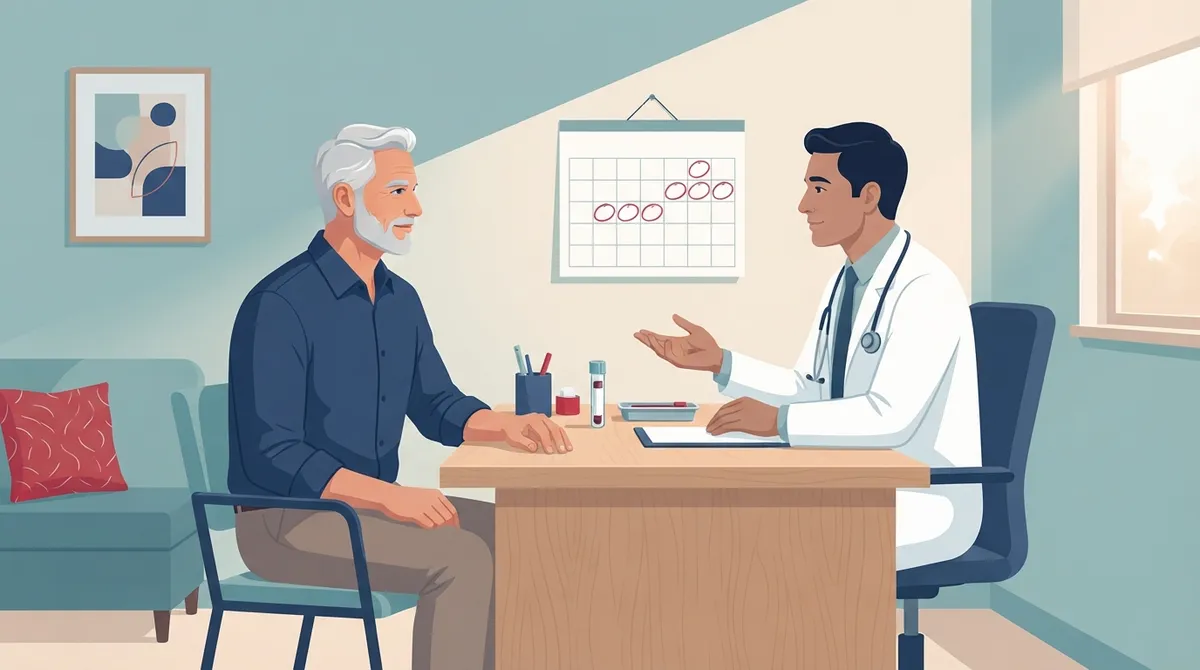
Key Takeaways
- Skipping follow-up is the most common mistake: book your next visit before leaving the first one, since problems like slow-building side effects can go unnoticed without review.
- Follow-up timing should be drug-specific and tied to your health history; ask your clinician why they chose your interval, as a vague answer is a red flag.
- Compounded peptides are not FDA-reviewed for safety, effectiveness, or quality, so confirm the exact product, strength, and whether the compounding pharmacy is properly licensed at every visit.
- Keep a running list of all prescriptions, supplements, doses, and start dates, since peptides can interact with other medicines and a full reconciliation should happen each visit.
- Report persistent or worsening side effects promptly, seek urgent care for severe allergic reactions or breathing trouble, and consider reporting suspected adverse events to FDA MedWatch.
- Treat clinic marketing as non-evidence: ask what supports your use, distinguish FDA labeling from published trials and promotion, and confirm the clinician holds an active Florida license.
Starting a peptide is the easy part. The harder part is what happens afterward. Many people in Tampa leave a visit with a prescription and a plan, then never return for a proper review. That gap is where problems start. Missed side effects, unclear goals, and unverified products can all slip through when no one is watching.
Good peptide therapy follow up care in Tampa is not a single standard schedule. It is a clinician-led process built around your health history, your goals, and the exact product you are using. In 2026, patients have more options than ever, and the evidence behind them varies widely. Some peptide medicines are FDA-approved for specific uses. Many others are not.
This guide covers eight common follow-up mistakes and how to avoid each one. It is written for busy adults, young families, and wellness-minded readers who want a safe, clear approach. We will also explain what a responsible follow-up visit should include and what questions to ask. For personalized care, you can contact InCare with your questions.

What Peptide Therapy Follow-Up Care Actually Means
In primary care and wellness, follow-up means clinician check-ins after a peptide is prescribed or given. The visit reviews symptoms, possible side effects, goals, and whether continuing makes sense. There is no single evidence-based interval that fits every peptide.
Peptides are not one uniform treatment category. Some, including certain GLP-1 medicines, have FDA-approved products for defined conditions. Approval of one peptide does not prove that another peptide works or is safe. Our guide on FDA-approved vs. compounded peptides explains this difference in more detail.
Why Follow-Up Matters More for Compounded Products
The FDA states that compounded drugs are not FDA-approved. The agency does not review them for safety, effectiveness, or quality before they reach patients. Compounding can be appropriate in limited cases under federal and state rules. It is not a substitute for an approved drug when one suits the patient.
The FDA has also raised safety concerns about certain bulk substances proposed for compounding, including BPC-157, CJC-1295, and GHRP-2. Concerns include limited human safety data, impurities, and immune-response risks. Serious adverse-event reports exist for some substances, though cause has not always been established. Because of this, careful follow-up is not optional. You can read more in 4 Facts on BPC-157 FDA Approval Status in 2026.
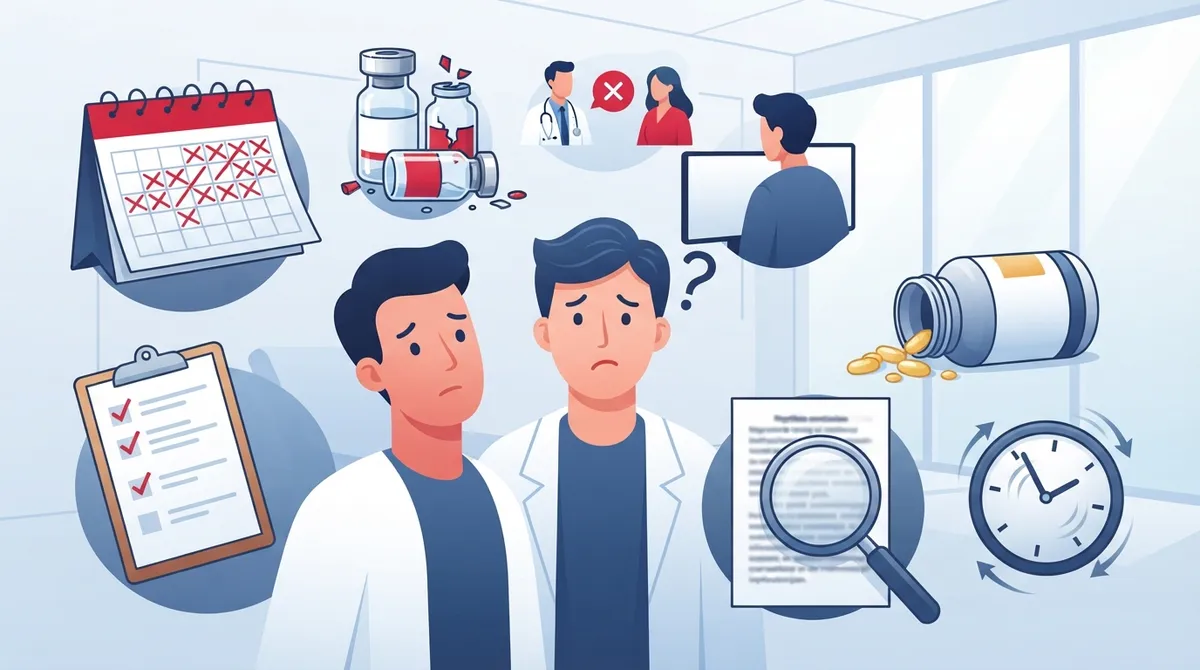
8 Peptide Therapy Follow-Up Mistakes to Avoid
1. Skipping the Follow-Up Visit Entirely
The most common mistake is simply not going back. Without a review, no one checks whether the therapy is helping or causing harm. A clinician cannot catch a slow-building problem if they never see you again.
Book your next visit before you leave the first one. Ask what the clinic expects to review and when. If you are unsure where to begin, book an appointment with InCare to start with a full medical review.
2. Following a One-Size-Fits-All Schedule
Some clinics apply the same check-in dates to every patient. That is a red flag. The right timing depends on the specific drug, the reason you are taking it, and your health profile. A patient with diabetes needs different monitoring than a healthy adult exploring wellness goals.
Ask your clinician why they chose your follow-up interval. A clear, drug-specific answer is a good sign. A vague answer is not.
3. Not Confirming the Exact Product and Source
Every follow-up should confirm exactly what you are taking. That means the peptide name, the strength, the pharmacy, and the lot if available. Compounded products can vary in quality, and the FDA does not review them before marketing.
Bring your vials or packaging to each visit. Ask whether the compounding pharmacy is properly licensed. Our article on 6 Ways to Verify CJC-1295 Quality Before You Try It offers practical verification steps that apply broadly.
4. Forgetting to Reconcile All Medicines and Supplements
Peptides do not exist in isolation. Prescription drugs, over-the-counter products, and supplements can all interact or overlap. A responsible follow-up reviews your full list every time.
Keep a running list on your phone. Include doses and start dates. This simple habit helps your clinician spot problems early. For more on this, see 11 Prescription Management Tips for Better Health in 2026.
5. Ignoring Side Effects Because They Seem Minor
Injection-site redness, mild swelling, or a new rash may seem small. Persistent or worsening symptoms still deserve a call. Early reporting prevents small issues from becoming large ones.
Know the warning signs that need urgent care:
- Severe allergic symptoms such as hives or swelling of the face or throat
- Trouble breathing
- Fainting or sudden dizziness
- Any other acute, serious reaction
For milder but ongoing issues, contact your clinician promptly. Suspected adverse events can also be reported to FDA MedWatch.
6. Using a Generic Monitoring Plan
Monitoring and lab testing should match the drug, the reason for use, and the patient. There is no universal lab panel for all peptides. Be cautious of any clinic that orders the same tests for everyone, or none at all.
Ask your clinician what they are monitoring and why. Ask what results would lead them to change or stop treatment. A thoughtful answer shows the plan is individualized.
7. Treating Marketing Claims as Medical Evidence
Clinic websites and social media often describe peptide benefits in bold terms. Those claims do not prove a peptide is approved, effective, or right for you. Marketing is not clinical evidence.
At each follow-up, ask what evidence supports your use. Distinguish between FDA labeling, published trials, and clinic promotion. Our piece on peptides for recovery and what the evidence really shows can help you read claims more critically.
8. Not Knowing Who to Call Between Visits
Problems rarely wait for your next appointment. Yet many patients do not know whom to contact after hours or how side effects are handled. That uncertainty can delay care when it matters most.
Before starting, ask for a clear contact path. Find out whether visits are in person or by telehealth, and how quickly the clinic responds to concerns.
What a Strong Follow-Up Visit Should Include
A well-run visit follows a clear structure. Use this list as a quality check for your own care.
- Goal review. Your clinician revisits why you started and whether your goals have changed.
- Symptom and side-effect check. You discuss any new or ongoing symptoms in detail.
- Product confirmation. The exact peptide, dose, and pharmacy source are verified.
- Medication reconciliation. All medicines and supplements are reviewed together.
- Medical history update. New diagnoses, pregnancy plans, or contraindications are assessed.
- Appropriate monitoring. Labs or measurements are ordered only if they fit your case.
- Informed discussion. Known uncertainties and risks are documented and explained.
- Decision and next steps. You and your clinician decide to continue, adjust, or stop.
Follow-Up Elements by Situation
The table below shows how follow-up focus can differ. It is a general illustration, not a protocol. Your clinician will tailor the plan to you.
|
Situation |
Typical Follow-Up Focus |
Key Question to Ask |
|---|---|---|
|
FDA-approved peptide medicine for a labeled condition |
Response to treatment, side effects, labeled monitoring |
What does the label recommend for monitoring? |
|
Compounded peptide product |
Product source, purity concerns, adverse effects |
Which pharmacy made this and is it licensed? |
|
Peptide with FDA safety concerns on file |
Closer symptom review, risk-benefit reassessment |
Is continuing still justified for me? |
|
Patient with other chronic conditions |
Drug interactions, condition control, coordinated care |
How does this affect my other treatments? |
How to Vet a Tampa Provider for Follow-Up Care
Not every clinic handles follow-up equally well. Take a few minutes to check before you commit. Our guide on 15 Questions to Ask a Peptide Therapy Clinic in Tampa goes deeper, but start with these basics:
- Confirm the clinician holds an active Florida license.
- Ask who prescribes and who reviews your progress.
- Verify that any compounding pharmacy is properly licensed.
- Find out if follow-up visits are in person, by telehealth, or both.
- Learn how results and side effects are handled between visits.
- Ask for an after-hours contact.
You may also want to read How to Vet Peptide Therapy in Tampa Safely for added guidance.
Why Primary Care Is a Strong Home Base
A primary care setting gives you one team that knows your whole health picture. That matters when a peptide interacts with a chronic condition, a medicine, or a screening result. At InCare, personalized primary care and advanced wellness services work together, with locations in Tampa and Riverview. You can see what patients say by visiting our InCare reviews on Google.
Coordinated care also supports prevention. Cancer screenings, metabolic testing, and body composition tracking can add useful context to any wellness plan. Our resource on choosing the best primary care doctor in Tampa explains what to look for.
Telehealth and Digital Follow-Up
Many Tampa patients want flexible visits. Telehealth can work well for symptom reviews, goal checks, and medication discussions. Some situations still need an in-person visit, such as injection-site concerns, vital signs, or lab draws.
Ask your clinic which parts of follow-up can be virtual. A good practice will explain the limits clearly. Digital tools are helpful, but they should support, not replace, clinical judgment.
Preparing for Your Next Follow-Up
A little preparation makes each visit more useful. Gather these items before you go:
- Your current medicine and supplement list, with doses
- The product packaging or pharmacy label
- A short symptom log with dates
- Questions about goals, evidence, and next steps
- Any recent lab results from other providers
For a broader view of safe use, review How to Evaluate Peptide Therapy for Wellness Safely. If cost is on your mind, what monthly peptide therapy costs in Tampa is a helpful reference. You can also follow health updates from us on Instagram, and visit Facebook or TikTok for wellness tips.
Conclusion: Make Follow-Up the Priority
Peptide therapy is only as safe as the care around it. The eight mistakes above are all avoidable with the right questions and the right team. Insist on an individualized plan, a verified product, clear monitoring, and a clear contact path. Treat marketing claims with caution and ask for evidence.
InCare offers personalized primary care and wellness services in Tampa and Riverview, with a focus on prevention and whole-body health. If you want clinician-led guidance, book your visit with InCare today and take the next step with confidence.
FAQs
Q: What happens at a peptide therapy follow-up appointment in Tampa?
A: A clinician reviews your goals, symptoms, and any side effects. They also confirm the exact product and source, reconcile your medicines and supplements, and decide whether to continue, adjust, or stop. Labs are ordered only if they suit your specific drug and health profile.
Q: How often should I follow up after starting peptide therapy?
A: There is no single evidence-based interval that fits every peptide. The right schedule depends on the specific medication, the reason for use, and your health history. Ask your clinician to explain why they chose your timeline.
Q: Are peptide therapies FDA-approved?
A: It depends on the specific peptide. Some, including certain GLP-1 medicines, have FDA-approved products for defined conditions. Compounded peptides are not FDA-approved and are not reviewed by the agency for safety, effectiveness, or quality before marketing.
Q: What side effects should I report after a peptide injection?
A: Seek urgent care for severe allergic symptoms, trouble breathing, fainting, or other acute serious reactions. Contact your clinician promptly about persistent or worsening symptoms or injection-site problems. You can also report suspected adverse events to FDA MedWatch.
Q: How can I check that a Tampa clinician and pharmacy are properly licensed?
A: Confirm the clinician holds an active Florida license and ask which pharmacy supplies your product. Ask whether that compounding pharmacy is properly licensed. A trustworthy clinic will answer these questions openly.