
Key Takeaways
- Do not combine semaglutide with another semaglutide product or a second GLP-1 receptor agonist unless your prescriber directs it, since this raises side-effect risk and makes problems hard to trace.
- Evidence for combining wellness peptides like BPC-157, CJC-1295, or ipamorelin with semaglutide is thin; no robust combination trials exist, so safety is not established.
- Compounded or unverified peptide products may have uncertain identity, strength, and purity, so ask whether a product is FDA-approved and request documentation of purity and third-party testing.
- Share every prescription, supplement, injection, and online product with your primary care clinician, and add new products one at a time so side effects can be traced to a single cause.
Social media makes it sound simple. Add a peptide to your weekly semaglutide shot, and you will lose fat faster, heal faster, and feel better. But is it safe to stack peptides with semaglutide? The honest answer is this: it depends on the exact peptide, the exact product, and your own health history. There is no general rule that says stacking is safe.
Semaglutide is already a peptide medicine. The word "peptide" covers hundreds of different compounds, and most wellness-marketed peptides have little human safety data. Many are not FDA-approved for weight loss. Some are sold in forms with unknown quality.
This guide walks through seven common mistakes people make when they combine these products. It is written for busy adults who want clear facts, not hype. It also explains how a primary care clinician can review your plan safely.
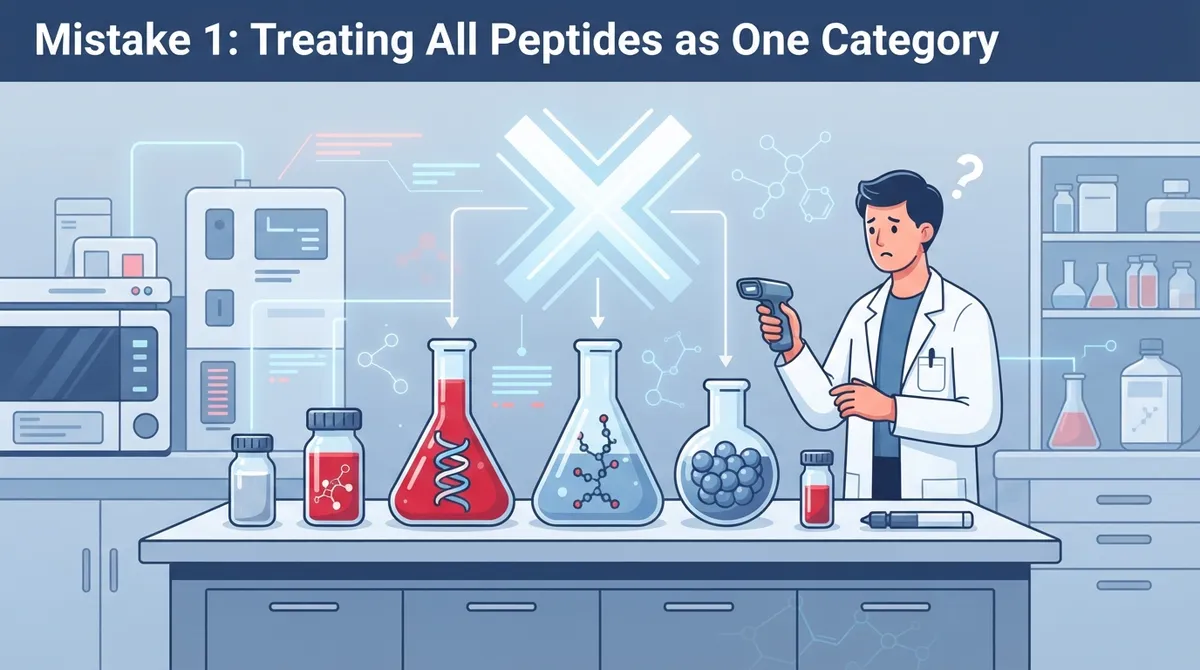
Mistake 1: Treating All Peptides as One Category
The first error is assuming "peptide" means one type of treatment. It does not. A peptide is simply a short chain of amino acids. Semaglutide is a peptide. So are insulin and some collagen supplements. Their effects and risks are completely different.
When someone asks if it is safe to stack peptides with semaglutide, the real question is about a specific second product. Its dose, route, purpose, and quality all matter. A peptide used for skin care is not the same as one used for appetite or growth hormone release.
For a plain-language primer, read How to Understand Peptides Explained by Your Doctor.

Mistake 2: Assuming Wellness Peptides Have Proven Safety Data
Peptides such as BPC-157, CJC-1295, and ipamorelin are popular online. But evidence for combining them with semaglutide is thin. They are not FDA-approved weight-loss treatments. No reliable clinical statistic shows that these combinations are safe or beneficial. Strong combination trials simply do not exist.
That gap matters. Without trials, no one can say how these products interact with semaglutide over months of use. You would be relying on forum posts and marketing claims.
You can learn more about individual products here:
- 5 BPC-157 Buying Mistakes That Put Your Health at Risk
- 9 Facts on Ipamorelin FDA Approval Status in 2026
- What Is CJC-1295 and Is It Safe to Try?
Mistake 3: Doubling Up on GLP-1 Medications
This is the most clear-cut danger. Do not combine semaglutide with another semaglutide product. Do not add a second GLP-1 receptor agonist unless your prescriber directs it. FDA labeling for Wegovy warns against such combinations.
Some online sellers market blends that contain more than one weight-loss compound. Stacking these on top of a prescription can raise side-effect risk. It also makes it hard to know which product is causing a problem.
If you are comparing options, see Retatrutide vs. Semaglutide: Which Wins for Weight Loss? and 6 Facts on Tirzepatide vs Semaglutide Weight Loss.
Mistake 4: Ignoring How Semaglutide Already Affects Your Body
Semaglutide commonly causes stomach-related side effects. These include nausea, vomiting, diarrhea, constipation, and abdominal pain. If you add another product that also affects appetite, digestion, blood sugar, or fluid balance, symptoms can overlap.
Then a simple question becomes hard to answer: which product caused this? A clinician cannot adjust your care well if two or three new variables start at once.
The table below shows why changing one thing at a time matters.
|
Situation |
Why It Complicates Care |
|---|---|
|
Starting semaglutide and a peptide the same week |
New nausea or fatigue cannot be traced to one cause |
|
Raising semaglutide dose while adding a peptide |
Side effects may be blamed on the wrong product |
|
Using a product that also affects appetite or glucose |
Overlapping effects may be hard to separate |
|
Taking several unverified injectables |
Quality and dose are unknown |
To understand the baseline drug first, read How to Understand Semaglutide's Mechanism of Action and 10 Semaglutide Side Effects Patients Must Know (2026).
Mistake 5: Overlooking Absorption and Medication Interactions
Semaglutide slows gastric emptying. That means food and pills may move through your stomach more slowly. FDA labeling advises caution or monitoring when you take oral medicines at the same time, especially drugs with a narrow therapeutic index or those that need regular monitoring.
Clinical pharmacology studies found no clinically relevant interaction for the medicines tested. Even so, monitoring is advised where appropriate. One example involves oral semaglutide (Rybelsus), where levothyroxine exposure rose by 33% in an interaction study. That finding applies to that specific formulation and should not be applied to every peptide combination.
The lesson is simple. Tell your clinician about every pill, supplement, and injection you use. A full medication review catches problems before they start. See 11 Prescription Management Tips for Better Health in 2026 for a practical checklist.
Mistake 6: Skipping Your Medical History Review
Semaglutide carries important precautions. Labeling includes warnings about pancreatitis and gallbladder disease. There is a risk of low blood sugar when it is used with insulin or sulfonylureas. It is also contraindicated for people with a personal or family history of medullary thyroid carcinoma or MEN2.
Adding any new therapy on top of these precautions should never be a guess. A primary care clinician can check your history, labs, and current medicines first. This step is quick, and it can prevent serious harm.
Know the warning signs. Seek urgent care if you have:
- Severe or persistent stomach pain, with or without vomiting
- Yellowing of the skin or eyes
- Signs of low blood sugar, such as shakiness, sweating, or confusion
- Swelling or a lump in the neck, or trouble swallowing
- Signs of a serious allergic reaction, such as swelling of the face or trouble breathing
For more on what to watch for, review Does Semaglutide Raise Your Pancreatitis Risk? and 5 Signs of Semaglutide Allergic Reaction to Watch.
Mistake 7: Trusting Compounded or Unverified Products
Quality is a major concern. Compounded or unapproved peptide products can have uncertain identity, strength, sterility, and purity. The FDA has raised safety concerns about compounded semaglutide. These include dosing errors and the use of salt forms such as semaglutide sodium or acetate. Those are different active ingredients from the ones in approved products.
An injectable that is mislabeled or contaminated can cause real harm. Online sellers rarely show proof of testing. Research-use-only labels also mean the product was never intended for human use.
Use this short checklist before you consider any peptide product:
- Ask whether the product is FDA-approved and for what use.
- Ask who prepares it and whether the source is a licensed pharmacy.
- Request documentation of purity and third-party testing.
- Confirm the dose, route, and storage instructions in writing.
- Share everything with your primary care clinician before you start.
These guides can help you vet a source: FDA-Approved vs. Compounded Peptides: Which Wins? and 15 Compounded Semaglutide Tampa Mistakes to Avoid in 2026.
What a Safer Approach Looks Like
The safest path is not a ready-made stack. It is a supervised plan built around your goals and health. A thoughtful primary care visit usually includes these steps:
- Medication reconciliation. Your clinician lists every prescription, supplement, and injection you use, including items bought online.
- Risk screening. Your history is checked for conditions that raise risk with semaglutide.
- One change at a time. New products are added slowly, so side effects can be traced.
- Monitoring. Weight, labs, symptoms, and tolerance are tracked over time.
- Clear stopping rules. You know which symptoms mean you should call or seek care.
This is the approach used at InCare, a personalized primary care and wellness clinic serving Tampa and Riverview, Florida. The team combines medical expertise with tools like metabolic breath analysis, body composition scans, and in-house testing. These help guide weight-loss care in a measurable way. You can read how it works in How Does Medically Supervised Weight Loss Work? and 7 Mistakes When You Combine Peptides With GLP-1 Drugs.
Who Should Be Especially Careful
Some people have even more reason to pause before stacking. Take extra care if you:
- Have a history of pancreatitis or gallbladder disease
- Use insulin or a sulfonylurea
- Take medicines that need close monitoring
- Are pregnant, planning pregnancy, or breastfeeding
- Have a personal or family history of thyroid cancer
Busy parents, high-performing professionals, and wellness-minded adults often feel pressure to optimize everything at once. A clear plan with one clinician is faster and safer than juggling products from several sources.
Bottom Line on Stacking Peptides With Semaglutide
So, is it safe to stack peptides with semaglutide? There is no blanket yes. Evidence is limited for many popular wellness peptides, and doubling up on GLP-1 drugs is a clear risk. Quality problems with unverified products add another layer of concern. The best step you can take is to talk with a clinician who reviews your exact products, doses, history, and other medicines.
You can also follow InCare on Instagram, Facebook, and TikTok for health updates. To see what patients say, visit us on Google — InCare and read reviews of our Tampa Bay care.
Thinking about adding a peptide to your semaglutide plan? Do not guess. Book Now for a medication review with the InCare team, or contact us with questions. We will help you build a plan that is safe, measured, and made for you.
FAQs
Q: Can you take BPC-157 while using semaglutide?
A: There is no strong human evidence that shows this combination is safe or beneficial. BPC-157 is not FDA-approved, and product quality can vary. Talk with your primary care clinician before combining them.
Q: Is it safe to combine semaglutide with CJC-1295 or ipamorelin?
A: Robust combination trials are lacking, so safety is not established. These products are not FDA-approved weight-loss treatments. A clinician should review your history, doses, and other medicines first.
Q: Can semaglutide be used with another GLP-1 medication?
A: Generally, no. Product labeling warns against combining semaglutide with another semaglutide product or another GLP-1 receptor agonist unless your prescriber directs it.
Q: Does semaglutide interact with oral medications or supplements?
A: Semaglutide slows stomach emptying, which may affect how some oral medicines are absorbed. FDA labeling advises monitoring, especially for drugs with a narrow therapeutic index. Always share your full medication and supplement list with your clinician.
Q: Should I tell my doctor about peptides I buy online?
A: Yes. Disclose every prescription, supplement, injection, and online product you use. This allows your clinician to check for interactions and quality concerns before problems develop.