
Key Takeaways
- GHK-Cu is not FDA-approved for injection or for treating any medical condition, and a 2026 systematic review found no peer-reviewed phase III randomized trial supporting it.
- Injectable compounded GHK-Cu carries immunogenicity and impurity concerns, and FDA notes human safety data are limited, so injecting it outside a careful clinical setting is risky.
- 'Category 1' status for non-injectable GHK-Cu is an interim compounding review status, not FDA approval or proof of safety or effectiveness.
- Avoid 'research use only' GHK-Cu vials sold online, since they are not made for human use and carry risks of contamination, wrong dosing, and mislabeling.
- Ask any clinic which exact product and route they offer, its current FDA status, who manufactures it, how quality is tested, and how reactions are monitored.
- Hair regrowth and wound-healing claims are unsupported in humans; thinning hair or slow-healing wounds warrant a primary care evaluation for underlying causes.
Interest in the GHK-Cu peptide in Tampa has grown quickly in 2026. Wellness clinics, med spas, and online sellers all promote it for smoother skin, faster healing, and even thicker hair. The marketing is loud. The human evidence is much quieter. That gap is where most patients make costly or risky mistakes.
GHK-Cu is a naturally occurring copper-binding tripeptide. It has been studied mostly in the lab and in animals, plus a few small human trials of cosmetic creams. It is not an FDA-approved drug for injection or for treating any medical condition. This guide walks through 12 common mistakes, explains what current evidence supports, and shows how to approach GHK-Cu with a licensed clinician. At InCare, we focus on prevention, evidence, and safety first, so you can make informed choices about any wellness product.
What GHK-Cu Peptide Is and What the Evidence Shows
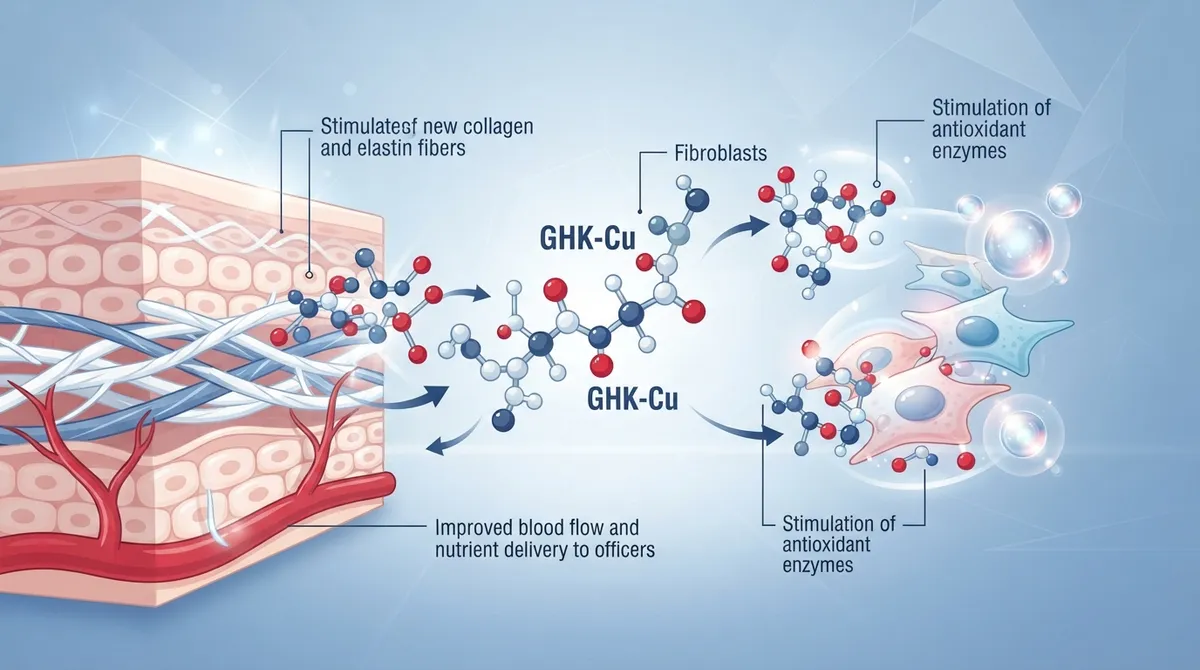
GHK-Cu stands for glycyl-L-histidyl-L-lysine complexed with copper. Researchers have studied it for skin-related effects, including collagen activity and tissue repair signals. Most of those findings come from cell and animal studies, not large human trials.
A 2026 systematic review found that human clinical studies made up only 11 of 64 included studies, or 17.2%. Most human studies were small. The review found no peer-reviewed phase III randomized trial of GHK-Cu. A separate 2026 consumer medical review described two small studies of cosmetic creams that reported better skin thickness or fine-line appearance, while stressing that larger trials are needed.
In plain terms, GHK-Cu is interesting, but it is not proven. Keep that in mind as you read the mistakes below.

Mistake 1: Treating GHK-Cu Like an Approved Medical Treatment
The first mistake is assuming GHK-Cu is a proven therapy. It is not. Injectable GHK-Cu is not FDA-approved, and no product has been approved to treat wounds, hair loss, or any other condition.
Claims such as "heals tissue" or "reverses aging" go beyond what the data show. If a Tampa provider presents GHK-Cu as a sure fix, ask for the evidence and the regulatory status in writing.
Mistake 2: Mixing Up Topical, Compounded, and Injectable Products
Not all GHK-Cu products are the same. The route matters for both safety and regulation. Many patients lump them together and end up with the wrong expectations.
|
Product Type |
Typical Use |
Regulatory Notes |
|---|---|---|
|
Cosmetic copper tripeptide cream or serum |
Skin appearance |
Sold as cosmetic; cannot claim to treat disease |
|
Compounded non-injectable preparation |
Prescription topical or similar |
Not FDA-approved; reported as Category 1 for compounding consideration |
|
Compounded injectable |
Marketed for wellness or repair |
Not FDA-approved; FDA flags immunogenicity concerns and limited human safety data |
|
"Research use only" vials |
Sold online |
Not intended for human use; no quality assurance |
Ask any clinic exactly which form and route they offer. A vague answer is a warning sign.
Mistake 3: Misreading FDA Category 1 Status
Search results report that non-injectable GHK-Cu was placed in Category 1 for consideration in compounding, while injectable GHK-Cu was not. Many people hear "Category 1" and assume it means approved or proven safe. It does not.
Category 1 is an interim review status. It is not FDA approval and not a finding of safety or effectiveness. FDA status can also change. The agency has planned to consult its Pharmacy Compounding Advisory Committee on GHK-Cu, so check the latest FDA listings before you make any decision.
Mistake 4: Ignoring the Safety Concerns With Injectable GHK-Cu
FDA materials note that compounded injectable GHK-Cu may pose immunogenicity risks. This can relate to peptide aggregation and impurities. The agency also notes that human safety data are limited.
Immunogenicity means the immune system may react to the product. Reactions can range from local irritation to more serious responses. Because the safety record is thin, injecting GHK-Cu outside a careful clinical setting is a poor bet.
- Limited human safety data for injections
- Possible aggregation and impurity issues in compounded peptides
- No large controlled trials to define risks
Mistake 5: Believing Hair Regrowth and Wound Healing Promises
GHK-Cu is often marketed for thicker hair and faster healing. The evidence does not support those claims in people. Lab and animal findings do not guarantee results in humans.
If you have hair thinning or a slow-healing wound, those are medical issues that deserve a real workup. Thinning hair can relate to thyroid problems, low iron, hormone shifts, or stress. A wound that will not heal may signal diabetes or circulation problems. A primary care visit can find the cause. For related reading, see Can GHK-Cu Peptides Actually Regrow Thinning Hair?
Mistake 6: Expecting Guaranteed Skin Rejuvenation
Small studies of cosmetic creams reported some improvement in skin thickness or the look of fine lines. That is encouraging, but it is not a guarantee. Results vary, and the studies were small.
Treat any promise of "guaranteed" or "dramatic" change as marketing. A fair approach is to set modest goals and judge results over time. To learn how to track progress honestly, read How to Track GHK-Cu Results Week by Week.
Mistake 7: Buying "Research Use Only" Products Online
Some websites sell GHK-Cu labeled for research only. These products are not made for human use. There is no guarantee of purity, dose, or sterility.
Risks include contamination, wrong strength, and mislabeled contents. A cheap vial is not worth an infection or a bad reaction. If you want to understand buying risks across peptides, see 5 BPC-157 Buying Mistakes That Put Your Health at Risk.
Mistake 8: Skipping a Clinician Evaluation
A good Tampa clinic should evaluate you before offering GHK-Cu. That includes your history, medications, allergies, and goals. A sales pitch is not an evaluation.
Be extra careful if you are pregnant or nursing, managing a medical condition, or using other treatments. Copper-related issues, skin conditions, and drug interactions are worth discussing. For more on safety, see 4 GHK-Cu Interactions to Avoid for Safer Skin Wellness.
Mistake 9: Letting Marketing Replace Evidence
A clinic website that advertises GHK-Cu is not independent proof that it works. Provider marketing is not evidence of safety or effectiveness. One local Tampa-area page advertises topical use, but that is a sales claim, not a study.
Ask pointed questions before you commit. Here is a simple checklist.
- Which exact GHK-Cu product and route do you offer?
- Is it a cosmetic, a compounded preparation, or an injectable?
- What is its current FDA status?
- Who makes it, and how is quality tested?
- What are the known risks and the limits of the evidence?
- Who will monitor me, and how do I report a reaction?
You can find more screening questions in 15 Questions to Ask a Peptide Therapy Clinic in Tampa.
Mistake 10: Not Budgeting for Realistic Costs
Prices vary widely. A compounded cream can cost far more than an over-the-counter product, yet it may not work better. Higher price does not equal higher proof.
Before you pay, ask what you are buying, how long it lasts, and whether follow-up is included. A transparent price breakdown helps you avoid surprises. For help with this, see How to Budget for GHK-Cu Cost at a Wellness Clinic.
Mistake 11: Skipping Basic Skin and Health Care First
Many skin goals are better served by proven basics. Daily sunscreen, a good moisturizer, and treatments with stronger evidence often come first. Sleep, nutrition, and managing chronic conditions also affect skin and healing.
A primary care provider can help you review those foundations and refer you to a dermatologist when needed. Peptides should not replace the basics. Our guide on 11 Skin Repair Steps Doctors Recommend in 2026 covers proven steps worth trying first.
Mistake 12: Not Following Up or Watching for Reactions
If you try a GHK-Cu product, watch your skin and your body. Stop and contact a clinician if you notice redness, swelling, itching, hives, or any trouble breathing. Do not push through a reaction.
- Test any new topical on a small area first
- Keep the product name and lot number
- Report side effects to your clinician promptly
- Schedule follow-up to review results honestly
For warning signs to know, read 13 GHK-Cu Allergic Reaction Signs You Must Not Ignore.
How to Evaluate a Tampa Clinic Offering GHK-Cu
Choosing where to go matters as much as choosing what to try. Look for a licensed clinician who explains the evidence plainly, names the product and route, and admits what is not known. Be cautious of anyone who promises results or pressures you to buy quickly.
Tampa Bay offers many options, so compare them carefully. Our overview of 9 Things to Know Before Choosing a Peptide Specialist in Tampa can help. If you also want a deeper look at what GHK-Cu may and may not do, see What Should You Know Before GHK-Cu Therapy in Riverview?
Why Primary Care Is the Smart Starting Point
A wellness goal works best when it starts with your whole health. At InCare, our clinicians in Tampa and Riverview combine primary care with advanced wellness services. We focus on prevention, screening, and personalized plans rather than hype. If you are curious about GHK-Cu or other peptides, we can discuss what the evidence supports, what is still unproven, and what safer steps may serve you better.
You can see what patients say by visiting our InCare location on Google. You can also follow our updates on Instagram, Facebook, and Tik Tok. Learn more about the regulated landscape in FDA-Approved vs. Compounded Peptides: Which Wins?
Conclusion: Make an Informed Choice in 2026
The GHK-Cu peptide in Tampa is a hot topic, but the evidence is still early. Avoid treating it as an approved treatment, mixing up product types, buying unverified vials, or skipping a clinician. Stay skeptical of guarantees, verify current FDA status, and prioritize safety over trends.
If you want honest guidance from licensed providers, we are ready to help. Book Now to talk with an InCare clinician, or contact our team with questions about safe, evidence-based wellness care in Tampa and Riverview.
FAQs
Q: What is GHK-Cu peptide, and what is it used for?
A: GHK-Cu is a naturally occurring copper-binding tripeptide studied for skin-related effects. It is marketed in cosmetic and wellness products, but most supporting evidence comes from lab and animal research, with only small human studies of topical products.
Q: Is GHK-Cu FDA-approved for injection or skin treatment?
A: No. GHK-Cu is not an FDA-approved drug for injection or for treating a medical condition. FDA materials highlight limited human safety data and potential immunogenicity concerns for compounded injectable GHK-Cu, so check current FDA listings before making any decision.
Q: Is topical GHK-Cu different from injectable GHK-Cu?
A: Yes. Cosmetic creams, compounded non-injectable preparations, and injectables carry different regulatory and safety considerations. Non-injectable GHK-Cu was reported in Category 1 for compounding consideration, while injectable GHK-Cu was not, and Category 1 is not an approval.
Q: Does GHK-Cu actually improve wrinkles, skin firmness, or hair growth?
A: Small studies of cosmetic creams reported improvements in skin thickness or the look of fine lines, but larger controlled trials are still needed. Evidence does not establish GHK-Cu as an effective treatment for hair loss or wounds.
Q: What should I ask a clinician before considering GHK-Cu in Tampa?
A: Ask which exact product and route they offer, its FDA status, who manufactures it, and how quality is tested. Also discuss the known risks, the limits of the evidence, and how your health history, medications, or pregnancy status may affect safety.