
Key Takeaways
- GHK-Cu has limited, mixed human evidence; much of the excitement comes from lab and animal research, and it is not an FDA-approved drug for any medical condition.
- No FDA-approved injectable GHK-Cu product exists, and the FDA has raised safety concerns about compounded injectable forms, including immune reactions from peptide clumping or impurities.
- Topical copper-peptide cosmetics and compounded injections differ greatly in regulation, quality, and risk, so always ask which one a clinic is offering.
- Never buy 'research chemical' peptides or inject anything without a licensed clinician overseeing your care, dosing, and follow-up.
- When evaluating a Riverview clinic, ask about the exact route and concentration, the compounding pharmacy's quality controls, FDA status, evidence for your goal, and risks and alternatives.
- Start with a primary care or dermatology visit to match your specific goal, such as skin, hair, or healing, with options that have stronger evidence.
If you are looking for GHK-Cu peptide therapy in Riverview, you have probably seen bold claims online. Some say it smooths skin, regrows hair, and repairs tissue. Others sell it as a quick fix for aging. The truth is more careful, and it matters for your safety.
GHK-Cu is a copper-binding peptide that occurs naturally in the body. It has been studied for its possible role in skin repair and tissue remodeling. However, much of the excitement comes from lab and animal research, not large human trials. It is also not an FDA-approved drug for treating any medical condition.
This guide explains what GHK-Cu is, what the evidence shows in 2026, and where the real risks sit. It also shows how to judge any Riverview clinic that offers it. For busy professionals, young families, and wellness-minded adults, the goal is simple: make a safe, informed choice with a licensed clinician.
What Is GHK-Cu and Why Is It Getting So Much Attention?
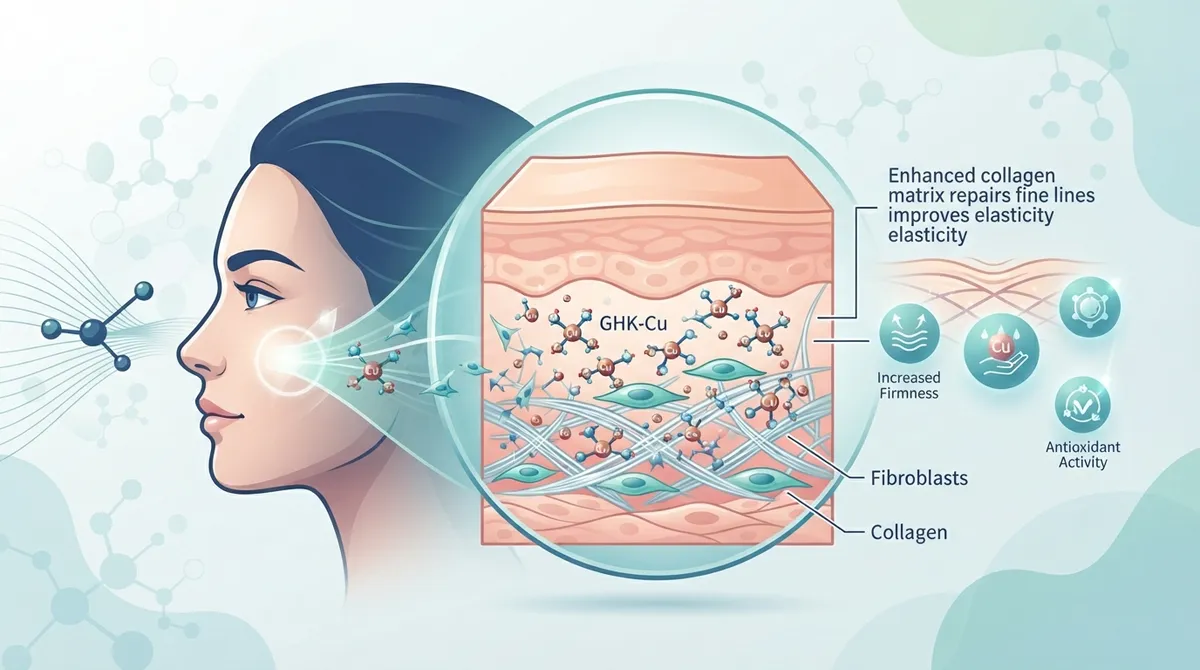
GHK-Cu stands for glycyl-L-histidyl-L-lysine copper. It is a small peptide, which is a short chain of amino acids, that binds copper. Researchers have studied it for possible effects on skin repair, collagen activity, and tissue remodeling.
Interest has grown because social media and online sellers promote it for many goals. These include fewer wrinkles, thicker hair, and faster healing. Many of these claims go far beyond what current human research supports.
Here is the key point. A promising laboratory finding is not the same as a proven treatment. A peptide can look exciting in a dish or in animals and still fail to deliver in people. That gap is why careful medical guidance matters.
The Evidence in Plain Language
Human evidence for GHK-Cu remains limited and mixed. Small studies have looked at cosmetic outcomes, but they do not prove broad benefits. Two examples from a 2026 review show how modest the data can be:
- A small split-face eyebrow study had 18 participants and a 12-week follow-up. It reported better eyebrow hair count and diameter with a 2% topical serum. The study was small, so it cannot show wider effectiveness or long-term safety.
- A small study after CO2 laser treatment had 13 participants finish follow-up. It found no clear objective advantage for GHK-Cu on the measured endpoints.
In short, the research does not show that GHK-Cu reliably treats hair loss, wounds, aging, or whole-body health problems. Anyone who promises those results is getting ahead of the science.
Topical vs. Injectable: The Difference That Matters Most
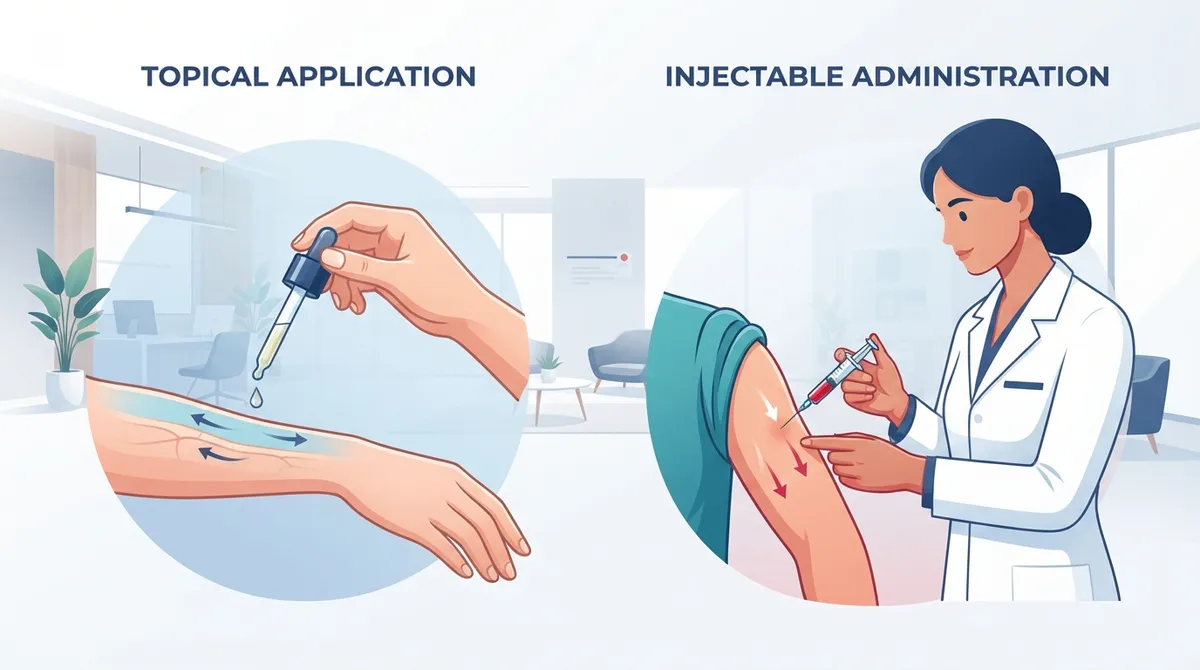
When people search for GHK-Cu peptide therapy in Riverview, they often mix up two very different products. One is a topical copper-peptide skincare product. The other is a compounded injection. These are not the same, and they do not carry the same risk.
|
Feature |
Topical Copper-Peptide Products |
Compounded Injectable GHK-Cu |
|---|---|---|
|
How it is used |
Applied to the skin as a cream or serum |
Injected under the skin or into tissue |
|
FDA approval |
Sold as cosmetics; not approved to treat disease |
No FDA-approved injectable GHK-Cu product exists |
|
Main concerns |
Varying concentration, formulation, and quality |
Immune reactions, impurities, infection, dosing errors |
|
Human safety data |
Limited but more established for cosmetic use |
Limited |
|
Clinical oversight |
Helpful, not always required |
Strongly needed |
Cosmetic marketing does not prove that a product treats a disease. Topical products can also differ in strength and in how well they reach the intended tissue. So even a skincare serum deserves a clear look at its label and source.
What the FDA Has Said About GHK-Cu
Regulation is a big part of this story, and it is changing. Reading it correctly helps you avoid misleading sales pitches.
- No FDA-approved injectable GHK-Cu exists. A clinic offering it should plainly say that it is a compounded or investigational treatment, not an approved therapy.
- The FDA has raised safety concerns about injectable GHK-Cu. These include possible immune reactions linked to peptide clumping or impurities, plus limited human safety data.
- Non-injectable GHK-Cu is in an interim status. The FDA returned it to Category 1 in its bulk-substance compounding review. Category 1 is only an interim evaluation status. It is not approval of the substance, a product, or any treatment claim.
- A regulatory step is planned. The agency said it intended to consult its Pharmacy Compounding Advisory Committee before the end of February 2027 about possible inclusion on the 503A bulks list. That is a planned review, not an approval.
These facts mean the rules around GHK-Cu may keep shifting. A trustworthy clinician will explain the current status clearly instead of hiding it behind marketing language.
Risks to Understand Before You Consider Treatment
Injection carries general risks, no matter the product. These include infection, dosing mistakes, and contamination when handling or quality control is poor. Peptides add another layer of concern.
Peptide products can contain impurities or clump together. In some cases, that may trigger an immune response. Because human safety data on injectable GHK-Cu is thin, no one can promise how your body will react.
Products sold as "research chemicals" are especially risky. They are not made for human use, and they come without medical screening, dosing guidance, or follow-up. If a seller tells you to inject something without a clinician involved, walk away.
Who Should Be Extra Careful
- People who are pregnant, planning pregnancy, or breastfeeding
- Anyone with a history of allergic or immune reactions
- People with a personal or family history of cancer
- Those taking multiple medications or managing chronic conditions
These groups should only explore any peptide with direct medical supervision. Even then, the safest answer may be to wait for better evidence.
How to Evaluate a Riverview Clinic Offering GHK-Cu
Not every clinic that mentions peptides handles them responsibly. Use this checklist to judge any provider in the Riverview area, including the one you already trust.
- Check the clinician's credentials. Confirm that a licensed physician, nurse practitioner, or physician assistant is overseeing your care.
- Ask for the exact route and formulation. Is it topical, nasal, or injectable? What concentration is it?
- Ask about FDA status. A good answer admits that GHK-Cu is not FDA approved and that injectable forms raise specific concerns.
- Ask where the product comes from. Find out which pharmacy prepares it and how quality and purity are verified.
- Ask for the evidence. What research supports the use for your goal? Be wary of answers that rely on testimonials alone.
- Discuss risks and alternatives. A responsible provider covers side effects, other options, and when to stop.
- Confirm follow-up. You should have a plan for monitoring, reporting reactions, and reassessing results.
Also be cautious about local pricing claims. There is no reliable, current count of Riverview clinics offering GHK-Cu or standard local prices, so verify costs directly with each provider before committing.
Start With a Conversation, Not a Product
The wisest first step is a conversation with a licensed primary care clinician or a dermatologist. Share your actual goal, whether that is smoother skin, thinning hair, slow healing, or general wellness. Then let the clinician match that goal to options with stronger evidence.
At InCare, this is how we approach preventive and whole-body care. Our team looks at the full picture, including your history, labs, and lifestyle, before suggesting any treatment. You can learn more about primary care at InCare and meet our providers. If you are weighing peptides in general, our guides on using GHK-Cu safely for skin and wellness and peptide therapy benefits and safety offer helpful background.
Evidence-Based Alternatives to Explore
Depending on your goal, a clinician may point you toward options with a stronger track record:
- Skin concerns: Daily sunscreen, retinoids, and a review of your skin routine. See our tips on skin repair steps doctors recommend.
- Thinning hair: A medical workup for causes such as thyroid issues or nutrient gaps, plus established options like hair restoration treatments.
- Whole-body wellness: Preventive screenings, DNA gene testing, and metabolic breath analysis to guide your plan.
- Energy and hydration: Support through IV hydration and vitamin drips when appropriate.
These paths may feel less exciting than a trending peptide. Still, they rest on firmer ground, and a provider can track your progress with real measurements.
Why Riverview Patients Choose InCare
InCare is a personalized healthcare clinic that pairs modern technology with medical expertise. We serve patients in Riverview and Tampa with primary care, urgent care, cancer screenings, weight loss programs, and advanced wellness services. Our focus is prevention and whole-body optimization, not hype.
That means honest conversations. If a therapy lacks strong human evidence or carries unresolved safety questions, we say so. If a better option exists for your goal, we help you pursue it. Patients also tell us they value the friendly team and attentive physicians, and you can read InCare reviews on Google to see their experiences. Our Riverview clinic is also a convenient base for families who want care close to home. Explore our locations to find the right fit.
You can also follow us for health updates on Instagram, Facebook, and TikTok.
Key Takeaways for Anyone Searching in Riverview
- GHK-Cu is a natural copper peptide with interesting lab research but limited, mixed human evidence.
- It is not an FDA-approved drug, and no FDA-approved injectable version exists.
- The FDA has flagged safety concerns about compounded injectable GHK-Cu.
- Topical cosmetic products and compounded injections are very different, so always ask which one you are being offered.
- Never buy "research chemical" peptides or inject anything without a licensed clinician involved.
- Start with a primary care visit to match your goal with the safest, best-supported option.
Take the Next Step With a Trusted Riverview Team
Searching for GHK-Cu peptide therapy in Riverview is a smart first move only if it leads to a safe, informed plan. The best results come from clear goals, honest evidence, and a clinician who knows your health history. Skip the shortcuts and start with real medical guidance.
Ready to talk through your skin, hair, or wellness goals? Book your visit with InCare today, or contact our team with questions. We are here to help you choose care that is safe, personal, and built around you.
FAQs
Q: Is GHK-Cu peptide therapy FDA-approved?
A: No. GHK-Cu is not an FDA-approved drug for treating a medical condition, and there is no FDA-approved injectable GHK-Cu product. Any clinic offering it should clearly explain that it is a compounded or investigational option.
Q: Is injectable GHK-Cu safe?
A: Safety data in humans is limited, and the FDA has raised concerns about compounded injectable GHK-Cu. These include possible immune reactions from peptide clumping or impurities, as well as general injection risks such as infection and dosing errors. Only consider it under direct supervision by a licensed clinician.
Q: What is the difference between copper-peptide skincare and GHK-Cu injections?
A: Topical copper-peptide products are applied to the skin and are sold as cosmetics, while injections are compounded preparations delivered under the skin or into tissue. They differ in regulation, quality control, and risk. Cosmetic products also do not treat disease, regardless of marketing claims.
Q: Does GHK-Cu really work for skin, hair, or wound healing?
A: The evidence is limited and mixed. Small studies have looked at cosmetic outcomes, such as a 2% topical serum in an 18-person eyebrow study, but results do not prove broad or long-term benefits. Laboratory findings should not be treated as proven clinical results.
Q: What should I ask a Riverview clinic before starting GHK-Cu?
A: Ask about the exact route and formulation, the evidence for your goal, FDA status, pharmacy and product quality, risks, alternatives, and follow-up plans. Avoid any seller offering injections or research-grade products without proper clinical oversight.