Key Takeaways
- Florida medical cannabis evaluation is a clinical assessment, not an automatic approval: the physician must confirm a qualifying condition and judge that likely benefits outweigh risks, and may decline.
- The first certification visit must be in person, with the physician in the same room as the patient; telehealth is only permitted for later renewal exams after that initial visit.
- Certification and the state ID card are separate steps: the physician enters you in the Florida Medical Marijuana Use Registry, then you apply to OMMU for your card yourself.
- Physician re-evaluation is required at least once every 30 weeks before new certification, and the OMMU card renews annually, so apply about 45 days before expiration.
If you live in Riverview, Florida, and you are curious about medical cannabis, you probably have a lot of questions. Who can qualify? What happens during the visit? Do you need to drive to Tampa? A medical cannabis evaluation in Riverview is the first step toward finding out whether cannabis is a safe and sensible option for you.
In Florida, this evaluation is a real medical visit. It is not a quick approval. A qualified physician must examine you, review your history, and decide if the likely benefits outweigh the risks. Knowing the process ahead of time saves you stress, money, and wasted trips.
This guide covers 11 key things to know in 2026. Whether you are a busy parent, a tech-savvy professional, or someone who wants proactive care, these points will help you prepare with confidence.

1. An Evaluation Is a Clinical Assessment, Not an Automatic Approval
Many people assume a visit equals a card. That is not how Florida law works. During a medical cannabis evaluation, a qualified physician examines you and reviews your medical history. The doctor must diagnose a qualifying condition and decide that the likely benefits outweigh the potential health risks.
This means a physician can say no. A good clinic will explain why and suggest other treatment paths. That honest approach is a sign of quality care.
2. Florida Law Lists Specific Qualifying Conditions
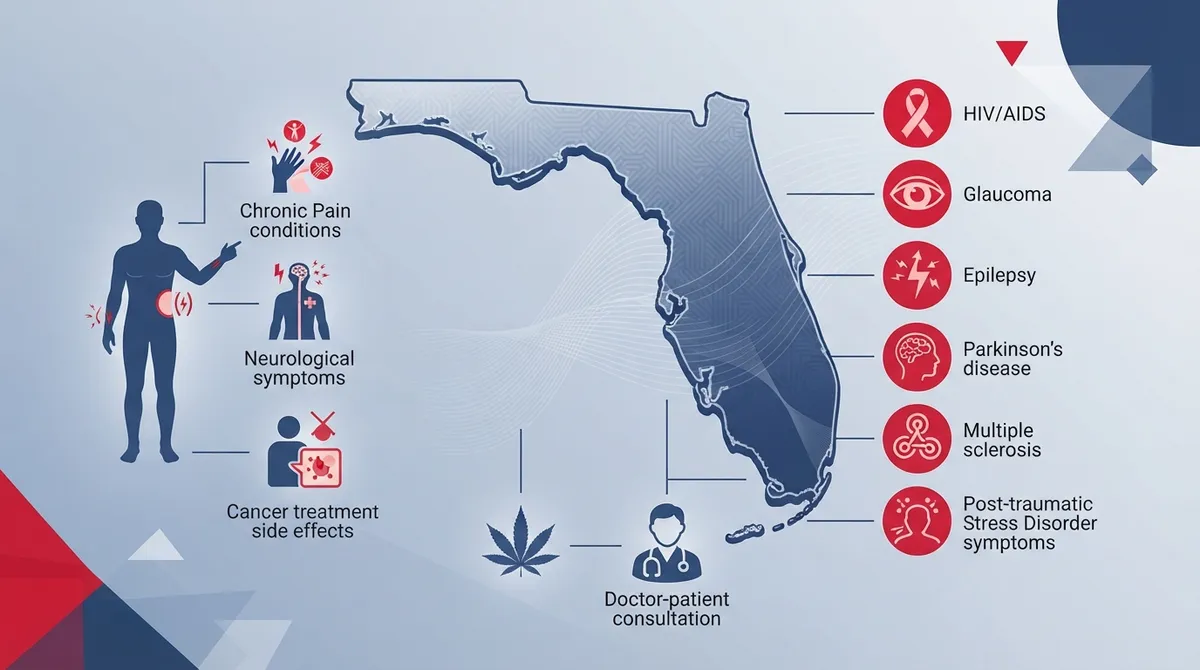
Not every health concern qualifies. Florida law names certain conditions. A diagnosis alone does not guarantee certification, but it is the starting point.
- Cancer
- Epilepsy
- Glaucoma
- HIV/AIDS
- Post-traumatic stress disorder (PTSD)
- Amyotrophic lateral sclerosis (ALS)
- Crohn's disease
- Parkinson's disease
- Multiple sclerosis
- Comparable conditions, certain terminal conditions, and chronic nonmalignant pain caused by or originating from a qualifying condition
If you are unsure whether your condition fits, bring your records. The physician can review them during your visit.
3. Your First Visit Must Be In Person
This point surprises many tech-savvy patients. For an initial certification, the physician must conduct an in-person physical examination while in the same room as the patient. A video-only first visit does not meet the requirement.
Under the current statute, later renewal examinations may be done by telehealth after the in-person exam has taken place. Always confirm the visit format when you book.
4. Certification and the State Card Are Two Separate Steps
Many patients mix these up. Here is how the process flows:
- You complete an in-person evaluation with a qualified physician.
- If certified, the physician enters you into the Florida Medical Marijuana Use Registry.
- You separately apply to the Office of Medical Marijuana Use (OMMU) for your identification card.
- You submit the required documentation and payment to the state.
The clinic handles step two. Step three is your responsibility, so plan time for it.
5. Eligibility Basics: Residency and Age Rules
You must be a Florida resident, either permanent or seasonal. You must also meet the program's medical eligibility rules. Patients younger than 18 require a second physician's concurrence. Extra restrictions apply to certification during pregnancy.
Bring proof of residency to your visit. Policies on documents vary, so ask the clinic what they accept.
6. What the Physician Reviews Before Certifying You
The physician has several legal duties before certifying you. These steps protect your safety.
- Review the state registry and your controlled-drug prescription history
- Examine you in person and confirm a qualifying diagnosis
- Document the risk-benefit assessment in your record
- Enter the certification and any authorized orders into the state registry
Because the doctor checks your medication history, be honest about everything you take. This includes supplements, since some products can interact with cannabis.
7. What to Bring to Your Evaluation
Preparation makes your visit faster and more useful. Our guide on what to bring to a medical cannabis visit covers this in more detail. At a minimum, gather these items:
- A valid photo ID
- Proof of Florida residency
- Medical records or diagnosis letters for your qualifying condition
- A list of current medications and past treatments
- Payment for the visit fee
Written notes about your symptoms, triggers, and what has or has not worked help the physician make a better decision.
8. Costs, Timing, and Renewals
Fees vary by clinic, so ask for a clear price before you book. Remember there are two types of cost: the physician visit and the state card fee paid to OMMU.
|
Requirement |
How Often |
Who Handles It |
|---|---|---|
|
Physician re-evaluation |
At least once every 30 weeks before a new certification |
Your certifying physician |
|
OMMU card renewal |
Annually; apply about 45 days before expiration |
You, through the state |
|
Initial exam |
Once, in person |
Physician and patient |
Mark both dates on your calendar. Missing the 30-week window can delay your next certification.
9. "Riverview" Listings Can Be Misleading
Here is a tip many patients overlook. Some online listings say they serve Riverview but actually operate from offices elsewhere in the Tampa area. Before you book, verify the clinic's exact street address, the clinician's Florida qualifications, the visit format, and the fee.
InCare has a Riverview location at 11922 Boyette Rd, plus a Tampa office at 1213 N Franklin St, so local patients can choose what is most convenient. You can read more about related options in our guide on how to get a medical marijuana card in Riverview, FL.
10. Why Primary Care Matters for Cannabis Decisions
Cannabis does not exist in a vacuum. It can affect sleep, mood, blood pressure, and how other medicines work. That is why many patients prefer an evaluation inside a full primary care setting rather than a stand-alone office.
At a primary care and wellness clinic, your physician can see your full health picture. This includes chronic conditions, current prescriptions, and preventive screenings. If you want to understand how a trusted clinic operates, see our list of signs of a reputable medical marijuana clinic. The same quality markers apply in Riverview.
InCare is the strongest choice for this kind of coordinated care. Our team combines modern technology with personalized medicine, and patients consistently praise the friendly staff and attentive physicians. You can read InCare reviews on Google to see what local patients say.
11. Know the Questions to Ask Before You Book
A short phone call can prevent a wasted visit. Ask these questions up front:
- Is the first visit in person, and where exactly is it held?
- Is the physician qualified under Florida's medical marijuana program?
- What is the total fee, and are follow-up visits included?
- What records should I bring?
- How are renewals and the 30-week re-evaluation handled?
Clear answers show a clinic that respects your time. Vague answers are a warning sign. For help comparing local clinics, our article on how MMJ certification works in 2026 walks through the process step by step.
Who Benefits Most From a Medical Cannabis Evaluation?
Patients with a diagnosed qualifying condition who have not found enough relief from standard treatments are often the best candidates. Busy families, working professionals, and wellness-minded adults all use the program. Younger adults should note that extra rules apply under age 18.
Remember that cannabis is one tool, not a cure-all. A physician-led evaluation helps you decide if it fits your wider health plan. You can also explore our broader primary care services to build a complete wellness strategy.
Conclusion: Take the First Step With Confidence
A medical cannabis evaluation in Riverview is a serious medical visit, and the process in Florida has clear rules. Expect an in-person exam, a careful risk-benefit review, a separate state card application, and ongoing re-evaluations. Verify the clinic's address, physician qualifications, and fees before you commit.
If you want a trusted, patient-first team that treats your whole health, InCare is ready to help. Book Now to schedule your visit, or contact our team with questions. You can also follow our updates on Instagram, Facebook, and TikTok for wellness tips from our Riverview and Tampa clinics.
FAQs
Q: How do I get a medical cannabis evaluation in Riverview, Florida?
A: Book an in-person visit with a physician qualified under Florida's medical marijuana program. The doctor will examine you, review your history, and decide if you meet the criteria. If certified, you are entered in the state registry and then apply separately to OMMU for your card.
Q: Does Florida require an in-person visit for a first certification?
A: Yes. For an initial certification, the physician must perform a physical examination while in the same room as the patient. Under the current statute, later renewal exams may be done by telehealth after that first in-person visit.
Q: How often do I need a recertification and card renewal?
A: Florida law requires a physician evaluation at least once every 30 weeks before a new certification is issued. The OMMU card has its own annual renewal, and the state advises applying about 45 days before it expires.
Q: What should I bring to a medical cannabis evaluation?
A: Bring a valid photo ID, proof of Florida residency, medical records for your qualifying condition, and a list of current medications. Payment for the visit fee is also needed. Confirm any extra requirements with the clinic before you arrive.
Q: Does a qualifying diagnosis guarantee I will be certified?
A: No. A diagnosis is only the starting point. The physician must also decide that the likely benefits outweigh the potential health risks for you. The doctor may decline certification if cannabis is not clinically appropriate.