
Key Takeaways
- BPC-157 is not FDA-approved for injuries, pain, gut conditions, or wellness, and compounded versions are not approved either, so no clinic's advertising proves approval or effectiveness.
- Human evidence is very thin: a 2026 systematic review found only three small studies with 30 participants total, rated as very low certainty.
- Verify any Tampa physician's active Florida license through the Florida Department of Health lookup and ask about board certification and relevant specialty.
- Ask where the peptide is sourced, which licensed compounding pharmacy supplies it, and what quality testing exists; walk away if the clinic cannot answer.
- Be wary of guaranteed healing, pressure to buy packages upfront, or treatment before a proper diagnosis, all of which are red flags.
- Start with a diagnosis and proven options such as physical therapy, sleep and nutrition review, lab work, and specialist referral, and insist on a follow-up plan. BPC-157 is also prohibited for athletes by WADA.
Searching for the best BPC-157 doctor in Tampa can feel urgent, especially if you are dealing with a stubborn injury, joint pain, or slow recovery. Social media and wellness websites often describe BPC-157 as a breakthrough. The medical facts are more cautious. BPC-157 is an investigational peptide, and it is not FDA-approved to treat injuries, pain, gut conditions, or general wellness.
That reality changes what "best" should mean. The best doctor is not the one who promises results from a peptide. The best doctor is the one who tells you the truth, finds the real cause of your problem, and helps you choose care that is safe and supported by evidence. In 2026, that standard matters more than ever.
This guide covers 11 common mistakes people make when they search for the best BPC-157 doctor in Tampa. It explains what the research shows, what the FDA has said, and how to judge any provider. It is written for busy professionals, young families, wellness-minded adults, and anyone who wants clear answers before making a health decision.
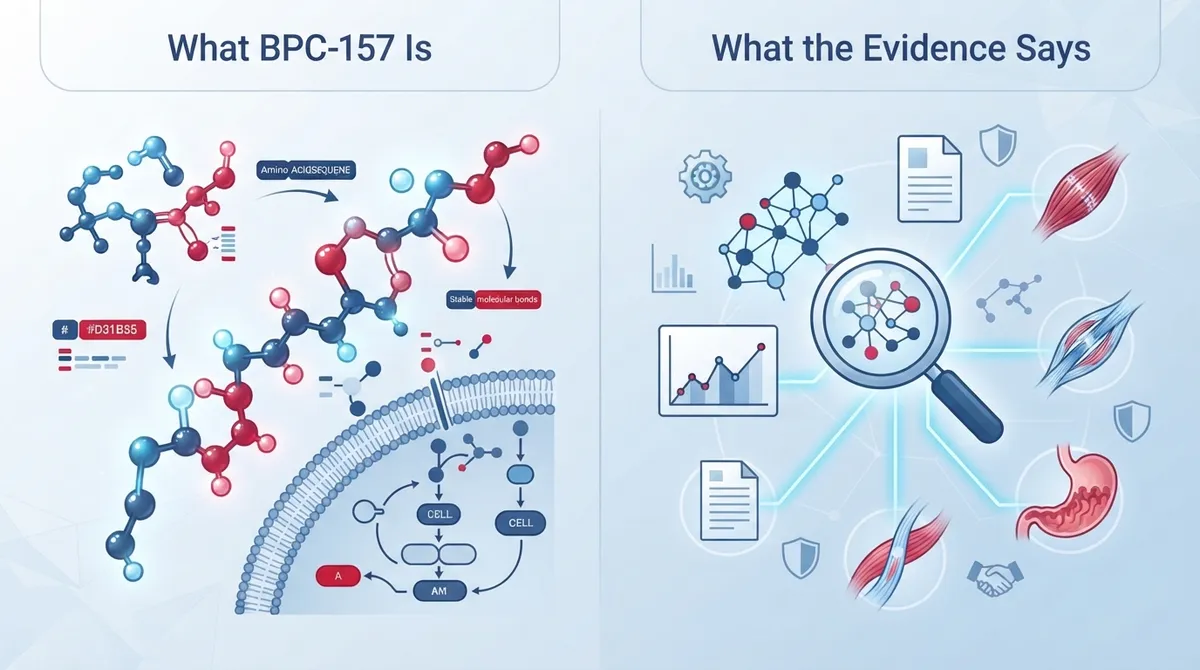
What BPC-157 Is and What the Evidence Says
BPC-157 is a synthetic peptide made of 15 amino acids. It is promoted for tendon, muscle, joint, and gut recovery. Most of the excitement comes from animal and laboratory research, not from large human trials.
The human evidence is very limited. A 2026 systematic review found only three small human studies with a combined total of 30 participants. The studies included a retrospective knee-pain study with 16 participants, a retrospective interstitial-cystitis pilot with 12 participants, and an intravenous safety pilot with 2 participants. The review rated the overall certainty of evidence as very low because of bias, indirectness, and imprecision. A 2025 narrative review reached a similar conclusion and called for larger, well-controlled trials.
|
Question |
What the Evidence Shows |
|---|---|
|
Is it FDA-approved? |
No. It is not approved to treat any condition. |
|
How many human studies exist? |
Three small studies, 30 participants total, per a 2026 review. |
|
Is long-term safety known? |
No. The FDA says available information is insufficient to judge harm. |
|
Is it allowed in sport? |
It is prohibited under World Anti-Doping Agency rules. |
For a deeper look at the research, see Does BPC-157 Really Speed Up Muscle Recovery? and 4 Facts on BPC-157 FDA Approval Status in 2026.

11 Mistakes to Avoid When Choosing a BPC-157 Doctor in Tampa
1. Treating a Clinic Ad as Proof of Approval
A clinic that advertises BPC-157 has not shown that it is approved or effective. Advertising is marketing. It is not a regulatory decision. The FDA states that compounded drugs are not FDA-approved, and compounding does not establish safety or effectiveness.
2. Searching for a Peptide Before Finding a Diagnosis
Many people start with the treatment instead of the problem. A sore shoulder, a nagging tendon, or digestive trouble each has many possible causes. A good doctor first asks what is wrong, then decides what to do about it. Without a diagnosis, any treatment is a guess.
3. Ranking Doctors by Reviews Alone
Online reviews are useful, but they are not medical evidence. A friendly office and a fast appointment do not tell you whether a treatment is supported by research. Use reviews to judge communication and service. Use credentials and evidence to judge medical quality. If you want a practical framework, read Best Primary Care Doctor in Tampa: How to Choose in 2026.
4. Skipping License and Credential Checks
Always confirm that the clinician holds an active Florida license and a specialty that fits your concern. You can verify a physician through the Florida Department of Health's license lookup. Ask about board certification. A confident, qualified provider will welcome these questions.
5. Believing Any Promise of Guaranteed Healing
No honest clinician can guarantee that a peptide will heal an injury. Claims of fast, certain results are a red flag. Because the human evidence is so thin, the only truthful message is that the benefits are unproven and the risks are not fully known.
6. Ignoring FDA Safety Concerns
The FDA has flagged specific concerns about compounded BPC-157. These include possible immune reactions, impurities related to peptide manufacturing, and a lack of safety information for the routes of administration being proposed. The agency says the available information is not enough to decide whether BPC-157 may harm humans. A good provider will explain these concerns plainly instead of skipping past them.
7. Not Asking Where the Product Comes From
Product quality is a major issue with peptides. Ask which pharmacy supplies the product, whether it is a licensed compounding pharmacy, and what quality testing exists. If a clinic cannot answer, walk away. Our guide on 5 BPC-157 Buying Mistakes That Put Your Health at Risk explains the supply risks in more detail.
8. Forgetting About Your Other Medications and Conditions
Any new treatment can interact with what you already take. Your history matters, including heart conditions, immune conditions, pregnancy plans, and current prescriptions. A primary care clinician who knows your full record is better placed to weigh these risks than a provider who only sells one service.
9. Overlooking Anti-Doping Rules If You Compete
BPC-157 is prohibited by the World Anti-Doping Agency. If you are a competitive athlete, even at an amateur level, a positive test can carry penalties. Check current rules with your sport's governing body before considering any peptide. Our article Peptides for Athletes: Hype vs. Medical Reality? covers this topic.
10. Skipping Proven Options First
Evidence-based care for injury and pain exists. Depending on your situation, it may include a physical exam, imaging, structured physical therapy, activity changes, sleep and nutrition support, and referral to an orthopedic or sports medicine specialist. These options have far more research behind them than BPC-157. They also give you a baseline to measure progress against.
11. Accepting Treatment Without a Follow-Up Plan
Responsible care includes monitoring. You should know what outcome you are hoping for, how it will be measured, when you will be re-evaluated, and what happens if it does not work or causes a problem. A provider who has no plan for follow-up is not practicing careful medicine.
What a Qualified Tampa Provider Should Tell You
Use this checklist during your first visit. A trustworthy provider should be able to address every point.
- The working diagnosis for your problem and how it was reached.
- The proven treatment options and their success rates.
- The regulatory status of any peptide, including that BPC-157 is not FDA-approved.
- The known uncertainties, including very limited human data.
- The source and quality controls for any compounded product.
- The monitoring schedule and the plan if side effects appear.
- Whether the treatment is available only through a properly reviewed clinical trial.
For a broader list, see 15 Questions to Ask a Peptide Therapy Clinic in Tampa.
Evidence-Based Alternatives to Consider First
If your goal is recovery from injury, pain, or low energy, several steps have stronger support than BPC-157.
- A thorough exam and diagnosis: Pinpoint whether the issue is a strain, tendon problem, arthritis, or something else.
- Physical therapy and graded exercise: These remain a core approach for many tendon and muscle problems.
- Sleep, nutrition, and stress review: Poor sleep and nutrition slow healing, and these are fixable.
- Lab work and screening: Underlying issues such as thyroid, vitamin, or metabolic concerns can affect recovery.
- Specialist referral: Orthopedic, sports medicine, or gastroenterology care when the problem needs it.
You can also learn how to recover safely in How to Use Healing Peptides Safely for Recovery and compare provider types in Which Named Peptides Are Available in Tampa Clinics?.
Why Primary Care Is the Smartest Starting Point
Many people jump straight to a specialty peptide clinic. A primary care physician is often a better first stop. Primary care looks at your whole health, reviews your medications, orders appropriate testing, and refers you when needed. This approach lowers the risk of missing something important.
This is where InCare fits. With locations in Tampa and Riverview, InCare combines primary care, urgent care, and advanced wellness services, including metabolic breath analysis, body composition analysis, DNA gene testing, and weight loss programs. The focus is on prevention and whole-body health, with personalized plans built on your results. If you are curious about peptides, a clinician can explain the evidence honestly and help you decide what makes sense for you. See what patients say and visit us on Google — InCare to read reviews of the Tampa and Riverview team. You can also follow updates on Instagram.
If you are weighing cost, our guide to What Does Monthly Peptide Therapy Cost in Tampa? offers useful context. If you are still choosing a clinic, How to Choose the Best Primary Care Near You in Tampa is a good next read.
Red Flags and Green Flags at a Glance
|
Red Flags |
Green Flags |
|---|---|
|
Guarantees of healing or "proven" results |
Clear explanation that evidence is limited |
|
No diagnosis before treatment |
Full history, exam, and testing first |
|
Cannot name the supplying pharmacy |
Transparent product sourcing and quality checks |
|
Pressure to buy packages upfront |
Time to think, ask questions, and get a second opinion |
|
No follow-up plan |
Defined monitoring and clear stop points |
Your Next Step
The best BPC-157 doctor in Tampa is not defined by who offers the most peptides. It is defined by honesty, credentials, careful diagnosis, and a plan that puts your safety first. Because BPC-157 remains investigational, with only 30 participants studied across three small human studies, caution is not pessimism. It is good medicine.
Start with a clinician who looks at your whole health and tells you what is known and what is not. Book your visit with InCare to discuss your recovery goals, or contact our team with questions before you come in. You can also find us on Facebook.
FAQs
Q: Is BPC-157 FDA-approved in the United States?
A: No. BPC-157 is not an FDA-approved drug for treating injuries, pain, gut conditions, or general wellness. Compounded versions are also not FDA-approved, and compounding does not establish that a drug is safe or effective.
Q: Does BPC-157 work for tendon, muscle, or joint injuries?
A: This has not been established in humans. A 2026 systematic review found only three small studies with 30 participants in total and rated the overall evidence as very low certainty. Larger, well-controlled trials are still needed.
Q: What are the known risks of BPC-157?
A: The FDA has raised concerns about immune reactions, peptide-related impurities, and limited safety information for proposed routes of administration. The agency states that available information is not enough to determine whether it may harm humans.
Q: How can I verify a Tampa physician's credentials?
A: Use the Florida Department of Health license lookup to confirm an active Florida license and any disciplinary history. Also ask about board certification and the clinician's specialty, and request clear answers about any treatment they propose.
Q: Is BPC-157 allowed for athletes?
A: No. The World Anti-Doping Agency prohibits BPC-157 under its prohibited-substances framework. Athletes should check current rules and consult their sport's governing body before considering it.