
Key Takeaways
- Sermorelin is not FDA-approved for adult wellness; the branded Geref was withdrawn, and compounded versions are not reviewed by the FDA as finished drugs.
- Evidence for sleep, energy, recovery, and body composition benefits in adults is limited, lacking large randomized controlled trials, so bold claims should be treated with caution.
- A thorough medical evaluation of history, medications, labs, and common causes like thyroid problems or sleep apnea should come before starting any sermorelin therapy.
- Ask which pharmacy compounds the medication and how quality is verified, since compounded products vary and the source matters.
- Dose, schedule, and duration must be individualized by a clinician; self-directed online protocols can lead to avoidable side effects.
- Walk away from guarantees of specific results, pressure to buy upfront packages, no monitoring plan, or reluctance to name the compounding pharmacy.
Search for sermorelin therapy in Tampa and you will find plenty of clinics promising better sleep, deeper recovery, sharper energy, and a leaner body. The marketing is confident. The evidence behind it is far more limited. In 2026, patients deserve a clear picture of what sermorelin is, what it is not, and how to avoid the missteps that cost money and may put health at risk.
Sermorelin is a synthetic analog of growth hormone-releasing hormone (GHRH). It signals the pituitary gland to release growth hormone. It is not growth hormone itself. That distinction matters, and so does the regulatory story behind it. This guide walks through ten common mistakes people make when exploring sermorelin therapy in Tampa. It also shows how a primary care approach can keep the decision grounded in medicine rather than marketing. Whether you are a busy parent, a wellness-minded professional, or simply curious, the goal is the same: make an informed choice.

What Sermorelin Therapy Actually Is
Sermorelin is a 29-amino-acid peptide. It copies the active portion of the hormone your hypothalamus uses to tell the pituitary gland to release growth hormone. In other words, it nudges your own system rather than replacing a hormone from the outside.
It was once sold under the brand name Geref. That product was used for certain pediatric growth-related concerns and for diagnostic testing. The branded product was later withdrawn from the U.S. market. Reports indicate that no FDA-approved sermorelin product is currently marketed.
Today, sermorelin offered for adult wellness is typically a compounded preparation. Compounded products are made by a pharmacy for an individual prescription. They are not reviewed by the FDA for safety, effectiveness, or quality in the same way approved drugs are.
Why This Matters for Tampa Patients
Many Tampa clinics list sermorelin alongside other peptide, hormone, and wellness services. Availability does not prove that a treatment is right for you. A responsible clinician should explain the regulatory status plainly and describe why they believe the therapy fits your situation.
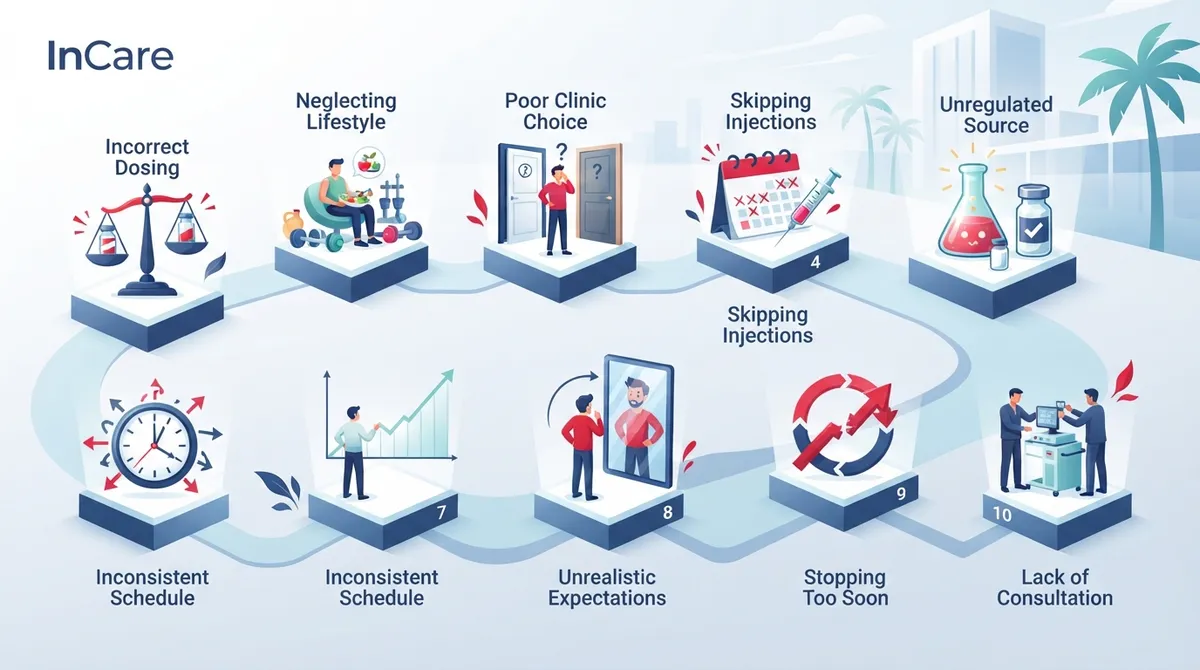
10 Sermorelin Therapy Mistakes to Avoid
The list below reflects the most common errors patients make. Each one is avoidable with a little preparation and the right medical partner.
1. Assuming Sermorelin Is FDA-Approved for Adult Wellness
This is the most common misunderstanding. The original branded product is no longer marketed, and compounded sermorelin used for adult wellness is not approved as a finished drug. Ask any clinic directly about the regulatory status of what they prescribe. A clear, honest answer is a good sign.
2. Believing Anti-Aging Claims Without Evidence
Wellness marketing often promotes better energy, sleep, recovery, body composition, and "anti-aging." These outcomes are not supported by large randomized controlled trials in adults. They should not be presented as established benefits. Treat bold promises with caution.
3. Skipping a Full Medical Evaluation
Starting any therapy without reviewing symptoms, history, medications, and relevant exam or lab findings is a mistake. Fatigue, poor sleep, and weight changes have many causes. Thyroid problems, sleep apnea, depression, diabetes, and low testosterone can all look similar. A thorough evaluation comes first. If you do not have a regular doctor yet, a primary care visit is a sensible starting point.
4. Not Knowing What Condition Is Being Treated
A good plan targets a defined problem. If a clinic cannot tell you what condition sermorelin is treating, pause. Vague goals like "optimization" make it hard to measure whether anything is working.
5. Ignoring the Source of the Medication
Because compounded products vary, the preparing pharmacy matters. Ask which pharmacy compounds the medication and how quality is verified. Patients should never have to guess where their injection came from.
6. Copying Online Dosing Protocols
Sermorelin is typically described as a subcutaneous injection when prescribed. Dose, schedule, and duration should be individualized by the prescribing clinician. Forum posts and social media threads are not a substitute for medical judgment. Self-directed protocols can lead to avoidable side effects.
7. Overlooking Side Effects and Who Should Avoid It
Reported adverse effects include injection-site reactions and occasional gastrointestinal symptoms. Pregnancy, breastfeeding, and known hypersensitivity are cited as reasons to avoid use. Other risks depend on your health history and the preparation. Discuss them openly before you begin.
8. Skipping Follow-Up and Monitoring
Any therapy needs a plan for tracking response and watching for problems. Ask how often you will be seen, what will be measured, and what would cause the plan to change or stop. Without follow-up, you cannot tell whether treatment helps.
9. Choosing on Price or Convenience Alone
Reliable Tampa-specific pricing data is not available, so costs vary and should be confirmed directly with clinics and pharmacies. Insurance often does not cover compounded peptides for wellness use. A low price is not a bargain if the evaluation is thin or the product is unverified.
10. Treating Peptides as a Shortcut Around Basics
No injection replaces sleep, nutrition, movement, and stress management. For many people, the real gains come from foundational care. Preventive screening and lifestyle changes deserve attention first. Learn how preventive care can work for your health before layering on advanced therapies.
Marketing Claims vs. Clinical Evidence
The table below separates what is commonly advertised from what is actually established. It is a simple way to read clinic websites with a critical eye.
|
Topic |
Common Marketing Claim |
What the Evidence Supports |
|---|---|---|
|
Regulatory status |
"Proven peptide therapy" |
Compounded sermorelin is not an FDA-approved finished drug |
|
Mechanism |
"Boosts your hormones naturally" |
Stimulates the pituitary to release growth hormone; not a direct replacement |
|
Energy and sleep |
"Feel years younger" |
Adult wellness outcomes lack large randomized controlled trials |
|
Body composition |
"Burn fat, build muscle" |
No reliable quantitative effect estimate for adult wellness use |
|
Safety |
"Gentle and risk-free" |
Injection-site reactions and some GI symptoms reported; not suitable for everyone |
What a Responsible Primary Care Evaluation Looks Like
A strong clinical approach is methodical. It does not begin with a product. It begins with you. Here is what a careful evaluation typically includes:
- A detailed history. Your clinician reviews symptoms, sleep patterns, medications, supplements, and past conditions.
- A physical exam and relevant labs. Findings guide whether further testing is useful.
- A look at common causes first. Thyroid function, blood sugar, sleep disorders, and mood are checked before attributing symptoms to hormone signaling.
- A frank conversation about evidence. You hear what is known, what is not, and what the regulatory status means.
- A monitoring plan. Goals, check-ins, and stopping rules are set in advance.
This is the kind of whole-person review that sets thoughtful practices apart. At InCare, the focus is prevention and whole-body optimization, supported by technology such as body composition analysis and metabolic breath analysis. These tools provide measurable data, which helps replace guesswork with facts.
Questions to Ask Any Tampa Clinic Before You Start
Bring this checklist to your consultation. Clear answers signal a trustworthy practice.
- What specific condition or goal is this therapy meant to address?
- Is the product FDA-approved, or is it compounded? Which pharmacy prepares it?
- What evidence supports this plan for someone like me?
- What side effects should I watch for, and who should avoid it?
- How will you measure my response, and how often will we meet?
- What are the total costs, and is any part covered by insurance?
If answers feel evasive or overly promotional, consider a second opinion. Good medicine welcomes questions.
Who Tends to Consider Sermorelin, and Why a Broader View Helps
Interest in sermorelin comes from many directions. Tech-savvy professionals want an edge in recovery and focus. Busy parents want more energy at the end of a long day. Younger adults are curious about prevention and longevity. Women in their thirties and forties may be looking for a clinician who treats the whole picture rather than one narrow issue.
For all of these groups, the same principle applies. Start with the basics. Confirm what is actually driving your symptoms. Then decide whether a peptide has a role. Often, the answer involves sleep, nutrition, weight management, and targeted testing. Programs such as medical weight loss or DNA gene testing can offer more concrete, personalized insight than a one-size-fits-all injection.
If you are curious about how peptides are discussed more broadly in clinical settings, you can read InCare's overview of what peptides are and how they relate to longevity. For a deeper look at related options in the area, see this guide to peptide therapy in Tampa.
Why Follow-Up and Individualization Matter Most
Even if a clinician and patient agree that sermorelin is reasonable, the details decide the outcome. Dose, schedule, and duration should fit the individual. A plan that works for one person may be inappropriate for another.
Follow-up is where safety lives. Regular visits allow your clinician to review how you feel, check relevant measures, and adjust or stop treatment when needed. A clinic that sells a package and disappears is not practicing continuity of care. Look for a team that stays involved over time, such as the physicians on the InCare provider team.
Red Flags That Should Make You Walk Away
Some warning signs are easy to spot once you know them:
- Guarantees of specific results, such as a set amount of weight loss or reversal of aging
- No medical history review before prescribing
- Pressure to buy a multi-month package upfront
- Reluctance to name the compounding pharmacy
- Claims that a compounded product is "FDA-approved" without nuance
- No plan for monitoring or follow-up
Any one of these is reason to slow down. Several together are reason to leave.
Putting It All Together
Sermorelin therapy in Tampa sits in a gray area between marketing enthusiasm and limited clinical proof. It may be offered responsibly by a thoughtful clinician who explains the uncertainty and monitors you closely. It may also be sold as a shortcut with promises the evidence cannot support. Your job is to tell the difference.
Start with a real evaluation. Ask direct questions. Demand clarity on regulatory status, sourcing, dosing, and follow-up. Keep the foundations of health in place. And choose a practice that treats you as a whole person, not a product category.
InCare brings together primary care, urgent care, and advanced wellness services under one roof, with locations in Tampa and Riverview. The team emphasizes prevention, personalized plans, and data-driven decisions. Patients can also see what others say by reading InCare reviews on Google. You can follow updates and wellness education on Instagram, Facebook, and TikTok.
Ready to talk through your goals with a clinician who will give you straight answers? Book your visit with InCare or contact our team to ask questions first. A careful evaluation today can save you time, money, and worry tomorrow.
FAQs
Q: What is sermorelin therapy, and how does it work?
A: Sermorelin is a synthetic 29-amino-acid analog of growth hormone-releasing hormone (GHRH). It signals the pituitary gland to release growth hormone rather than replacing the hormone directly. When prescribed, it is commonly given as a subcutaneous injection.
Q: Is sermorelin FDA-approved for adults or for anti-aging?
A: No. The branded product, once sold as Geref, was withdrawn from the U.S. market, and compounded sermorelin used for adult wellness is not FDA-approved as a finished drug. Compounded products are not reviewed by the FDA for safety, effectiveness, or quality in the same way as approved medications.
Q: What evidence supports sermorelin for sleep, energy, or recovery?
A: Evidence for adult wellness outcomes such as sleep, energy, recovery, and body composition is limited, and large randomized controlled trials are lacking. These benefits are common in marketing but should not be presented as established. A clinician should explain this uncertainty honestly.
Q: What should a primary care provider evaluate before prescribing sermorelin?
A: A responsible evaluation reviews your symptoms, medical history, medications, and relevant exam or laboratory findings. It also rules out more common causes of fatigue or poor sleep. Your clinician should explain the condition being treated, the evidence, the monitoring plan, and which pharmacy prepares the medication.
Q: What are the possible side effects, and who should not use sermorelin?
A: Reported effects include injection-site reactions and occasional gastrointestinal symptoms. Pregnancy, breastfeeding, and known hypersensitivity are cited as reasons to avoid use. Suitability depends on your health and the preparation, so discuss risks with a clinician.