
Key Takeaways
- KPV is not FDA-approved for any condition, and 'pharmaceutical grade' is unregulated marketing language with no legal definition—the FDA found no human clinical studies for KPV and identified significant safety data gaps.
- Most KPV research comes from laboratory and animal studies, not human trials; many promising preclinical compounds fail or require decades of additional research before proving safe for human use.
- A legitimate 'pharmaceutical grade' claim requires verified identity testing, purity assays, impurity screening, sterility testing, and documented manufacturing controls—a certificate of analysis alone does not prove safety or sterility.
- Before considering any KPV product, consult a licensed provider about FDA approval status, human clinical evidence, manufacturing documentation, and evidence-based alternatives rather than purchasing unregulated compounds online.
If you have searched for KPV peptide online, you have likely seen the phrase "pharmaceutical grade" attached to almost every listing. It sounds reassuring. It suggests safety, purity, and medical approval. But what does this phrase actually mean, and can you trust it? For patients in Tampa and Riverview exploring wellness peptides, understanding the real story behind KPV matters more than a marketing label ever could.
This article breaks down what KPV is, why "pharmaceutical grade" is not the same as FDA-approved, and what questions you should ask before considering any peptide product. Whether you are a busy parent researching options between school pickups or a wellness-focused professional evaluating your next health investment, this guide gives you the facts you need.
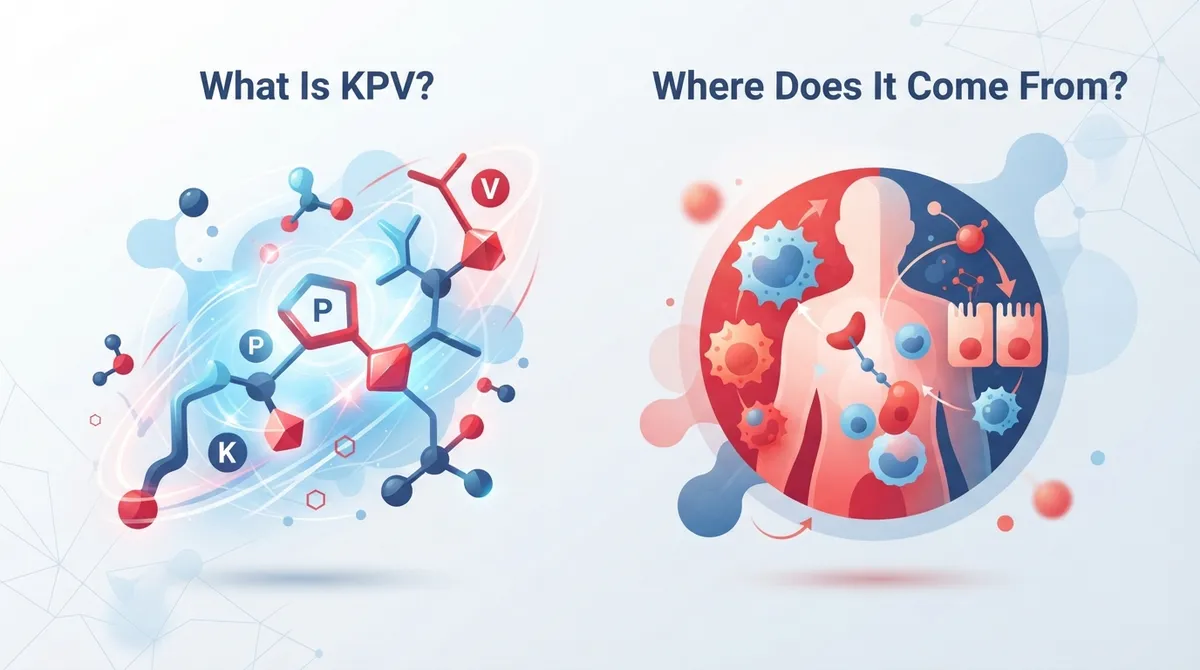
What Is KPV and Where Does It Come From?
KPV stands for lysine-proline-valine. It is a short chain of three amino acids called a tripeptide. Scientists first identified it as a fragment of alpha-melanocyte-stimulating hormone, or alpha-MSH, a hormone your body makes naturally.
Researchers became interested in KPV because early lab studies suggested it might calm inflammation. Some animal studies looked at KPV for gut inflammation, skin irritation, and tissue injury. These are interesting starting points for science. But they are far from proof that KPV works safely in people.
Understanding the Research Gap
Most KPV studies happened in petri dishes or in animals like mice and rats. This is called preclinical research. It is an important first step in drug development. However, preclinical results often do not carry over to human bodies the same way. Many promising lab compounds fail once tested in people, or they need decades of additional research before doctors can safely recommend them.

What Does "Pharmaceutical Grade" Actually Mean?
This is where things get tricky. The term "pharmaceutical grade" has no strict legal definition when used by supplement sellers or research chemical vendors. A company can print this phrase on a label without any government agency checking their claim.
True pharmaceutical manufacturing involves strict, verified steps. Here is what should back up a real quality claim:
- Identity testing to confirm the product actually contains what the label says
- Purity and assay testing to measure exact concentration
- Impurity screening to catch unwanted byproducts
- Residual solvent testing from the manufacturing process
- Endotoxin testing for anything that could be injected
- Sterility testing for injectable products
- Stability data showing the product stays safe over time
- Documented manufacturing controls that follow good manufacturing practice standards
A simple certificate of analysis is not enough on its own. It can be useful, but it does not prove sterility, safety, or that the product will work as promised. Many KPV products sold online come labeled "research use only," which is a signal that they were never intended for use in people at all.
Is KPV FDA Approved?
No. KPV is not an FDA-approved drug. It is not an approved biologic. It has no approved therapeutic use for any condition, including inflammatory bowel disease, skin conditions, or wound healing.
In fact, the FDA reviewed KPV as part of a briefing document connected to the Pharmacy Compounding Advisory Committee's review of peptide substances. The findings were notable:
- The FDA found no identified human clinical studies for KPV administered by any route.
- There was no applicable United States Pharmacopeia or National Formulary monograph for KPV free base or KPV acetate.
- The agency reported insufficient human safety data to evaluate KPV for wound healing or inflammatory uses.
- Gaps remained in understanding repeated-dose toxicity, reproductive effects, genotoxicity, and immune responses to KPV.
An advisory committee discussion is not the same as approval. Even if a compounding list status changes, that does not mean KPV becomes a proven or authorized treatment for general use.
KPV Claims vs. Verified Facts
|
Common Marketing Claim |
What the Evidence Actually Shows |
|---|---|
|
"Pharmaceutical grade quality" |
No standard definition; not verified by any regulatory body |
|
"Clinically proven anti-inflammatory" |
No registered human trials found on ClinicalTrials.gov as of recent review |
|
"FDA reviewed" |
FDA reviewed it for compounding list consideration, not for approval |
|
"Safe for injection" |
No human exposure or safety data identified by FDA for any route |
|
"Third-party tested" |
A certificate of analysis alone does not confirm sterility or compliance |
Why This Matters for Your Health Decisions
Wellness-minded patients often want to try the newest thing before it becomes mainstream. That instinct is not a bad one. Prevention and proactive care are valuable. But there is a difference between trying an evidence-based therapy your doctor recommends and self-administering an unregulated compound purchased online.
Unverified peptides carry real risks. Because human safety data is limited, side effects, allergic reactions, and long-term consequences are not well understood. Products sold outside a licensed medical setting may also be mislabeled, contaminated, or improperly dosed.
Questions to Ask Before Considering Any Peptide
- Is this substance FDA approved for the condition I want to treat?
- Has it been tested in real human clinical trials, not just labs or animals?
- Who is manufacturing it, and can they prove sterility and purity with third-party documentation?
- Is a licensed medical provider overseeing my use of this product?
- What established, evidence-based treatments exist for my actual health goal?
Safer, Evidence-Based Alternatives to Explore
If you are dealing with inflammation, skin irritation, or digestive discomfort, there are well-studied paths worth discussing with a doctor first. A thorough evaluation through primary care can uncover the actual cause of your symptoms rather than masking them with an unproven compound.
For patients specifically interested in peptide-based wellness support, InCare offers medically supervised peptide therapy in Tampa using protocols grounded in current clinical understanding. This is a very different experience than ordering a vial from an unregulated website. You get a licensed provider, a documented plan, and follow-up care.
Other tools available at InCare that support whole-body wellness include DNA gene testing to understand your personal health risks, body composition analysis to track real physical progress, and IV hydration and vitamin therapy for targeted nutrient support.
How InCare Approaches Peptide and Wellness Conversations
At InCare, with locations in Tampa and Riverview, the approach starts with a real conversation about your health history and goals. Providers evaluate conventional diagnoses and treatments first. Investigational compounds like KPV are discussed honestly, including their current limitations, rather than sold as guaranteed fixes.
This matters because your safety comes first. A trustworthy clinic will never claim a product is "pharmaceutical grade" without being able to back that claim up with real documentation. You can read what other patients say about their experience by visiting InCare's page on Google — InCare, where the practice holds a strong reputation for transparent, patient-first care.
What a Responsible Evaluation Looks Like
- A full review of your symptoms and medical history
- Clear explanation of what is proven versus experimental
- Discussion of FDA status and existing safety data for any product mentioned
- Recommendations based on your specific health picture, not generic marketing claims
- Follow-up monitoring if any therapy is started
The Bottom Line on KPV Pharmaceutical Grade Claims
The phrase "pharmaceutical grade" is marketing language, not a regulatory guarantee. KPV remains an investigational peptide with promising lab research but no confirmed human clinical trials, no FDA approval, and significant safety data gaps. Before considering any KPV product, ask hard questions about testing, sourcing, and medical oversight.
If your goal is genuine inflammation relief, gut health support, or skin healing, a licensed provider can walk you through options that are actually backed by solid evidence. You can also follow ongoing health tips and updates from InCare on Facebook, Instagram, and TikTok for accessible explanations of trending wellness topics.
Ready to get real answers about peptide therapy, inflammation, or whole-body wellness? Book your appointment today and talk with a provider who will give you honest, evidence-based guidance instead of unverified marketing claims. You can also get in touch with our team to ask questions before your visit.
FAQs
Q: Is KPV pharmaceutical grade or FDA approved?
A: KPV is not FDA approved for any condition. The phrase "pharmaceutical grade" is a marketing term without a strict legal definition, and it does not mean a product has been reviewed or approved by the FDA. Always ask for verified testing documentation rather than relying on this label alone.
Q: What does pharmaceutical grade actually mean for a peptide product?
A: A credible quality claim should be backed by identity testing, purity and assay data, impurity screening, and sterility testing for injectable products. A certificate of analysis alone does not prove a product is safe, sterile, or compliant with manufacturing regulations.
Q: Is there human clinical evidence that KPV reduces inflammation?
A: Most KPV research comes from lab and animal studies, not human clinical trials. The FDA reported no identified human clinical studies for KPV administered by any route, so claims about proven human benefits are not currently supported by strong evidence.
Q: Can a compounding pharmacy legally prepare KPV for patients?
A: KPV's status for compounding has been under FDA review, but an advisory committee discussion does not equal approval. Patients should ask their provider directly about current legal status and whether a compounded product meets safety and quality standards.
Q: What are safer alternatives to KPV for managing inflammation or gut symptoms?
A: A comprehensive evaluation through primary care can identify the actual cause of inflammation or digestive issues and guide you toward evidence-based treatments. Medically supervised peptide therapy programs, when appropriate, also offer more oversight than unregulated online purchases.