
Key Takeaways
- Medical weight loss starts with a full clinician assessment of your health history, labs, medications, and goals, not a generic template. Be wary of any program that hands you a plan before doing this.
- Verify the prescriber's credentials and Florida licensure through the state's public lookup tool, and ask exactly which product is prescribed and whether it is FDA-approved for your use.
- Ask for a written breakdown of total costs and check insurance coverage, since visit fees, labs, medication, and follow-up can add up quickly.
- Be skeptical of guaranteed results or provider-reported statistics; ask about follow-up frequency, side-effect monitoring, and how the clinic handles maintenance and weight regain.
Searching for riverview fl medical weight loss can feel overwhelming. Clinics, telehealth apps, and retail health providers all promise results. Yet the wrong choice can cost you time, money, and even your health. In 2026, more people than ever are seeking clinician-led weight care, and the options keep growing.
Medical weight loss is different from a crash diet. It starts with a clinician who reviews your health history, labs, and goals. Then it builds a plan that may include nutrition, activity, behavioral support, and sometimes prescription medication. The plan should fit you, not a template.
This guide walks through ten common mistakes people make when choosing a program in Riverview. Avoid them, and you will be better prepared to pick safe, effective care. Busy parents, tech-savvy professionals, and wellness-minded adults will find practical steps they can use right away.
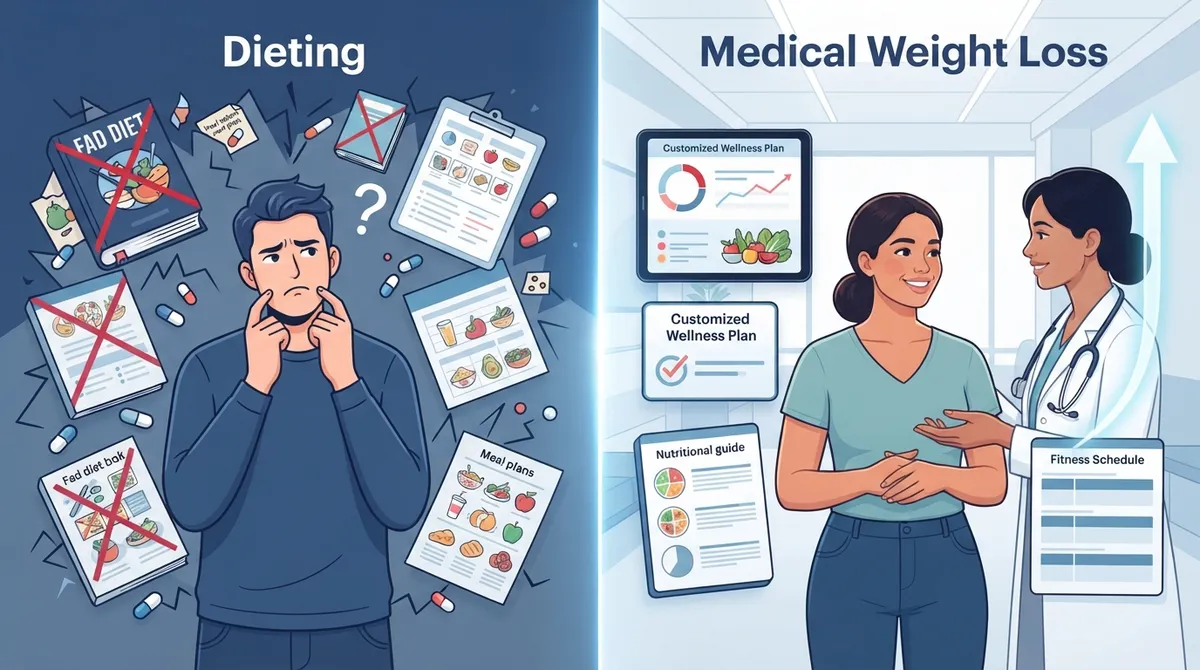
Why Medical Weight Loss Is Different From Dieting
A standard diet focuses on food alone. Medical weight management looks at the whole body. It considers hormones, sleep, stress, medications, and chronic conditions such as diabetes or high blood pressure.
A sound program usually begins with an individualized assessment. That assessment often covers:
- Health and weight history
- Current medications and supplements
- Relevant measurements and laboratory tests
- Personal goals and daily routine
From there, treatment may combine nutrition guidance, activity advice, behavioral support, scheduled follow-up, and medication when clinically appropriate. Not every plan needs medication. To learn more about the difference, read what makes medical weight loss different from dieting.

Where Medical Weight Loss Is Offered in Riverview
Riverview residents can find care through several channels. These include primary-care practices, dedicated weight-management clinics, urgent-care providers, retail health clinics, and telehealth services. Each model works differently. Services, eligibility, costs, and medication availability vary by provider, so confirm details directly before you commit.
Provider websites describe different approaches. Some advertise medical assessment, lab work, nutrition guidance, and in-person follow-up. Others present weight loss alongside primary care. Some evaluation-based programs may include GLP-1 medication when clinically appropriate. These are provider claims, not independent comparisons of outcomes.
10 Medical Weight Loss Mistakes to Avoid
1. Skipping the Medical Assessment
Some programs hand you a plan before they know your health story. That is a red flag. A real medical program starts with a full evaluation. Without it, a clinician cannot spot hidden issues like thyroid problems, insulin resistance, or medication side effects that affect weight.
2. Choosing a Clinic Without Checking Credentials
Always verify clinician credentials and Florida licensure. Ask who will prescribe, who will monitor you, and what training they have. Look up the license through the state's public lookup tool. A friendly front desk is nice, but it is not a credential.
3. Assuming Medication Is Right for Everyone
Prescription anti-obesity medicines, including GLP-1-based treatments, are not appropriate for everyone. A licensed clinician should assess eligibility. They should also explain expected benefits, risks, and the monitoring plan. Medication is not required in every program. For a closer look, see our guide on who can benefit from medical weight loss programs.
4. Confusing FDA-Approved Drugs With Compounded Products
This mistake can be costly. FDA-approved weight-management medicines should be kept separate from compounded products and from drugs approved for other uses. Ask these questions before you start:
- Which exact product is being prescribed?
- Is it FDA-approved for my use?
- How is it dispensed, and by whom?
- What monitoring and follow-up are included?
You can read more about drug choices in our article on how to choose the best injection for weight loss.
5. Believing Guaranteed Results
No honest clinic can promise a set number of pounds. Results vary by person, dose, duration, and habits. Be careful with big claims. For example, one retail clinic page reports that over 65% of its patients lost weight within six weeks. That is a provider-reported figure. The page does not explain the study design, and it may not apply to Riverview patients.
The same caution applies to trial data. A telehealth provider cites average clinical-trial weight loss of about 15% with semaglutide and about 20% with tirzepatide. These are approximate trial results from the provider. Outcomes differ by study and patient, and they are not a guarantee for you.
6. Ignoring Total Cost and Insurance Coverage
Prices can include visit fees, lab work, medication, and follow-up. Some plans cover part of the cost, and others do not. Ask for a written breakdown. Then check with your insurer about coverage for visits and medications. Our weight loss injections cost guide can help you plan.
7. Overlooking Follow-Up and Monitoring
Weight care is not a one-time visit. Good programs schedule regular check-ins. They track progress, side effects, and lab changes. Ask how often you will be seen and whether visits are in person or by telehealth. Gaps in follow-up can lead to stalled progress or unnoticed side effects.
8. Forgetting About Related Health Conditions
Weight rarely stands alone. It connects to blood sugar, blood pressure, sleep, and mood. A primary-care-centered program can link weight management with evaluation of related conditions, medication review, and ongoing care. If you live with diabetes, see how medical weight loss supports diabetics in managing their health.
9. Not Asking About Side Effects
Medications such as semaglutide or tirzepatide can cause side effects. Common ones affect digestion. Others may be more serious for certain patients. Your clinician should review your history and explain what to watch for. Never start a prescription weight-loss drug without that talk.
10. Having No Plan for Maintenance
Many people lose weight, then regain it. Before you start, ask how the clinic handles maintenance and weight regain. A strong plan covers habits, support, and what happens if you stop treatment. Lasting change needs a long-term view.
How Program Models Compare
This table summarizes common program types you may find in Riverview. Use it as a starting checklist, and confirm details with each provider.
|
Program Type |
Typical Features |
Questions to Ask |
|---|---|---|
|
Primary-care practice |
Weight care tied to chronic condition care, labs, medication review |
Who coordinates my overall care? |
|
Dedicated weight clinic |
Structured plan, nutrition coaching, in-person follow-up |
What are total fees and visit frequency? |
|
Urgent or retail clinic |
Evaluation-based programs, may include GLP-1 when appropriate |
How is long-term follow-up handled? |
|
Telehealth service |
Remote visits, home delivery of medication |
Which product is prescribed and how is it dispensed? |
What a Strong Riverview Program Includes
Look for a plan built around you. It should feel clear, honest, and well organized. A strong riverview fl medical weight loss program typically offers:
- A full health review with labs and measurements
- Clear goals that match your life and schedule
- Nutrition and activity guidance you can follow
- Behavioral support for habits, stress, and sleep
- Medication only when it is clinically appropriate
- Regular follow-up and a maintenance plan
Modern tools can add value. Body composition scans and metabolic testing show what the scale cannot. InCare offers body composition analysis and metabolic breath analysis to help tailor plans. These tools track fat and muscle changes, not just total weight.
Why Primary Care Matters for Weight Loss
Weight management works best when one team sees the full picture. A primary-care clinic can review your medications, order labs, and monitor related conditions in one place. That coordination reduces gaps and conflicting advice. It also saves time, which matters for busy families and working professionals.
InCare combines primary care with advanced wellness services. Patients can find personalized weight loss programs alongside primary care, cancer screening, and DNA gene testing. Learn more about our team on the providers page. Our practice has a strong patient reputation, and you can see what neighbors say when you visit us on Google — InCare.
Tips for Your First Visit
Come prepared, and you will get more from your appointment. Bring a list of medications and supplements. Note your weight history and past diet attempts. Write down your goals and any health concerns.
Consider these quick tips:
- Ask for a written plan with costs and follow-up dates
- Request lab results and keep copies
- Report side effects early
- Share your sleep, stress, and eating patterns honestly
For a broader view of what to look for in a clinic, review 7 mistakes to avoid when choosing a weight loss clinic in Riverview. You can also explore semaglutide in Riverview to understand one common option.
Follow Us for Wellness Tips
Stay connected for health news and clinic updates. Follow InCare on Instagram, Tik Tok, and Facebook.
Start Your Journey With Confidence
Choosing a riverview fl medical weight loss program is a big decision. Avoid the ten mistakes above, and you will be better equipped to find safe, personalized care. Look for real credentials, clear costs, honest expectations, and steady follow-up.
InCare offers physician-led care that connects weight management with your overall health. Our Riverview team is ready to build a plan around your needs. Book Now to start, or contact our team with questions. Your first step toward lasting health can happen this week.
FAQs
Q: Where can I find medically supervised weight loss in Riverview, FL?
A: Medically supervised weight loss is offered through primary-care practices, dedicated weight clinics, urgent-care providers, retail clinics, and telehealth services. InCare provides physician-led weight management connected to full primary care. Always confirm services, costs, and availability directly with any provider.
Q: Who may qualify for GLP-1 medication for weight loss?
A: Eligibility depends on your health history, weight history, current medications, and other factors. A licensed clinician must evaluate you and review the benefits and risks. These medicines are not appropriate for everyone, and they are not required in every program.
Q: Can a primary-care doctor prescribe weight-loss medication in Florida?
A: Yes, a licensed clinician in a primary-care setting can prescribe weight-loss medication when it is clinically appropriate. The prescriber should explain the specific product, how it is dispensed, and what monitoring will follow. Ask whether the drug is FDA-approved for your use.
Q: What should I ask a clinic before starting a weight-loss program?
A: Ask about clinician credentials and Florida licensure, total costs, insurance coverage, and the medication source. Also ask how often follow-up visits occur and how the clinic handles maintenance or weight regain. Get the answers in writing when possible.