
Key Takeaways
- KPV has no clinically proven dose for humans despite microgram labels appearing official; the number reflects manufacturing convenience, not medical evidence or safety data.
- Route of administration (oral, topical, nasal, injectable) dramatically changes how much KPV actually reaches your body, but human comparison data does not exist for any route.
- No completed human clinical trials, pharmacokinetic studies, or safety studies exist for KPV as of 2026, making all animal research findings unreliable predictors of human effectiveness.
- KPV products labeled 'for research use only' may lack third-party testing for purity, potency, and sterility, meaning the microgram amount on the label is unverified.
- Before trying KPV, consult your primary care provider about established, evidence-based treatments for inflammation or gut issues rather than experimenting with an unproven peptide.
- Ask any KPV seller for independent lab testing certificates and clear answers about product testing and human safety data; lack of transparency is a major red flag.
Search for KPV online and you will see labels listing a specific microgram amount per serving. This number looks official. It seems like something a doctor tested and approved. But that is not what "micrograms per serving" actually means for this peptide. In 2026, there is still no clinically proven dose of KPV for humans, and understanding why matters for anyone considering this product.
KPV is short for lysine-proline-valine, a small peptide fragment studied mostly in labs and animals. It has become popular in wellness circles for claims about inflammation, gut health, and skin repair. But the gap between a marketing label and real medical evidence is wide. This article breaks down what "micrograms per serving" really tells you, what it does not tell you, and how to think about KPV if you care about your long-term health.

What Is KPV and Why Do People Ask About It?
KPV is a tripeptide made of three amino acids: lysine, proline, and valine. It comes from a larger hormone called alpha-melanocyte-stimulating hormone, or α-MSH. Researchers first became interested in this fragment because of early lab studies suggesting it might calm inflammation.
Since then, KPV has shown up in products aimed at gut health, skin conditions, and general inflammation support. You may see it marketed as an oral capsule, a topical cream, a nasal spray, or even an injectable. Each of these delivery methods works differently in the body, which is a key point we will return to.
For readers exploring peptide-based wellness options, our team at Peptides In Tampa Why Incare Is The Top Clinic For Peptide Therapy can walk you through what current research actually supports.
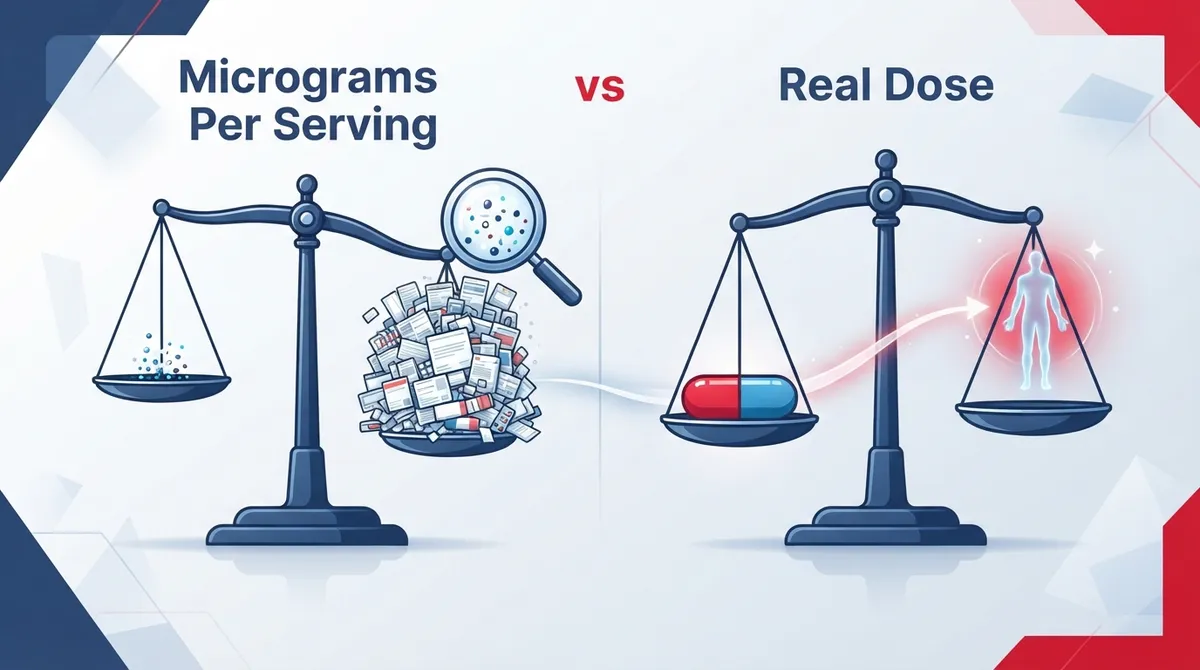
Understanding Micrograms Per Serving vs. a Real Dose
Here is the core issue. "Micrograms per serving" is a labeling term. It tells you how much KPV is packed into one scoop, capsule, or spray. It does not tell you whether that amount is safe, effective, or backed by any human testing.
Think of it like this: a nutrition label can tell you a snack has 200 calories per serving. That is a fact about the product. It says nothing about whether 200 calories is the right amount for your goals. The same logic applies here. A microgram number is a manufacturing detail, not a medical recommendation.
Why There Is No Standard KPV Dose
Right now, no completed human clinical trial has tested KPV as a single-ingredient drug. This means researchers have not established:
- A safe starting dose for healthy adults
- An effective dose for any specific condition
- How the body absorbs and processes KPV over time
- Whether repeated use causes buildup or side effects
Without this data, any microgram number on a label is essentially a guess dressed up as science. Companies choose serving sizes based on manufacturing convenience or comparisons to similar peptides, not on proven human outcomes.
Route of Administration Changes Everything
One of the biggest misunderstandings about KPV involves how it enters your body. The same microgram amount can behave completely differently depending on the route.
- Oral capsules or powders must survive stomach acid and digestive enzymes before any of the peptide can reach your bloodstream. Much of it may break down before it ever gets absorbed.
- Topical creams rely on skin absorption, which is often limited for peptides this size.
- Nasal sprays may reach the bloodstream faster through nasal tissue, but exposure levels are still not well studied in humans.
- Injectable forms bypass digestion entirely, delivering the peptide directly into tissue or the bloodstream.
Because of these differences, you cannot assume that 500 micrograms taken orally equals 500 micrograms injected. The research needed to compare these routes in humans simply does not exist yet for KPV.
What Does the Research Actually Show?
Most of what we know about KPV comes from laboratory dishes and animal models. These early studies have looked at inflammation markers, intestinal barrier function, and skin healing in mice and rats. Some results looked promising in that limited context.
However, promising animal data does not automatically translate to human safety or benefit. Many substances that work well in mice fail to show the same results in people, or turn out to carry risks that only appear with human testing. This is a standard and important step in drug development that KPV has not yet completed.
What Regulatory Sources Say
According to information reviewed from FDA-related sources, KPV is not an FDA-approved drug for any condition. No FDA-approved product on the market contains KPV as an ingredient. This is an important fact for anyone considering a KPV product for a health concern.
The same sources report no identified human exposure data for KPV, regardless of the route used. There are also no identified human pharmacokinetic studies, meaning we do not know how the body absorbs, distributes, breaks down, or removes KPV. And there are no identified clinical safety studies, meaning side effects in humans have not been formally documented.
In July 2026, a Pharmacy Compounding Advisory Committee reviewed KPV free base and KPV acetate. The vote was 8 in favor, 6 opposed, and 1 abstention. This was only an advisory recommendation. It did not approve KPV or authorize it for compounding pharmacies to prepare and sell.
|
Research Category |
Status for KPV (2026) |
|---|---|
|
FDA-Approved Drug Status |
Not approved for any use |
|
Human Clinical Trials |
None identified as completed |
|
Human Pharmacokinetic Data |
None identified |
|
Human Safety Studies |
None identified |
|
Compounding Advisory Vote (July 2026) |
8 for, 6 against, 1 abstention (advisory only) |
The Problem With "Research Use Only" Labels
Many KPV products carry a label saying "for research use only" or "not for human consumption." This phrase exists for a legal reason. It signals that the product has not gone through the testing required for human use.
Despite this label, some sellers market these products in ways that suggest personal use for wellness or health goals. This creates confusion. A research-only label does not mean the product is dangerous by default, but it does mean:
- No independent lab has confirmed exact potency
- Purity and contaminant testing may be missing or unreliable
- Sterility cannot be assumed, especially for injectable forms
- Stability over time is not guaranteed
If you are considering any peptide product, ask whether the seller provides third-party testing certificates. Without this, the microgram number on the label is simply unverified.
How Should Primary Care Patients Think About KPV?
If you are dealing with ongoing inflammation, digestive symptoms, skin issues, or slow-healing wounds, it is tempting to look for a quick fix online. But these symptoms deserve a real medical evaluation first.
A qualified primary care provider can help identify the actual cause of your symptoms. Conditions like inflammatory bowel disease, eczema, psoriasis, and chronic wounds often have established, evidence-based treatments. Delaying proper care while experimenting with an unproven peptide can allow a treatable condition to get worse.
Our providers at Providers take time to review your full health picture before recommending any treatment path. This includes discussing which therapies have real clinical support and which are still investigational.
Questions to Ask Before Trying Any Peptide Product
Before purchasing any KPV product, consider asking these questions:
- Has this specific product been tested by an independent lab for purity and potency?
- Does the seller provide a certificate of analysis?
- Is this product labeled for research use only, and if so, why am I being told to use it personally?
- What route of administration is recommended, and is there any human safety data for that route?
- Have I discussed this with a primary care provider who knows my full health history?
If you cannot get clear answers to these questions, that is a red flag. A reputable clinic will always encourage transparency over a quick sale.
KPV vs. Established Anti-Inflammatory Approaches
It helps to compare KPV against treatments with a longer track record. Many patients dealing with inflammation already have access to well-studied options through their primary care provider.
|
Approach |
Human Clinical Evidence |
FDA Status |
|---|---|---|
|
KPV Peptide |
None identified in human trials |
Not FDA-approved |
|
Prescription Anti-Inflammatories |
Extensive, decades of trials |
FDA-approved for specific conditions |
|
Lifestyle & Dietary Changes |
Well-documented in nutrition research |
Not applicable |
|
IV Vitamin Support |
Studied for hydration and nutrient delivery |
Varies by ingredient |
This does not mean every prescription option is right for every patient. But it does mean these treatments have a body of evidence that KPV currently lacks. A conversation with your doctor can help you weigh real options instead of guessing based on a label.
Whole-Body Wellness Beyond a Single Peptide
Many people turn to peptides like KPV because they want to feel better overall, not just treat one symptom. This is a reasonable goal, but it is better served by a comprehensive approach.
At InCare, wellness services extend well beyond any single supplement. Options include Dna Gene Testing to understand your genetic health risks, Body Composition analysis using advanced imaging, and Iv Hydration Vitamin Drips for targeted nutrient support. These services are grounded in measurable data about your body, not unverified label claims.
For those managing weight alongside inflammation concerns, our Weight Loss programs are physician-supervised and built around your specific metabolic needs. This kind of personalized, evidence-informed care is what separates a real wellness plan from a guess based on a supplement label.
Finding Care in Tampa and Riverview
InCare operates convenient locations in both Tampa and Riverview, Florida, making it easier for patients across the Tampa Bay area to access thoughtful, physician-guided wellness care. Whether you are managing a chronic condition, exploring peptide therapy questions, or simply due for a wellness check, our Locations page can help you find the clinic nearest you.
Many patients discover InCare through word of mouth and online reviews. You can Visit us on Google — InCare to read what current patients say about their experience with our providers and staff. We also share health education and clinic updates through Facebook, Instagram, and Tik Tok, so you can stay informed between visits.
Moving Forward Safely
The microgram number on a KPV label may look precise, but it is not a substitute for real clinical guidance. Until human trials establish a proven, safe dose, this peptide remains an investigational option rather than a routine wellness tool.
If you are dealing with inflammation, digestive discomfort, skin concerns, or slow healing, the safest first step is a conversation with a trusted primary care provider. Our team can help you understand your options, separate marketing claims from medical evidence, and build a plan grounded in your actual health needs. To take that next step, reach out to our care team today or schedule your appointment online now.
FAQs
Q: How many micrograms of KPV are in one serving?
A: This varies by product and manufacturer, since there is no standardized or clinically validated serving size. The number on any label reflects a manufacturing choice, not a proven effective or safe human dose.
Q: Is there a clinically proven KPV dosage for humans?
A: No. Current evidence for KPV comes mainly from laboratory and animal studies, with no completed human clinical trials identified. This means no established, evidence-based dosage exists for wellness, inflammation, or digestive health purposes.
Q: Is KPV FDA-approved or legal to use in the United States?
A: KPV is not an FDA-approved drug for any indication, and no FDA-approved product contains it as an ingredient. A 2026 advisory committee vote on compounding was only a recommendation and did not grant approval or authorize routine compounding.
Q: What is the difference between oral, topical, nasal, and injectable KPV?
A: Each route affects how much of the peptide actually reaches your bloodstream and tissues. Oral forms face digestive breakdown, topical forms depend on skin absorption, and injectable forms bypass digestion entirely, but human data comparing these routes for KPV does not currently exist.
Q: Can KPV help with gut inflammation or inflammatory bowel disease?
A: Some animal studies have explored KPV's effects on intestinal inflammation, but these findings have not been confirmed in human clinical trials. Anyone with persistent gastrointestinal symptoms should see a primary care provider for proper diagnosis and evidence-based treatment options.