
Key Takeaways
- Several Tampa-area clinics publicly advertise named peptides like sermorelin, BPC-157, and CJC-1295, but listings are marketing and do not confirm FDA approval, suitability, or current stock.
- FDA has raised safety concerns about compounded BPC-157, CJC-1295, and ipamorelin, citing limited human data and potential immune reactions; FDA-approved peptides have defined indications and labeling.
- Before starting, verify the prescriber's license through the Florida Department of Health, ask whether the product is FDA-approved or compounded, and confirm the dispensing pharmacy is state-licensed.
- Avoid products labeled "research use only" for human treatment, and favor a provider that starts with baseline labs and medication review before recommending any peptide.
If you have searched for peptide therapy in Tampa lately, you have probably seen long lists of product names: sermorelin, ipamorelin, BPC-157, CJC-1295, and more. That naturally raises a practical question. Are named peptides available in Tampa clinics? The short answer is yes, but the full answer is more nuanced. Availability depends on the clinic, the specific product, and the legal status of that product.
Some peptides are FDA-approved medicines with defined uses. Others are offered as compounded preparations, and a few are sold in ways that raise real safety concerns. For busy professionals, parents, and wellness-minded adults in Tampa Bay, knowing the difference matters. An advertised treatment is not proof that it is appropriate, approved, or safe for you.
This guide explains which named peptides Tampa-area practices publicly advertise, how regulation shapes what you can actually get, and what questions to ask before you start. It also shows how a primary care setting like InCare approaches wellness with a prevention-first mindset.

Yes, Tampa Clinics Advertise Named Peptides
Publicly available clinic websites show that several Tampa-area wellness and medical practices list named peptide treatments. Examples include sermorelin, gonadorelin, and bremelanotide (PT-141). Some also advertise CJC-1295, ipamorelin, BPC-157, TB-500, and GHK-Cu.
One search of Tampa-area provider pages found at least two practices, including Pain & Wellness Institute and Tampa Surgical Arts, that list specific peptide options. That is a small sample, not a full count of local clinics. Menus change often, so a listing today may not reflect what is in stock next month.
Treat these listings as marketing, not verification. A clinic listing a peptide does not mean the product is FDA-approved, that it suits your health profile, or that it is currently obtainable.
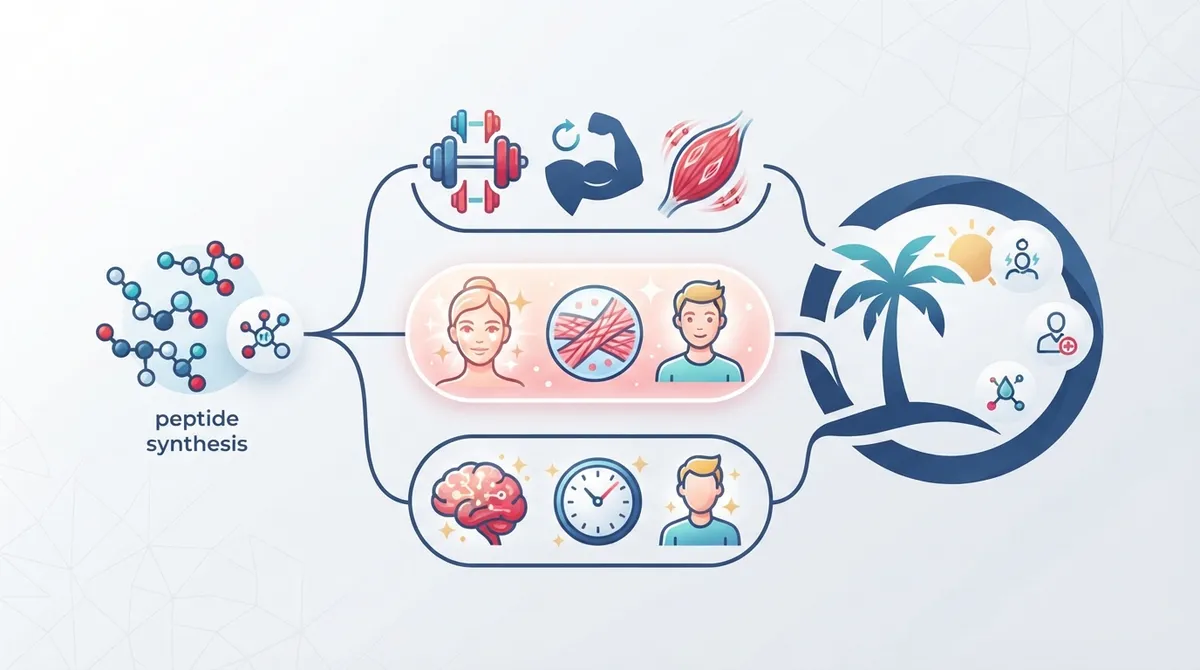
Commonly Advertised Peptides and What They Are Promoted For
Clinics often group peptides by the goal they claim to support. The table below summarizes names you may see in Tampa, the typical marketing focus, and the general regulatory picture. It is educational, not medical advice.
|
Named Peptide |
Typical Marketing Focus |
Regulatory Picture |
|---|---|---|
|
Sermorelin |
Growth hormone support, anti-aging |
Often offered as a compounded product |
|
Ipamorelin |
Recovery, body composition |
FDA has raised safety concerns about its use in compounding |
|
CJC-1295 |
Growth hormone stimulation |
FDA has raised safety concerns about its use in compounding |
|
BPC-157 |
Tissue repair, joint and gut support |
FDA has raised safety concerns; limited human data |
|
Gonadorelin |
Hormone axis support |
Varies by product and use |
|
Bremelanotide (PT-141) |
Sexual function |
FDA-approved product exists for a specific indication |
|
TB-500 and GHK-Cu |
Healing, skin, recovery |
Generally not FDA-approved for these uses |
Notice that the regulatory column varies widely. That is the heart of the issue. The word "peptide" covers very different products with very different levels of evidence.
What Does "Peptide" Actually Mean in a Clinic Setting?
Peptides are short chains of amino acids. Your body makes many of them naturally, and several are used in mainstream medicine. Insulin is a well-known example.
Semaglutide and tirzepatide are also peptide-based medicines. They have FDA-approved products for specific indications, such as type 2 diabetes and chronic weight management. If you are exploring this category for weight loss, our guide on semaglutide in Tampa and our comparison of tirzepatide and semaglutide explain how approved options work.
By contrast, many peptides marketed for recovery, anti-aging, or general wellness are not FDA-approved for those uses. Approval applies to a particular product and a particular indication. It does not extend to every formulation or marketing claim involving the same molecule.
FDA-Approved vs. Compounded Peptides
This distinction is the most important concept in the whole topic.
FDA-Approved Peptide Medicines
An FDA-approved drug has gone through premarket review for safety, effectiveness, and manufacturing quality. It has labeled uses, dosing guidance, and known warnings. When a clinician prescribes an approved product for its labeled purpose, you have a clear evidence base to review.
Compounded Peptides
Compounded drugs are not FDA-approved. According to the FDA, compounding may be appropriate for an individual patient when an approved drug cannot meet that patient's medical need. However, compounded products do not undergo FDA premarket review for safety, effectiveness, or quality.
Rules also limit which bulk drug substances compounding pharmacies may use. Separate criteria apply to 503A pharmacies and 503B outsourcing facilities, and eligibility depends on current FDA lists. A clinic offering a named peptide does not by itself prove that its preparation meets those requirements.
Safety Concerns Patients Should Know About
The FDA has raised specific concerns about certain peptides used in compounding, including BPC-157, CJC-1295, and ipamorelin. Cited issues include limited human safety information, potential immunogenicity (an unwanted immune response), and other risks.
Keep these points in mind:
- Limited human data: Many peptide claims rest on animal studies or small, early research.
- Product quality varies: Compounded preparations are not reviewed by the FDA before sale.
- Injection risks: Self-injection carries infection and dosing risks without proper training.
- Unknown interactions: Peptides may interact with medications or underlying conditions.
Avoid any product labeled "research use only" for human treatment. Those products are not intended for people and are not made to clinical standards.
How to Verify a Tampa Peptide Provider
You do not need to guess. A few direct checks protect you. Follow these steps before agreeing to any peptide treatment:
- Confirm the prescriber's license. Use the Florida Department of Health license lookup to verify the clinician.
- Ask for the exact product name. Request the specific ingredient and whether it is FDA-approved or compounded.
- Identify the dispensing pharmacy. Ask who supplies it and whether the pharmacy is state-licensed.
- Request the evidence. Ask what human research supports the proposed use for someone like you.
- Ask about monitoring. A responsible plan includes baseline labs and follow-up.
- Compare alternatives. Ask what approved or lifestyle options exist for the same goal.
A trustworthy clinician welcomes these questions. Vague answers or pressure to buy a package quickly are warning signs.
What Do Peptide Consultations Cost in Tampa?
Pricing varies and can change. One Tampa-area listing, Tampa Bay Total Wellness, reports a $149 in-office peptide consultation. That figure is provider-specific and should be confirmed directly.
Treatment costs differ even more. They depend on the product, dose, duration, and whether lab monitoring is included. Insurance often does not cover peptides marketed for wellness. For a closer look at budgeting, see our overview of how much peptide therapy costs in 2026.
Why Start With Primary Care Instead of a Peptide Menu?
Many people begin with a product in mind. A better starting point is a goal: more energy, better recovery, healthier body composition, or improved sleep. A primary care approach looks at the whole picture first.
That means reviewing your history, current medications, labs, and risk factors. It may reveal that sleep, thyroid function, hormones, nutrition, or metabolism explain your symptoms. In those cases, a peptide may not be the right tool at all.
InCare is a personalized clinic that combines modern technology with medical expertise, with locations in Tampa and Riverview. Services such as metabolic breath analysis, body composition analysis, and DNA gene testing give clinicians objective data before recommending anything. Prevention and whole-body optimization come first.
If you want to understand the space better, our articles on peptide therapy benefits and safety in Tampa and what to look for in a Tampa peptide clinic go deeper. You can also read about what peptides are and how they relate to longevity.
Who Tends to Ask About Peptides?
Interest comes from several groups, and each has different needs:
- Tech-savvy adults who research health online and want data-driven care.
- High-income wellness seekers pursuing proactive optimization through testing and screening.
- Busy parents who want efficient answers about energy, weight, and recovery.
- Younger adults curious about prevention, often after seeing peptides on social media.
- Women without an established primary care relationship who want comprehensive wellness visits.
For all of these readers, the same rule applies. Social media content is not a substitute for a medical evaluation. Online hype often skips risks, regulation, and individual fit.
A Smarter Way to Decide in 2026
Peptide interest is not going away, and rules continue to evolve. FDA lists and guidance can change, so a product available this year may be restricted later. That is another reason to work with a clinician who tracks current regulations rather than relying on a static menu.
Here is a simple framework for deciding:
- Define the specific health goal you want to address.
- Get a full baseline evaluation, including labs and medication review.
- Ask whether an FDA-approved option or lifestyle change fits first.
- If a peptide is proposed, verify the product, pharmacy, evidence, and monitoring plan.
- Revisit the plan regularly and stop if side effects or concerns appear.
Conclusion: Availability Is Not the Same as Appropriateness
So, are named peptides available in Tampa clinics? Yes. Several local practices advertise products such as sermorelin, gonadorelin, bremelanotide, CJC-1295, ipamorelin, and BPC-157. But availability is only the first question. The better questions are whether a product is approved, who makes it, what the evidence shows, and whether it fits your health.
Choose a clinic that puts evaluation before products and welcomes your questions. You can see what patients say by reading InCare reviews on Google at Visit us on Google — InCare. You can also follow our health updates on Instagram, Facebook, and TikTok.
Ready to talk through your goals with a licensed clinician? Book Now to schedule a visit at our Tampa or Riverview location, or contact our team with questions.
FAQs
Q: Which named peptides do Tampa wellness clinics offer?
A: Publicly available clinic pages advertise peptides such as sermorelin, gonadorelin, bremelanotide (PT-141), CJC-1295, ipamorelin, BPC-157, TB-500, and GHK-Cu. Availability varies by clinic and can change, so confirm current offerings directly with the provider.
Q: Are BPC-157, TB-500, CJC-1295, or ipamorelin FDA-approved?
A: These peptides are not FDA-approved drugs for the wellness and recovery uses commonly marketed. The FDA has also raised safety concerns about BPC-157, CJC-1295, and ipamorelin in compounding, citing limited human safety data and potential immune reactions.
Q: What is the difference between an FDA-approved peptide medicine and a compounded peptide?
A: An FDA-approved medicine has undergone premarket review for safety, effectiveness, and quality for a specific use. A compounded peptide is prepared for an individual patient and does not receive that same premarket review.
Q: What questions should I ask before starting peptide therapy?
A: Ask whether a licensed clinician will review your history and medications, whether the product is FDA-approved or compounded, and which pharmacy supplies it. Also ask what evidence supports the use, how you will be monitored, and what alternatives exist.
Q: Are semaglutide and tirzepatide considered peptides?
A: Yes, both are peptide-based medicines, and FDA-approved products exist for specific indications such as type 2 diabetes and chronic weight management. Approval applies to the specific product and indication, so a clinician should confirm that it fits your situation.