If you run a primary care practice or rely on one, you have likely seen the name Novitas Solutions on a Medicare remittance advice, a denial letter, or an enrollment notice. The name can be confusing. Many people assume it is a Medicare health plan. It is not. Understanding what Novitas Solutions does with Medicare can save clinicians time, reduce claim errors, and help patients know who to call when something goes wrong.
Novitas Solutions is a contractor for the Centers for Medicare & Medicaid Services (CMS). It processes Original Medicare claims and supports providers in specific regions of the country. For a primary care and wellness clinic, that work touches enrollment, billing, coverage rules, and claim follow-up. This guide explains how Novitas Solutions Medicare services work in 2026, which states it covers, and what practices should check before they bill. It also shows why a well-organized care team matters to patients who use Medicare.

What Is Novitas Solutions in the Medicare System?
Novitas Solutions is a Medicare Administrative Contractor, often shortened to MAC. CMS hires MACs to handle day-to-day Original Medicare fee-for-service operations. These operations include processing Part A and Part B claims, enrolling providers, answering provider questions, and publishing regional coverage guidance.
The key point is simple. Novitas Solutions Medicare work applies to Original Medicare. It is not a Medicare Advantage plan, a Medigap policy, or a drug plan. It does not help a person choose or change plans. Its role is to process claims and support providers under rules set by CMS.
What Novitas Does Not Do
- It does not sell insurance or enroll people in Medicare plans.
- It does not replace CMS policy. It applies national rules and adds local ones.
- It does not process most Medicare Advantage claims. Those go to the private plan.
- It does not decide your overall plan choice or premiums.
Knowing this saves time. If a patient has a Medicare Advantage plan, the clinic should bill that plan instead of the Original Medicare contractor.
Which States Does Novitas Solutions Cover?
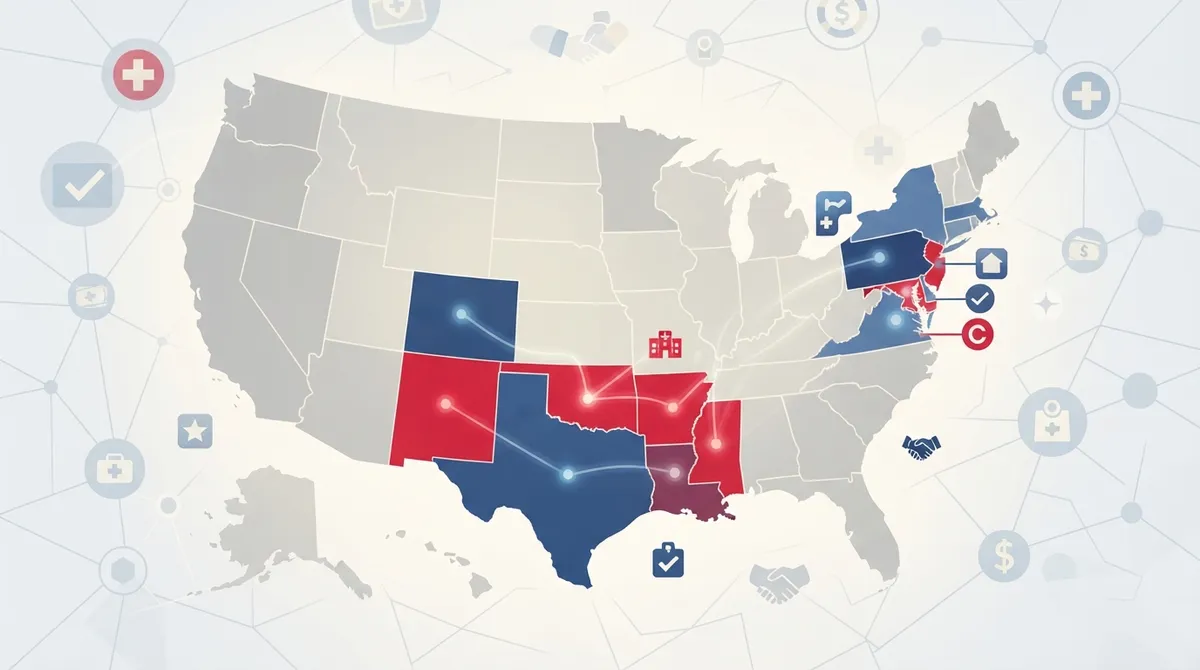
Each MAC serves a set of states called a jurisdiction. Novitas administers Part A and Part B in two jurisdictions, and it also serves certain provider groups nationally for specified functions, including Indian Health Service, tribal, and Veterans Affairs providers.
|
Jurisdiction |
Areas Covered |
Fee-for-Service Beneficiaries* |
Physicians* |
|---|---|---|---|
|
Jurisdiction H (JH) |
Arkansas, Colorado, Louisiana, Mississippi, New Mexico, Oklahoma, Texas |
4,626,057 |
151,216 |
|
Jurisdiction L (JL) |
Delaware, District of Columbia, Maryland, New Jersey, Pennsylvania; for Part B, also Arlington and Fairfax counties and the cities of Alexandria, Fairfax, and Falls Church in Virginia |
3,561,659 |
123,613 |
*CMS figures reported as of September 30, 2025.
Jurisdiction H represents about 13.9% of the national Part A and Part B workload. Jurisdiction L represents about 11.8%. CMS has described Jurisdiction H as involving more than $58 billion in annual Medicare benefit payments. CMS also indicated that a new Jurisdiction H contract had an anticipated effective date of July 1, 2026. Contract awards and transition dates can change, so practices in those states should confirm current operational details with CMS or Novitas.
What About Florida?
Florida is not in a Novitas jurisdiction. Clinics in Tampa and Riverview deal with a different Medicare Administrative Contractor for Original Medicare claims. The rules on this page still help readers who work with Novitas or who move between regions. A practice should always confirm its own jurisdiction before it uses any contractor-specific guidance.
How Does Novitas Solutions Medicare Support Primary Care Practices?
For a primary care or wellness clinic in a Novitas jurisdiction, the contractor touches many daily tasks. Here is where most practices interact with it.
- Provider enrollment. Clinicians must enroll in Medicare before they can bill. This includes new enrollments, changes, and revalidation.
- Claims submission. Practices send Part B claims for office visits, screenings, and procedures.
- Claim status and follow-up. Staff check whether a claim was paid, denied, or rejected.
- Billing education. Novitas publishes guides and webinars on coding and documentation.
- Coverage guidance. It publishes local coverage determinations for services in its region.
Each of these steps affects cash flow. A small error in enrollment or coding can delay payment for weeks.
How Do You Enroll With Novitas for Medicare?
Medicare enrollment generally starts with a CMS-855 application. Providers submit it through the Provider Enrollment, Chain and Ownership System, known as PECOS, or by paper. The specific form depends on whether the applicant is an individual clinician, an organization, or a reassignment of benefits.
Basic Enrollment Steps
- Confirm the clinician has an active National Provider Identifier (NPI).
- Complete the correct CMS-855 application in PECOS or on paper.
- Submit required supporting documents, such as licenses and practice details.
- Respond quickly to any development request from the contractor.
- Track the application until approval, then keep records current.
One detail trips up many new practices. Enrolling in Medicare is a separate step from enrolling to send electronic claims. A clinic may be approved to treat Medicare patients yet still cannot submit claims electronically until the electronic data interchange (EDI) setup is finished. Plan for both from the start.
What Are Local Coverage Determinations?
Medicare covers services that are reasonable and necessary. National coverage rules set the baseline. Contractors such as Novitas can add local coverage determinations, or LCDs, for services in their jurisdiction. An LCD explains when a particular service or item is considered reasonable and necessary.
Primary care practices should check LCDs and related billing articles before they provide or bill services that may be covered by one. Common areas include lab testing, diagnostic procedures, and certain wound or skin treatments. Coverage often depends on the diagnosis code, the documentation, and the frequency of the service.
- Read the current LCD and the related billing and coding article.
- Match the diagnosis on the claim to the documented medical need.
- Record the reason for the service in the visit note.
- Recheck policies often, since they can be updated.
How Do You Check a Claim or Resolve a Denial?
Claims can be paid, denied, rejected, or returned as unprocessable. These outcomes are not the same. A rejected claim usually has a data problem and can be fixed and resent. A denied claim was processed and not paid, and may need an appeal.
A Simple Denial Workflow
- Read the remittance advice and note the reason and remark codes.
- Check the patient's eligibility and the date of service.
- Compare the claim to the visit note and coding rules.
- Correct and resubmit if the error was clerical.
- File a timely appeal if you believe the denial was wrong.
Deadlines matter. Medicare has time limits for filing claims and for appeals. Missing a deadline can mean losing payment for good, so staff should track dates carefully.
Does Novitas Handle Medicare Advantage Claims?
No. Medicare Advantage plans are run by private insurers. Those plans have their own rules, networks, and claim systems. If a patient has a Medicare Advantage plan, the clinic bills that plan, not the Original Medicare contractor.
This is why the first step at every visit is checking the patient's card. A patient with a red, white, and blue Original Medicare card is billed to the regional MAC. A patient with a private plan card follows that plan's rules. Getting this wrong is one of the most common causes of denied claims. Our related guide on Medicare Advantage plans and primary care explains the differences in more detail.
What Billing and Documentation Rules Should Practices Check?
Good documentation protects both the clinic and the patient. Medicare pays for services that are medically necessary and properly recorded. Before submitting claims, practices should review the following.
- Patient eligibility. Verify coverage and the correct payer on the date of service.
- Correct coding. Use current CPT and ICD-10 codes that match the note.
- Medical necessity. Show why the service was needed.
- Signed and dated records. Keep complete, legible notes.
- Current policies. Confirm the latest CMS and Novitas instructions.
Preventive services deserve special care. Annual wellness visits, screenings, and counseling each have their own rules on frequency and coding. Patients often ask what to expect at these visits, and our article on what happens during an annual wellness visit is a helpful starting point. Practices should also review common Medicare wellness visit mistakes to avoid coding and scheduling errors.
Why Does This Matter for Patients?
Patients do not need to know contractor codes. They do benefit when their clinic handles Medicare rules well. Clean claims mean fewer surprise bills and fewer delays. Accurate coding helps ensure covered services are billed correctly.
A strong primary care partner also helps patients use Medicare well. That includes preventive screenings, chronic condition management, and coordinated referrals. Learn more about what Medicare covers for seniors in primary care and how to find a doctor that accepts Medicare.
Why Coordinated Care Helps Medicare Patients
Medicare patients often see several clinicians. Without coordination, tests repeat and medicine lists get out of sync. A primary care team that tracks the full picture can prevent that. Our piece on fragmented care versus coordinated care shows how a single point of contact improves safety and outcomes.
How InCare Supports Medicare Patients in Tampa and Riverview
InCare is a personalized healthcare clinic that combines modern technology with medical expertise. With locations in Tampa and Riverview, Florida, the team offers primary care, urgent care, cancer screening, weight management, and advanced wellness services. The focus is on prevention and whole-body health, which matters for adults who want to stay well as they age.
Patients in the Tampa Bay area can meet the physicians on the providers page, review clinic locations, and see what others say. You can also read InCare reviews on Google, where the clinic holds a 4.8 out of 5 rating from 359 reviews. Patients often mention the friendly staff and the care from Dr. Ahluwalia.
Coverage questions are common, so it helps to speak with a team that understands them. If you are comparing options, our guide to the traits of the best Medicare provider for primary care lists what to look for.
Practical Tips Before You Bill or Enroll
- Confirm your jurisdiction. Look up the MAC that serves your state before you follow any contractor guide.
- Keep enrollment current. Watch for revalidation notices and update changes fast.
- Set up EDI early. Do not wait until the first claim is ready.
- Check LCDs often. Review policies before adding or changing a service.
- Train your billing team. Use CMS and contractor education resources.
- Verify the payer at every visit. Tell Original Medicare and Medicare Advantage apart.
These habits are simple, but they prevent many of the delays that frustrate practices and patients alike. For updates and health tips, you can also follow InCare on Facebook, Instagram, and TikTok.
Conclusion
Novitas Solutions Medicare services are about administration, not insurance. As a Medicare Administrative Contractor, Novitas processes Original Medicare Part A and Part B claims, handles provider enrollment, and publishes local coverage guidance in Jurisdictions H and L. It does not run a health plan, and it does not process most Medicare Advantage claims. For any practice, the smartest first step is to confirm the right jurisdiction, then follow current CMS and contractor instructions on enrollment, coding, and documentation.
For patients, the best outcome comes from a primary care team that manages Medicare rules well and puts prevention first. If you live in Tampa or Riverview and want personalized, technology-driven care, book an appointment with InCare today, or contact our team with any questions about your care.
FAQs
Q: What is Novitas Solutions and what does it do for Medicare?
A: Novitas Solutions is a Medicare Administrative Contractor hired by CMS to administer Original Medicare fee-for-service operations. It processes Part A and Part B claims, supports provider enrollment, and publishes local coverage guidance. It is not a health plan.
Q: Which states are in Novitas Jurisdiction H and Jurisdiction L?
A: Jurisdiction H includes Arkansas, Colorado, Louisiana, Mississippi, New Mexico, Oklahoma, and Texas. Jurisdiction L includes Delaware, the District of Columbia, Maryland, New Jersey, and Pennsylvania, plus parts of northern Virginia for Part B services.
Q: Does Novitas handle Medicare Advantage claims?
A: No. Medicare Advantage claims are generally handled by the patient's private Medicare Advantage plan. Novitas processes Original Medicare claims only, so clinics should confirm the patient's payer at every visit.
Q: How do primary care practices enroll for Medicare billing?
A: Practices usually submit a CMS-855 application through PECOS or on paper, and each clinician needs an active NPI. Enrolling in Medicare is separate from setting up electronic claims, so both steps should be planned.
Q: Where can I find Novitas local coverage determinations?
A: Local coverage determinations are published on the Novitas website and in the Medicare Coverage Database. Providers should read the current LCD and its billing and coding article before providing or billing a covered service.