Key Takeaways
- Topical GHK-Cu may modestly improve signs of photoaging like fine lines, wrinkles, and skin density, but evidence comes from small studies of about 8 to 12 weeks and is still preliminary.
- Claims that GHK-Cu repairs wounds or deep tissue rest mainly on lab and animal research; it is not an established treatment for ulcers, surgical wounds, or other medical wounds.
- Cosmetic and compounded GHK-Cu products are not FDA-approved to treat disease or wounds, and quality and concentration vary widely; injectable use lacks proven human safety data.
- Sunscreen and proven treatments like retinoids have far stronger evidence for photoaging, so GHK-Cu should be treated as an optional add-on, not a replacement.
Copper peptides have moved from niche skincare shelves into mainstream wellness conversations. Many patients now ask a simple question: what does GHK-Cu do for skin and repair, and does the science support the claims? The short answer is that GHK-Cu shows promise, but the evidence is still early.
GHK-Cu is a small, naturally occurring peptide that binds copper. Researchers have studied it for its possible effects on collagen, skin texture, and tissue remodeling. Social media often presents it as a miracle repair molecule. The research tells a more careful story.
This guide explains what GHK-Cu is, what studies suggest it may do, where the evidence falls short, and how to approach it safely. It is written for busy adults, wellness-minded readers, and families who want clear facts before they spend money or try a new product.
What Is GHK-Cu?
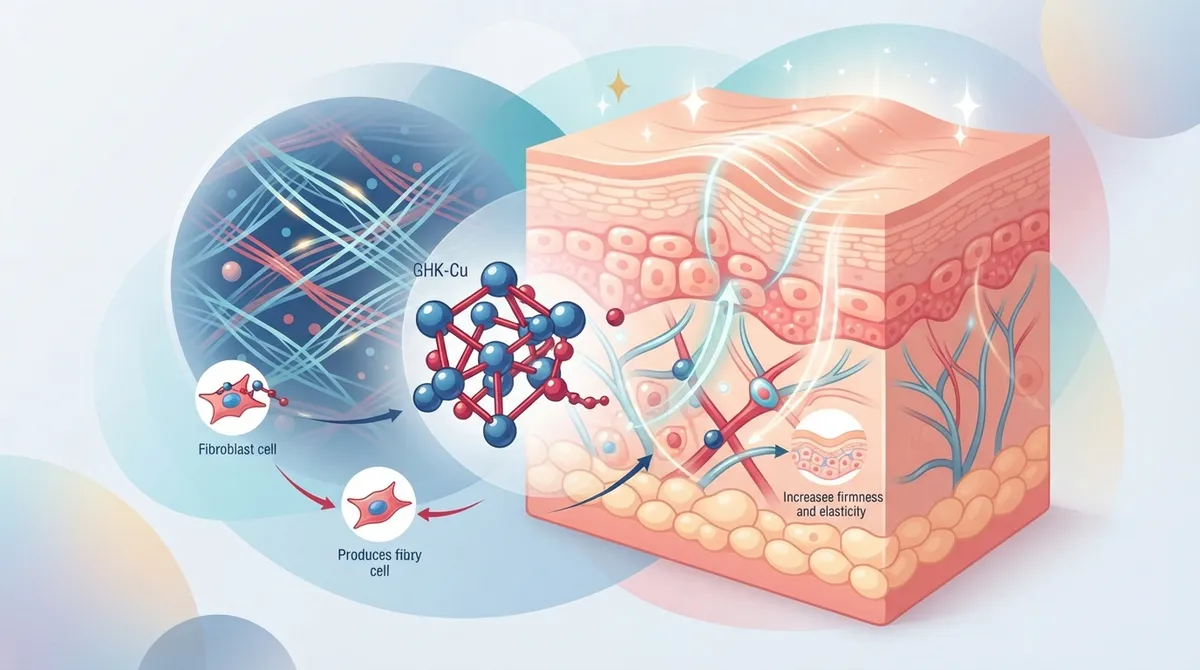
GHK-Cu stands for glycyl-L-histidyl-L-lysine complexed with copper. It is a tripeptide, which means it is made of three amino acids. The body produces it naturally, and levels appear to decline with age.
Scientists have studied GHK-Cu for several proposed actions:
- Supporting collagen and other structural proteins in the skin
- Influencing inflammation signals
- Affecting tissue-repair pathways
- Acting as an antioxidant in laboratory settings
Much of the mechanistic evidence comes from laboratory and animal research. That matters, because results in a petri dish or a mouse do not always carry over to people.
What Does GHK-Cu Do for Skin?
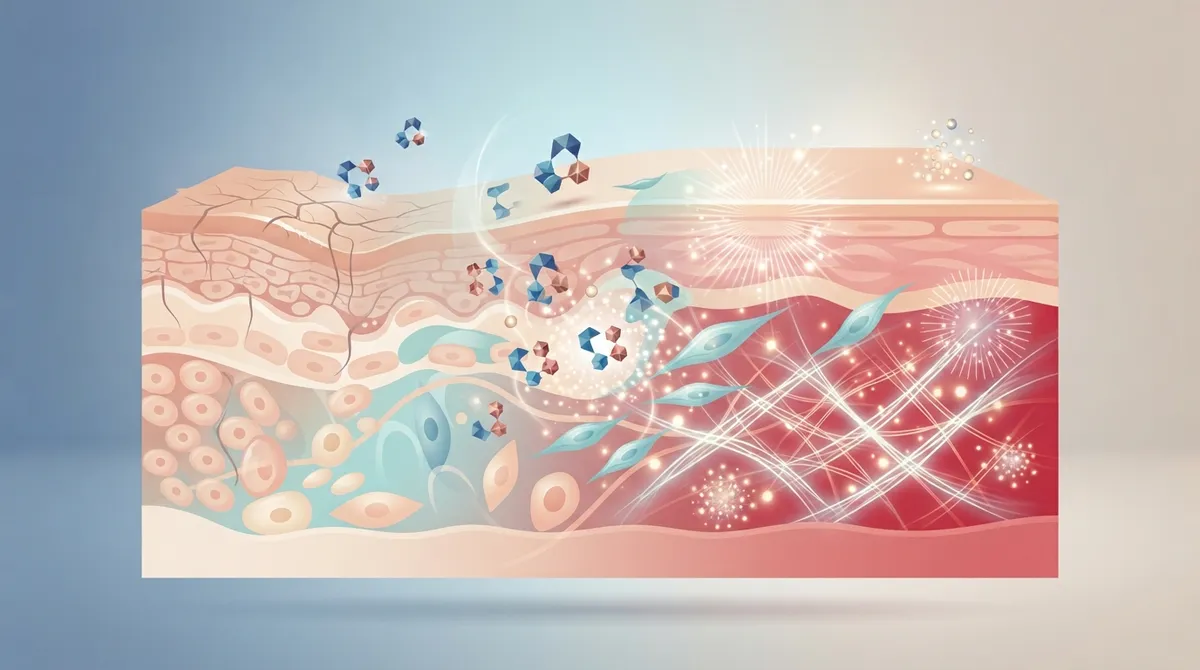
Most of the human research focuses on topical creams for photoaged skin. Photoaging is the visible damage caused by years of sun exposure, such as fine lines, wrinkles, and loss of firmness.
Collagen and Skin Density
Collagen is the protein that keeps skin firm and smooth. Some small studies suggest GHK-Cu may support collagen-related remodeling. One small study summarized in a 2025 review followed 20 volunteers for one month. Procollagen synthesis increased in 70% of the GHK-Cu group. The comparison groups were 50% for vitamin C and 40% for retinoic acid. This was a small study, not a population-level estimate, so it should be read with caution.
Fine Lines, Wrinkles, and Laxity
Two 12-week studies are often cited in reviews:
- A study of 41 women with photodamage around the eyes reported improvements in lines, wrinkles, and skin thickness or density compared with other treatments.
- A study of 71 women using a facial cream reported improvements in skin density, thickness, laxity, fine lines, and wrinkle depth.
A small randomized study also reported lower wrinkle volume and depth after eight weeks. The review reports 31.6% lower wrinkle volume versus a peptide comparator and 55.8% lower versus a carrier control. These numbers sound impressive, but the studies were small. Some also had commercial or industry-related limitations.
A Balanced Summary of the Skin Evidence
|
Claim |
Type of Evidence |
Strength |
|---|---|---|
|
Improves fine lines and wrinkles |
Small human studies, 8 to 12 weeks |
Preliminary |
|
Supports skin thickness and density |
Small human studies |
Preliminary |
|
Boosts collagen-related activity |
Lab studies and one small human study |
Preliminary |
|
Reverses skin aging |
Not established |
Unsupported |
A 2025 review of topical GHK as an anti-wrinkle ingredient also noted a surprising lack of robust clinical studies. It raised concerns about how well the peptide penetrates the skin.
What Does GHK-Cu Do for Repair and Healing?
This is where the hype often outruns the evidence. GHK-Cu has been studied for wound healing and tissue repair. Laboratory and animal research suggests it may influence repair signaling, inflammation, and the extracellular matrix, which is the scaffold that supports skin cells.
Evidence in people is much less certain. The available results do not establish GHK-Cu as an effective treatment for chronic ulcers, surgical wounds, or other medical wounds. A 2024 review of soft-tissue peptide therapies noted that large-scale human studies of GHK-Cu remain very limited, despite extensive preclinical research.
For readers interested in the connective tissue angle, our article on 6 facts about GHK-Cu connective tissue repair explores this topic in more depth.
Important Safety Note About Wounds
GHK-Cu is not an established medical treatment for wounds. It should never replace standard wound care. If you have a cut that is not healing, signs of infection, or a diabetic foot sore, see a clinician promptly. Putting a peptide product on broken skin may cause irritation and delay proper care.
Cosmetic Creams vs. Compounded Products
Not all GHK-Cu products are the same. This is one of the most common points of confusion.
|
Product Type |
Regulatory Status |
Key Concern |
|---|---|---|
|
Cosmetic creams and serums |
Not FDA-approved to treat disease or wounds |
Concentration and quality vary by brand |
|
Compounded topical preparations |
Not FDA-approved products |
Quality and evidence vary |
|
Compounded injectable GHK-Cu |
Not FDA-approved |
Limited human safety data and potential immune reactions |
The FDA has raised concerns about limited human safety data and potential immune reactions for compounded injectable GHK-Cu. Injectable use should not be presented as a proven skin-repair treatment. If you are weighing options, review our guide on FDA-approved vs. compounded peptides to understand the difference.
How GHK-Cu Compares With Other Skin Ingredients
Many readers want to know if GHK-Cu beats retinoids or vitamin C. The honest answer is that no head-to-head evidence proves it does. Retinoids and sun protection have far stronger clinical track records for photoaging. GHK-Cu may be a reasonable add-on for some people, but it is not a proven replacement.
If you are comparing options, you may find GHK-Cu vs. retinol helpful. For a wider view, see which peptides actually slow skin aging in 2026.
Possible Side Effects and Who Should Be Careful
Topical GHK-Cu products may cause side effects in some people. Common reactions include:
- Redness
- Burning or stinging
- Itching
- Contact dermatitis
Take extra care if you have any of the following:
- A chronic skin condition such as eczema, rosacea, or psoriasis
- An open wound or recently irritated skin
- A planned cosmetic or medical procedure
- Pregnancy or breastfeeding, where safety data is limited
- A history of allergic reactions to skincare ingredients
Always patch test a new product on a small area first. To learn more about warning signs, read about GHK-Cu allergic reaction signs and whether GHK-Cu is safe.
How to Approach GHK-Cu Safely
If you are curious about copper peptides, a careful approach protects both your skin and your wallet. Follow these steps:
- Talk with a primary care clinician first, especially if you take medications or have a skin condition.
- Choose products from transparent manufacturers that list ingredients and concentrations.
- Start with a low-frequency routine and patch test.
- Pair any peptide product with daily sunscreen, which remains the most proven anti-aging step.
- Track changes with photos over 8 to 12 weeks, the timeframe used in most studies.
- Stop use and seek care if irritation, swelling, or rash develops.
For product selection tips, see how to pick the best GHK-Cu serum for your skin. If you want to monitor progress, our guide on tracking GHK-Cu results week by week can help set realistic expectations.
Why Skin Health Starts With Whole-Body Care
Skin reflects what is happening inside the body. Sleep, nutrition, stress, hormones, blood sugar, and sun exposure all shape how skin looks and heals. A cream cannot fix these root factors on its own.
This is where a primary care and wellness approach adds value. A clinician can review your health history, check for underlying issues, and help you decide whether a peptide product fits your goals. At InCare, our team combines primary care with advanced wellness services to support prevention and whole-body optimization for patients in Tampa and Riverview. If skin changes come with fatigue, slow healing, or other symptoms, a medical visit is often the smarter first step than a new serum.
You can also read about 11 skin repair steps doctors recommend in 2026 for evidence-based habits that support healing. Many patients also like to see what peers say, and you can visit us on Google and read InCare reviews from our Tampa Bay community. For daily tips and updates, follow InCare on Instagram, Facebook, and TikTok.
The Bottom Line
So, what does GHK-Cu do for skin and repair? Early research suggests topical GHK-Cu may modestly improve signs of photoaging, such as fine lines, laxity, and skin density, after about 8 to 12 weeks. Claims about wound healing and deep tissue repair rest mostly on laboratory and animal studies. Human proof is thin, and injectable or compounded versions carry added uncertainty.
GHK-Cu may be a reasonable, low-risk experiment for healthy skin when used as a cosmetic product with realistic expectations. It is not a substitute for sunscreen, proven dermatology treatments, or medical wound care.
If you have questions about skin health, healing, or peptide products, a conversation with a qualified clinician can save you time and money. Book your visit with InCare to build a personalized, evidence-based wellness plan, or contact our team with questions today.
FAQs
Q: What is GHK-Cu, and how is it different from other copper peptides?
A: GHK-Cu is a naturally occurring tripeptide made of glycine, histidine, and lysine that binds copper. Many copper peptide products use different or modified peptide forms, so results and evidence do not always transfer between them. Always check which specific ingredient a product contains.
Q: Can GHK-Cu reduce wrinkles or improve skin firmness?
A: Small human studies of topical GHK-Cu report improvements in fine lines, wrinkles, and skin density after about 8 to 12 weeks. These studies were limited in size, so the results are promising but preliminary. Sunscreen and proven treatments such as retinoids still have stronger evidence.
Q: Does GHK-Cu help wounds heal?
A: Most wound-healing evidence comes from laboratory and animal research, not strong human trials. GHK-Cu is not an established treatment for ulcers, surgical wounds, or other medical wounds. It should not replace standard wound care from a clinician.
Q: Are GHK-Cu creams FDA-approved to treat skin aging or wounds?
A: No. Cosmetic GHK-Cu products are not FDA-approved to treat disease or wounds, and compounded preparations are not FDA-approved products. Quality, concentration, and evidence can vary widely between products.
Q: Is GHK-Cu safe for sensitive or irritated skin?
A: Topical GHK-Cu may cause redness, burning, itching, or contact dermatitis in some people. Patch test first and avoid applying it to broken skin. Consult a qualified clinician if you have a skin condition, an open wound, or a planned procedure.