
Key Takeaways
- KPV is not FDA-approved and lacks human clinical trial data proving it treats eczema, psoriasis, or dermatitis; all current research is limited to cell cultures, animal models, and lab-based studies.
- KPV lab studies show it may reduce inflammatory pathways (NF-κB and MAPK) and lower inflammatory chemicals like IL-6, IL-8, and TNF-α in skin cells, but these results don't guarantee effects on real human skin.
- Topical corticosteroids and calcineurin inhibitors remain the gold standard treatments with decades of clinical trial data and established safety profiles, unlike KPV which has no approved dosing or long-term human safety data.
- Compounded or online KPV products lack FDA regulation, standardized manufacturing, and purity testing, carrying unknown risks and should not substitute for evidence-based dermatologic care prescribed by licensed providers.
- A 2017 study showed KPV could penetrate human skin via iontophoresis and microneedling in lab settings, but this only demonstrates delivery mechanics—not clinical effectiveness for treating skin disease symptoms.
- Critical safety gaps exist for KPV including no established safe dosing, unknown medication interactions, and no long-term human safety data, making it unsuitable for clinical recommendation until proper human trials are completed.
Skin inflammation affects millions of people, from stubborn eczema flare-ups to persistent contact dermatitis. As patients search for new answers, a lab-made peptide called KPV has started showing up in wellness conversations and online forums. But what does the science actually say? This article breaks down current KPV research in dermatology using plain language, so you understand what is proven, what is promising, and what remains unknown.
At InCare, our teams in Tampa and Riverview believe patients deserve honest, evidence-based information. That means separating early lab findings from real treatments you can trust today. Whether you are dealing with a skin flare-up or simply curious about peptide science, this guide gives you the facts.

What Is KPV and Why Are Researchers Studying It?
KPV stands for lysine-proline-valine. It is a tiny chain of three amino acids. Scientists pulled this fragment from a larger hormone called alpha-melanocyte-stimulating hormone, or alpha-MSH.
The original hormone affects skin pigment and inflammation. Researchers wanted the anti-inflammatory benefits without the pigment-darkening side effects. That is why they isolated the KPV piece for closer study.
Most of this research happens in labs, not doctor's offices. Scientists test KPV on skin cells grown in dishes. They also study it in animal models of skin inflammation. This early-stage work is called preclinical research.
How Might KPV Affect Skin Inflammation?
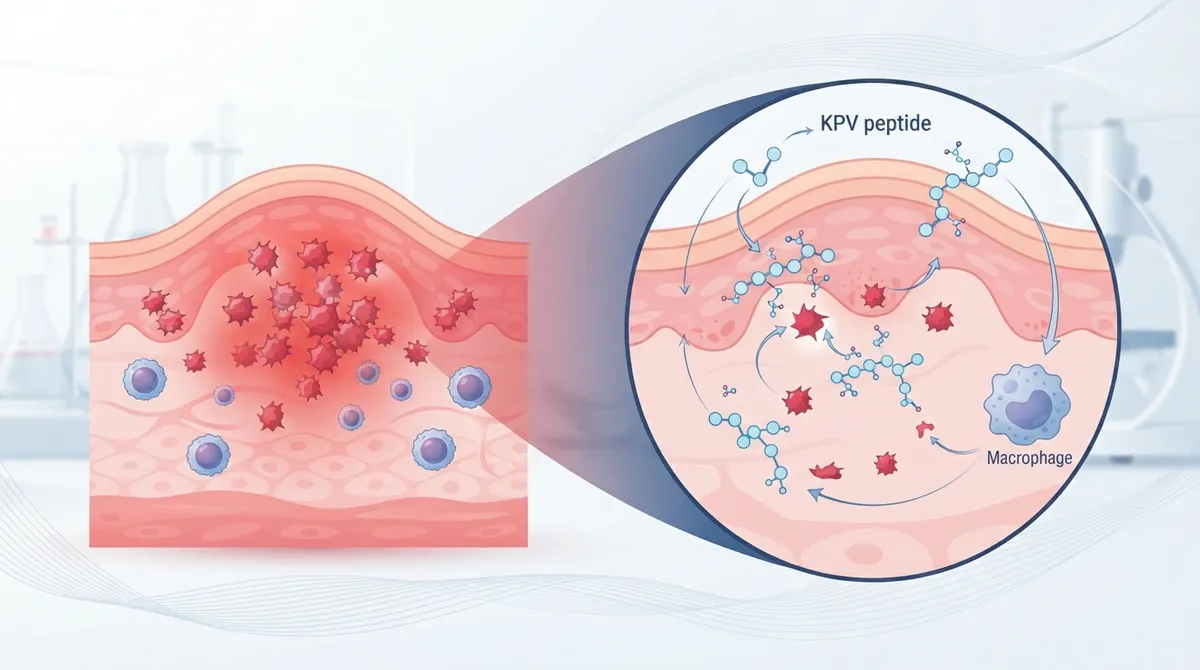
Lab studies suggest KPV may calm certain inflammatory pathways inside skin cells. Two key pathways are called NF-κB and MAPK. Both play a role in triggering skin redness, swelling, and irritation.
When researchers expose skin cells to KPV in the lab, they often see lower levels of inflammatory chemicals. These include interleukin-1β, IL-6, IL-8, and TNF-α. These chemicals are known drivers of skin inflammation and irritation.
Some studies also point to reduced oxidative stress. This is cell damage caused by unstable molecules called free radicals. Less oxidative stress may mean less cellular injury in skin tissue.
Key Inflammatory Markers KPV May Influence
- NF-κB signaling, a major driver of inflammation in skin cells
- ERK and p38 MAPK pathways, linked to stress responses in skin
- Interleukin-1β (IL-1β), a chemical messenger tied to swelling
- IL-6 and IL-8, markers often elevated in inflamed skin
- TNF-α, a protein connected to chronic inflammatory conditions
- Caspase-1, an enzyme involved in cell death and inflammation
These are laboratory measurements, not patient results. A cell responding well in a petri dish does not guarantee the same effect on human skin. This distinction matters when reading headlines about peptide research.
What Does the Research Actually Include So Far?
Current KPV dermatology research falls into a few categories. Understanding these categories helps you judge how strong the evidence really is.
1. Cultured Skin Cell Studies
Scientists grow keratinocytes, the main cells in your skin's outer layer, in lab dishes. They then expose these cells to KPV and measure changes in inflammation markers.
2. Reconstructed Skin Models
These are lab-grown, multi-layer tissue samples that mimic real human skin. They allow researchers to study how KPV behaves across different skin layers.
3. Animal Studies
Some research uses animal models of contact dermatitis and other inflammatory skin conditions. These studies help scientists understand possible mechanisms before testing on humans.
4. Transdermal Delivery Studies
A notable 2017 study examined how KPV might pass through human skin using methods like iontophoresis and microneedling. This study tested delivery, not treatment effectiveness. It used donated human skin tissue outside the body, known as an ex vivo model.
5. Pollution and Skin Stress Research
A more recent study looked at whether KPV could reduce skin cell damage caused by fine particulate matter, the tiny pollution particles found in urban air. Researchers observed effects on the ERK/p38 MAPK/NF-κB pathway and an enzyme called caspase-1. This may hint at future uses for pollution-related skin stress, but again, this was lab-based work.
Is KPV Proven to Treat Eczema, Psoriasis, or Dermatitis?
No. This is the most important point to understand. KPV is not an approved treatment for any skin condition. There are no large human clinical trials confirming it works for eczema, psoriasis, or contact dermatitis.
The published research on KPV and skin inflammation remains focused on cell cultures and animal models. No standard human dosing exists. No long-term human safety data has been established either.
|
Research Stage |
What It Involves |
Relevance to Patients |
|---|---|---|
|
Cell Culture Studies |
Testing KPV on isolated skin cells in a dish |
Early signal only, not clinical proof |
|
Reconstructed Skin Models |
Lab-grown tissue mimicking human skin layers |
Better model, still not a live patient |
|
Animal Studies |
Testing in mice or other animal models |
Helps understand mechanism, not human dosing |
|
Ex Vivo Human Skin |
Donated human skin tested outside the body |
Delivery method research only |
|
Human Clinical Trials |
Randomized, controlled testing in patients |
Not yet established for KPV in dermatology |
Is KPV FDA-Approved for Skin Conditions?
No. KPV is not an FDA-approved dermatologic medication. It does not carry an approved dose, route of administration, or safety profile for treating skin disease.
Some online sellers offer compounded or research-labeled KPV products. These products are not regulated the same way as approved medications. Using them outside of proper medical guidance carries unknown risks.
If you are managing a skin condition, working with a licensed provider remains the safest path. Our primary care team can evaluate your symptoms and recommend treatments backed by solid clinical evidence.
How Does KPV Compare to Established Anti-Inflammatory Treatments?
Topical corticosteroids remain the gold standard for many inflammatory skin conditions. They have decades of clinical trial data, established dosing, and known safety profiles.
Here is how the current evidence compares:
- Topical Corticosteroids: Backed by large clinical trials, FDA-approved, with known side effect profiles for short and long-term use.
- Calcineurin Inhibitors: Another approved option for eczema and dermatitis, with published safety data across age groups.
- KPV: Limited to lab and animal research. No approved human dosing. No confirmed clinical benefit in patients.
This does not mean KPV research is unimportant. Early-stage peptide studies often pave the way for future treatments. But patients should not substitute unproven compounds for medications with proven track records.
Can KPV Actually Penetrate the Skin?
This question drove the 2017 transdermal delivery study. Researchers tested whether KPV could cross the skin barrier using iontophoresis, a technique using mild electrical current, and microneedling, which creates tiny channels in the skin.
The study found some passage through human skin tissue in a lab setting. However, this tells us about delivery mechanics, not clinical outcomes. Getting a compound into skin tissue is different from proving it reduces disease symptoms in real patients.
What Are the Risks and Unknowns of KPV Use?
Because human trials are lacking, several important gaps remain in our knowledge:
- No established safe dosing for topical, injected, or other routes
- No long-term safety data in human patients
- No standardized manufacturing or purity testing for over-the-counter products
- Unknown interactions with other medications or skin treatments
- No FDA oversight of compounded or online peptide sellers
Given these gaps, primary care clinicians generally should not recommend compounded or online KPV products as a substitute for guideline-supported dermatologic care. If you are curious about peptide science in general, our article on what peptides are and how they work offers helpful background.
What Should You Do If You Have a Skin Condition Now?
If you are dealing with eczema, contact dermatitis, or another inflammatory skin issue, here are practical next steps:
- Schedule an appointment with a primary care provider or dermatologist for a proper diagnosis.
- Discuss proven treatment options, including topical steroids or other evidence-based therapies.
- Ask about triggers, such as allergens, environmental exposures, or underlying conditions.
- Avoid unregulated peptide products marketed for skin conditions without medical supervision.
- Follow up regularly to track how your treatment plan is working.
Our providers, including those featured on our providers page, can walk you through safe, effective options tailored to your skin health needs.
Why Choose InCare for Your Skin and Wellness Concerns?
At InCare, we combine modern technology with clear, honest medical guidance. Our Tampa and Riverview locations offer comprehensive primary care services, including evaluation and management of skin conditions that may benefit from established anti-inflammatory treatments.
We also offer advanced wellness services like DNA gene testing, body composition analysis, and IV hydration therapy for patients who want a whole-body approach to health optimization. Every recommendation we make is grounded in current medical evidence, not internet trends.
You can follow our latest health updates on Facebook and Instagram, or see quick wellness tips on TikTok. Many of our patients also share their experiences on Google, and you can visit us on Google — InCare to read real reviews from people in Tampa and Riverview.
The Bottom Line on KPV Research in Dermatology
KPV is an interesting research compound. Early lab studies suggest it may calm certain inflammatory pathways in skin cells. But this research remains in early stages, limited to cell cultures, animal models, and ex vivo skin studies.
There is no strong human clinical trial data proving KPV treats eczema, psoriasis, or dermatitis. It is not FDA-approved. No standard dose exists. Patients should rely on evidence-based treatments and licensed medical guidance rather than unregulated online products.
If you have questions about a skin condition or want to explore proven wellness options, our team is ready to help. Reach out to our team today or schedule your visit online to get started with care you can trust.
FAQs
Q: What is KPV peptide and how might it affect skin inflammation?
A: KPV is a three-amino-acid fragment derived from alpha-MSH. Lab studies suggest it may reduce inflammatory signaling in skin cells by calming pathways like NF-κB and MAPK, though this research remains preclinical.
Q: Is KPV proven to treat eczema, atopic dermatitis, psoriasis, or contact dermatitis?
A: No. Current evidence comes from cell cultures, animal models, and ex vivo skin studies. There are no established human clinical trials proving KPV treats these skin conditions.
Q: Is KPV FDA-approved or available as an approved skin medication?
A: KPV is not FDA-approved for any dermatologic use. It lacks standard human dosing, safety data, and regulatory clearance, so it should not replace approved treatments.
Q: How does KPV compare with topical corticosteroids or other established anti-inflammatory treatments?
A: Topical corticosteroids have decades of clinical trial data and known safety profiles. KPV research is limited to laboratory and animal studies, with no confirmed clinical benefit in human patients.
Q: Should primary-care clinicians recommend compounded or online KPV products for skin conditions?
A: No. Without established human safety data or FDA approval, clinicians should rely on guideline-supported dermatologic therapies rather than unregulated compounded or online peptide products.