
Key Takeaways
- MOTS-c is a mitochondrial peptide whose benefits for energy, blood sugar, and fat metabolism have so far been shown only in cell and animal studies, not proven in people.
- No human trial has tested MOTS-c as a treatment, and the FDA reports no clinical data or established safe or effective dose for MOTS-c drug products.
- Human studies have mainly measured the MOTS-c the body already makes; in a 2021 breast cancer survivor study, levels rose with exercise and tracked with health changes, but exercise was the intervention.
- Products sold online may vary in purity and strength, and unknown side effects make them especially risky for people with diabetes, heart disease, or those on prescription medicines.
- Proven steps for metabolic health include regular aerobic and strength exercise, balanced nutrition, quality sleep, routine lab screenings, and clinician-guided weight management.
- Bring your goals, current medications, and supplements to a licensed clinician, and ask what evidence supports any peptide and which tested alternatives can meet the same goal.
MOTS-c is one of the most talked-about names in longevity and wellness circles right now. Social media posts promise more energy, easier weight loss, and slower aging. But what does the science actually say? If you are a busy professional, a parent juggling a full calendar, or someone who wants to get ahead of health problems, you deserve a clear answer before you spend money or take any risk.
Here is the short version. MOTS-c is a small protein made by your mitochondria, the tiny engines inside your cells. Lab and animal studies suggest it may help with energy use and blood sugar control. But these are early findings. The benefits of MOTS-c have not been proven in people, and the FDA has not approved it for any use. This guide explains what is known, what is not, and what proven steps can support your metabolic health today.
What Is MOTS-c and Where Does It Come From?
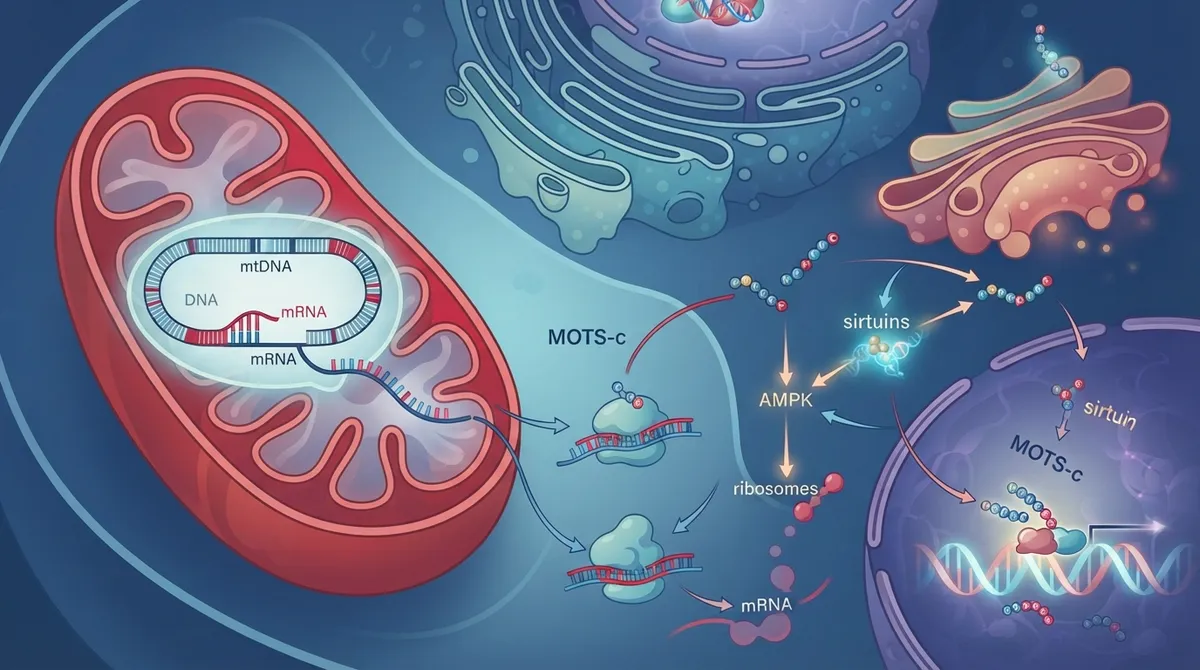
MOTS-c stands for "mitochondrial open reading frame of the 12S rRNA-c." That is a long name for a short peptide, which is a tiny chain of amino acids. Your body makes it naturally. It is encoded by mitochondrial DNA, which is separate from the DNA in the nucleus of your cells.
Mitochondria turn food into usable energy. Researchers believe MOTS-c may act like a messenger, helping cells respond to stress and manage energy. That is why scientists study it in connection with metabolism, exercise, and aging.
It is important to separate two ideas:
- Natural MOTS-c: the peptide your own body produces. Researchers can measure it in blood and tissue.
- MOTS-c products: synthetic versions sold online or by some clinics. These have not been tested as drugs in human clinical trials.
Most of the excitement comes from studies of the first kind, while most marketing is about the second. That gap matters.
What Are the Possible Benefits of MOTS-c?
Researchers have explored several possible benefits. Remember, these are proposed effects from cell and animal studies. They are not proven results for people who take MOTS-c.
Blood Sugar and Insulin Sensitivity
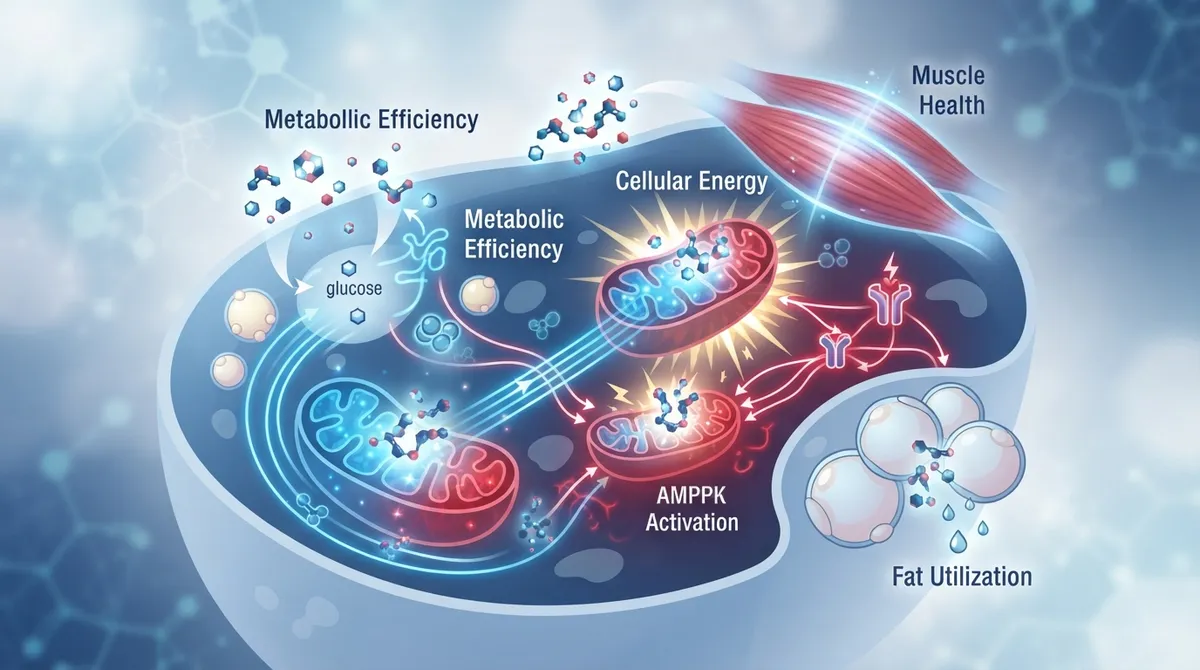
In lab and animal studies, MOTS-c appeared to improve how cells respond to insulin. It also seemed to affect how muscle cells take up glucose. This has led to interest in whether it could someday help with insulin resistance or type 2 diabetes. No human trial has shown this yet. For a deeper look at this question, see our guide on MOTS-c and diabetes management facts.
Energy Balance and Fat Metabolism
Animal studies suggest MOTS-c may activate AMPK-related pathways. AMPK is often called a cellular energy sensor. When it turns on, cells tend to burn more fuel and store less. Mice given MOTS-c in some studies showed better resistance to diet-induced weight gain. That does not mean the same will happen in people. You can read more about the animal data in 14 MOTS-c animal research facts.
Exercise and Muscle Function
Natural MOTS-c levels appear to rise during exercise and then return toward baseline afterward. This has led some to call it an "exercise mimetic," meaning something that might copy a few effects of exercise. But the rise in natural levels is not the same as a benefit from taking a product. No one has shown that injecting MOTS-c gives you the results of a workout.
Healthy Aging
Because mitochondria weaken with age, researchers wonder if MOTS-c levels or activity play a role in aging. This idea is still a theory. Whether adding more MOTS-c could slow aging is unknown.
What Does Human Research Actually Show?
This is where the story gets more sober. Human studies have mostly measured the MOTS-c your body already makes. They have not tested MOTS-c as a treatment.
Here is one example. A 2021 analysis looked at a 16-week aerobic and resistance exercise program in breast cancer survivors. MOTS-c increased significantly after exercise in the non-Hispanic White subgroup, but not in the Hispanic subgroup. In the group where it rose, changes in MOTS-c were linked to changes in fat mass, body weight, insulin resistance (HOMA-IR), and lean mass.
That sounds promising, but there are limits:
- The finding did not apply to every subgroup.
- An association does not prove cause and effect.
- The participants exercised. Nobody took a MOTS-c product.
In other words, exercise changed MOTS-c, and exercise likely drove the health gains. To see how the published work holds up, review what MOTS-c research studies really show.
Why Are the Benefits of MOTS-c Still Unproven?
The FDA has reviewed this peptide as part of its compounding discussions. Its briefing document reports that a literature search found no clinical studies or human exposure data for drug products containing MOTS-c. It also found no evidence that establishes a safe or effective human dose.
The table below shows how the evidence stacks up.
|
Claim |
Evidence Level |
What It Means for You |
|---|---|---|
|
Improves insulin sensitivity |
Cells and animals only |
Not proven in people |
|
Supports fat loss |
Animal studies only |
Not proven in people |
|
Rises with exercise |
Human observational data |
Shows a link, not a treatment effect |
|
Slows aging |
Theory |
No human evidence |
|
Safe and effective dose |
None established |
Safety is unknown |
The FDA also notes that MOTS-c is not a component of an approved drug. So no official dose, label, or long-term safety record exists. If you want to understand the regulatory picture, read about MOTS-c FDA approved vs. investigational status. Rules can change, so always check current FDA guidance.
What Are the Risks and Unknowns?
When a product has no human safety data, the risks are not just unlikely. They are unknown. That is a very different thing from "safe." Here are the main concerns:
- No proven dose. Without human trials, nobody can say how much is too much. You can learn more in why no safe human MOTS-c dose is proven yet.
- Unknown side effects. Short-term and long-term effects have not been studied in people. See how to weigh MOTS-c side effects before you try it.
- Product quality. Products sold online may vary in purity and strength. Without oversight, you may not get what the label says.
- Interactions with other conditions or medicines. People with diabetes, heart disease, or those who take prescription drugs should be especially careful. Review MOTS-c contraindications every patient must know.
For athletes, there is another issue. Anti-doping groups have raised concerns about peptides like this. Learn more in peptides for athletes: hype vs. medical reality.
Who Is Asking About MOTS-c, and Why?
Interest comes from several groups, and each has a different goal.
- Tech-savvy professionals want to optimize energy and performance and often follow biohacking trends online.
- Wellness-focused adults who already invest in DNA testing, IV therapy, or screenings want the next advanced option.
- Busy parents look for ways to manage weight and low energy without adding hours to the day.
- Young adults and women exploring prevention often find peptides through social media and want a trusted source to sort fact from hype.
If you are in one of these groups, the best first step is a conversation with a licensed clinician who knows your full health picture. That is where a primary care and wellness practice can help.
What Proven Options Support Metabolic Health Right Now?
The good news is that you do not need an unproven peptide to improve how your body uses energy. Several well-studied steps have solid evidence behind them.
- Regular exercise. Aerobic and strength training both improve insulin sensitivity and body composition. Remember, exercise is also what raises natural MOTS-c levels.
- Balanced nutrition. Whole foods, enough protein, fiber, and fewer ultra-processed items support steady blood sugar.
- Quality sleep. Poor sleep worsens insulin resistance and appetite control. If this is a struggle, see how to know when to see a doctor for poor sleep.
- Routine lab work and screenings. Checking blood sugar, cholesterol, thyroid, and hormone levels finds problems early.
- Clinician-guided weight management. Approved medications and structured programs can help when lifestyle changes alone are not enough. Learn how a primary care doctor aids weight loss.
Tools like metabolic breath analysis, body composition scans, and DNA gene testing can also show where you stand. They turn guesses into data, which makes your plan more personal and more effective.
How to Talk to Your Doctor About MOTS-c
If you are curious about MOTS-c, bring your questions to a professional you trust. Here is a simple way to prepare:
- Write down why you are interested, such as energy, weight, or blood sugar.
- List every medication and supplement you take.
- Ask what evidence exists for your specific goal.
- Ask about proven alternatives that could meet the same goal.
- Ask what tests could show your current metabolic health.
A good doctor will not dismiss your curiosity. They will also be honest about what the science supports. You can get a wider view of how clinicians weigh these options in how to evaluate peptide therapy for wellness safely.
Why Choose InCare for Metabolic and Wellness Care?
InCare is a personalized primary care and wellness clinic with locations in Tampa and Riverview, Florida. The team combines medical expertise with modern tools to focus on prevention and whole-body health. Services include primary care, urgent care, cancer screenings, medical weight loss, metabolic breath analysis, body composition analysis, DNA gene testing, and IV hydration.
This mix matters. Instead of chasing a single trending peptide, InCare patients get a full picture of their health and a plan built on proven methods. Patients have rated the clinic 4.8 out of 5 on Google, and you can read InCare reviews on Google to see what neighbors in the Tampa Bay area say. You can also follow health tips and updates on Instagram, Facebook, and TikTok.
The Bottom Line on MOTS-c Benefits
MOTS-c is a fascinating peptide, and science is right to study it. It may one day lead to new tools for metabolic health. But today, its benefits remain possibilities, not promises. Human proof is missing, no safe dose exists, and the FDA has not approved it for any use.
In the meantime, exercise, good nutrition, sleep, smart screenings, and clinician-guided care have real, proven results. Ready to build a plan around your goals? Book your appointment with InCare today, or contact our team with questions about metabolic health, weight management, and wellness testing.
FAQs
Q: What is MOTS-c and how does it work?
A: MOTS-c is a small peptide encoded by mitochondrial DNA. Lab and animal studies suggest it may influence cellular energy use, glucose handling, and AMPK-related pathways. How it behaves as a treatment in people has not been established.
Q: Is MOTS-c FDA-approved or available by prescription?
A: No. MOTS-c is not FDA-approved for any medical or wellness use, and it is not a component of an approved drug. Regulatory and compounding rules can change, so check current FDA guidance and speak with a licensed clinician.
Q: Can MOTS-c help with weight loss or insulin resistance?
A: Animal studies hint at effects on fat metabolism and insulin sensitivity, but no human trial has shown that taking MOTS-c helps with weight loss or insulin resistance. Proven options include exercise, nutrition, sleep, and clinician-guided weight management.
Q: Is MOTS-c safe, and is there a proven dose?
A: Human safety is unknown. The FDA's briefing document reports no clinical studies or human exposure data for MOTS-c drug products and no evidence of a safe or effective human dose.
Q: What are evidence-based alternatives for metabolic health?
A: Regular exercise, balanced nutrition, quality sleep, routine screenings, and clinician-guided weight and blood sugar management all have strong evidence. A primary care team can personalize these steps using lab work and tools like metabolic breath analysis.