Key Takeaways
- TRT works best for men with two things together: consistently low testosterone confirmed by repeat morning blood tests, and matching symptoms. Age alone is not a reason to start.
- The best-supported benefits are improved sexual desire and activity in true deficiency, correction of some anemia, and higher bone density; however, bone density gains have not been shown to prevent fractures.
- Energy and mood results are mixed: in TRAVERSE's anemia subgroup, 41.0% of treated men reported better energy versus 27.5% on placebo, but other analyses found no significant benefit.
- TRT is not a fertility treatment and can suppress sperm production, so men planning to have children soon should discuss this with their doctor before starting.
- Before starting, screen for contraindications such as prostate or breast cancer, hematocrit above 54%, untreated severe sleep apnea, and recent heart attack or stroke.
- Treatment requires follow-up: reassess 3 to 12 months after starting and then yearly, checking hematocrit and blood pressure, since testosterone can raise blood pressure.
Many men notice changes as they age. Energy drops, sex drive fades, and workouts feel harder. So it is natural to ask, what are the benefits of TRT? Testosterone replacement therapy (TRT) can help some men a great deal. For others, it offers little, and it carries real risks.
The honest answer depends on one thing: whether you truly have testosterone deficiency. In 2026, the best evidence shows TRT works well for men with confirmed low levels and matching symptoms. It is not a general anti-aging tool or a wellness shortcut.
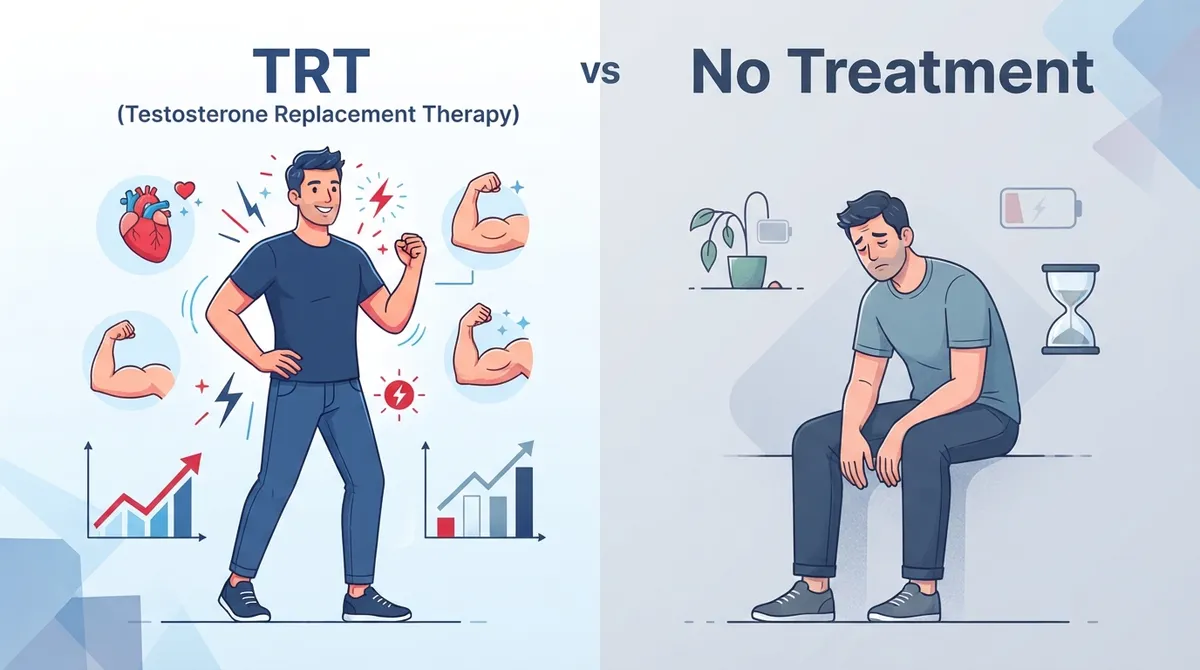
This article compares two paths. One is TRT under medical care. The other is no treatment, or lifestyle-first care. You will see which benefits have strong support, which are less certain, and who should avoid TRT. At InCare, our primary care team helps men sort through these choices with testing, clear explanations, and careful follow-up in Tampa and Riverview.
What TRT Is and Who It Is For
TRT replaces testosterone in men whose bodies do not make enough. It can be given by injection, gel, patch, or other forms. The goal is to bring levels back into a healthy range and relieve symptoms of deficiency.
The Endocrine Society says TRT is meant for adult men with two things: symptoms or signs of testosterone deficiency, and consistently low testosterone confirmed by testing. A single low lab result is not enough. Age alone is not a reason to start.
Doctors usually repeat a morning blood test to confirm the result. They also look for the cause. Sleep apnea, obesity, medication effects, and other health problems can lower testosterone. Treating those issues sometimes helps more than hormones do. For a deeper look at how the therapy works, see our guide on what testosterone replacement therapy is at InCare.
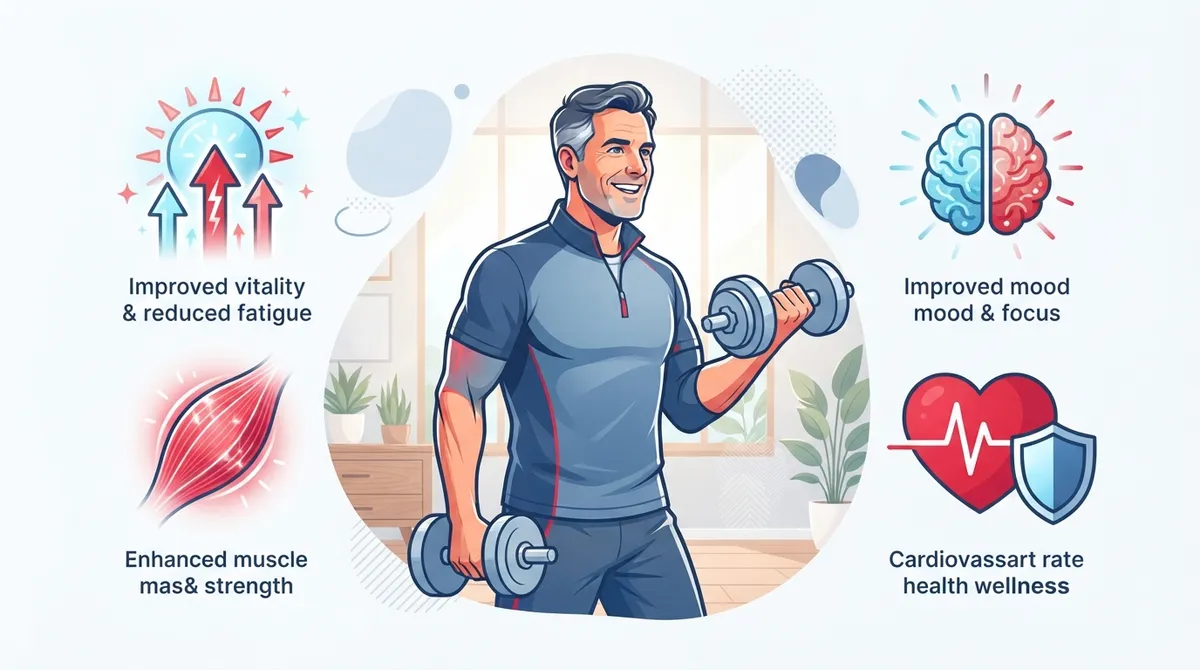
The Benefits of TRT: What the Evidence Supports
Not every claimed benefit is equally proven. Some are well supported. Others are mixed. Here is a plain look at each.
Stronger Support: Sexual Desire and Activity
The best-supported benefit is better sexual desire and sexual activity. Men with true deficiency often report a clear improvement in libido. Some also see better erectile function. However, erectile dysfunction has many causes, such as blood vessel disease, diabetes, and stress. TRT alone may not fix it.
Stronger Support: Anemia Correction
TRT can correct anemia in some men with low testosterone. In the large TRAVERSE trial, anemia was present in 815 of 5,204 participants (15.7%). Testosterone treatment helped raise hemoglobin in men with this problem. Doctors still need to watch for the opposite issue, which is too many red blood cells.
Stronger Support: Bone Density
TRT can improve bone mineral density and estimated bone strength. This sounds like a clear win, but there is a catch. These changes do not prove TRT prevents fractures. In TRAVERSE, fractures occurred in 91 testosterone-treated men (3.5%) compared with 64 men on placebo (2.4%). Better bone scans did not mean fewer breaks.
Mixed Evidence: Energy and Mood
Many men hope TRT will restore energy and lift mood. Results vary. In the TRAVERSE anemia subgroup, 41.0% of treated men reported improved energy at six months, versus 27.5% on placebo. That is a real gap. Yet Endocrine Society reviews found no statistically significant improvement in energy or mood in some analyses. The effect depends on the group studied and the outcome measured.
Modest Support: Muscle Mass and Strength
TRT may increase lean muscle mass and strength. It should not be sold as a proven weight-loss, anti-aging, or athletic performance treatment. Muscle gains are best when TRT is paired with resistance training, good sleep, and nutrition. If weight is a main goal, a structured plan such as our medical weight loss program may offer more direct help.
TRT vs. No Treatment: A Side-by-Side Look
The table below compares the two paths for men with confirmed low testosterone versus men who choose lifestyle care alone.
|
Factor |
TRT Under Medical Care |
No TRT / Lifestyle-First Care |
|---|---|---|
|
Sexual desire |
Often improves in true deficiency |
May improve if weight, sleep, or stress are the cause |
|
Anemia |
Can correct anemia in some men |
Needs separate evaluation and treatment |
|
Bone density |
Can improve; fracture benefit unproven |
Weight-bearing exercise, vitamin D, calcium support bone |
|
Energy and mood |
Mixed results |
Sleep, activity, and mental health care help |
|
Muscle and strength |
May increase lean mass |
Strength training builds muscle without hormones |
|
Fertility |
Can lower sperm production |
No fertility impact |
|
Monitoring needed |
Regular labs and blood pressure checks |
Routine primary care visits |
Neither path is always better. A man with clear deficiency and strong symptoms may gain a lot from TRT. A man with normal levels and a busy, sleepless life will likely do better with lifestyle changes first.
Who Should Not Start TRT
TRT is not safe for everyone. The Endocrine Society advises against starting it in several situations. These include:
- Prostate cancer or breast cancer
- Elevated hematocrit (too many red blood cells)
- Untreated severe sleep apnea
- Uncontrolled heart failure
- A recent heart attack or stroke
- Thrombophilia, a clotting disorder
- Certain prostate findings that need further evaluation first
This is why a careful screening visit matters. A good clinician reviews your history, symptoms, and risk factors before writing any prescription. Men over 40 should also learn what prostate screening involves. Our article on key things men should know about prostate exams explains what to expect.
TRT and Fertility: An Important Warning
TRT is not a fertility treatment. In fact, it can suppress sperm production. Men who plan to have children soon should not start TRT without a clear discussion with their doctor. Other options exist that can raise testosterone while protecting fertility. If you are a young father or planning a family, raise this topic at your first visit.
Risks and Safety Updates for 2026
Safety has been a major topic in recent years. The TRAVERSE trial enrolled 5,246 men aged 45 to 80 with symptoms of low testosterone and existing or high cardiovascular risk. Testosterone was noninferior to placebo for major adverse cardiovascular events during the trial.
Following that result, the FDA announced class-wide labeling changes in February 2025. The boxed warning about increased cardiovascular events was removed. However, the labels were updated to warn that testosterone products can raise blood pressure. This means blood pressure should be watched closely during treatment.
Another known risk is erythrocytosis, defined as hematocrit above 54%. Endocrine Society evidence reviews found this happens more often with testosterone therapy. Regular blood tests help catch it early. Managing blood pressure is also a key part of safe care. Our guide to proven strategies for blood pressure management offers useful tips.
How Doctors Diagnose Low Testosterone
A safe TRT plan starts with the right diagnosis. Here is the usual process:
- Review symptoms. Your doctor asks about libido, energy, mood, sleep, and physical changes.
- Order morning blood tests. Testosterone is highest in the morning, so timing matters.
- Repeat the test. A second result confirms whether levels stay low.
- Look for causes. Your doctor checks for sleep apnea, obesity, diabetes, medication effects, and pituitary or testicular problems.
- Discuss goals and fertility. You and your doctor weigh benefits, risks, and family plans.
- Decide on treatment. TRT starts only if you meet the criteria and have no major red flags.
This process protects you from unnecessary treatment. It also makes sure other health issues are not missed. A primary care office is well suited to this work because it sees the whole picture of your health. You can learn more about that approach in our article on whether primary care doctors can prescribe TRT and order hormone testing.
Monitoring: What Safe TRT Follow-Up Looks Like
TRT is not a one-time fix. It needs ongoing checks. The Endocrine Society recommends reassessing patients 3 to 12 months after starting, then yearly. Each visit looks at symptom response and side effects.
Common monitoring steps include:
- Symptom review, including libido, energy, and mood
- Testosterone levels to confirm the dose is right
- Hematocrit to watch for high red blood cell counts
- Blood pressure at every visit
- Prostate risk checks as appropriate for your age and history
Skipping follow-up is one of the biggest mistakes men make. Online-only clinics may hand out prescriptions with little oversight. A primary care clinic that knows your history can adjust the plan safely over time.
Which Path Fits Which Man?
Think of the choice this way. Different people have different needs.
- Tech-savvy men in their 30s and 40s often want data. Blood work, body composition scans, and tracked symptoms help show whether low testosterone is real.
- Busy fathers need efficient care and a frank talk about fertility before any hormone plan.
- Wellness-focused professionals may benefit from body composition analysis and metabolic testing to find root causes of fatigue and weight gain.
- Men over 50 should pay extra attention to heart health, prostate screening, and bone health before starting TRT.
In many cases, the smartest first step is not a prescription. It is a full checkup. Sleep, weight, stress, alcohol, and other conditions can all lower testosterone. Fixing them may restore levels without medication.
Why Choose InCare for Testosterone Care
InCare combines primary care with advanced wellness services under one roof. Our team looks at the full picture of your health. We confirm the diagnosis with proper testing, review your risks, and build a plan that fits your goals. If TRT is right for you, we monitor you closely. If it is not, we point you to safer steps that can help.
Patients in Tampa and Riverview trust us for personalized, technology-driven care. You can read what they say by visiting our InCare reviews on Google. For more on our approach, explore our TRT health services or learn about the benefits of testosterone therapy for men over 40. You can also follow our health tips on Instagram, Facebook, and TikTok.
Conclusion: Is TRT Worth It?
TRT can be worth it for men with confirmed low testosterone and matching symptoms. The best-supported benefits are better sexual desire and activity, correction of some anemia, and higher bone density. Energy, mood, and muscle effects are less certain. TRT is not a fertility aid, and it is not a general anti-aging treatment.
For men without true deficiency, lifestyle-first care is usually the better choice. For men with deficiency, TRT works best with careful screening and steady monitoring. Either way, the right first step is an honest evaluation with a doctor who knows your history.
Ready to find out where you stand? Book your visit with InCare today, or contact our team with questions. We will help you decide whether TRT is the right move for your health.
FAQs
Q: What symptoms can TRT improve in men with low testosterone?
A: TRT has the strongest evidence for improving sexual desire and sexual activity in men with confirmed deficiency. It can also correct anemia in some men and improve bone density. Effects on energy, mood, and physical performance are less consistent.
Q: How is low testosterone diagnosed before starting TRT?
A: Doctors review your symptoms and order repeat morning blood tests to confirm consistently low levels. They also look for underlying causes, such as sleep apnea or obesity. A single low result is not enough to start treatment.
Q: Does TRT affect fertility or sperm count?
A: Yes. TRT can suppress sperm production and is not recommended for men planning to have children soon. Men who want to protect fertility should discuss other options with a clinician before starting.
Q: How often should I be monitored while on TRT?
A: The Endocrine Society advises reassessing patients 3 to 12 months after starting, then once a year. Monitoring commonly includes symptom response, testosterone levels, hematocrit, blood pressure, and prostate risk as appropriate.
Q: Is TRT safe for the heart?
A: In the TRAVERSE trial, testosterone was noninferior to placebo for major cardiovascular events. The FDA removed the class-wide boxed warning on cardiovascular risk in 2025 but added warnings about higher blood pressure. Your doctor should check your blood pressure regularly while you are on treatment.