
Key Takeaways
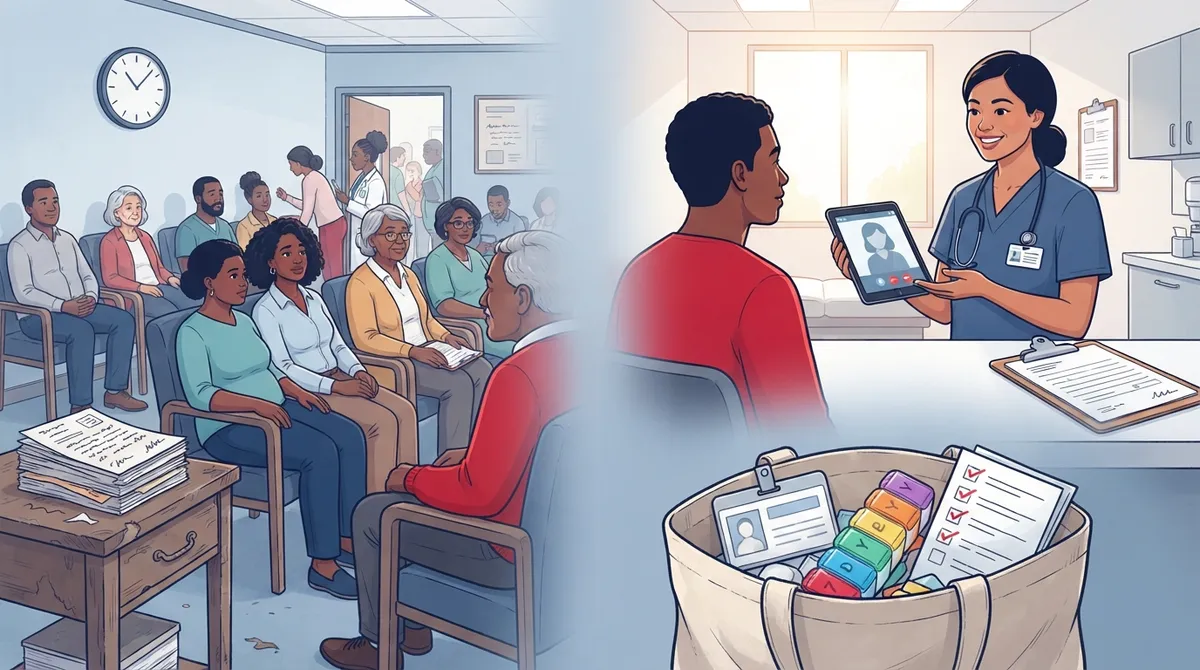
- Establishing care before you get sick gives you a trusted clinician who knows your history, which can help you avoid emergency room visits for problems a regular doctor could handle.
- Bring a photo ID, insurance card, a full medication and supplement list with doses, allergies, prior test results, and written questions to make your first visit far more productive.
- Confirm the clinician is accepting new patients, that the practice takes your insurance, and whether the visit is preventive, problem-focused, or both, since billing can differ.
- Ask how test results are shared, how fast the office replies, what after-hours access looks like, and whether telehealth is covered by your plan before you commit.
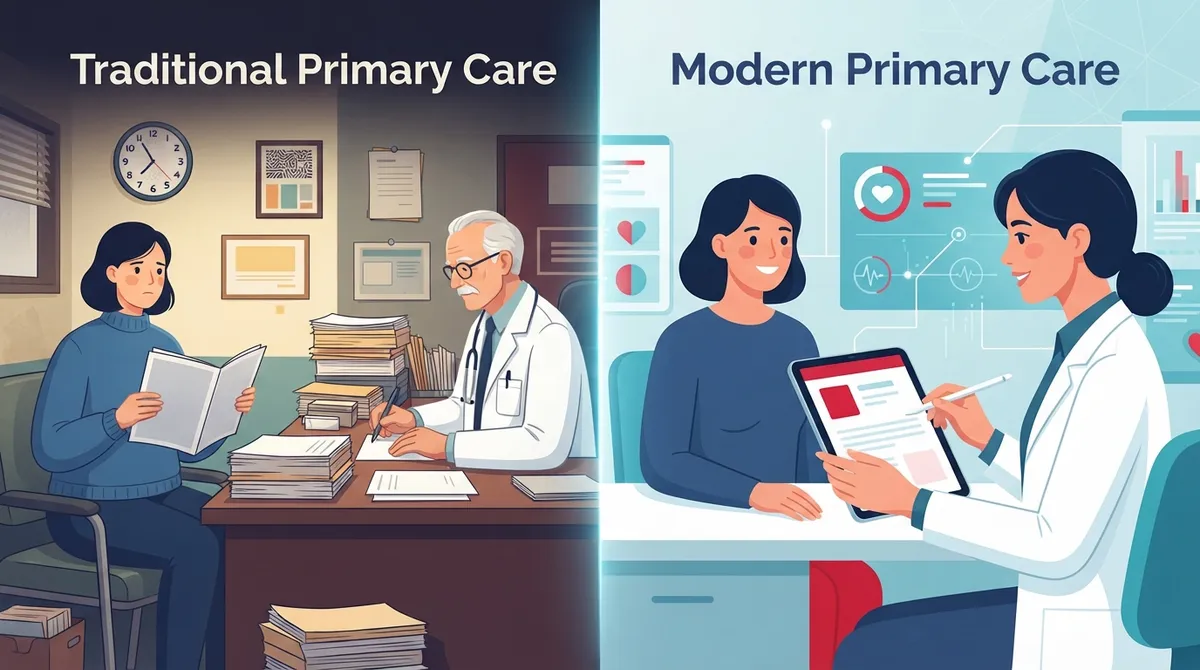
- Traditional practices often have long waits and short visits, while modern preventive practices bundle screenings, labs, urgent care, and telehealth, reducing trips and fragmented care.
- Ask about costs up front, since wellness services like body composition testing or DNA testing are often self-pay and may not be covered by insurance.
Choosing a doctor is a big decision. For many people, the first visit sets the tone for years of care. If you are searching for new patient primary care, you have two broad paths. One is the traditional model, with short visits and limited technology. The other is a modern, preventive model that treats the whole person. Knowing the difference can save you time, money, and frustration.
A new-patient visit is more than a single fix for a single symptom. It is a chance to build a lasting relationship with a clinician. You review your health history, share current concerns, and make a plan for prevention and follow-up. Yet access is not always easy. HRSA reported 8,466 primary-care shortage areas as of December 2, 2025, covering about 92 million residents, or roughly 27% of the U.S. population. Finding the right practice matters.
This guide compares traditional and modern approaches to new patient primary care. You will learn what happens at a first visit, what to bring, how to prepare, and how to choose a practice that fits your life. Whether you are a busy parent, a young professional, or a wellness-minded adult, this article will help you decide.
What Is New Patient Primary Care?
New patient primary care is the process of establishing care with a clinician who becomes your main medical contact. This person can be a family physician, a general internist, a nurse practitioner, or a physician assistant. Pediatricians serve the same role for children.
Your first visit usually covers three goals:
- Learning your story: your medical history, medications, allergies, and family background.
- Checking your health today: vital signs, an exam when appropriate, and a review of current concerns.
- Planning ahead: screenings, vaccines, referrals, and follow-up.
This visit is the foundation for everything that follows. For a deeper look at the full range of services, read about comprehensive primary care and why it matters.
Traditional vs. Modern Primary Care: The Core Differences
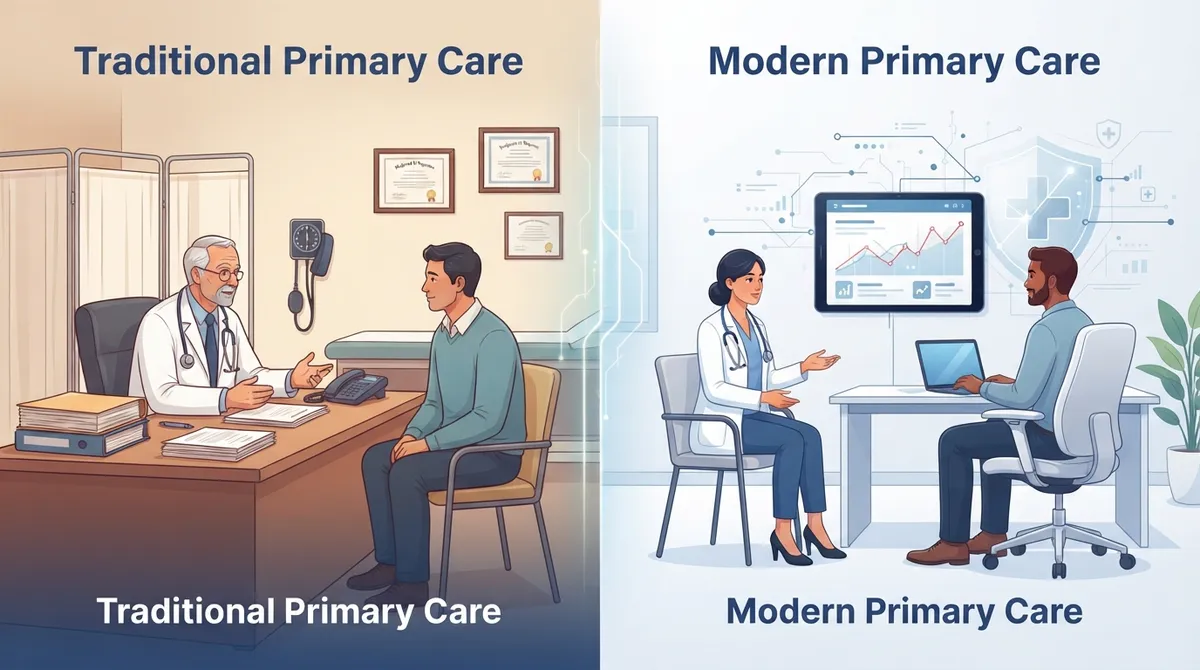
Not all practices run the same way. The two models below show the range of what patients can expect.
|
Feature |
Traditional Model |
Modern Preventive Model |
|---|---|---|
|
Visit focus |
Treating a current problem |
Prevention plus current concerns |
|
Technology |
Basic exam tools |
Advanced testing and digital tools |
|
Access |
Office visits only |
In-person, urgent care, and virtual visits |
|
Services on site |
Limited |
Screenings, labs, wellness, and weight care |
|
Care planning |
Reactive |
Personalized and proactive |
|
Communication |
Phone tag |
Clear channels for results and refills |
Neither model is wrong for everyone. But the modern approach fits the way many people live today. It saves trips, ties services together, and puts prevention first.
Traditional Primary Care: Strengths and Limits
What the Traditional Model Does Well
Traditional practices often offer a steady, familiar relationship. Many doctors know their patients for decades. Visits are straightforward, and the care is focused on diagnosing and treating illness.
Where It Can Fall Short
The challenges show up in daily life:
- Long waits for a new-patient slot. A 2020 survey cited in HRSA budget materials found that 46% of households reported negative health consequences from being unable to get an appointment when needed.
- Short visits. Time pressure can leave questions unanswered.
- Fragmented care. You may need separate offices for labs, screenings, and wellness services.
- Limited tools for prevention. Many risks are caught late, after symptoms appear.
These gaps are why many patients are now looking for a different kind of practice. See how fragmented care compares to coordinated care for more detail.
Modern Primary Care: Strengths and Tradeoffs
What the Modern Model Offers
A modern preventive practice blends medical expertise with technology. The goal is to find problems early and keep you well. It treats your health as a whole picture, not a list of separate complaints.
Common features include:
- Cancer screenings and routine preventive care
- Urgent care for sudden illness or injury
- Telemedicine for follow-ups and quick questions
- Body composition and metabolic testing
- DNA gene testing for personalized insights
- Medical weight loss and wellness programs
InCare is one example of this approach. It is a personalized clinic with locations in Tampa and Riverview, Florida. The team combines primary care, urgent care, and advanced wellness services under one roof. Patients can also explore cancer screening, DNA gene testing, and weight loss programs without starting over with a new office each time.
Tradeoffs to Consider
A modern practice may offer more than you need. Some wellness services may not be covered by insurance. It is smart to ask about costs before you book. The best practices are open about pricing and what your plan will pay for.
Which Model Wins? A Look by Patient Type
The right choice depends on your life. Here is how each model tends to fit common needs.
Busy Young Families
Parents need speed and convenience. A modern practice that handles family primary care, screenings, and sick visits in one place can cut down on trips. Learn more about family primary care.
Tech-Savvy Millennials and Gen Z Adults
These patients often want virtual visits, clear digital communication, and prevention-focused tools. A modern practice usually meets those needs better than a traditional office.
High-Income Wellness Seekers
People who want to optimize their health often look for testing and personalized plans. Advanced screening, genetic insights, and IV therapy fit that goal. The modern model is the stronger match here.
Women Without an Established Doctor
Many women see only an OB/GYN. A primary care doctor covers the rest of your health, including cancer screenings, metabolic health, and mental well-being. A modern practice that treats the whole body can fill that gap.
Patients With Stable, Simple Needs
If you are healthy and rarely need care, a traditional office may be enough. Even then, a preventive plan is worth having.
How to Prepare for Your First Visit
Preparation makes the visit far more useful. Follow these steps before you go.
- Confirm the basics. Ask if the clinician is accepting new patients and if the practice takes your insurance.
- Clarify the visit type. Find out whether it is a preventive exam, a problem-focused visit, or both. Billing can differ if a new concern comes up during a preventive visit.
- Gather your documents. Bring a photo ID and your insurance card.
- List your medications. Include supplements, doses, and any known allergies.
- Collect your records. Bring prior test results, imaging, and vaccine history. If you need help, see these steps for a medical records request.
- Write your questions. Keep a short list of concerns and goals.
For a full walk-through, review this guide to a new patient appointment.
What Happens During the Visit
The exact flow varies by age, health, and reason for the appointment. Most first visits include the following.
History and Review
Your clinician reviews your medical history, medications, allergies, and family background. Social factors, such as sleep, stress, diet, and activity, also matter. Be honest. Details that feel small can change your care plan.
Vital Signs and Exam
A nurse or medical assistant checks your blood pressure, heart rate, weight, and temperature. The clinician may then perform a physical exam when appropriate. To learn more, see what happens during an annual physical exam.
Preventive Care Planning
Preventive services are individualized. The U.S. Preventive Services Task Force (USPSTF) publishes evidence-based recommendations for people without symptoms. For example, USPSTF recommends biennial screening mammography for women ages 40 to 74 and colorectal cancer screening for adults ages 45 to 75. Your clinician will talk with you about what fits your age, history, and risk.
Next Steps
Before you leave, you should know your plan. That may include lab work, referrals, medication changes, or a follow-up date. Ask how to get test results, request refills, and reach the office after hours.
Questions Worth Asking a New Provider
Good questions help you judge fit. Consider asking:
- How do I reach the office, and how fast do you reply?
- How are test results shared?
- What happens if I need care after hours or on short notice?
- Do you offer telehealth, and is it covered by my plan?
- Which screenings do you recommend for me, and why?
- How do you coordinate referrals to specialists?
The answers reveal how a practice works. They also show whether the team values your time. For more ideas, see these signs you have found the right primary care practice.
Why Access and Timing Matter
Primary care access is a national concern. HRSA's 2025 workforce report estimates a shortage of 70,610 full-time-equivalent primary care physicians by 2038. It also notes that 7.2% of U.S. counties had no primary care physician in 2023. The national ratio was 101 primary care physicians per 100,000 people.
What does this mean for you? Waiting can cost you. Establishing care before you are sick gives you a trusted starting point. It also helps you avoid the emergency room for problems a regular doctor could handle. If you are still searching, this guide on finding doctors accepting new patients can help.
Insurance and Cost: What to Know
Coverage rules vary. Many plans cover an annual preventive visit, but the details differ. A new concern raised during a preventive visit may be billed as a separate problem-focused service.
Before you book:
- Confirm that the practice is in network.
- Ask what a first visit costs without insurance.
- Check whether labs and screenings are covered.
- Ask which wellness services are self-pay.
Clear answers up front prevent surprise bills later.
The Verdict: Why Modern Care Wins for Most Patients
For most new patients, the modern preventive model wins. It saves time by bringing services together. It catches risks earlier through screening and testing. It also treats you as a whole person, not a single complaint.
InCare stands out as a strong choice in this space. The clinic pairs personalized primary care with state-of-the-art technology and a wide range of wellness options. Patients in Tampa and Riverview can also use virtual visits when time is short. InCare holds a 4.8 out of 5 rating on Google across 359 reviews, and patients often praise the friendly staff and the care they receive. You can read InCare reviews on Google to see what patients say. You can also learn about the clinicians on the providers page or view the clinic locations.
Stay connected with InCare on Instagram, Facebook, and TikTok for health tips and clinic news.
Conclusion
Your first primary care visit is the start of a long partnership. Traditional practices offer familiarity, but they often rely on short visits and scattered services. A modern preventive practice offers a more complete, proactive experience. It fits the needs of busy families, tech-savvy adults, wellness seekers, and anyone who wants to stay ahead of health problems.
Do not wait until you are sick. Gather your records, write your questions, and choose a practice that treats you as a partner. Book your new patient appointment with InCare today, or contact our team with any questions about getting started.
FAQs
Q: What happens at a first primary care appointment?
A: Your clinician reviews your medical history, medications, allergies, and family background. They take vital signs, perform an exam when appropriate, and discuss screenings, tests, and follow-up. The visit also builds the foundation for an ongoing care relationship.
Q: What should I bring to a new-patient primary care visit?
A: Bring a photo ID, your insurance card, and a list of medications and supplements with doses. Also bring known allergies, prior records or test results, and a short list of questions and concerns.
Q: How do I find a primary care doctor who is accepting new patients?
A: Start by checking your insurance directory, then call the practice to confirm the clinician is taking new patients. Ask about the cost of a first visit and whether the appointment is preventive, problem-focused, or both.
Q: Can I discuss a health problem during a preventive visit?
A: Yes, you can raise concerns during a preventive visit. Keep in mind that coverage and billing may differ when a new problem is addressed, so ask the office how it will be handled.
Q: What preventive screenings should I expect at my first visit?
A: Screenings depend on your age, medical history, and risk. USPSTF guidance includes biennial mammography for women ages 40 to 74 and colorectal cancer screening for adults ages 45 to 75, and your clinician will tailor recommendations to you.


