Key Takeaways
- Systemic hormone therapy treats hot flashes and night sweats while traveling through your bloodstream, whereas local vaginal estrogen targets only vaginal dryness and irritation without addressing hot flashes—choose based on your specific symptoms.
- If you have a uterus, systemic estrogen must be paired with a progestogen to protect the uterine lining from overgrowth, but this requirement doesn't apply if you've had a hysterectomy.
- Transdermal patches and lower-dose formulations may reduce risks of blood clots and stroke compared to oral pills, though all hormone therapy options carry individual risks that require personalized discussion with your provider.
- Hormone therapy is most effective and safe for healthy, symptomatic women younger than 60 or within 10 years of menopause onset, but older patients can still benefit with careful individual risk assessment.
- A qualified provider should conduct a thorough first appointment including symptom review, full medical history, blood pressure check, and clear explanation of options—hormone blood tests aren't always necessary for typical menopause diagnosis.
- Choose FDA-approved hormone products over compounded bioidentical hormones unless medically necessary, as FDA products undergo rigorous testing for consistent safety and dosing while compounded products lack this verification.
Searching for "hormone replacement therapy near me" often starts with a simple problem: hot flashes, night sweats, or vaginal dryness that won't go away. But once you start looking, you find two very different paths. One treats your whole body. The other treats one small area. Knowing the difference matters more than most people realize, and it can save you months of frustration.
This guide breaks down systemic hormone therapy versus local vaginal estrogen in plain language. You'll learn what each option treats, who should consider a progestogen, and what a good first visit looks like. Whether you're a busy parent squeezing in a visit between school pickups or someone who just wants clear answers, this comparison will help you talk to your doctor with confidence.
What Does Menopause Hormone Therapy Actually Treat?
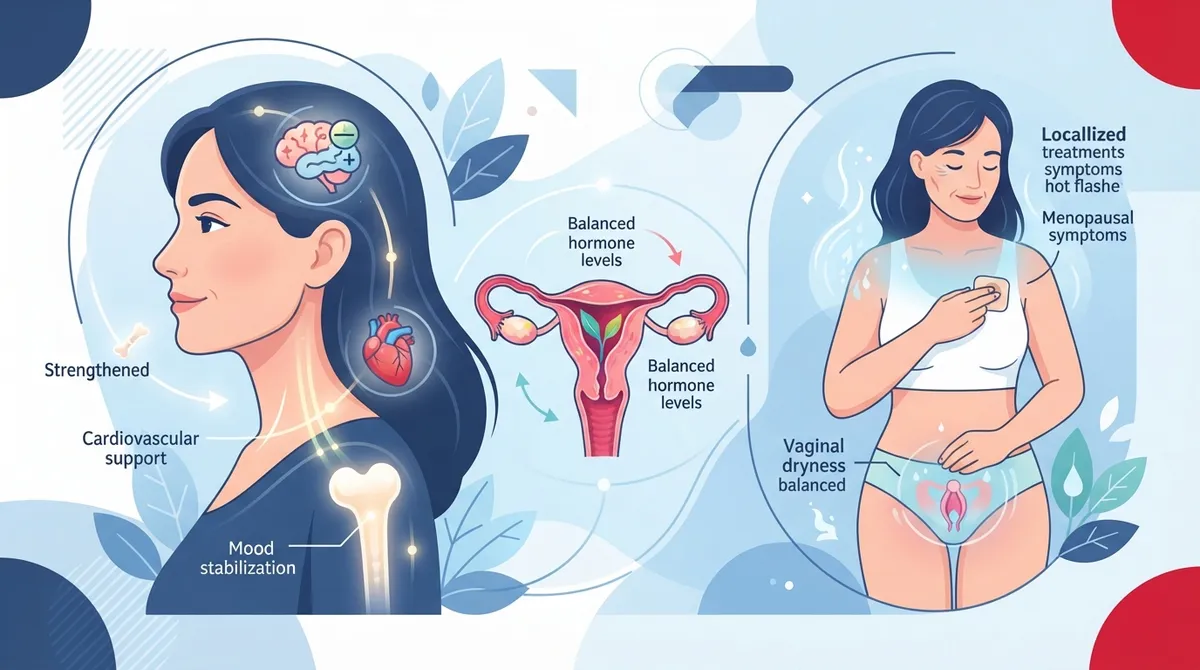
Menopause hormone therapy, sometimes called MHT, is not one single treatment. It's a category of options tailored to your symptoms, health history, and goals. A good primary care visit starts by figuring out exactly what you're dealing with before recommending anything.
According to The Menopause Society's 2022 position statement, hormone therapy remains the most effective treatment for hot flashes, night sweats, and genitourinary symptoms of menopause. It also helps prevent bone loss and lowers fracture risk over time.
Systemic Hormone Therapy: The Whole-Body Option
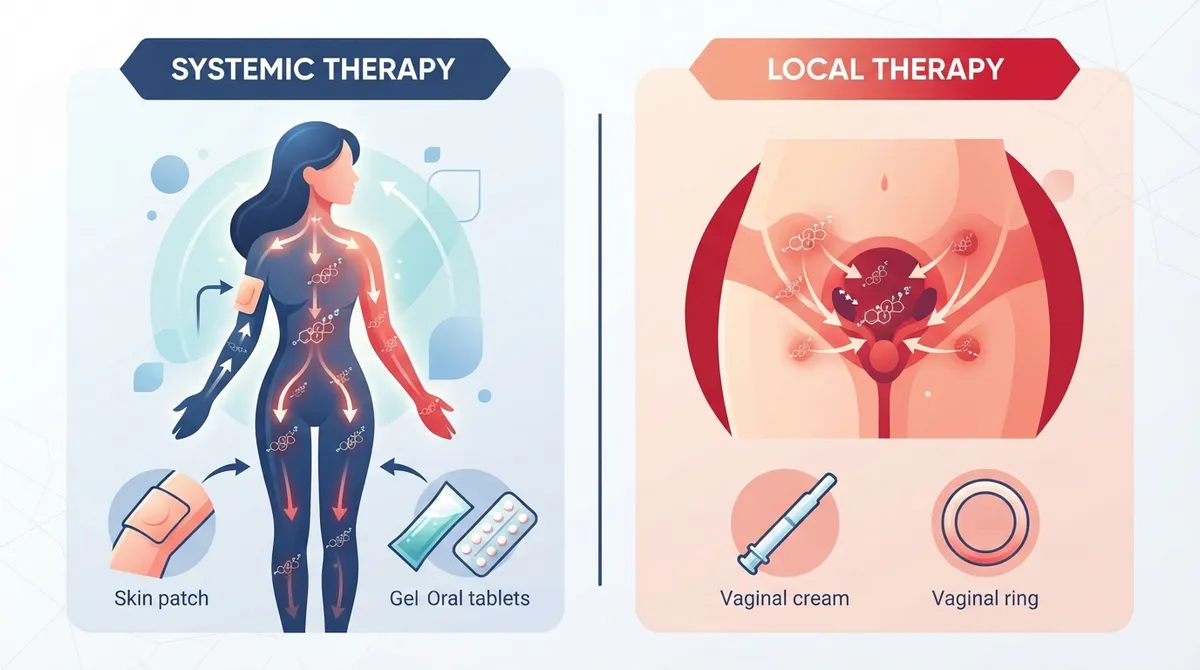
Systemic estrogen travels through your bloodstream and reaches tissues throughout your body. This is the option most people mean when they search for "hormone replacement therapy near me" because it treats the classic menopause symptoms everyone talks about.
- Hot flashes and night sweats
- Sleep disruption tied to temperature swings
- Mood changes linked to hormone shifts
- Bone density loss during and after menopause
Systemic therapy comes in several forms, including pills, skin patches, gels, and sprays. Your doctor will help you pick the route that fits your health history and lifestyle.
Local Vaginal Estrogen: The Targeted Option
Low-dose vaginal estrogen works differently. It stays mostly in the vaginal tissue and does not travel through your whole body the same way systemic therapy does. This makes it a good fit for genitourinary symptoms like:
- Vaginal dryness
- Pain during sex
- Frequent urinary tract infections tied to menopause
- General irritation or discomfort in vaginal tissue
Here's the catch: local vaginal estrogen generally does not treat hot flashes. If your main complaint is night sweats, this option alone likely won't help. Many patients need to understand this difference clearly, and that's exactly the kind of conversation you should have during a wellness visit.
Systemic vs. Local Therapy: A Side-by-Side Comparison
The table below breaks down the key differences so you can see which option might fit your symptoms.
|
Factor |
Systemic Hormone Therapy |
Local Vaginal Estrogen |
|---|---|---|
|
Treats hot flashes |
Yes |
No |
|
Treats vaginal dryness |
Yes |
Yes |
|
Helps prevent bone loss |
Yes |
No |
|
Needs a progestogen (if uterus present) |
Usually yes |
Usually no |
|
Common forms |
Pills, patches, gels, sprays |
Creams, rings, tablets |
|
Absorbed into bloodstream |
Yes, significantly |
Minimal |
Do You Need a Progestogen With Estrogen?
This is one of the most common questions patients ask. If you still have a uterus, systemic estrogen is generally paired with a progestogen. This protects the lining of your uterus from overgrowth, which can raise cancer risk if left unchecked.
If you've had a hysterectomy, estrogen alone is typically used instead. Your provider will confirm this based on your full medical history, not just a quick checklist. This is exactly why working with a trusted clinician matters, whether that's through Naveen Paddu MD, Pramjeet Ahluwalia MD, or Teshy John MD at InCare.
How to Find a Qualified Provider Near You
Finding the right hormone therapy provider takes a bit of homework. Here's a simple process to follow:
- Start with a primary care clinic that offers comprehensive wellness services, not just a single-focus hormone clinic.
- Ask if the provider follows current medical society guidelines, like those from The Menopause Society.
- Confirm they use FDA-approved products rather than relying only on compounded formulas.
- Check that they offer a full health history review, including blood pressure and risk factors.
- Look for a clear follow-up plan, since hormone therapy needs periodic reassessment.
Many patients in Tampa and Riverview start this search by checking locations near their home or workplace. A short drive for a thorough, honest conversation is worth more than a quick prescription from somewhere less careful.
What Happens at Your First Appointment?
A first visit for hormone therapy should feel thorough, not rushed. Here's what a solid appointment typically includes:
- A detailed review of your symptoms and how long you've had them
- Discussion of your full medical history, including any blood clots, cancer, or liver disease
- Blood pressure check and general risk assessment
- Conversation about your goals, whether that's fewer hot flashes or better sleep
- A clear explanation of hormone and non-hormone options available to you
Interestingly, hormone blood tests are not always needed. For healthy people over 45 with typical menopause symptoms, doctors can often diagnose menopause based on your symptoms alone. Testing may still make sense in certain situations, so don't be surprised if your doctor skips it or orders it depending on your case.
Timing Matters: Why Age Affects Your Options
Research shows that timing plays a big role in how safe and effective hormone therapy can be. The Menopause Society's 2022 statement notes that the benefit-risk balance is generally most favorable for healthy, symptomatic women younger than 60 or within 10 years of menopause onset.
This doesn't mean older patients can never benefit. It simply means your doctor will weigh your individual risks more carefully if you're starting therapy later. Absolute risks of heart disease, stroke, blood clots, and dementia tend to rise with age, so a personalized conversation is essential rather than a one-size-fits-all approach.
Are Patches Safer Than Pills?
This question comes up often, especially among wellness-focused patients who research their options before committing. The short answer: transdermal routes like patches and lower doses may reduce certain risks compared to oral pills.
Specifically, transdermal estrogen may lower the risk of blood clots and stroke compared to some oral formulations. However, this doesn't mean patches carry zero risk. Every patient's situation is different, and your provider should walk you through the specific risks tied to your health profile before you choose a route.
Why Prescription Data Shows a Concerning Trend
Despite proven benefits, fewer people are using hormone therapy today than in the past. A 2024 report found that systemic hormone therapy use among women 40 and older dropped from 4.6% in 2007 to just 1.8% in 2023.
The decline shows up across age groups too. Among women aged 50 to 54, use fell from 6.0% to 3.6% over the same period. For women aged 55 to 59, it dropped from 7.3% to 3.8%. This data reflects prescription trends, not necessarily how many people could actually benefit from treatment.
Many experts believe outdated fears from decades-old studies still influence patient hesitation today. That's part of why clear, updated information matters so much when you're weighing your options.
FDA-Approved vs. Compounded Bioidentical Hormones
You may come across clinics offering compounded "bioidentical" hormones as a custom alternative. While this sounds appealing, it's worth understanding the tradeoffs.
FDA-approved products go through rigorous testing for safety, effectiveness, and consistent dosing. Compounded products are not FDA-approved, which means their safety and dosing accuracy are less reliable. Most primary care providers recommend starting with FDA-approved options unless there's a specific medical reason to consider compounding.
Risks to Discuss With Your Provider
No treatment is risk-free, and hormone therapy is no exception. Before starting, your provider should ask about several key health factors:
- History of breast or endometrial cancer
- Unexplained vaginal bleeding
- Prior blood clots or stroke
- Cardiovascular disease
- Liver disease
Some of these conditions may make systemic therapy inappropriate for you. This is exactly why a thorough cancer screening and health history review should happen before any prescription is written.
How Often Should Treatment Be Reviewed?
Hormone therapy isn't a "set it and forget it" treatment. Your provider should schedule regular check-ins to reassess whether your current plan still fits your needs. This includes:
- Reviewing whether your symptoms have improved
- Checking for any new health changes or risk factors
- Adjusting dose or route if needed
- Discussing how long you plan to continue treatment
There's no universal answer for how long someone should stay on hormone therapy. It depends on your symptoms, risks, and personal goals, which is why ongoing care with the same trusted provider matters so much.
Why InCare Is a Strong Choice for Hormone Therapy Near You
InCare offers a personalized approach to hormone health, blending advanced technology with real medical expertise. With locations in Tampa and Riverview, InCare combines primary care excellence with wellness services like DNA gene testing and body composition analysis to give you a full picture of your health, not just a single prescription.
Patients consistently praise the clinic's friendly staff and thorough care, reflected in InCare's 4.8 out of 5 rating on Google from hundreds of reviews. You can visit us on Google — InCare to read what real patients say about their experience. You can also follow along on Facebook, Instagram, and TikTok for wellness tips and clinic updates.
Making Your Decision
Choosing between systemic and local hormone therapy comes down to your specific symptoms and health history. Systemic therapy wins for widespread symptoms like hot flashes and bone protection. Local vaginal estrogen wins for targeted comfort without full-body absorption. Neither option is universally "better"—the right choice depends entirely on you.
The best path forward is a real conversation with a qualified provider who takes time to understand your full picture. Skip the guesswork and get answers built around your body, not a generic checklist.
Ready to talk through your options with a provider who listens? Book your appointment today and take the next step toward feeling like yourself again. If you have questions before scheduling, feel free to reach out to our team for guidance.
FAQs
Q: What does hormone replacement therapy treat during menopause?
A: Systemic hormone therapy treats hot flashes, night sweats, sleep issues, and helps prevent bone loss. Local vaginal estrogen targets genitourinary symptoms like dryness and painful sex, but it does not treat hot flashes.
Q: How do I find a qualified menopause hormone therapy provider near me?
A: Look for a primary care clinic that reviews your full health history, follows current medical guidelines, and offers a clear follow-up plan. Clinics like InCare in Tampa and Riverview combine hormone therapy with broader wellness care for a complete approach.
Q: Do I need progesterone with estrogen therapy?
A: If you still have a uterus, a progestogen is typically paired with estrogen to protect the uterine lining. If you've had a hysterectomy, estrogen alone is generally used instead.
Q: Are hormone patches safer than pills?
A: Transdermal patches and lower doses may reduce certain risks, like blood clots and stroke, compared to oral pills. However, no option is completely risk-free, so your provider should review your personal health history first.
Q: How often should hormone therapy be reviewed?
A: Hormone therapy should be reassessed regularly with your provider to check symptom improvement, monitor health changes, and adjust dosing if needed. There's no fixed timeline, since it depends on your individual goals and risk factors.