
Key Takeaways
- SSRP typically refers to the Seeds Scientific Research & Performance Institute, a private peptide-focused education program; it is not a medical license or government approval.
- Always verify a Tampa physician's active Florida medical license and disciplinary history through Florida's official license lookup before booking.
- Confirm specialty-board status in the relevant board's public directory, since board certification reflects advanced testing in a specialty.
- Ask the clinic what the SSRP certification covers, when it was earned, and whether it is current, and confirm directly with the institute if it affects your decision.
- Before any peptide or regenerative treatment, ask about the product's source, U.S. regulatory status, supporting evidence, risks, alternatives, monitoring, and total cost.
- Choose a physician who provides a full primary care evaluation with labs and screenings first; a training credential should be a bonus, not the main reason for choosing a doctor.
Searching for an SSRP certified physician in Tampa can feel confusing. The term appears in wellness circles, yet few clinics explain what it actually means. In the Primary Care & Wellness setting, SSRP usually refers to the Seeds Scientific Research & Performance Institute, a private organization that offers peptide-focused education and certification. It is a useful training credential. It is not a medical license.
This guide explains what an SSRP certified physician in Tampa does, what the certification can and cannot tell you, and how to verify any clinician before you book. It is written for busy professionals, families, and health-conscious adults who want clear answers. You will also find practical questions to ask, a comparison of credentials, and a step-by-step checklist. By the end, you will know how to choose a Tampa physician with confidence and how to separate marketing from medical substance.
What Does SSRP Certification Mean?
SSRP stands for the Seeds Scientific Research & Performance Institute in the context most Tampa patients encounter. The institute provides training on peptide therapy topics for clinicians. A physician who completes it can say they hold SSRP certification.
The acronym is not universal. It can mean different things in other industries or regions. If a clinic uses the term, ask what it refers to and who issued the credential. A good practice will answer plainly.
A Private Educational Credential
SSRP certification is supplementary education. It shows a clinician pursued extra training in a specific area. It does not replace the core requirements that make someone a physician.
- It is not a Florida medical license.
- It is not a specialty-board certification.
- It is not government approval of a clinician, clinic, or treatment.
- It does not prove that a therapy is safe, effective, or FDA-approved.
Think of it like a continuing-education badge. It adds context, but it should never be the only reason you choose a doctor.
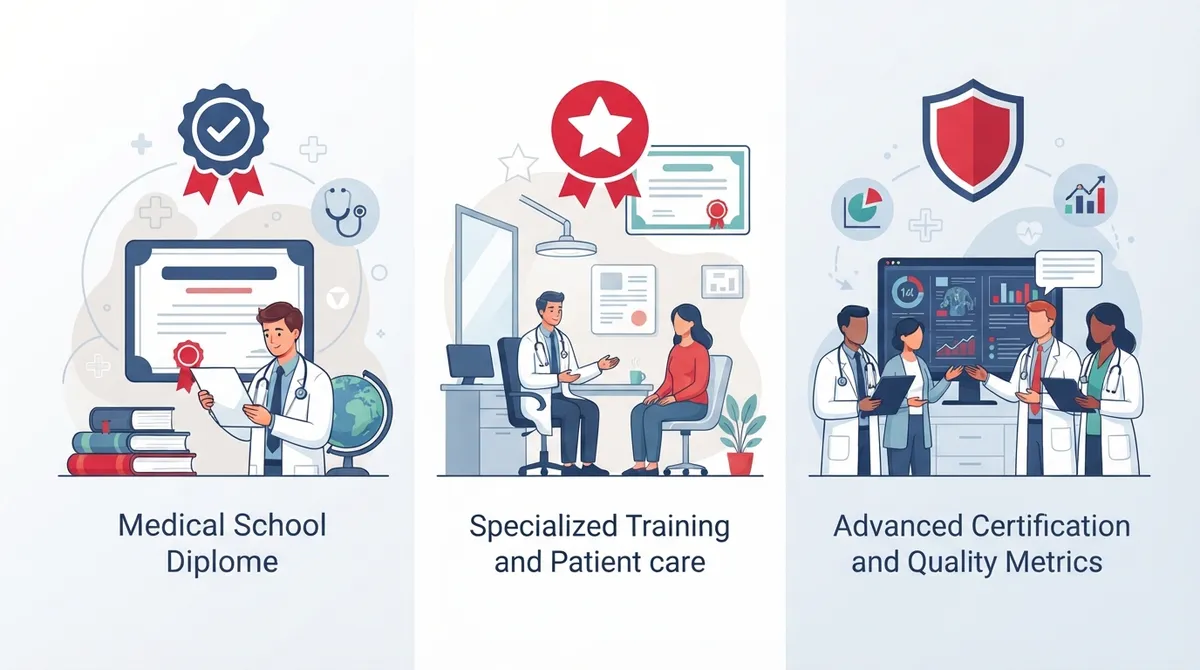
Credentials Compared: What Each One Tells You
Patients often mix up credentials that sound similar. The table below shows what each one means and how to check it.
|
Credential |
Issued By |
What It Confirms |
How to Verify |
|---|---|---|---|
|
Florida medical license |
State of Florida |
Legal authority to practice medicine |
Florida's official license lookup, which also shows public disciplinary information |
|
Specialty-board certification |
Medical specialty boards |
Advanced training and testing in a specialty |
The relevant board's public directory |
|
SSRP certification |
Seeds Scientific Research & Performance Institute (private) |
Completed peptide-focused education |
Ask the provider and confirm with the institute directly |
The license comes first. Without an active Florida license, no other credential matters. Board certification adds depth in a clinician's specialty. SSRP training can add knowledge in a niche area, but it sits on top of the foundation.
Why Patients Search for SSRP Certified Physicians in Tampa
Interest in peptide therapy has grown. Many adults hear about it through social media, podcasts, and fitness communities. They want to know if a local doctor has formal training before they consider it.
That instinct is smart. Peptide, exosome, and other regenerative offerings vary widely in quality and evidence. A physician who has taken structured education may be better prepared to discuss options. Still, training alone does not guarantee good care.
Different groups search for different reasons:
- Tech-savvy millennials want modern, data-driven care and clear explanations.
- High-income wellness seekers look for proactive optimization with proper medical oversight.
- Busy young families need a physician who can coordinate preventive care efficiently.
- Gen Z health explorers often research online first and want a trustworthy second opinion.
- Preventive-minded women want whole-body wellness, not only reproductive care.
Each group benefits from the same principle. Choose a physician who is licensed, experienced, and transparent first. Treat added certifications as a bonus.
A Caution About Directory Listings
Some Tampa practices state that they hold SSRP certification at the clinic level. One regenerative-medicine practice in Tampa, for example, describes its team as including a board-certified general surgeon and a physician assistant. That is a claim made by the practice itself. It is not an independent endorsement.
A listing or certificate on a website does not prove three things:
- The provider currently offers a specific service.
- The provider has prescribing authority for it.
- The certifying organization endorses that provider.
Always confirm current credentials, services, and the exact scope of any certification directly with the practice. Then confirm with the institute if the certification matters to your decision.
How to Verify a Tampa Physician in 6 Steps
Use this checklist before you book. It takes about fifteen minutes and protects you from avoidable risk.
- Check the Florida license. Use Florida's official license lookup. Confirm the license is active and review any public disciplinary history.
- Confirm specialty-board status. Look up the physician in the relevant board's public directory. Primary care physicians are often board certified in family or internal medicine.
- Ask about clinical experience. How long has the clinician treated patients with your concern? How many similar cases have they managed?
- Clarify the SSRP claim. Ask what the certification covers, when it was earned, and whether it is current.
- Learn who does what. Ask who evaluates you, who prescribes, and who administers treatment.
- Review follow-up and costs. Get clear answers on monitoring, risks, alternatives, and total price.
A trustworthy clinic welcomes these questions. If answers feel vague, treat that as useful information.
Questions to Ask Before Peptide or Regenerative Treatment
Peptides, exosomes, stem-cell products, and similar offerings deserve extra scrutiny. A training credential does not establish that a treatment is approved, effective, or appropriate for you. Ask these questions directly:
- What is the exact product, and where does it come from?
- What is its regulatory status in the United States?
- What evidence supports this use for my condition?
- What are the risks, side effects, and alternatives?
- Will I see the physician in person, or only a staff member?
- What labs or screenings will you order first?
- How will you monitor my progress and adjust the plan?
Be cautious of promises that sound too good. Real medicine involves tradeoffs, and a reputable physician will explain them. It is also wise to know that some states have moved to restrict certain research-grade peptides, which shows how quickly rules can change. Ask any clinic how they stay current on regulations.
Why a Primary Care Foundation Matters
Wellness treatments work best when they sit on top of solid basics. A primary care physician looks at your whole health picture, including blood pressure, blood sugar, cholesterol, sleep, mental health, and family history. That context helps decide whether an advanced therapy even makes sense.
Preventive care also catches problems early. Routine cancer screening, an annual wellness visit, and baseline lab work create a map of your health. From there, any wellness plan can be tailored safely. Our guide to making preventive care work for your health explains how to build that routine.
Skipping the foundation is a common mistake. A physician who jumps straight to peptides without a full evaluation may be missing something important.
How InCare Approaches Physician-Led Wellness in Tampa
InCare is a personalized clinic that blends medical expertise with state-of-the-art technology. With locations in Tampa and Riverview, the practice offers primary care, urgent care, and advanced wellness services under one roof. The focus is prevention and whole-body optimization, with decisions guided by evaluation and data.
That approach means your care starts with a conversation and an assessment. Patients can explore DNA gene testing, metabolic breath analysis, and body composition analysis to understand their baseline. Those results help shape a plan that fits your goals, rather than a one-size-fits-all protocol.
If peptide therapy interests you, read our overview of peptide therapy in Tampa and our related guide on finding an SSRP certified doctor in Riverview. You can also meet the clinicians on our providers page and learn more about Dr. Naveen Paddu. Patient feedback is available too, so you can read InCare reviews on Google and see what neighbors in the Tampa Bay area say about their visits.
Red Flags to Watch For
Most clinics act in good faith. Still, learn to spot warning signs when you evaluate any provider.
- A certification is presented as proof that a treatment works.
- The clinic cannot show an active Florida license on request.
- No physician evaluates you before treatment begins.
- Pricing is unclear or pushed through urgent sales tactics.
- The product source or regulatory status is not explained.
- Follow-up care is missing or vague.
If you notice two or more of these, pause and seek another opinion. Your health is worth the extra time.
Comparing Your Options in Tampa
When you compare clinics, weigh the whole picture instead of a single credential. The table below offers a simple framework.
|
What to Compare |
Why It Matters |
What a Strong Answer Looks Like |
|---|---|---|
|
Licensure |
Confirms legal authority to practice |
Active Florida license with a clean public record |
|
Primary care capability |
Supports safe, whole-person decisions |
Full evaluation, labs, and screenings before any advanced therapy |
|
Transparency |
Builds trust and informed consent |
Clear explanation of risks, alternatives, and costs |
|
Follow-up |
Allows safe monitoring and adjustment |
Scheduled check-ins and accessible clinicians |
|
Additional training |
Adds niche knowledge |
Credentials such as SSRP described accurately and confirmable |
A clinic that scores well across these rows is more likely to serve you well over time. Convenience matters too. Look for flexible scheduling, virtual options, and same-day access when you need it. Our guide on choosing the right primary care physician in Tampa Bay offers more detail on this process.
Stay Informed and Connected
Health information changes quickly, so it helps to follow trusted sources. You can keep up with wellness tips and clinic updates on Instagram, Facebook, and TikTok. Use social content as a starting point only. Always confirm medical decisions with a licensed physician who knows your history.
Conclusion: Choose Substance Over Labels
An SSRP certified physician in Tampa has pursued extra education in peptide-focused medicine. That is worth noting, but it is only one piece of the puzzle. The strongest choice is a licensed, experienced, transparent physician who evaluates you thoroughly and builds a plan around your needs. Verify the license, ask direct questions, and make sure the care starts with a solid primary care foundation.
InCare brings together personalized primary care, advanced diagnostics, and wellness services in Tampa and Riverview, so your decisions rest on real data and real medical oversight. Ready to take the next step? Book your appointment with InCare today, or contact our team to ask questions about credentials, services, and what to expect at your first visit.
FAQs
Q: What does SSRP certification mean for a physician in Tampa?
A: In Tampa primary care and wellness settings, SSRP typically refers to a private peptide-focused education program from the Seeds Scientific Research & Performance Institute. It shows a clinician completed additional training in that area. It is supplementary education and does not replace a medical license or board certification.
Q: Is SSRP certification the same as a Florida medical license or board certification?
A: No. A Florida medical license is issued by the state and grants legal authority to practice. Board certification is awarded by specialty boards. SSRP is a private educational credential and is not government approval of a clinician, clinic, or treatment.
Q: How can I verify a Tampa physician's Florida license and disciplinary history?
A: Use Florida's official license lookup to confirm the license is active and to review any public disciplinary information. Then check the physician's specialty-board status in the relevant board's directory. Doing both gives you a reliable picture of their standing.
Q: Does SSRP certification mean a peptide treatment is FDA-approved?
A: No. A training credential does not establish that a treatment is approved, effective, or safe. Ask the physician about the specific product, its source, its regulatory status, and the evidence supporting its use for your condition.
Q: What questions should I ask before starting peptide or regenerative treatment?
A: Ask who evaluates, prescribes, and administers the treatment, what the product is and where it comes from, and what evidence supports it for you. Also ask about risks, alternatives, follow-up monitoring, and total cost. A reputable clinic will answer clearly and without pressure.