Key Takeaways
- Verify the doctor's Florida license through the Department of Health's MQA portal and review disciplinary records in context, since a public complaint is not proof of a violation.
- Confirm board certification separately from state licensure, as it signals advanced training in a specialty.
- Call both your insurer and the practice to verify the doctor, the specific office location, and any associated labs or imaging are in network before booking.
- Ask new-patient access questions upfront: how soon you can be seen, evening or weekend hours, telehealth availability, and how urgent illnesses are handled.
- Choose between a traditional practice for stable, long-standing care and an integrated clinic for convenience, prevention, and one-stop services like urgent care and screenings.
- Use online reviews to spot patterns like wait times and communication style, then judge fit yourself at the first visit by noting whether the doctor listens and explains options clearly.
Searching for a doctor in Tampa can feel like a full-time job. A quick online search brings up hundreds of names, star ratings, and insurance logos. Healthgrades alone lists 827 primary care doctor results within 10 miles of Tampa, and directory counts like that say nothing about quality. So how do you choose the best doctor in Tampa for your needs?
The answer starts with one big decision. Do you want a traditional solo or small-group practice, or an integrated clinic that combines primary care, urgent care, and wellness services under one roof? Both models can deliver good care. They fit different lives, though.
This guide compares the two options side by side. You will learn how to check a doctor's license, confirm insurance, judge access and communication, and decide which model suits you. Whether you are a busy parent, a young professional, or someone who wants proactive health tracking, you will leave with a clear, simple plan.
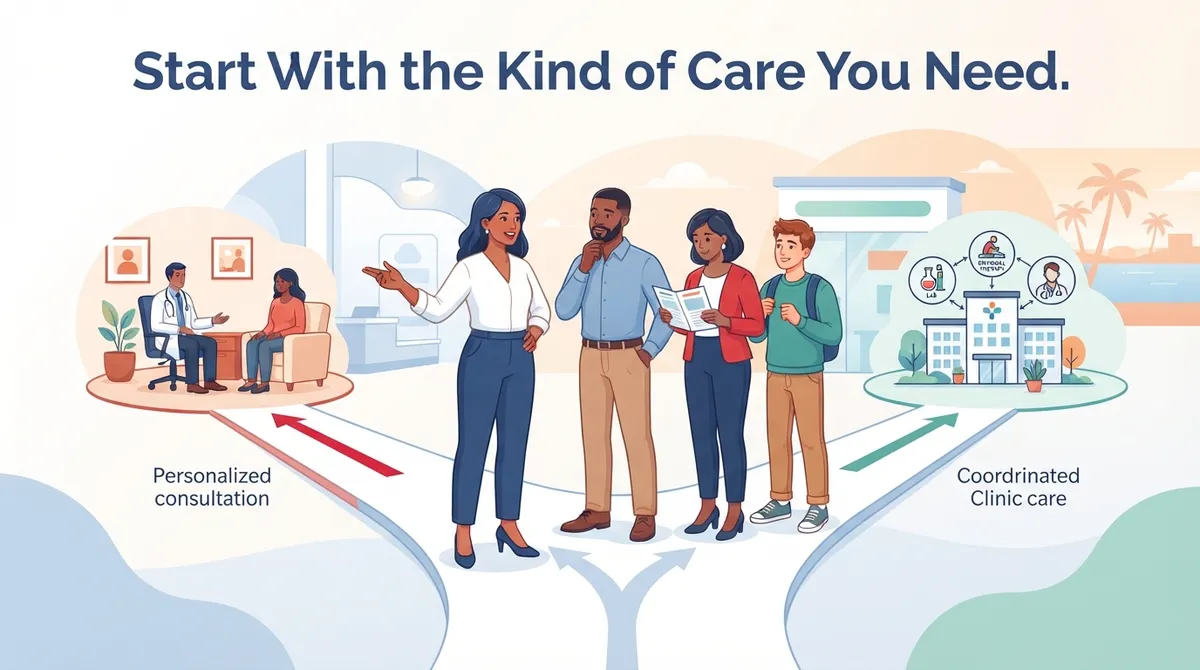
Start With the Kind of Care You Need
Before you compare practices, decide what you need from a doctor. A primary care clinician handles preventive care, common illnesses, and chronic conditions. This clinician also coordinates referrals and keeps your health record in one place.
Here is a quick way to match the doctor type to your situation:
- Family medicine: Treats patients of all ages. This is a good fit for families who want one doctor for everyone.
- Internal medicine: Focuses on adults. It suits people managing conditions like high blood pressure or diabetes.
- Pediatrics: The usual choice for children.
If you are not sure where to begin, read what a family medicine clinic actually does for you. It explains how each doctor type works in daily practice.

Step One: Verify Credentials Before Anything Else
A friendly office means little if the doctor is not properly licensed. Credentials come first. Here is how to check them in four steps.
- Check the Florida license. Use the Florida Department of Health's Medical Quality Assurance (MQA) license verification portal. It shows license status and public disciplinary information.
- Read disciplinary records in context. The state notes that a public administrative complaint is not itself disciplinary action or proof of a violation. Look at the full record before you decide.
- Confirm board certification. Board certification is separate from state licensure. It is an extra credential that shows advanced training in a specialty.
- Ask about relevant experience. A good doctor will gladly tell you about their experience with your age group, health conditions, and preventive care needs.
This verification step applies to both practice models. It is the foundation for every other choice you make.
Step Two: Confirm Insurance and Costs
Insurance trips up many patients. A doctor listed as "in network" online may not be in network at the specific office you visit. Provider directories can be out of date.
Before you book, call both your insurer and the practice. Confirm these points:
- The clinician is in network.
- The exact office location is in network.
- Any lab or imaging facility they use is also in network.
- Your copay, deductible, and any new-patient fees.
- Whether you need a referral to see a specialist.
Medicare patients have extra details to check. Our guide on how to find doctors accepting new patients near you walks through the process.
The Two Models Compared
Now the main comparison. Here is how a traditional practice stacks up against an integrated clinic.
|
Factor |
Traditional Solo or Small Practice |
Integrated Primary Care and Wellness Clinic |
|---|---|---|
|
Services |
Routine visits, chronic care, referrals |
Primary care, urgent care, screenings, weight loss, IV therapy, gene testing |
|
Appointments |
Often booked weeks out |
Often offers same-day and virtual options |
|
Technology |
Varies widely |
Typically includes advanced diagnostics and digital tools |
|
Care coordination |
Relies on outside referrals |
Many services handled in one location |
|
Focus |
Treating existing problems |
Prevention and whole-body optimization |
Neither column is "right" for everyone. A longtime patient with one stable condition may love the familiarity of a small practice. A busy family or a health-conscious professional may value the convenience and range of an integrated clinic.
Step Three: Compare Access and Convenience
Great credentials do not help if you cannot get an appointment. Access is where the two models often differ most.
Questions to Ask About Access
Call each office and ask a few practical questions:
- How soon can a new patient be seen?
- What are the office hours, including evenings or weekends?
- Is telehealth available, and does your insurance cover it?
- What happens if you need to be seen quickly for an illness or injury?
- How does the office handle prescription refills and test results?
Tampa traffic matters too. Compare travel time from your home or work. A clinic that is easy to reach is one you will actually visit.
Many people discover that same-day access changes how they use healthcare. If you want fast care without losing continuity, see how same-day appointments make fast primary care possible.
Step Four: Judge Communication and Fit
Credentials and insurance get you in the door. Fit keeps you there. You will share private health details with this person, so comfort matters.
Pay attention to these signs during your first visit:
- The doctor listens without rushing you.
- They explain options in plain language.
- They respect your preferences and cultural needs.
- They include you in decisions instead of just giving orders.
Online ratings can help you spot patterns, such as long wait times or a dismissive attitude. They are not a substitute for verifying credentials or meeting the doctor yourself. Use reviews as a starting point, then trust your own experience.
For a deeper checklist, review 7 signs you've found the right primary care practice. You can also avoid common errors by reading 7 mistakes to avoid when choosing a primary care doctor.
Who Fits Which Model Best?
Your life stage and goals shape the right choice. Here is a simple breakdown.
A Traditional Practice May Suit You If
- You have one stable condition and a long-standing doctor relationship.
- You rarely need urgent visits or extra services.
- You prefer a small, familiar office.
An Integrated Clinic May Suit You If
- You are a busy parent who wants one place for the whole family.
- You want preventive tools like cancer screenings, metabolic testing, or DNA gene testing.
- You like virtual visits and digital access to your care.
- You want help with weight loss or whole-body wellness alongside regular care.
- You do not yet have a primary care doctor and want a full-service starting point.
Young adults and women between 18 and 40 often fall into that last group. Many have never built a primary care relationship. A clinic that covers wellness visits, screenings, and whole-body services beyond reproductive care can fill that gap well.
Why an Integrated Clinic Often Wins in Tampa
For many Tampa residents, an integrated model offers a strong balance of continuity and convenience. InCare is a good example. It is a personalized clinic with locations in Tampa and Riverview that blends medical expertise with modern technology. Patients can get primary care, urgent care, cancer screening, and weight loss programs without bouncing between offices.
The clinic also offers DNA gene testing, IV hydration and vitamin drips, and metabolic breath analysis. This focus on prevention helps people find risks early instead of waiting for symptoms. Patients who want a closer look at the team can meet the physicians on the providers page.
Patient feedback backs this up. InCare holds a 4.8 out of 5 rating on Google across 359 reviews, with patients praising the friendly staff and the quality of care. You can visit us on Google and read InCare reviews to see real experiences before you book.
If you want to compare options across the city, our guide to the best primary care doctor in Tampa and our overview of how to choose the right primary care physician in Tampa Bay go deeper.
Use Directories Wisely
Provider directories are useful for building a shortlist. Tampa-area health systems, including USF Health, offer searchable directories filtered by specialty and location. These often show whether a clinician accepts new patients and which insurance plans they take.
Treat directories as a starting point only. Availability and accepted plans change often. Always confirm details by phone before you book. You can also follow practices on social media, such as InCare on Instagram, to get a feel for the team and the culture of a clinic.
Your First Visit: What to Ask
Your first appointment is a two-way interview. Bring a short list of questions and notes about your health history. Good questions include:
- How do you approach preventive care for someone my age?
- How do you coordinate care if I need a specialist?
- What is the best way to reach you with questions between visits?
- How quickly can I get an urgent appointment?
- What technology or testing do you use to track my health over time?
A doctor who answers clearly and kindly is likely a good long-term match. If something feels off, it is fine to keep looking. Choosing a doctor is not a lifetime contract.
Final Verdict: Which Path Should You Take?
A traditional practice works well for people with simple, stable needs and a strong existing relationship. An integrated clinic wins for most people who value speed, prevention, and one-stop convenience. In a busy city like Tampa, that combination is hard to beat.
Whichever route you choose, follow the same core steps. Verify the license, confirm insurance, check access, and judge communication on the first visit. Those four steps protect you from a poor match and put you on a path to better long-term health.
Ready to experience a more connected approach to care? Book your InCare appointment today or contact our team with any questions. We are here to help you build a lasting relationship with a doctor who knows you.
FAQs
Q: How do I find a primary care doctor in Tampa who accepts my insurance?
A: Start with your insurer's provider directory to build a shortlist. Then call both your insurer and the practice to confirm the doctor, the specific office location, and any associated lab are in network. Also ask about copays, deductibles, and referral requirements before you book.
Q: How can I check whether a Florida doctor is licensed and has disciplinary actions?
A: Use the Florida Department of Health's Medical Quality Assurance (MQA) license verification portal. It shows license status and public disciplinary information. Keep in mind that a public administrative complaint is not itself proof of a violation, so review the details in context.
Q: What is the difference between a family medicine doctor and an internal medicine doctor?
A: Family medicine doctors care for patients of all ages, which suits families who want one doctor for everyone. Internal medicine doctors focus on adults and often manage complex or chronic conditions. Children are generally seen by a pediatrician.
Q: Should I choose a doctor based on patient reviews or board certification?
A: Use both, but give credentials more weight. Verify licensure and board certification first, since reviews cannot confirm training. Then use patient ratings to spot themes like wait times and communication style, and confirm fit during your first visit.
Q: What should I do if I need a primary care appointment quickly in Tampa?
A: Call practices that advertise same-day or short-notice appointments, and ask about telehealth options. An integrated clinic that offers primary and urgent care can often see you faster. If symptoms are severe or life-threatening, go to an emergency room.