
Key Takeaways
- Retatrutide is investigational and not FDA-approved for routine prescribing in Tampa or elsewhere; be wary of online sellers or clinics claiming to offer it.
- In a 48-week phase 2 trial, the 12-mg group had a mean weight reduction of up to 24.2% in a secondary analysis, though these are group averages, not guaranteed results.
- The most common side effects were nausea, diarrhea, and vomiting, generally mild to moderate and more frequent at higher doses and during dose increases.
- Approved GLP-1 therapies with clinician supervision are available now, while Tampa patients interested in retatrutide can check ClinicalTrials.gov and contact study sites to confirm eligibility.
If you live in Tampa and follow weight-loss news, you have likely heard about the triple agonist retatrutide. It is one of the most talked-about medicines in obesity research in 2026. Headlines promise large weight loss, and some online sellers claim you can get it today. The truth is more careful and more useful.
Retatrutide is an investigational medicine from Eli Lilly. It is not FDA-approved for routine prescribing. Approved GLP-1 options, on the other hand, are available now through a licensed clinician. This article compares the two paths side by side so you can decide what makes sense for your health.
You will learn what a triple agonist is, what the research shows, what side effects were reported, and how Tampa residents can safely explore clinical trials. You will also see which proven options a primary care team can discuss with you today. At InCare, our goal is to help you separate real science from hype.
What Is a Triple Agonist Like Retatrutide?
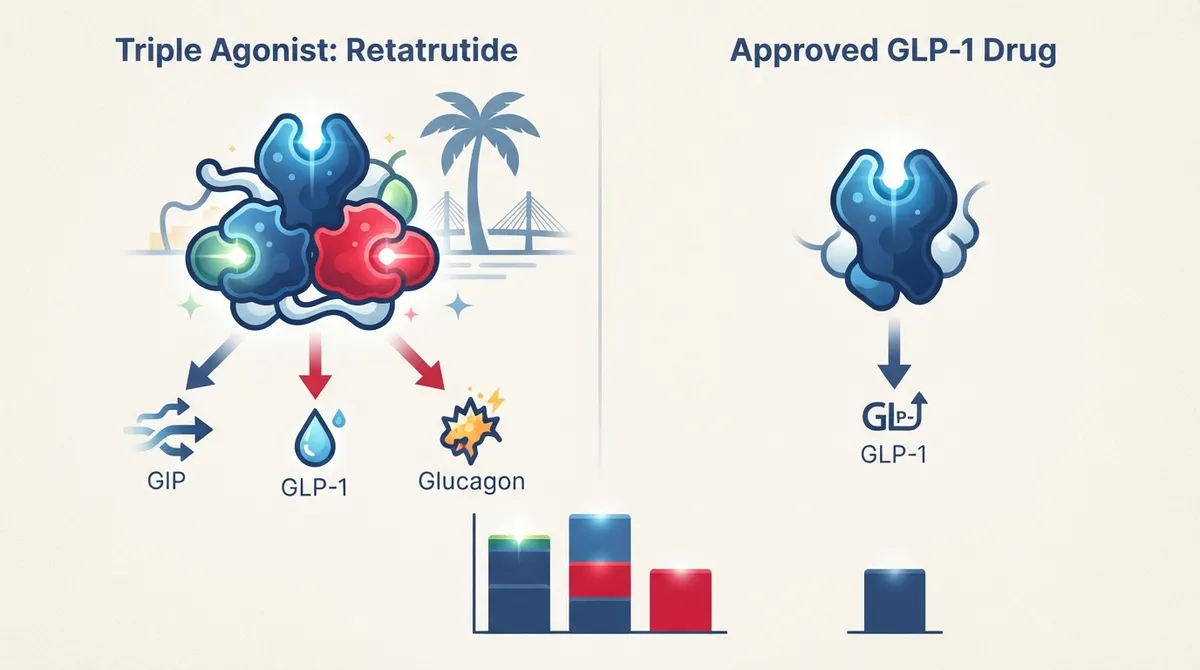
Retatrutide (LY3437943) is a once-weekly injectable medicine. It is called a triple agonist because it activates three hormone receptors at once: GIP, GLP-1, and glucagon. Each plays a role in appetite, blood sugar, and how the body uses energy.
Here is a simple way to think about it:
- GLP-1: helps you feel full and slows stomach emptying.
- GIP: supports insulin release and may improve how the body handles fat and sugar.
- Glucagon: may increase energy use and support fat burning.
Many approved weight-loss shots act on one or two of these pathways. A triple agonist aims to use all three. That is why researchers are so interested in it. For a patient-friendly overview, see our guide on 11 facts about retatrutide every patient should know.

Is Retatrutide FDA-Approved in Tampa?
No. Retatrutide remains investigational. It is not FDA-approved for routine prescribing in Tampa or anywhere else in the United States. Taking part in a clinical trial is very different from receiving a commercially available, approved treatment.
Be cautious if a wellness business claims it can prescribe FDA-approved retatrutide. Products sold online or by compounding sources are not the same as the medicine studied in trials. Their purity, dose, and safety may be unknown. A licensed clinician should always guide any weight-loss medicine you use.
If you want to understand the timeline, read our breakdown of when retatrutide may be available in 2026.
What Did the Research Show?
The most cited data come from a phase 2 trial published in the New England Journal of Medicine in 2023. It enrolled 338 adults with obesity or overweight plus a weight-related condition. None had type 2 diabetes. Participants received retatrutide or placebo once weekly for 48 weeks.
The key findings were:
- Weight loss was dose-dependent, meaning higher doses led to greater average loss.
- At 24 weeks, the 12-mg group had a mean weight reduction of up to 17.5%.
- At 48 weeks, the 12-mg group had a mean reduction of up to 24.2% in a secondary endpoint analysis.
These numbers are trial averages, not promises. Your results could be higher or lower. Phase 2 studies are also smaller and shorter than the large phase 3 studies needed for approval.
Phase 3 Studies Are Underway
The phase 3 TRIUMPH program is testing retatrutide in several groups and outcomes. These include chronic weight management, type 2 diabetes, obstructive sleep apnea, knee osteoarthritis, cardiovascular outcomes, and kidney outcomes. Trial status can change, so always check the current record on ClinicalTrials.gov.
Reported Side Effects
Stomach and bowel effects were the most common problems in the phase 2 trial. These included nausea, diarrhea, and vomiting. They were generally mild to moderate, often appeared during dose increases, and were more frequent at higher doses.
Adverse events were reported in 70% of placebo participants and in 73% to 94% of those in retatrutide groups. A trial of this size cannot show the full long-term safety picture. That is a key reason approval has not yet happened.
If you already use a GLP-1 medicine, our article on managing gastrointestinal side effects offers practical tips that apply to this drug class.
Retatrutide vs. Approved Options: Side-by-Side Comparison
Here is how an investigational triple agonist compares with approved GLP-1 care available through a clinician today.
|
Factor |
Retatrutide |
Approved GLP-1 Options |
|---|---|---|
|
FDA status |
Investigational, not approved |
Approved for specific uses |
|
How to access |
Clinical trial only |
Prescription from a licensed clinician |
|
Receptors targeted |
GIP, GLP-1, and glucagon |
GLP-1 alone, or GIP and GLP-1 |
|
Dosing |
Once weekly, in trials |
Once weekly, with labeled dosing |
|
Safety data |
Phase 2 complete, phase 3 ongoing |
Large real-world and trial data |
|
Medical monitoring |
Provided by the study team |
Provided by your care team |
The takeaway is simple. Retatrutide may become a strong option in the future. For now, approved treatments offer a clear, safe, and supervised path that you can start without waiting.
Retatrutide Clinical Trials in Tampa
Search results list Tampa-area research sites tied to retatrutide studies, including Care Access in Tampa and MOORE Clinical Research/TrueBlue Clinical Research. One listing described a cardiovascular and kidney outcomes study, and another described a chronic low back pain study.
A listing does not guarantee a study is recruiting or that you qualify. Follow these steps:
- Search retatrutide on ClinicalTrials.gov and filter by Tampa, Florida.
- Open the current record and check the recruitment status.
- Read the eligibility criteria for age, weight, and health conditions.
- Contact the listed site or sponsor directly to confirm details.
- Share the plan with your primary care clinician so your records stay coordinated.
Trial sites decide eligibility, not primary care clinics. Still, your clinician can review your health history and help you ask the right questions before you apply.
Approved Weight-Management Options to Discuss Now
While retatrutide remains in research, Tampa patients can talk with a clinician about established treatments. The right plan depends on your health, goals, and medical history. Options often include:
- Medically supervised GLP-1 therapy, such as semaglutide or tirzepatide
- Nutrition coaching and structured meal planning
- Metabolic testing to guide calorie and exercise targets
- Body composition tracking to follow fat and muscle changes
- Management of related conditions such as high blood pressure, prediabetes, and sleep apnea
To compare two leading approved choices, read tirzepatide vs. semaglutide weight loss injections in Tampa. You can also review what weight loss injections cost in 2026.
Why a Primary Care Team Makes the Difference
Weight-loss medicine works best inside a full care plan. A primary care team can check labs, review your medicines, and watch for side effects. That matters even more with powerful hormone-based drugs.
InCare combines primary care with advanced wellness tools. Our weight loss program is supported by metabolic breath analysis and body composition scans, so your plan is built on real data. Busy families, young professionals, and wellness-focused adults all benefit from one team that sees the whole picture.
Our providers, including Dr. Pramjeet Ahluwalia, focus on prevention and long-term health. You can meet the full care team or read what patients say on Google. We also share wellness updates on Instagram, TikTok, and Facebook.
How to Spot Unsafe Retatrutide Claims
Because interest is high, some sellers use the name to sell unapproved products. Watch for these red flags:
- Claims that retatrutide is FDA-approved or ready to prescribe
- Products labeled for research use only that are marketed for personal use
- No physical exam, lab work, or medical history review
- Promises of guaranteed weight loss or a set number of pounds
- No clear way to reach a licensed clinician with questions
If you have already used an unapproved product, tell your clinician. It helps them keep you safe. Our guide on what to know before starting semaglutide in Tampa shows what a safe starting process looks like.
Final Verdict: Which Path Wins?
For most Tampa residents, approved GLP-1 care wins today. It is available now, supervised, and backed by large bodies of evidence. Retatrutide is exciting, and its early results are impressive. Yet it remains a research medicine until regulators say otherwise.
If you are curious about trials, explore them through official sources and keep your primary care team informed. If you want to start moving toward your goals now, a medically supervised plan is the safest step.
Ready to talk with a clinician who can explain your options? Book your weight-loss consultation with InCare or contact our team with your questions. You can also review our Tampa and Riverview locations to find the most convenient visit.
FAQs
Q: Is retatrutide FDA-approved, and can a clinic in Tampa prescribe it?
A: No. Retatrutide is an investigational medicine and is not FDA-approved for routine prescribing. Access is limited to clinical trials, so be cautious of any clinic that claims it can prescribe an approved version.
Q: How much weight loss did retatrutide produce in clinical trials?
A: In a 48-week phase 2 trial, the 12-mg group reached a mean weight reduction of up to 24.2% in a secondary analysis. These are group averages, not guaranteed individual results.
Q: What side effects have been reported with retatrutide?
A: The most common effects were nausea, diarrhea, and vomiting. They were generally mild to moderate, often occurred during dose increases, and were more frequent at higher doses.
Q: Are there retatrutide clinical trials recruiting in Tampa, Florida?
A: Tampa-area research sites have been linked to retatrutide studies, but listings can become outdated. Check the current ClinicalTrials.gov record and confirm recruitment and eligibility directly with the study site.
Q: What weight-loss options can a Tampa primary care clinician discuss while retatrutide is still investigational?
A: A clinician can review approved GLP-1 therapies, nutrition support, metabolic testing, and care for related conditions. The best plan depends on your health history, goals, and lab results.