Key Takeaways
- Confirm symptoms plus two separate morning testosterone tests before starting TRT; guidelines do not support treatment based on a single low result or symptoms alone.
- Raise fertility plans at the first visit, since TRT can suppress sperm production and is generally not recommended for men planning children in the near term.
- Ask for a monitoring schedule: testosterone and hematocrit checks at 3 to 6 months, hematocrit yearly, and prostate assessment before and 3 to 12 months after starting.
- A primary care physician can coordinate TRT with related conditions like sleep apnea, diabetes, and blood pressure, which often affect testosterone levels and treatment risks.
Men searching for "dr naveen paddu trt tampa" usually want one thing: a clear answer about testosterone replacement therapy (TRT) from a physician they can trust. That is a smart starting point. TRT is a medical treatment, not a lifestyle product, and where you receive it matters as much as whether you receive it.
According to InCare, Dr. Naveen Paddu is an internal medicine and primary care physician serving Tampa and Riverview, Florida. InCare's website describes hormone-related care, including TRT, as part of its services. This guide compares two common paths for men in Tampa in 2026: TRT delivered through a full primary care practice, and TRT delivered through a standalone low-T clinic. We will cover who qualifies, what testing is needed, the risks, and how to decide.
One note on sourcing: clinic pages describe services, but they do not prove credentials or outcomes. Always confirm a provider's licensure, board status, and current availability directly with the clinic.
Who Is Dr. Naveen Paddu, and What Does InCare Say About TRT?
InCare lists Dr. Naveen Paddu as an internal medicine physician. Internal medicine training focuses on adult health, including heart disease, diabetes, blood pressure, and hormone-related conditions. These are the same areas that overlap with testosterone health. You can read more on the InCare providers page.
InCare describes its TRT approach as physician-guided and based on evaluation and laboratory results. Its website mentions several possible delivery methods:
- Topical gels or creams
- Injections
- In some cases, pellets
The right option depends on clinical assessment and availability. Ask the clinic which methods it currently offers before you book.
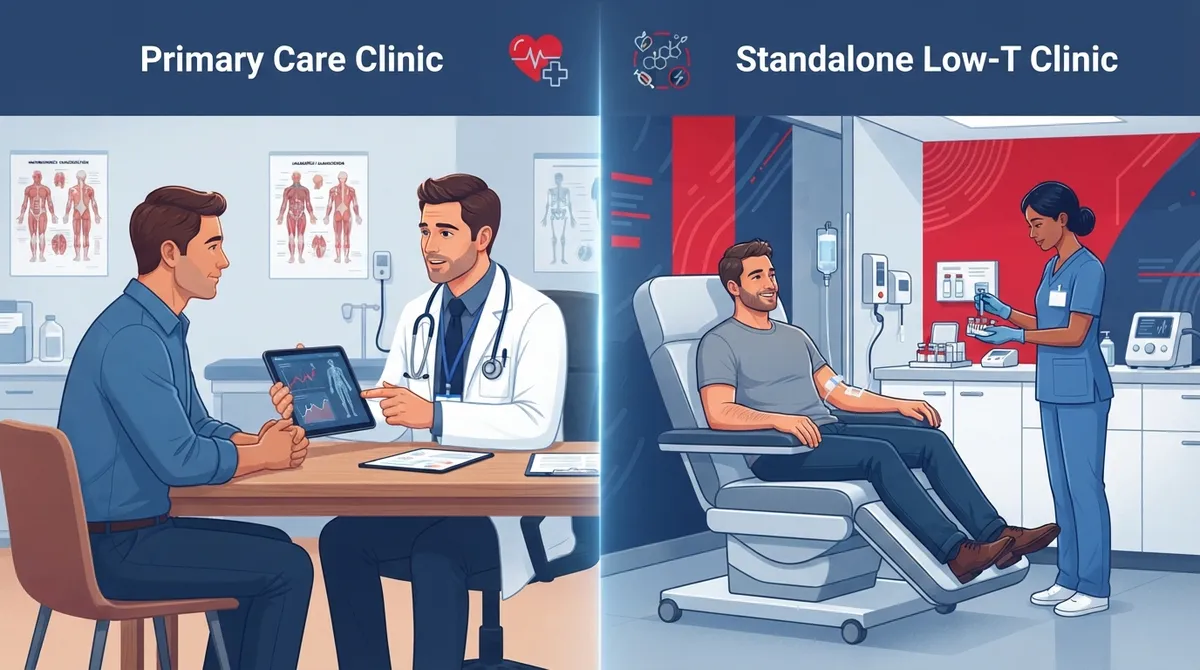
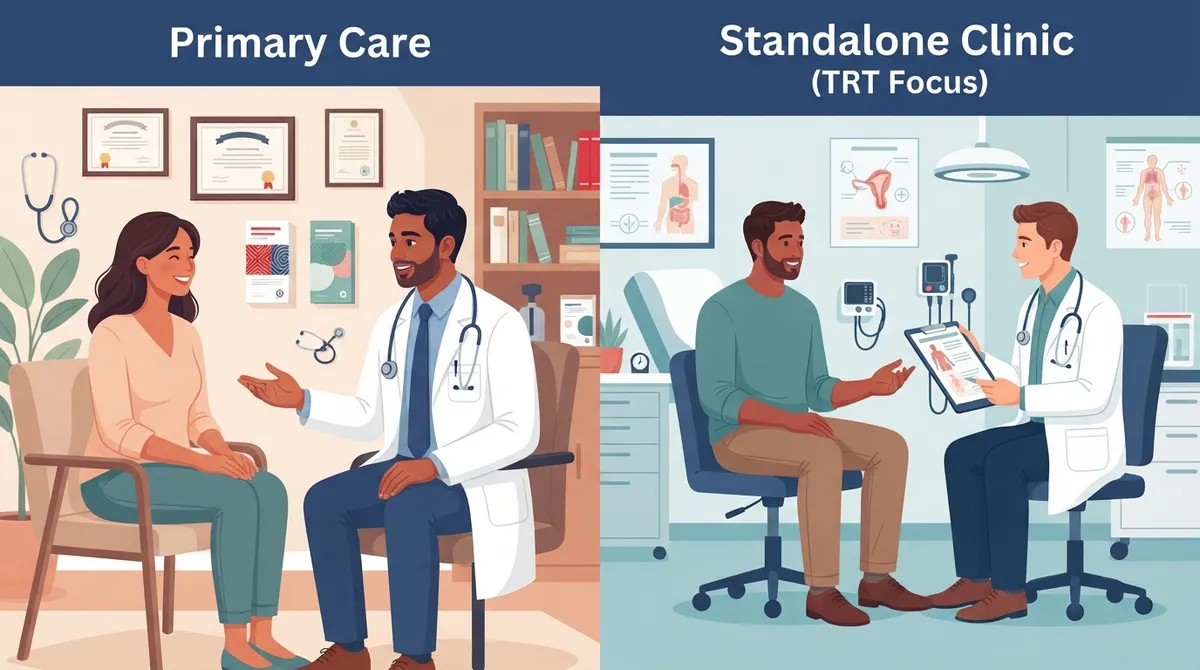
Primary Care TRT vs. Standalone Low-T Clinic: Side-by-Side
Both models can prescribe testosterone. The difference lies in context. A primary care physician sees your whole health picture. A standalone clinic often focuses on one issue. The table below shows how the two approaches typically compare.
|
Factor |
Primary Care Practice |
Standalone Low-T Clinic |
|---|---|---|
|
Scope of care |
Whole-body, ongoing relationship |
Often limited to hormone therapy |
|
Medical history review |
Full chart, medications, chronic conditions |
Varies by clinic |
|
Related screenings |
Blood pressure, cholesterol, diabetes, cancer screening in one place |
May require outside referrals |
|
Monitoring |
Folded into regular visits |
Scheduled separately |
|
Treatment of other issues |
Urgent care, chronic disease, weight care |
Usually not offered |
For many men, the main advantage of the primary care route is coordination. Low testosterone often travels with other conditions. Sleep apnea, obesity, type 2 diabetes, and certain medications can all lower testosterone or raise TRT risks. A physician who already manages those conditions can weigh the full picture. For a deeper look at this idea, see fragmented care vs. coordinated care.
Who Actually Qualifies for TRT?
TRT is not meant for every man who feels tired. The Endocrine Society guideline recommends TRT only for men who have both symptoms or signs of testosterone deficiency and consistently low testosterone levels. Normal age-related changes, a wish for better athletic performance, or general low energy are not enough on their own.
Common symptoms that prompt an evaluation include:
- Reduced sex drive
- Erectile difficulties
- Loss of muscle mass or strength
- Persistent fatigue
- Low mood or poor concentration
These symptoms are not specific to low testosterone. Thyroid problems, depression, poor sleep, and medication effects can look the same. That is why a careful workup comes first.
The Testing Process Before Treatment
A responsible TRT evaluation follows a clear order. Here is the sequence that guideline-based care generally uses:
- Symptom and history review. Your clinician asks about symptoms, medications, sleep, weight changes, and family goals.
- Morning blood test. Testosterone levels are highest in the morning, so testing is done then.
- Repeat confirmation. The Endocrine Society recommends confirming a low result with a second morning test.
- Cause evaluation. Your clinician looks for the reason behind low levels, which may be treatable on its own.
- Risk review. Baseline checks include hematocrit and, where appropriate, prostate assessment.
- Shared decision. You and your physician discuss benefits, risks, and delivery options.
If a clinic offers a prescription after one quick test and a short chat, that is a reason to ask more questions. Careful clinics take the time to confirm the diagnosis.
Who Should Not Start TRT
The Endocrine Society advises against TRT in several situations. These include:
- Men who plan to have children in the near term
- Certain prostate or breast cancer concerns
- Elevated hematocrit
- Untreated severe sleep apnea
- Uncontrolled heart failure
- A heart attack or stroke within the past 6 months
- Thrombophilia (a clotting disorder)
This list is a major reason to choose a clinician who knows your full medical record. A primary care physician can check these items against your existing chart rather than relying only on what you recall in a single visit.
Fertility: The Question Many Men Forget
TRT can suppress sperm production and impair fertility. For a man who wants children, this matters a great deal. Testosterone therapy is generally not recommended for men planning fertility in the near term. Raise this topic at your very first visit, even if children are a distant plan. Your clinician can explain alternatives that may support testosterone without shutting down sperm production.
Monitoring: The Part That Protects You
Starting TRT is only the beginning. Ongoing monitoring is a core part of safe treatment. Endocrine Society guidance outlines these checkpoints:
|
Check |
Recommended Timing |
|---|---|
|
Testosterone level |
3 to 6 months after starting, aiming for the mid-normal range |
|
Hematocrit |
Baseline, 3 to 6 months after starting, then yearly |
|
Prostate assessment (if chosen) |
Before treatment, then 3 to 12 months after starting |
|
Urology referral |
If PSA rises more than 1.4 ng/mL above baseline, exceeds 4 ng/mL, or the prostate exam is abnormal in year one |
Hematocrit matters because TRT can thicken the blood by raising red blood cell counts. Prostate monitoring matters because testosterone can affect prostate tissue. Learn more about prostate exams before you start therapy.
Because these checks repeat over months and years, the convenience of one practice handling them alongside your routine care is a real benefit. Your annual physical, lab work, and TRT follow-up can happen in the same place. See what happens during an annual physical exam for an idea of how this fits together.
Risks and Side Effects to Discuss
Every treatment has trade-offs. Common concerns with TRT include:
- Higher red blood cell counts
- Acne or oily skin
- Fluid retention
- Breast tenderness or enlargement
- Worsening of untreated sleep apnea
- Reduced sperm count and fertility
Your physician should explain which risks apply to you. For a broader look at the treatment itself, review what testosterone replacement therapy is at InCare.
Location, Contact, and How to Book
InCare's website lists two area offices. Details can change, so confirm them before you visit:
- Tampa: 1213 N. Franklin St., Tampa, FL 33602
- Riverview: 11922 Boyette Rd., Riverview, FL 33569
- Phone: 813-553-3330
You can see all InCare locations online. Patient feedback is also public: read what InCare patients say on Google through our InCare Google profile. You can also follow the practice on Instagram, Facebook, and TikTok for updates.
How to Decide: A Simple Checklist
Use these questions to compare any TRT provider in Tampa:
- Does the provider require symptoms plus repeat morning testing?
- Do they review your full medical history and medications?
- Will they discuss fertility before prescribing?
- Is there a clear monitoring schedule for testosterone, hematocrit, and prostate health?
- Can they treat related issues such as weight, blood pressure, and diabetes?
- Can you verify the physician's credentials directly?
A practice that answers yes to all six is more likely to deliver safe, coordinated care. InCare's model, which combines primary care, wellness, and hormone-related services under one roof, is built for this kind of whole-health approach. Men who also want help with weight can explore InCare's weight loss programs, since excess weight is a known contributor to low testosterone.
The Bottom Line
Searching for Dr. Naveen Paddu and TRT in Tampa is a reasonable first step, but the better question is how your care will be managed over time. TRT works best when the diagnosis is confirmed, risks are reviewed, and monitoring is consistent. A primary care setting offers a strong advantage here because your hormone care sits inside your overall health plan, not apart from it.
If you are ready to talk with a physician about symptoms, testing, and whether TRT fits your situation, book an appointment with InCare or contact the InCare team with your questions. Confirm current services and availability with the clinic when you reach out.
FAQs
Q: Does Dr. Naveen Paddu offer testosterone replacement therapy in Tampa?
A: InCare lists Dr. Naveen Paddu as an internal medicine and primary care physician, and its website describes hormone-related care that includes TRT. Because services and availability can change, confirm current TRT offerings directly with the clinic at 813-553-3330.
Q: What symptoms and test results are needed to qualify for TRT?
A: TRT is generally appropriate only for men with symptoms or signs of testosterone deficiency and consistently low testosterone. The Endocrine Society recommends confirming low levels with repeat morning testing and evaluating the underlying cause before treatment begins.
Q: How often is monitoring needed while on TRT?
A: Guidance recommends checking testosterone and hematocrit 3 to 6 months after starting, with hematocrit rechecked yearly afterward. Prostate assessment, if chosen, is done before treatment and again 3 to 12 months after starting.
Q: Can TRT affect fertility?
A: Yes. TRT can suppress sperm production and impair fertility, so it is generally not recommended for men planning children in the near term. Discuss family plans with your physician before starting so alternatives can be considered.
Q: What TRT delivery options does InCare describe?
A: InCare's website mentions topical gels or creams, injections, and in some cases pellets. The best option depends on your clinical assessment and what the clinic currently offers.