
Key Takeaways
- Most growth hormone-releasing peptides like CJC-1295 and ipamorelin lack FDA approval for advertised wellness uses and carry documented safety risks including immune reactions and blood glucose changes.
- Only about 10 natural peptides have FDA approval, primarily for diabetes, obesity, and specific growth hormone disorders—approval for one condition does not validate use for general anti-aging or hormone optimization.
- Unproven research peptides like BPC-157 and TB-500 sold online lack human clinical trials, proper dosing data, and safety profiles, making self-injection at home dangerous due to infection and dosing error risks.
- Legitimate hormone evaluation requires specific diagnosis through lab testing and physical exam for conditions like thyroid disease or low testosterone, not treatment of vague 'hormone imbalance' marketing terms.
- Red flags for unreliable peptide clinics include promises of universal hormone optimization, pressure for expensive packages, reliance on unvalidated saliva testing, and lack of follow-up monitoring plans.
- Compounded peptides are not equivalent to FDA-approved medications; always verify pharmacy licensing, source material quality, medical rationale, and monitoring plans before considering compounded options.
Search online for "peptides for hormone balance," and you will find bold promises. Clinics claim these compounds fix fatigue, boost testosterone, and reverse aging. But is this marketing phrase backed by real medical evidence? In primary care, the answer is more complex than social media suggests.
This article compares peptide-based hormone marketing to standard, evidence-based hormone care. We will look at what is FDA-approved, what remains unproven, and how a trusted primary care provider evaluates your symptoms safely. Whether you are a busy parent, a wellness-focused professional, or new to primary care, this guide will help you make smart, safe choices.
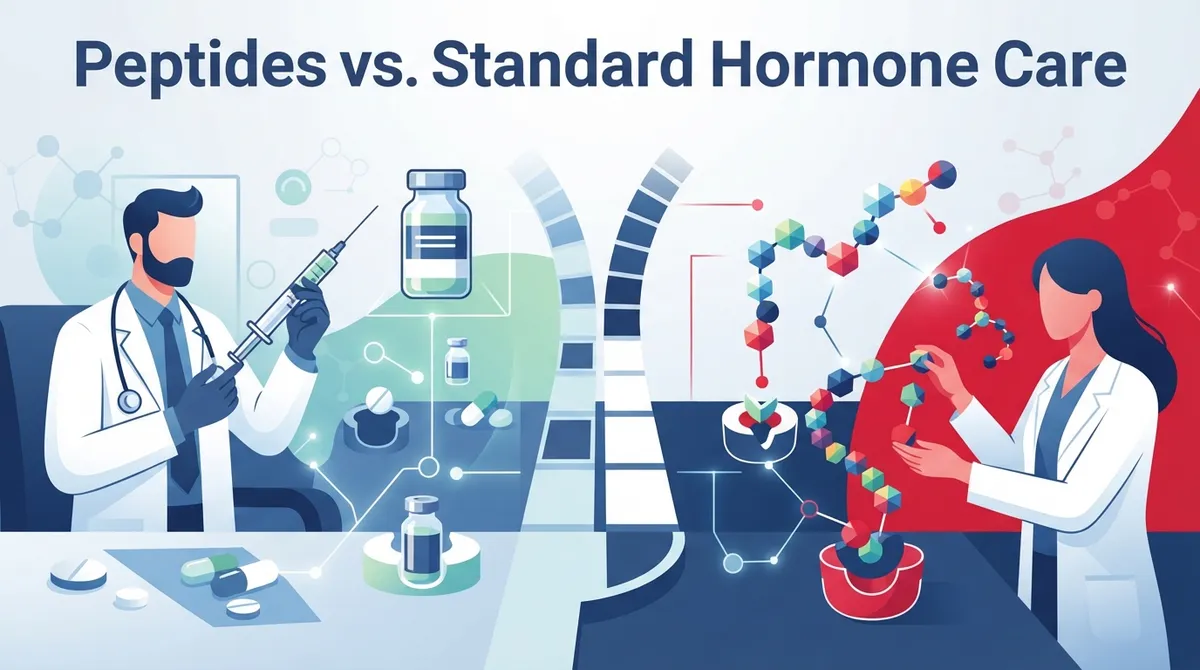
What Does "Peptides for Hormone Balance" Actually Mean?
"Peptides for hormone balance" is not an official medical diagnosis. It is a broad marketing term. It gets used to describe many different products, from approved medicines to unregulated compounds sold online.
Peptides are short chains of amino acids. Your body makes many peptides naturally. Some peptide medicines are FDA-approved for specific health problems. Others are experimental or sold without proper testing.
In real primary care, hormone problems get diagnosed through a careful process. This includes reviewing your symptoms, medical history, a physical exam, and targeted lab tests. Providers do not treat an undefined "imbalance." They treat specific conditions, like thyroid disease or low testosterone, based on clear evidence.
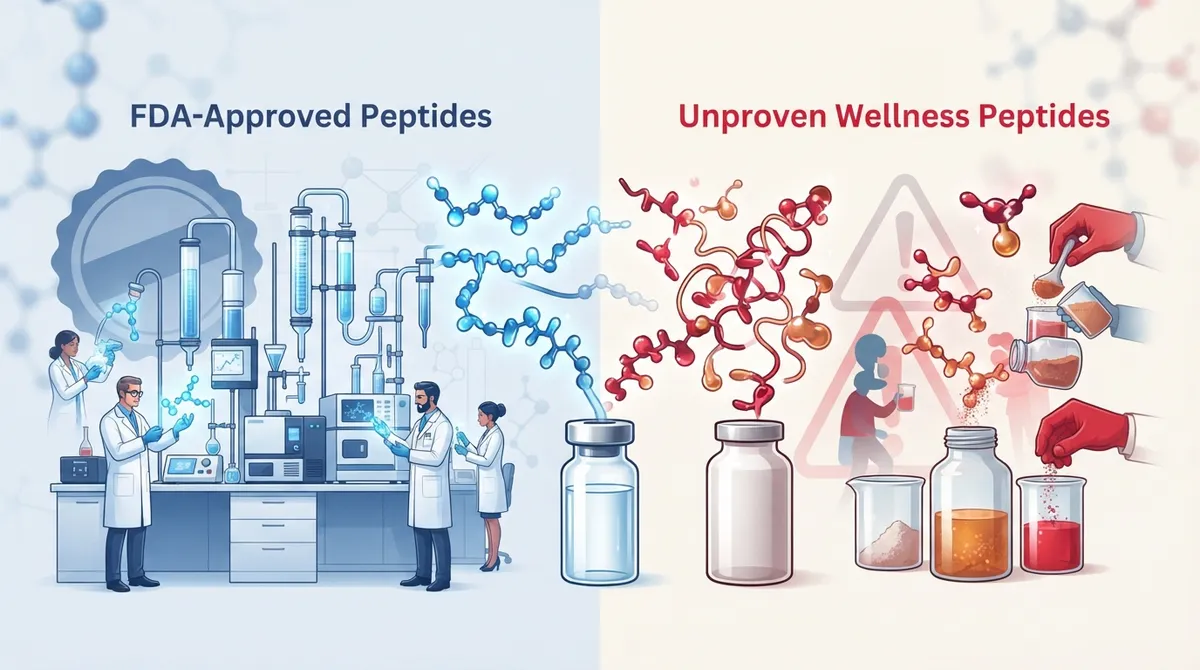
FDA-Approved Peptides vs. Unproven Wellness Peptides
Some peptide medicines have real, proven uses. Others are sold with big claims but little science behind them. Here is how they compare.
|
Category |
Examples |
Approval Status |
Common Marketed Use |
|---|---|---|---|
|
FDA-Approved Metabolic Peptides |
Semaglutide, Tirzepatide |
Approved for diabetes and obesity |
Weight loss, blood sugar control |
|
Growth Hormone Peptides |
Sermorelin, CJC-1295, Ipamorelin |
Mostly compounded, limited approval |
Anti-aging, muscle gain, energy |
|
Research-Use Peptides |
BPC-157, TB-500, MOTS-c |
Not FDA-approved for human use |
Healing, recovery, longevity |
|
GHRP Compounds |
GHRP-2, GHRP-6 |
Compounding safety concerns noted by FDA |
Growth hormone release |
A 2024 review of FDA-approved peptide medicines found about 10 natural peptides have historically gained approval. These cover conditions like diabetes, hypoglycemia, and specific growth hormone disorders. Approval for one condition does not mean a peptide is safe or effective for general wellness, anti-aging, or hormone optimization claims.
GLP-1 Peptides: What They Do and Do Not Do
Semaglutide and tirzepatide are well-known GLP-1 receptor agonists. Many people ask if these count as "peptides for hormone balance." The honest answer is more specific.
These medicines affect glucose regulation, appetite, and body weight. They do not broadly "rebalance" all your hormones. They work through one specific pathway, not a total hormone reset.
These medicines require an established diagnosis before use. Your provider must review contraindications, possible side effects, and any drug interactions. If you are curious about medical weight loss options, a proper evaluation always comes first.
The Risks Behind Growth Hormone Releasing Peptides
Growth hormone peptides get heavy promotion in wellness circles. Names like CJC-1295, ipamorelin, sermorelin, GHRP-2, and GHRP-6 appear often. These compounds may change growth hormone, IGF-1, glucose, and cortisol levels in your body.
But evidence for broad wellness benefits stays limited. Many of these products are not FDA-approved for the uses being advertised online. The FDA has flagged real safety concerns for some compounded versions.
Here are known concerns tied to certain growth hormone peptides:
- Immunogenicity, meaning your immune system may react poorly
- Peptide aggregation and impurities from poor manufacturing
- Uncertain potency between different batches
- Contamination risks during compounding
- Incorrect ingredients or wrong dosing
- Negative effects on blood glucose or cortisol levels
GHRP-2 and GHRP-6 carry specific warnings. The FDA notes these substances may cause immune reactions. They may also reduce insulin sensitivity or raise blood glucose. This is not a small risk to ignore.
Why Unapproved "Research Peptides" Raise Red Flags
Peptides like BPC-157, TB-500, and MOTS-c get sold online as "research use only." This label exists for a reason. These products lack solid human clinical trials.
Without proper research, we cannot know the right dose, real risks, or true benefits. Self-injecting these substances at home adds more danger. You risk infection, dosing mistakes, and unpredictable reactions.
A responsible primary care provider will not prescribe unproven compounds for vague wellness goals. Instead, they look for the real medical cause behind your symptoms.
What a Responsible Hormone Evaluation Looks Like
Good primary care treats the actual health problem. It does not chase an undefined hormone target. Depending on your symptoms, your doctor may check for several possible causes.
- Thyroid disease, which affects metabolism and energy
- Diabetes or insulin resistance, which impacts weight and fatigue
- Menopause, which brings hormone shifts in women
- Hypogonadism, or low testosterone in men
- Adrenal disorders, which affect cortisol and stress response
- Obesity, which often ties into multiple hormone pathways
- Medication side effects that mimic hormone symptoms
- Sleep problems, which disrupt hormone rhythms
- Depression or anxiety, which can cause fatigue and weight changes
This step-by-step process helps identify the real issue. It avoids guessing based on trendy peptide marketing. If you need a full evaluation, an annual wellness visit is a strong place to start.
Standard Hormone Therapy vs. Peptide Marketing Claims
The Endocrine Society uses strict evidence grading for hormone treatments. This helps separate proven therapies from those with weak or uncertain support. Their guidance on menopausal hormone therapy is a good example.
Established menopause treatment offers real, measurable benefits. It helps relieve hot flashes and vaginal dryness. But it also carries known risks, including blood clots, stroke, and gallbladder disease. These risks and benefits get weighed carefully by trained providers.
Unproven peptide products should never replace this kind of evidence-based care without a clear medical reason. If you are exploring options like BHRT vs. traditional HRT, talk to a provider who reviews your full health picture first.
Common Side Effects and Risks to Know
Every peptide, approved or not, carries some risk. These risks vary based on the specific compound and your health history. Knowing them helps you make safer choices.
- Injection-site reactions like redness or swelling
- Nausea or other stomach issues
- Changes in blood glucose levels
- Fluid retention or swelling
- Blood pressure changes
- Headaches
- Allergic or immune reactions
- Drug interactions with other medications
Growth-promoting peptides also raise a theoretical concern. They might worsen existing cancers or trigger unusual tissue growth. This needs a full medical risk assessment. Do not assume a peptide is safe just because it is marketed as "natural."
Compounded Peptides: What You Need to Confirm First
Compounded medication is not the same as an FDA-approved product. If a clinic suggests compounding, ask several key questions before moving forward.
- What is the specific medical reason for this treatment?
- Is the compounding pharmacy properly licensed and credentialed?
- Where does the source material come from, and how is quality checked?
- What route of administration will be used, and is it appropriate?
- What is the exact dosing plan, and how will it be adjusted?
- What monitoring plan is in place to track your progress and safety?
- Is there an FDA-approved alternative that could work just as well?
If a clinic cannot answer these questions clearly, that is a warning sign. A trustworthy provider welcomes these questions and explains their reasoning.
How to Spot a Reputable Peptide or Hormone Clinic
Not every wellness clinic follows sound medical practice. Some rely on flashy marketing instead of real evidence. Watch for these warning signs.
- Promises of universal hormone optimization for everyone
- Claims of rapid anti-aging results with little explanation
- Treatment plans based only on saliva testing or unproven panels
- No mention of follow-up monitoring or repeat lab testing
- Pressure to buy expensive peptide packages quickly
Evidence-based care looks different. It uses validated lab testing, repeat testing when needed, and open discussion between you and your provider. This is called shared decision-making, and it protects your health long-term.
Why InCare Takes a Different Approach
At InCare, hormone concerns get treated with real diagnostic tools, not guesswork. Our team in Tampa and Riverview offers DNA gene testing, body composition analysis, and thorough lab work before recommending any treatment plan.
Our providers, including Dr. Pramjeet Ahluwalia and Dr. Naveen Paddu, focus on whole-body health. This means looking at thyroid function, metabolic health, and lifestyle factors, not just chasing a single peptide trend. You can learn more about our approach on our peptide therapy page.
Many patients also explore our IV hydration and vitamin drips as part of a broader wellness plan. These services support energy and recovery without relying on unproven injectable compounds. You can read what our patients say by visiting us on Visit us on Google — InCare.
Evidence-Based Alternatives Worth Considering
If you feel tired, notice weight changes, or suspect a hormone issue, there are proven paths forward. These options carry stronger evidence than most trending peptides.
|
Concern |
Evidence-Based Approach |
|---|---|
|
Low testosterone |
Confirmed lab testing plus supervised testosterone therapy |
|
Menopause symptoms |
Established hormone therapy with risk-benefit discussion |
|
Weight management |
FDA-approved GLP-1 medications plus lifestyle coaching |
|
Fatigue or brain fog |
Thyroid panel, sleep evaluation, and mental health screening |
|
Metabolic concerns |
Metabolic breath analysis and personalized nutrition plans |
These approaches rely on real diagnostic data. They also come with ongoing monitoring, so your provider can adjust treatment safely over time.
Frequently Overlooked Questions About Peptide Safety
Many patients assume peptides are automatically safe because they occur naturally in the body. This is not always true. Dosage, purity, and delivery method all affect safety.
The Endocrine Society's clinical practice guidelines use strict evidence grading systems. This helps separate proven treatments from those lacking solid research. You can review their published guidance through the Endocrine Society's clinical practice guideline for a deeper look at evidence standards in hormone care.
The FDA also maintains public information about compounding risks. Their guidance on certain bulk drug substances used in compounding outlines specific safety concerns tied to popular wellness peptides. Reviewing this kind of information before starting treatment protects your health.
Making the Right Choice for Your Health
Peptides are not inherently good or bad. Context matters most. An FDA-approved peptide, prescribed for a diagnosed condition, is very different from an unregulated compound sold online for vague wellness claims.
The safest path starts with a real evaluation. Symptoms deserve investigation, not assumptions. A qualified primary care provider in Riverview or Tampa can order the right tests and guide you toward proven treatment options.
Follow our team on Facebook and Instagram for wellness tips grounded in real medical evidence. You can also check out patient stories and health insights on Tik Tok.
Take the Next Step Toward Real Hormone Health
Do not let marketing language guide your health decisions. Real hormone balance starts with proper testing, honest conversations, and a provider who explains every option clearly. Whether you are dealing with fatigue, weight changes, or symptoms of menopause or low testosterone, InCare is ready to help you find real answers.
Ready to get evaluated the right way? Get in touch with our team today, or go ahead and schedule your appointment now to start your personalized hormone health journey with InCare in Tampa or Riverview.
FAQs
Q: What are peptides, and can they really balance hormones?
A: Peptides are short chains of amino acids that occur naturally in the body. Some peptide medicines are FDA-approved for specific conditions like diabetes or growth hormone disorders. However, most wellness peptides lack strong evidence for broadly "balancing" hormones, so a proper diagnosis always comes first.
Q: Are semaglutide and tirzepatide hormone-balancing peptides?
A: Semaglutide and tirzepatide are FDA-approved GLP-1 medications that affect appetite, glucose, and weight. They do not broadly rebalance all hormones. These medications require a confirmed diagnosis and careful medical supervision to manage side effects and interactions.
Q: Are compounded peptides safe and legal to use for wellness or anti-aging?
A: Compounded peptides are not automatically equivalent to FDA-approved medications. The FDA has flagged safety concerns for several compounded peptides, including impurities, immune reactions, and effects on blood sugar. Always confirm pharmacy credentials and medical rationale before considering compounded options.
Q: What blood tests should be done before considering peptide therapy?
A: Testing depends on your symptoms, but often includes thyroid panels, glucose and insulin levels, and hormone-specific labs like testosterone or estrogen. A qualified primary care provider selects tests based on your history and physical exam, not a one-size-fits-all panel.
Q: How can I tell whether a peptide clinic is reputable?
A: Reputable clinics use validated lab testing, explain risks clearly, and avoid promising universal results. Be cautious of clinics that rely only on saliva testing, push expensive packages quickly, or skip follow-up monitoring after starting treatment.