Key Takeaways
- Always verify insurance participation directly with both your insurer and the practice before booking, as network status varies by plan type, location, and physician—do not rely solely on online directories.
- Florida faces a critical primary care shortage with 66 of 67 counties affected; ask practices upfront about new-patient acceptance, wait times, and whether same-day or telehealth options are available to bridge gaps.
- Choose a primary care provider based on credentials, services, hospital affiliations, and office hours—not location alone—since the right fit matters more than proximity for long-term care quality.
- Select the right provider type for your needs: family medicine physicians treat all ages, internal medicine focuses on adults with complex conditions, and team-based models with nurse practitioners expand access.
- Prioritize preventive and wellness services in your search, including routine physicals, cancer screenings, chronic disease management, and weight management, rather than treating primary care as purely reactive care.
- Uninsured Tampa residents should contact community health centers like Metro Healthy Communities that offer income-based sliding-fee scales—bring proof of income documentation to qualify for discounted care.
Searching for a "primary care physician near me Tampa" should be simple. Instead, many residents end up on hold with insurance companies, stuck on waitlists, or matched with a provider who does not fit their needs. Florida faces a well-documented primary care shortage, and Tampa is not immune to it. Making the wrong choice early on can cost you weeks of delayed care, wasted co-pays, and missed screenings.
This guide walks through the five most common mistakes Tampa residents make when searching for a primary care physician near me Tampa, and how to avoid them. Whether you are a busy parent, a young professional, or someone finally ready to establish care after years without a doctor, these tips will help you find a practice that actually fits your life.

Mistake 1: Ignoring Insurance Verification Before Booking
One of the biggest errors people make is scheduling an appointment before confirming insurance participation. Insurance networks are complicated. A physician might accept your insurance company but not your specific plan tier, or they might be in-network for commercial insurance but not for Medicare Advantage or Medicaid.
Insurance participation can vary by physician, location, and plan type. Before you book, call both your insurance provider and the practice directly to confirm coverage. Do not rely solely on an online directory, since listings are not always current.
- Ask if the physician is in-network for your exact plan, not just the insurance company in general
- Confirm whether the office accepts Medicare Advantage, Original Medicare, or Medicaid if applicable
- Verify copay and deductible details before your first visit
- Ask about telehealth coverage under your specific plan
If you are uninsured, do not assume you have no options. Community health centers in the Tampa area, such as those affiliated with Metro Healthy Communities, often offer sliding-fee scales based on income. Eligibility usually requires proof of income, so gather documentation ahead of time.
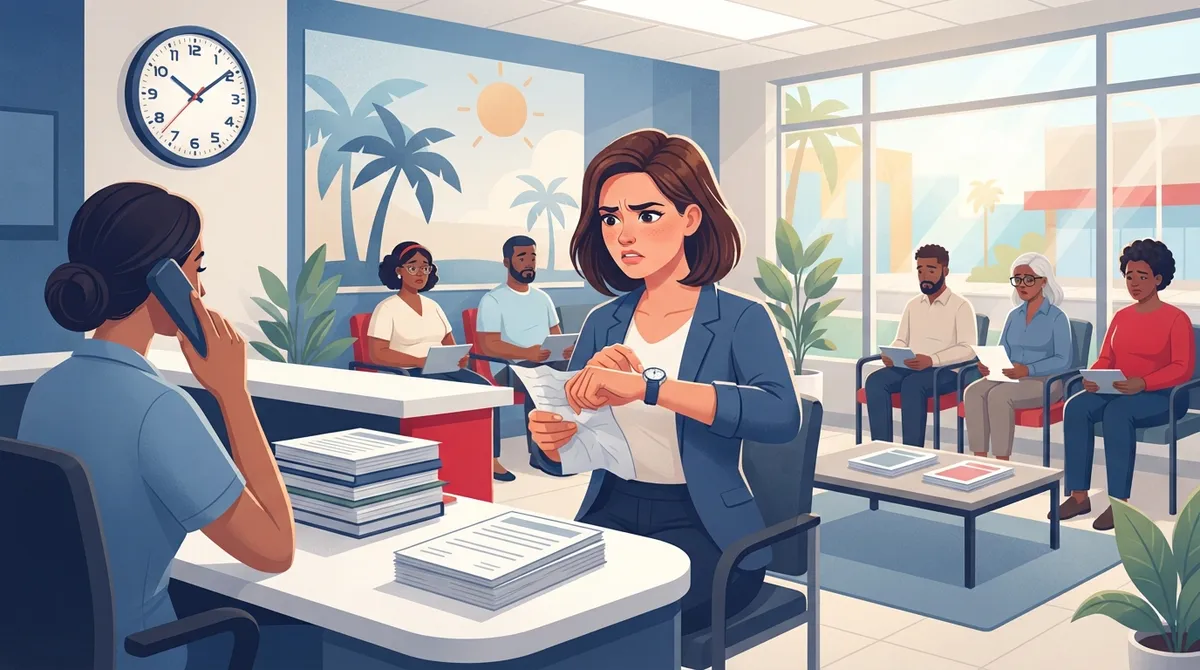
Mistake 2: Overlooking New-Patient Availability and Wait Times
Florida has a serious shortage of primary care doctors. According to the Florida Department of Health's 2025 Physician Workforce Annual Report, 66 of Florida's 67 counties had primary care shortages in all or part of the county. Statewide, Florida would need an estimated 3,835 more physicians to close specialty gaps entirely.
This shortage means many Tampa practices have long waitlists for new patients. A common mistake is assuming any clinic you call will have quick openings. Instead, ask these questions upfront:
- Is the practice currently accepting new patients?
- What is the average wait time for a first appointment?
- Are same-day or walk-in slots available for urgent needs?
- Does the office offer telehealth visits to bridge the gap before an in-person appointment?
Clinics like InCare in Tampa and Riverview are designed to reduce this friction by offering both same-day scheduling options and virtual visits, so patients are not stuck waiting weeks for basic care. You can review same-day appointment options before committing to a practice with limited flexibility.
Mistake 3: Choosing Based on Location Alone
Convenience matters, but picking the closest office without checking credentials, services, or care philosophy is a mistake. A primary care physician near me Tampa search should factor in more than proximity.
Consider these factors alongside location:
|
Factor |
Why It Matters |
|---|---|
|
Physician credentials |
Board certification and specialty training affect quality of care |
|
Practice type |
Family medicine, internal medicine, or team-based models suit different needs |
|
Hospital affiliations |
Determines where you would be treated for serious conditions |
|
Office hours |
Evening or weekend availability matters for working patients |
|
Language support |
Important for non-English-speaking patients or family members |
Major Tampa Bay networks, including BayCare Medical Group, report more than 65 primary care offices across the Tampa Bay area. That number of choices can feel overwhelming, which is exactly why narrowing your search by more than just distance leads to better outcomes. Reviewing provider profiles before booking gives you a clearer sense of who you will actually be working with.
Mistake 4: Not Understanding the Difference Between Provider Types
Many patients assume all primary care doctors are the same. In reality, Tampa offers several types of primary care providers, and choosing the wrong fit can affect your long-term care.
- Family medicine physicians treat patients of all ages, from children to seniors, making them ideal for households managing care across generations
- Internal medicine physicians focus specifically on adult health, often handling more complex chronic conditions
- Geriatric specialists concentrate on the unique needs of older adults
- Nurse practitioners and physician assistants often provide care under physician-supervised, team-based models, expanding access without sacrificing quality
If you have children and want one practice for the whole family, a family medicine approach through InCare's primary care services may be the better fit. If you are an adult managing a chronic condition like diabetes or hypertension, an internal medicine focus might serve you better. Learn more about how primary doctors help manage chronic illnesses before making your decision.
Mistake 5: Skipping Preventive and Wellness Services in Your Search
A final mistake is treating your primary care search as purely reactive, meaning you only think about it when you are sick. Primary care should be the foundation of ongoing prevention, not just a place to go when something feels wrong.
The Health Resources and Services Administration reported 340,319 actively working primary care physicians nationwide in 2023, representing just 34.3% of all active physicians. HRSA also projects a shortage of 70,610 full-time-equivalent primary care physicians by 2038. With fewer providers available long-term, establishing a relationship with a PCP now protects your access to preventive care later.
Ask potential practices about the full scope of wellness services they offer, not just sick visits. A strong primary care and wellness practice should provide:
- Routine physicals and immunizations
- Cancer screening services for early detection
- Chronic disease management for conditions like diabetes and high blood pressure
- Weight management support through medically supervised weight loss programs
- Advanced diagnostics such as body composition analysis or DNA gene testing
InCare integrates these services directly into primary care, so patients in Tampa and Riverview do not need to juggle multiple specialists for basic preventive needs. This whole-body approach reflects a growing trend toward proactive, technology-supported healthcare rather than reactive treatment alone.
What to Expect at Your First Appointment
Once you have avoided these five mistakes and selected a practice, preparing for your first visit helps things go smoothly. Bring the following:
- A valid photo ID and insurance card
- A list of current medications and dosages
- Any recent lab results or medical records from previous providers
- A list of questions or health concerns you want to discuss
- Family medical history, if known
Most primary care visits in Tampa last between 20 and 40 minutes for new patients, allowing time for a full health review. If you need same-day care for an acute issue before your scheduled physical, urgent care services can bridge that gap without a trip to the emergency room. Remember that primary and urgent care are not substitutes for emergency treatment. Chest pain, difficulty breathing, stroke symptoms, or uncontrolled bleeding require immediate emergency care, not a scheduled office visit.
How Often Should You See Your Primary Care Physician
Frequency depends on age, health status, and existing conditions. As a general guideline:
- Healthy adults under 40 should schedule an annual wellness visit
- Adults over 40 or those managing chronic conditions may need visits every three to six months
- Patients on regular medications often need more frequent check-ins for monitoring
- Anyone experiencing new or worsening symptoms should not wait for a scheduled visit
Consistent visits allow your physician to track trends in your health over time, rather than reacting only to isolated symptoms. This continuity is one of the strongest arguments for establishing a relationship with a single primary care practice rather than bouncing between urgent care clinics.
Why Tampa Residents Are Choosing InCare
InCare stands out among Tampa Bay's primary care and wellness options because it eliminates many of the mistakes outlined above. With locations in both Tampa and Riverview, plus telemedicine availability, InCare reduces the friction of finding a convenient, accepting provider. The practice combines traditional primary care with modern wellness services like IV hydration and vitamin drips and metabolic breath analysis, giving patients a single destination for both routine care and proactive health optimization.
Patients consistently highlight the practice's welcoming staff and physician-led care model. You can visit us on Google — InCare to read patient experiences directly from the Tampa and Riverview community. InCare also maintains an active presence on Facebook and shares wellness tips on Instagram, giving prospective patients another way to see the practice's approach before booking.
Making Your Final Decision
Choosing the right primary care physician near me Tampa search does not have to end in frustration. By verifying insurance ahead of time, asking about new-patient availability, weighing location against credentials and services, understanding provider types, and prioritizing preventive care, you set yourself up for a long-term healthcare relationship that actually works.
Florida's physician shortage, with only about 25 physicians per 10,000 residents according to the 2025 workforce report, makes early and informed action more important than ever. Waiting until you are sick to find a doctor often means longer waits and fewer choices. Establishing care now protects your access later.
If you are ready to find a Tampa or Riverview primary care physician who offers same-day scheduling, comprehensive wellness services, and a patient-first approach, reach out to our team today to learn more about how InCare can support your health goals. You can also book your appointment online in just a few minutes and take the first step toward consistent, whole-body primary care.
FAQs
Q: How do I find a primary care physician near me in Tampa?
A: Start by checking insurance participation directly with both your insurer and the practice, since network status varies by plan. Then review new-patient availability, office hours, and services offered before scheduling. Practices like InCare offer both Tampa and Riverview locations plus telehealth to simplify the search.
Q: What is the difference between a family medicine doctor and an internal medicine doctor in Tampa?
A: Family medicine physicians treat patients of all ages, from children to seniors, making them a good fit for households with mixed-age care needs. Internal medicine physicians focus exclusively on adults, often managing more complex chronic conditions. Your choice should depend on whether you need whole-family care or adult-focused management.
Q: How can I find a Tampa primary care doctor accepting new patients?
A: Call practices directly and ask about current new-patient status, since availability changes frequently due to Florida's ongoing physician shortage. Many clinics also offer telehealth visits to provide interim care while you wait for an in-person slot. Confirming this before your first call saves significant time.
Q: How much does a primary care visit cost without insurance in Tampa?
A: Costs vary widely, but uninsured patients may find reduced-cost options through community health centers offering income-based sliding-fee scales. Always ask about self-pay rates directly with the practice, since posted prices online are not always current. Bringing proof of income can help you qualify for discounted care.
Q: Do Tampa primary care offices offer same-day, walk-in, or telehealth appointments?
A: Many Tampa practices now offer a mix of same-day slots, walk-in urgent care, and telemedicine visits to accommodate busy schedules. Availability depends on the specific office, so confirm options when you call. InCare, for example, provides both in-person and virtual appointments across its Tampa and Riverview locations.