
Key Takeaways
- Verify FDA approval for the specific drug, route, and condition; clinic claims like 'medical grade' or 'prescription' do not prove a peptide is approved or effective for your purpose.
- Peptides like BPC-157 and TB-500 for recovery or anti-aging are not FDA-approved for those uses, and human evidence for them is limited or absent.
- A responsible center should clearly state the exact product, route, FDA status, and monitoring plan; vague answers are a warning sign.
- Ask who compounds the product and whether the pharmacy is licensed, since compounded peptides lack the premarket safety and quality review of approved drugs.
- Fatigue, poor sleep, thyroid disease, and low testosterone can mimic problems peptides are marketed to fix, so a medical workup should come first.
- Confirm the clinician's Florida license and the supplying pharmacy's licensing through official state sources, since online listings and reviews do not verify credentials or quality.
Searching for a peptide treatment center in Tampa can feel confusing. Clinics promote peptides for weight loss, recovery, energy, and healthy aging. Some of these claims are supported by strong evidence. Many are not. Before you book a visit, you need clear facts about what peptides are, what they can and cannot do, and how to judge a provider.
A peptide treatment center in Tampa is typically a medical or wellness clinic that offers clinician-supervised peptide services. Some sit inside primary care practices. Others operate as stand-alone med spas. The setting matters, because safe peptide care starts with a full medical review, not a menu of injections.
This guide explains how peptide care works, which products are FDA-approved, where the evidence is thin, and what questions to ask. It is written for busy adults, families, and wellness-minded patients across Tampa Bay who want accurate information before they commit.

What Is a Peptide Treatment Center in Tampa?
Peptides are short chains of amino acids. They act as signals in the body. Your body already makes thousands of them, including insulin and growth hormone-releasing hormone. Because "peptide" describes a broad class of molecules, a peptide treatment center does not offer one single treatment.
In Tampa, these centers usually offer clinician consultations that review your health history, symptoms, medications, and goals. From there, a provider may discuss options tied to weight management, recovery, energy, or healthy aging. Local clinic pages describe these services, but those descriptions are provider claims. They are not independent proof that a treatment works.
A responsible center should be able to tell you three things in plain language:
- Which exact product they would use and by what route (injection, nasal spray, oral, or topical)
- Whether that product is FDA-approved for your condition
- How they will monitor you and follow up
If a clinic cannot answer these clearly, treat that as a warning sign.
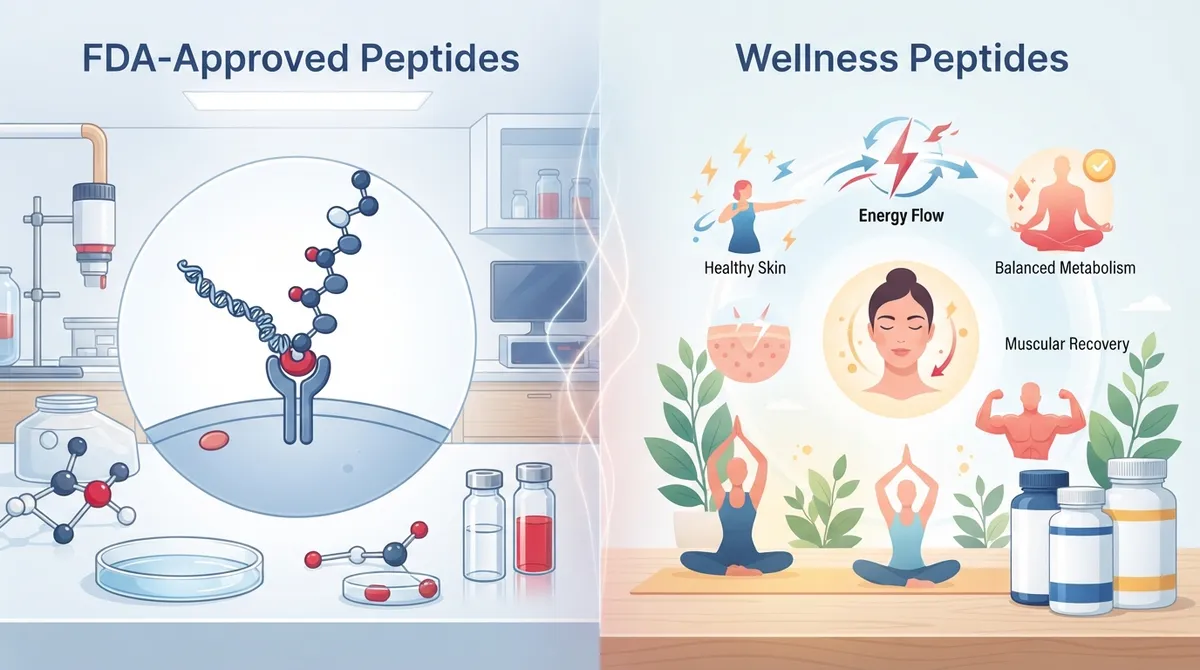
FDA-Approved Peptides vs. Wellness Peptides
This is the most important distinction in the whole topic. FDA approval is specific to a drug, a formulation, a route, and an indication. A clinic using words like "medical grade," "prescription," or "personalized" does not prove a peptide is approved or proven effective for the advertised purpose.
Some peptide medicines are FDA-approved for defined conditions. Examples include certain medications for diabetes and weight management. You should always verify the specific drug and indication in current FDA labeling or Drugs@FDA rather than rely on marketing.
Many peptides promoted for recovery, anti-aging, or performance are a different story. Products such as BPC-157, TB-500, CJC-1295, and ipamorelin are not FDA-approved for those wellness uses. Claims about tissue repair, athletic recovery, or anti-aging for several of these are based largely on laboratory or animal research. High-quality human clinical evidence is limited or absent.
|
Category |
Regulatory Status |
Evidence Level |
What to Ask |
|---|---|---|---|
|
FDA-approved peptide medicines |
Approved for specific indications |
Reviewed in clinical trials for the labeled use |
Is my condition the approved use? |
|
Compounded peptide products |
Not FDA-approved; made by a pharmacy for an individual patient |
Varies by ingredient |
Which pharmacy makes it, and is it licensed? |
|
Popular wellness peptides (recovery, anti-aging) |
Not approved for those uses |
Often preclinical (lab or animal data) |
What human studies support this claim? |
Regulatory status can change. The FDA has raised concerns about certain bulk substances used in compounding, including potential immune reactions, impurities, and limited human safety data. Check current FDA notices rather than assuming a product is allowed or safe.
Understanding Compounded Peptides
Compounded drugs are made by a pharmacy to fit one patient's needs. They are not FDA-approved. Compounding can be appropriate when it is legally permitted and a prescriber decides there is a true clinical need. However, it does not give the same premarket review of safety, effectiveness, and quality that an approved drug receives.
For you as a patient, this means sourcing matters. Ask who prepares the product. Ask whether the pharmacy is appropriately licensed. Ask how purity and sterility are tested. A good provider will welcome these questions.
What Do Peptide Clinics Commonly Promote?
Tampa clinic websites advertise a wide range of goals. Here are the most common themes and an honest look at each.
- Weight management: This is where the strongest evidence exists, mainly through FDA-approved medications used with medical supervision. If weight loss is your goal, a structured medical program is a sound starting point. You can learn more about medical weight loss options and how clinicians choose between them.
- Recovery and injury healing: Interest is high, but human evidence for many popular peptides is limited. Be cautious of promises of fast healing.
- Energy and vitality: Fatigue has many causes, such as thyroid problems, sleep apnea, anemia, or low testosterone. A medical workup should come before any peptide.
- Healthy aging: Claims are often stronger than the data. A focus on proven habits and screening usually delivers more.
Why Primary Care Is the Safest Starting Point
Peptide therapy should sit inside real medical care. A primary care approach looks at the whole person first. That means a medical history, a medication and supplement review, appropriate exams and lab tests, a discussion of alternatives, informed consent, and follow-up for side effects.
This matters because the cause of your symptoms may be treatable without a peptide at all. Poor sleep, thyroid disease, diabetes, and nutrient gaps can all mimic the problems peptides are marketed to fix. A clinic that tests first and prescribes second protects you from unnecessary risk and cost.
This is the approach InCare takes in Tampa and Riverview. InCare is a personalized healthcare clinic that pairs state-of-the-art technology with medical expertise. The care team combines primary care, DNA gene testing, metabolic breath analysis, and body composition analysis. That data gives your clinician a clearer picture of your metabolism and risk factors before any treatment is discussed. If you want a deeper look at how the clinic frames this service, read about peptide therapy in Tampa at InCare.
How a Safe Peptide Consultation Works
Knowing the usual steps helps you spot a careful provider. A well-run visit often follows this order:
- Medical history review. The clinician asks about symptoms, past conditions, family history, and goals.
- Medication and supplement check. Interactions are screened, since some products affect hormones, blood sugar, or blood pressure.
- Testing when indicated. Blood work, body composition scans, or metabolic testing may be ordered to find root causes.
- Evidence discussion. The provider explains what is proven, what is uncertain, and what alternatives exist.
- Informed consent. You receive clear information on benefits, risks, costs, and how the product is made.
- Follow-up plan. Check-ins track results and watch for side effects.
If any of these steps is skipped, ask why. Rushed visits that jump straight to a prescription deserve extra caution.
Possible Risks and Side Effects
No treatment is risk-free. Depending on the product, peptide injections may cause injection-site pain or redness, nausea, headache, water retention, or changes in blood sugar. Some products can trigger allergic or immune reactions. Compounded or poorly sourced products add concerns about contamination and inconsistent dosing.
Tell your clinician right away if you notice swelling, rash, trouble breathing, severe stomach pain, or any new symptom after starting treatment. People who are pregnant, are breastfeeding, have a history of cancer, or have certain chronic conditions need individual guidance before using any peptide.
Questions to Ask Before You Start
Use this checklist at your first visit to any peptide treatment center in Tampa:
- Who prescribes my treatment, and what are their credentials?
- Is this exact product FDA-approved for my condition?
- Is it compounded, and which pharmacy prepares it?
- What human studies support the claims you are making?
- What are the side effects, and what is the plan if they occur?
- How will you monitor my progress, and how often?
- What is the full cost, and is any of it covered by insurance?
How to Verify a Provider in Florida
Online listings do not confirm credentials, product quality, outcomes, or compliance. Always check the facts yourself. Confirm the clinician's Florida license and scope of practice through official state sources. Then confirm the pharmacy supplying the medication is properly licensed.
You can also look for signs of a transparent practice. Clear provider bios, named physicians, and honest answers about evidence are good indicators. You can meet the InCare provider team and read about each physician before you visit. Patient feedback adds context too, and you can read what patients say about InCare when you visit us on Google — InCare, where the clinic holds a 4.8 out of 5 rating.
Cost and Insurance Considerations
Reliable, independent price data for peptide therapy in Tampa is scarce. Costs vary widely by product, dose, and clinic, and many wellness peptide services are paid out of pocket. Be skeptical of any clinic that quotes a flat price before examining you. Ask for a written breakdown that includes visits, lab work, medication, and follow-up.
Insurance usually covers FDA-approved medications for approved conditions when criteria are met. It generally does not cover wellness-focused peptides. Confirm coverage with your plan before you start so there are no surprises.
Who Might Benefit From a Peptide Consultation?
A consultation can make sense for several groups. Tech-savvy professionals who want data-driven care may value testing before treatment. Busy parents looking for efficient weight management support may benefit from a structured medical plan. Women and young adults interested in prevention may want a baseline health picture first. In each case, the goal should be understanding your body and your options, not buying a product.
Remember that proven foundations come first. Sleep, nutrition, strength training, stress management, and routine screenings such as cancer screening deliver reliable benefits. Peptides, where appropriate, should be an addition to that base, not a replacement.
Finding the Right Care in Tampa Bay
The best peptide treatment center in Tampa is not the one with the boldest claims. It is the one that tests thoroughly, explains the evidence honestly, uses properly sourced products, and follows up. Those qualities describe a clinic built on medicine rather than marketing.
You can follow InCare on Instagram, Facebook, and TikTok for health education and clinic updates. InCare has locations at 1213 N Franklin St in Tampa and 11922 Boyette Rd in Riverview, plus virtual visits for added convenience.
Take the Next Step With InCare
If you are exploring peptide care in Tampa, start with a conversation grounded in evidence. InCare's physician-led team will review your history, discuss what is proven, and build a personalized plan around your goals. Book your appointment now to get started, or contact the InCare team with questions before you visit.
FAQs
Q: What does a peptide treatment center in Tampa offer?
A: A peptide treatment center typically offers clinician consultations that review your health history, symptoms, medications, and goals. Depending on the clinic, services may relate to weight management, recovery, energy, or healthy aging. Always confirm which products are FDA-approved and which are compounded.
Q: Are peptide therapies FDA-approved for anti-aging, recovery, or weight loss?
A: FDA approval is specific to each drug and indication. Some peptide medicines are approved for conditions such as diabetes and weight management. Peptides marketed for anti-aging or recovery, including BPC-157 and TB-500, are not FDA-approved for those uses.
Q: Is compounded peptide therapy safe?
A: Compounded products are not FDA-approved and do not receive the same premarket review of safety and quality. They may be appropriate when legally permitted and clinically justified. Ask which pharmacy prepares the product and confirm it is properly licensed.
Q: How can I verify a peptide provider in Florida?
A: Confirm the clinician's Florida license and scope of practice through official state sources. Also verify that the pharmacy supplying the medication is licensed. Online listings alone do not confirm credentials, product quality, or compliance.
Q: How much does peptide therapy cost in Tampa, and does insurance cover it?
A: Prices vary widely by product, dose, and clinic, and reliable independent figures are limited. Insurance often covers FDA-approved medications for approved conditions but generally does not cover wellness-focused peptides. Ask for a written cost breakdown and check with your insurer first.