
Key Takeaways
- MOTS-c lacks FDA approval and human trial evidence; most research comes from animal studies and a small 28-day trial of a synthetic analog (CB4211), not native MOTS-c itself, making weight loss or anti-aging claims unsupported.
- MOTS-c is prohibited by WADA for all competitive athletes under metabolic-modulator rules; athletes must avoid it unless approved by a sports-medicine professional familiar with anti-doping regulations.
- Age-defying peptides are a misleading marketing umbrella covering unrelated compounds like GHK-Cu and CJC-1295, each with different mechanisms and evidence levels; evaluate each peptide separately rather than as one category.
- Most peptide products sold online carry research-use-only labels and lack FDA oversight, creating serious risks including contamination, unknown interactions with medications, and undocumented immune reactions.
- Proven alternatives like quality sleep, resistance training, balanced nutrition, and preventive screenings have decades of research backing healthy aging and should be prioritized over investigational peptides.
- Before considering any peptide, discuss with a licensed provider your health goals, medical history, medications, metabolic status, cancer history, and athletic eligibility to ensure safety and appropriateness.
Peptide therapy has become one of the most talked-about topics in wellness circles, and two terms keep popping up: MOTS-c and "age-defying peptides." Patients in Tampa and Riverview often ask which option is better for energy, metabolism, or slowing down aging. The truth is more complicated than marketing pages suggest. Before you spend money on any peptide product, you need clear facts about what these compounds are, what science actually shows, and what risks you might be taking on.
This guide breaks down MOTS-c and the broader category of age-defying peptides in plain language. We will look at how they work, what human evidence exists, and why a conversation with a licensed provider matters more than online hype. If you are exploring peptide therapy options near you, this comparison will help you ask smarter questions at your next visit.

What Is MOTS-c?
MOTS-c is a small peptide made of 16 amino acids. Your mitochondria, the energy-producing parts of your cells, create it naturally. Researchers first identified MOTS-c because it appeared to influence how cells manage energy and respond to stress.
Scientists have studied MOTS-c mostly in mice and lab dishes, not in large human trials. Early findings suggest it may affect AMPK signaling, a pathway tied to metabolism and insulin sensitivity. Some studies also link it to exercise capacity and age-related metabolic changes in animals.
That sounds promising. But animal data does not prove that injecting MOTS-c into a human body is safe or effective. This is a critical distinction that many marketing sites skip over.
Why Human Evidence Matters
Most of what we know about MOTS-c comes from rodent studies. Mice are not people. Their metabolism, hormone systems, and drug responses often differ significantly from ours. A peptide that shows benefits in a mouse liver does not guarantee the same result in a human liver.
The closest human data available involves a synthetic analog called CB4211, not native MOTS-c itself. In an early-phase study, researchers gave 20 participants with obesity and elevated liver fat a 25-mg daily dose over 28 days. Some patients reported persistent injection-site reactions. This was a small, short study, not proof that MOTS-c works for weight loss or metabolic disease.
As of now, there is no completed, large-scale human trial proving that native MOTS-c helps with longevity, fat loss, diabetes prevention, or anti-aging goals.
What Are Age-Defying Peptides?
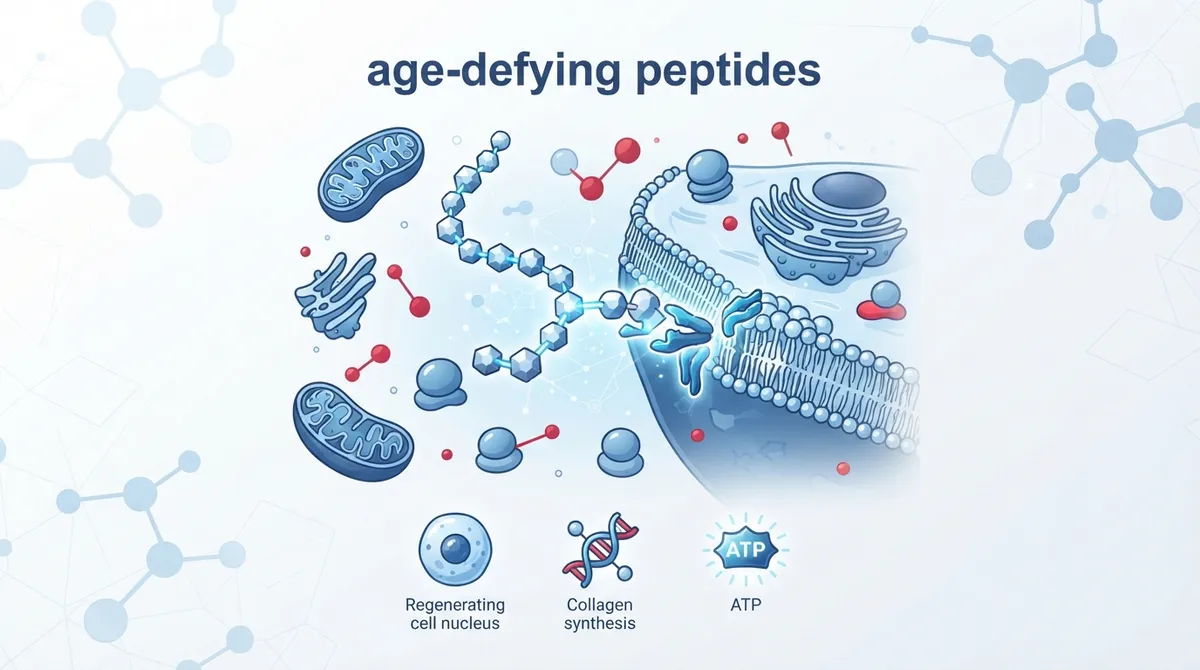
"Age-defying peptides" is not one specific product. It is a broad marketing term that covers many different compounds. Some examples include:
- GHK-Cu, a copper peptide studied for skin and tissue support
- CJC-1295 and ipamorelin, growth-hormone-related peptides
- Thymosin-related peptides, sometimes discussed for tissue repair
- Epitalon, a peptide explored in some longevity research circles
Each of these compounds has a different mechanism, different quality of research behind it, and different legal status. Lumping them together under one marketing label makes it harder for patients to make informed decisions. If you are researching options like GHK-Cu for skin and wellness or CJC-1295 for health support, treat each peptide as its own product with its own evidence base.
Why Comparing Them as One Category Is Misleading
Some age-defying peptides have more human research behind them than MOTS-c. Others have just as little. The label does not tell you anything about safety or effectiveness. It only tells you that a product is being marketed toward people interested in slowing visible or biological aging.
This is why primary care guidance matters. A qualified provider can help you understand what evidence actually supports each specific peptide, rather than relying on a catchy category name.
MOTS-c vs Age-Defying Peptides: Key Comparison
Here is a side-by-side look at how MOTS-c compares to common age-defying peptides in terms of evidence and regulatory status.
|
Factor |
MOTS-c |
Common Age-Defying Peptides |
|---|---|---|
|
Human Trial Data |
Very limited; mostly indirect via CB4211 analog |
Varies widely by peptide; some have more data, some have less |
|
FDA Approval Status |
Not approved for any human use |
Generally not approved for anti-aging claims |
|
Primary Research Source |
Animal and cell studies |
Mixed; depends on specific compound |
|
Athletic Eligibility |
Prohibited by WADA at all times |
Depends on the specific peptide |
|
Manufacturing Oversight |
Often sold as research-use-only |
Quality varies by supplier and product |
Regulatory and Legal Status You Should Know
Native MOTS-c has not received FDA approval for obesity, diabetes, exercise enhancement, osteoporosis, anti-aging, or any other condition. Most products sold online carry a research-use-only label. That means they are not intended for human use at all, despite how they may be marketed.
Regulatory status can shift over time. Even if an advisory committee reviews MOTS-c in the future, that review would be nonbinding. It would not automatically mean the peptide is approved, safe, or legal to prescribe. Patients should stay cautious and rely on their provider for the most current guidance.
Athletes Should Take Extra Caution
If you compete in sports, this matters a lot. MOTS-c is listed as prohibited at all times by the World Anti-Doping Agency. It falls under the metabolic-modulator and AMPK-activator category on the 2026 prohibited list. Competitive athletes should avoid it unless they get direct guidance from a sports-medicine professional familiar with anti-doping rules.
Potential Risks of Both MOTS-c and Age-Defying Peptides
Because so many of these products lack FDA oversight, quality control becomes a real concern. Here are risks you should discuss with a provider before considering any peptide:
- Contamination or incorrect concentration in products not regulated for human use
- Injection-site reactions, including redness, swelling, or persistent irritation
- Immune reactions that are not well understood or documented
- Unknown interactions with medications you may already take
- Unrecognized effects on blood sugar, organ function, or other body systems
- Lack of long-term safety data for ongoing or repeated use
These risks apply whether you are looking at MOTS-c or another peptide marketed for anti-aging. The lack of standardized manufacturing is one of the biggest concerns across this entire product category.
What a Primary Care Visit Should Cover
Before discussing any investigational peptide, a good clinician will want to review several things about your health. This helps determine whether a peptide conversation even makes sense for you.
- Your specific health goals and what you hope to achieve
- Full medical history, including chronic conditions
- Current medications and supplements
- Blood sugar and metabolic status
- Any personal or family cancer history
- Pregnancy status, if applicable
- Athletic competition status and eligibility concerns
This kind of thorough review is part of what makes comprehensive primary care valuable. It is not just about writing a prescription. It is about understanding your whole health picture before recommending any treatment, investigational or otherwise.
Evidence-Based Alternatives Worth Discussing
Many patients ask about peptides because they want more energy, better metabolism, or healthier aging. The good news is that several proven strategies can support these same goals without the uncertainty of investigational compounds:
- Consistent, quality sleep habits
- Regular resistance training and physical activity
- Balanced nutrition tailored to your metabolic needs
- Medically supervised weight loss programs when appropriate
- Up-to-date vaccinations and preventive screenings
- Cardiovascular risk management through regular checkups
- Approved treatments for diagnosed conditions
These approaches have decades of research behind them. They remain the foundation of healthy aging, even as newer compounds like MOTS-c continue to be studied.
Advanced Testing Can Help You Make Informed Decisions
If you are curious about your metabolic health or genetic predispositions before considering any peptide, advanced diagnostic tools can offer real clarity. Services like DNA gene testing, metabolic breath analysis, and body composition analysis give you data-driven insight into your body. This information helps guide decisions with your provider, rather than relying on guesswork or marketing claims.
For patients interested in whole-body optimization, combining these diagnostic tools with routine cancer screenings and wellness visits creates a much stronger foundation than any single peptide could offer on its own.
Why Working With a Trusted Clinic Matters
Peptide marketing moves fast, and claims can outpace the actual science. This is exactly why patients benefit from working with a clinic that prioritizes transparency and safety. InCare, with locations in Tampa and Riverview, combines modern technology with thorough medical evaluation to help patients understand what is proven and what remains investigational.
Patients consistently highlight the personalized attention they receive, and the clinic maintains a 4.8 out of 5 rating on Google from hundreds of reviews. You can visit us on Google — InCare to read patient experiences directly. The team also shares educational updates on Facebook, Instagram, and TikTok for patients who want ongoing wellness information.
Questions to Ask Before Trying Any Peptide
When you sit down with a provider, come prepared with specific questions. This ensures you get a clear, honest picture rather than vague reassurance.
- What human evidence exists for this specific peptide, not just the general category?
- Is this peptide FDA-approved for my specific health goal?
- What are the known and unknown risks based on current research?
- How is the product manufactured, and is it tested for purity?
- Does my medical history make this a poor fit?
- Are there proven alternatives that could achieve similar goals?
A provider who takes time to answer these questions honestly, even when the answer is "we don't have enough data yet," is one you can trust.
Making a Safe, Informed Choice
MOTS-c and age-defying peptides both generate excitement in wellness spaces, but excitement is not the same as proof. MOTS-c remains an experimental compound with limited human data, and the broader age-defying peptide category includes products with wildly different evidence levels. Treating any of them as guaranteed solutions for weight loss, muscle gain, or longevity is not supported by current research.
The safest path forward is a conversation with a licensed primary care provider who understands your full health history and can separate proven strategies from unproven trends. Whether you are exploring peptide therapy in Tampa or want a second opinion on a product you found online, professional guidance protects your health and your wallet.
Ready to get clear, personalized answers about your wellness options? Reach out to our team today or schedule your appointment now to start the conversation with a provider who puts your safety first.
FAQs
Q: What is the difference between MOTS-c and age-defying peptides?
A: MOTS-c is one specific mitochondrial-derived peptide studied mainly in animal research. "Age-defying peptides" is a broad marketing category covering many different compounds, such as GHK-Cu, CJC-1295, and epitalon, each with distinct mechanisms and evidence levels. Comparing them as a single group can be misleading, since safety and effectiveness vary by compound.
Q: Is MOTS-c FDA-approved or legal to prescribe?
A: No, native MOTS-c is not FDA-approved for any human indication, including weight loss, diabetes, or anti-aging use. Products sold online are typically labeled for research use only, not for human use. Any future regulatory review would not automatically make MOTS-c approved or legally available for routine prescribing.
Q: Does MOTS-c work for weight loss, muscle gain, or longevity?
A: Current human evidence does not support these claims for native MOTS-c. Most findings come from animal and cell studies, and the limited human data involves a synthetic analog called CB4211, not MOTS-c itself. No completed human trial has proven benefits for longevity, fat loss, or muscle building.
Q: Is MOTS-c banned for athletes?
A: Yes, MOTS-c is prohibited at all times by the World Anti-Doping Agency under the metabolic-modulator and AMPK-activator category. Competitive athletes should avoid it unless they receive specific guidance from a sports-medicine professional familiar with anti-doping regulations.
Q: What evidence-based alternatives can support healthy aging?
A: Proven strategies include consistent sleep, resistance training, balanced nutrition, medically supervised weight management, routine cancer screenings, and cardiovascular risk reduction. These approaches have strong research support and remain the foundation of healthy aging compared to investigational peptides.