Key Takeaways
- Yes, low testosterone can reduce sex drive, but low libido alone does not prove testosterone is the problem. Matching symptoms and repeatedly low lab results are both needed for a diagnosis.
- Doctors diagnose low testosterone using an early-morning blood test, ideally fasting, repeated on a separate day, since a single low result can be temporary.
- A total testosterone level below 300 ng/dL is the American Urological Association's reasonable cutoff, but it is a guide and must be interpreted alongside symptoms.
- Depression, stress, poor sleep or sleep apnea, obesity, alcohol or drug use, and medicines like opioids or corticosteroids can all lower libido even when testosterone is normal.
- Testosterone therapy may improve desire only in men with a confirmed deficiency, and it can reduce sperm production, so it is generally unsuitable for men planning to have children soon.
- Low libido with normal testosterone points to other causes, so reviewing sleep, mood, stress, medicines, and health conditions with a primary care clinician is the best next step.
Many men notice a drop in sex drive and wonder if hormones are to blame. It is a fair question. So, can low testosterone cause low sex drive? Yes, it can. Low desire is one of the symptoms most closely linked to testosterone deficiency, also called male hypogonadism. But the answer is not that simple. Many other things can lower libido, and a low sex drive alone does not prove that testosterone is the problem.
In 2026, more men are asking about hormone health, and more of them are searching online for quick answers. Quick answers can lead to wrong guesses. This article compares low testosterone with the other common causes of low libido. It explains how a primary care clinician sorts them out, what testing looks like, and when treatment makes sense. The goal is to help you ask better questions and get the right care.
The Short Answer: Can Low Testosterone Cause Low Sex Drive?
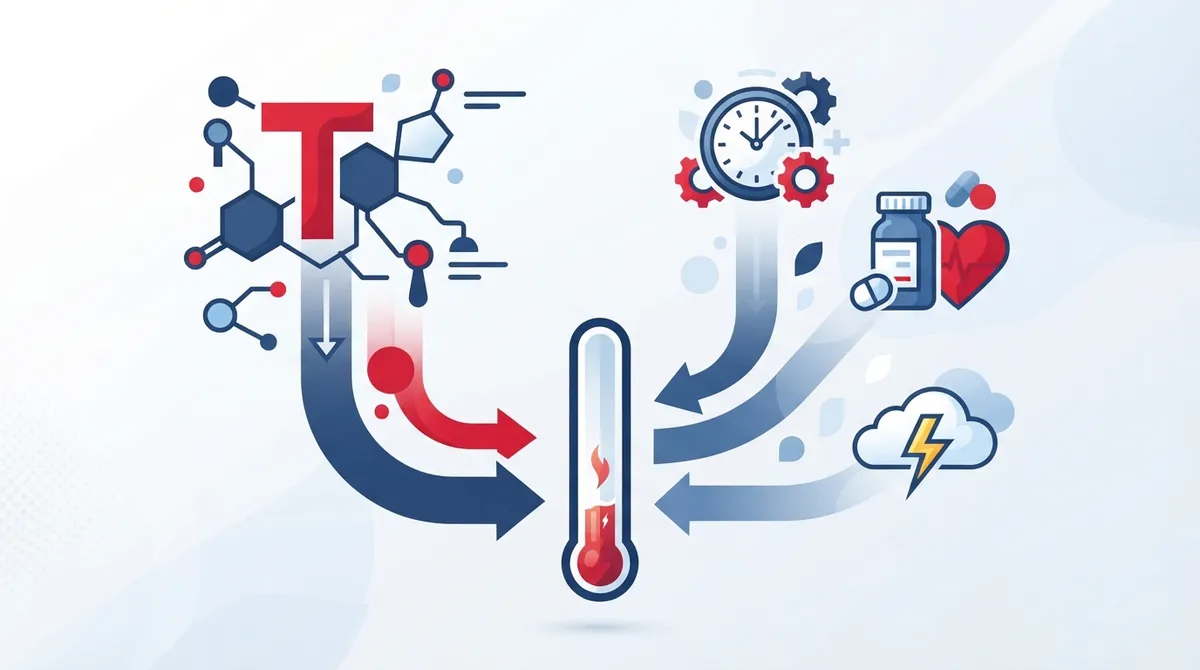
Yes. Testosterone plays a key role in sexual desire in men. When levels are truly low, men often report less interest in sex, fewer spontaneous thoughts about sex, and less energy overall. Doctors consider low libido one of the hallmark signs of testosterone deficiency.
However, the reverse is not always true. Low sex drive does not automatically mean low testosterone. Stress, poor sleep, depression, medicines, and chronic illness can all lower desire while hormone levels stay normal. This is why guidelines ask for two things together: matching symptoms and repeatedly low lab results. One without the other is not enough for a diagnosis.
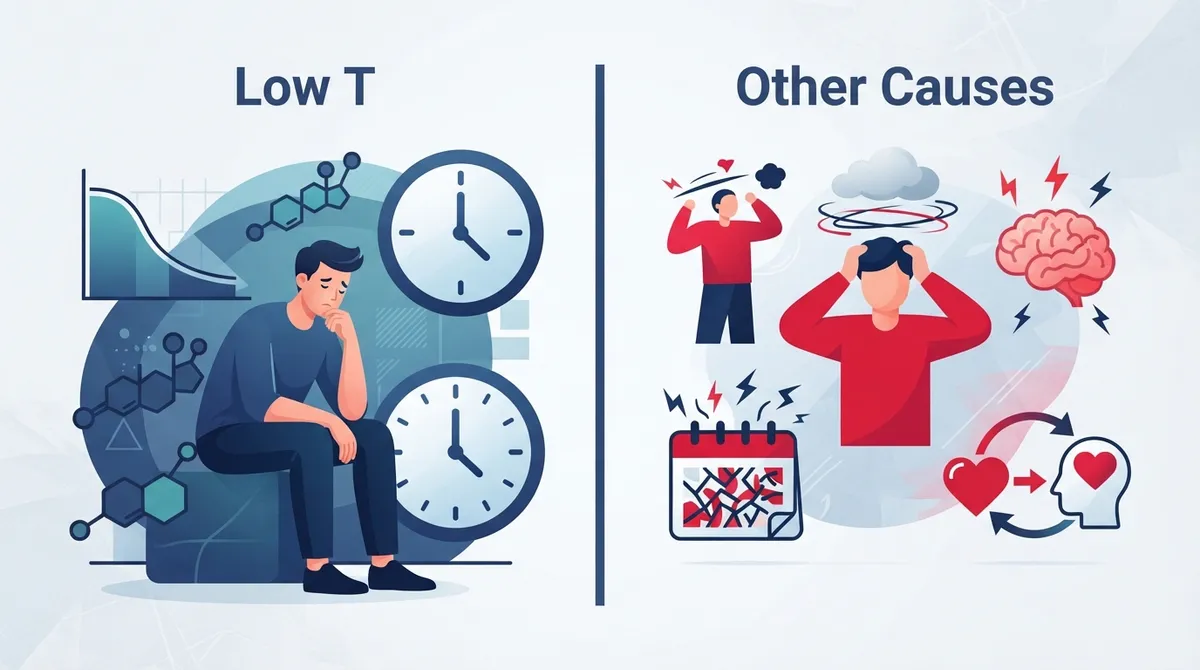
Low Testosterone vs. Other Causes: A Side-by-Side View
The table below compares the most common reasons for low sex drive. It shows how each one tends to look and what a clinician may do next.
|
Possible Cause |
Common Clues |
Typical Next Step |
|---|---|---|
|
Low testosterone (hypogonadism) |
Low desire, low energy, less muscle, mood changes, with repeated low lab results |
Two early-morning blood tests, then further hormone testing |
|
Depression or anxiety |
Sadness, loss of interest in many activities, worry, poor concentration |
Mood screening and treatment plan |
|
Stress or relationship strain |
Desire drops during hard periods or with conflict |
Counseling, lifestyle changes, open talks with a partner |
|
Poor sleep or sleep apnea |
Loud snoring, daytime tiredness, restless nights |
Sleep review and possible sleep testing |
|
Medicines |
Libido dropped after starting a new drug (opioids, corticosteroids, others) |
Medication review with your clinician |
|
Obesity or chronic illness |
Weight gain, diabetes, heart or kidney disease |
Whole-body evaluation and condition management |
|
Alcohol or substance use |
Regular heavy drinking or drug use |
Honest discussion and support options |
Notice that several of these causes overlap. A man with sleep apnea may also have low testosterone. A man who is overweight may have low testosterone and low mood. This is why a full review matters more than a single number.
Symptoms That Often Come With Low Testosterone
Low desire rarely shows up alone when testosterone is truly low. Men often notice a group of changes. Common symptoms include:
- Reduced interest in sex
- Fewer morning erections
- Low energy or constant fatigue
- Loss of muscle mass or strength
- Increased body fat
- Low mood or irritability
- Trouble concentrating
These symptoms can also come from other problems, which is why testing and a careful history are both needed. Erectile dysfunction and low libido are related but not the same. Erectile dysfunction means trouble getting or keeping an erection. Low libido means less desire. A man can have one without the other, and each may have different causes.
How Doctors Diagnose Low Testosterone
Guidelines from the American Urological Association and the Endocrine Society give clear steps. A diagnosis should not rest on one test or one symptom. Here is how the process usually works:
- Review symptoms and health history. Your clinician asks about desire, energy, mood, sleep, weight, medicines, alcohol, and stress.
- Perform a physical exam. This checks for signs such as changes in body hair, muscle, or testicular size.
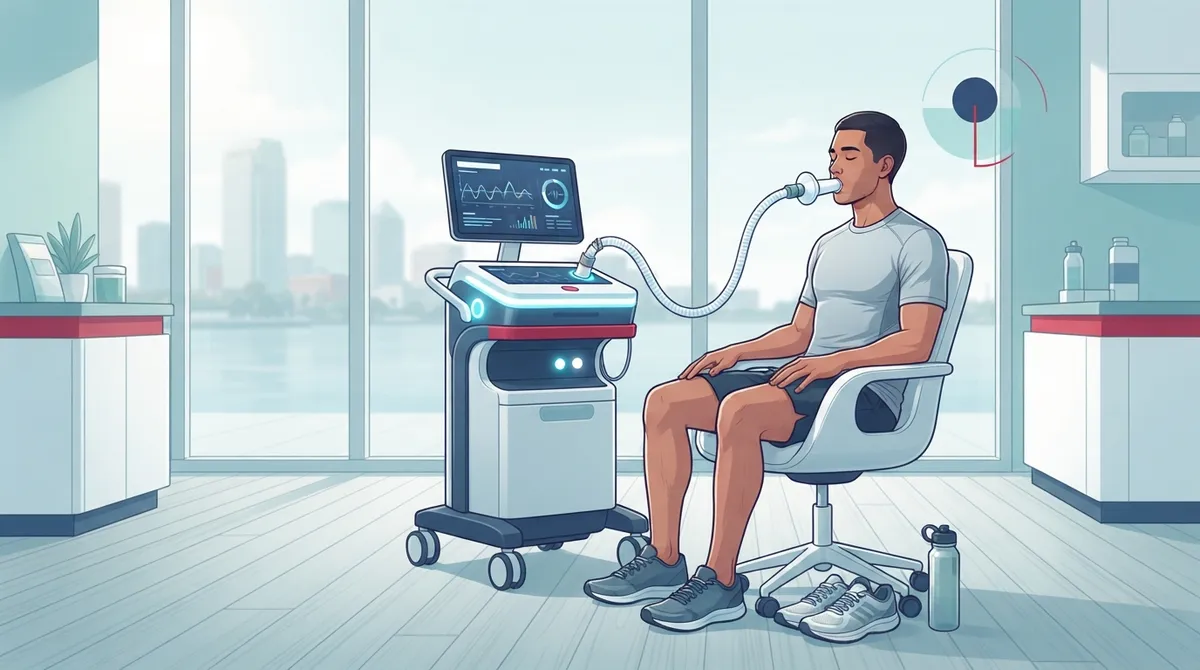
- Order an early-morning blood test. Testosterone levels shift during the day, so morning testing, ideally fasting, gives a more reliable result.
- Confirm with a second test. A low result should be repeated on a separate day. Illness and other factors can cause a temporary dip.
- Look at the full picture. Hypogonadism is diagnosed only when compatible symptoms appear together with consistently low levels.
The American Urological Association uses a total testosterone level below 300 ng/dL as a reasonable cutoff that supports a diagnosis. It is a guide, not a stand-alone answer. A number just under the line in a man with no symptoms may mean something very different from the same number in a man with clear symptoms.
Going Deeper: Finding the Source of Low Testosterone
If testosterone is repeatedly low, the next question is why. Clinicians may check luteinizing hormone (LH) and follicle-stimulating hormone (FSH). These tests help separate two main types:
- Primary hypogonadism: The testicles are not making enough testosterone, even though the brain is sending the signal.
- Secondary hypogonadism: The pituitary gland or hypothalamus in the brain is not sending the right signal.
Depending on results, a clinician may also check prolactin or free testosterone. Sometimes a referral to endocrinology or urology makes sense. Knowing the cause matters because it shapes the treatment plan and helps spot other health issues that need attention.
Other Causes Worth Ruling Out First
Because many things can lower desire, a good primary care visit looks at the whole person. Several causes are common and treatable.
Mental Health and Stress
Depression and anxiety are strong drivers of low libido. Ongoing stress raises cortisol and can lower interest in sex. Relationship strain plays a role too. Addressing these issues can bring desire back without any hormone treatment.
Sleep and Weight
Poor sleep and untreated sleep apnea can drain energy and lower testosterone. Excess weight is also linked with lower testosterone. A supervised plan through medical weight loss can improve both energy and hormone balance for some men. Tools such as body composition analysis give a clearer picture of fat and muscle than a bathroom scale.
Medicines and Chronic Illness
Opioids, corticosteroids, and several other drugs can reduce desire. Diabetes, heart disease, and kidney problems can do the same. A careful medication review is a simple first step, and it is a core part of primary care. For related ideas, see this guide on how to find what causes low sex drive in men.
Does Testosterone Therapy Fix Low Libido?
It can, but only in the right patient. Testosterone therapy may improve sexual desire in men who are properly diagnosed with testosterone deficiency. It is not a general fix for low libido when testosterone is normal. Taking it without a true deficiency adds risk without a clear benefit.
Treatment also requires an honest talk about benefits, risks, and monitoring. One important point: testosterone therapy can reduce sperm production. It is generally not a good fit for men who want to have children in the near term. Other options may be better for those men, and your clinician can explain them.
If you want to learn more about how treatment works, read about testosterone replacement therapy at InCare and the benefits of testosterone therapy for men over 40. You can also review how testosterone therapy works to restore vitality.
Why a Primary Care Visit Beats Guessing Online
It is tempting to search symptoms, buy a supplement, or order a home kit. That path often misses the real cause. A primary care clinician can do what a quick search cannot. They review your medicines and health history, order the right tests at the right time, and refer you when needed.
This matters for busy professionals, young families, and health-minded adults alike. A single visit can cover hormone testing, sleep concerns, mood screening, and preventive care in one place. It also keeps your records together, so nothing falls through the cracks. If you are unsure where to start, see whether you need a PCP.
At InCare, patients in Tampa and Riverview get personalized care that combines modern technology with medical expertise. The team can evaluate symptoms, order appropriate lab work, and build a plan based on your results and goals. You can learn more about our locations or see what patients say. Read InCare reviews on Google through Visit us on Google — InCare. You can also follow our updates on Instagram.
Low Testosterone vs. Normal Testosterone: What Each Result Means
Here is a simple way to think about your results and next steps:
|
Scenario |
What It May Mean |
Likely Path |
|---|---|---|
|
Low desire + repeatedly low testosterone |
Possible testosterone deficiency |
Find the cause, discuss treatment risks and benefits |
|
Low desire + normal testosterone |
Another cause is likely |
Review sleep, mood, stress, medicines, and health conditions |
|
Low testosterone + no symptoms |
May not need treatment |
Repeat testing and monitor |
|
One low result only |
Could be temporary |
Repeat early-morning test on a separate day |
Healthy Habits That Support Hormone Health
While testing and treatment are medical decisions, daily habits matter too. These steps support overall health and may help desire:
- Sleep seven to nine hours and treat any sleep problems
- Stay active with regular strength and cardio exercise
- Maintain a healthy weight with guidance if needed
- Limit alcohol and avoid recreational drug use
- Manage stress through rest, counseling, or relaxation habits
- Keep up with annual physical exams and screenings
Men curious about how health habits fit into long-term wellness can also explore what sets a men's health clinic apart. Staying proactive is one of the best ways to catch changes early.
Conclusion: Get the Right Answer, Not Just a Fast One
So, can low testosterone cause low sex drive? Yes, it can, and low libido is among the most common signs. But low desire has many causes, and only a proper evaluation can tell them apart. The best approach is simple: talk with a clinician, get accurate early-morning testing, review your medicines and lifestyle, and decide on treatment only when the evidence supports it.
If you have noticed a change in your sex drive, you do not have to guess. Book your appointment with InCare to start a clear, personalized evaluation in Tampa or Riverview. You can also contact our team with questions before your visit. Getting answers today can help you feel like yourself again.
FAQs
Q: Can low testosterone cause low sex drive?
A: Yes. Low desire is one of the symptoms most closely linked to testosterone deficiency. However, low sex drive alone does not prove testosterone is low, since stress, sleep problems, depression, and medicines can also lower libido.
Q: What testosterone level is considered low?
A: The American Urological Association uses a total testosterone level below 300 ng/dL as a reasonable cutoff to support a diagnosis. It must be confirmed with a second early-morning test and matched with symptoms before a diagnosis is made.
Q: How do doctors test for low testosterone?
A: Clinicians order a morning blood test, ideally fasting, and repeat it on a separate day if the first result is low. If levels stay low, they may check LH, FSH, prolactin, or free testosterone to find the cause.
Q: Does testosterone therapy improve libido?
A: It may improve sexual desire in men who are properly diagnosed with testosterone deficiency. It is not a general treatment for low libido when testosterone is normal, and it can reduce sperm production, so it is generally unsuitable for men planning to have children soon.
Q: What else can cause low sex drive in men?
A: Depression, stress, relationship difficulties, poor sleep, obesity, chronic illness, alcohol or drug use, and certain medicines such as opioids or corticosteroids can all lower libido. A primary care evaluation helps identify which factors apply to you.