
Key Takeaways
- KPV lacks large human clinical trials and FDA approval for eczema, relying only on lab and animal studies, while established treatments have decades of proven safety and efficacy data.
- KPV peptides struggle to penetrate skin effectively on their own, with passive diffusion falling below detectable levels in lab testing, meaning most compounded creams likely deliver little to no active dose.
- Proven eczema care combines daily moisturizing, trigger avoidance, prescription topical anti-inflammatories, and infection management—evidence-based approaches that should not be replaced by unproven KPV products.
- See a doctor if eczema spreads despite over-the-counter treatment, shows signs of infection, causes sleep loss, or interferes with daily activities, as professional evaluation prevents complications and confirms correct diagnosis.
If you have searched for "kpv eczema relief," you have likely found bold claims about a peptide that promises to calm inflamed, itchy skin. Eczema is frustrating, and it makes sense to look for new options when creams and lotions stop working. But before you spend money on an unproven peptide, it helps to understand what KPV actually is, what the science really shows, and how it compares to eczema treatments that already have years of proven results behind them.
At InCare, our primary care team in Tampa and Riverview helps patients sort fact from marketing hype every day. This guide breaks down the real evidence on KPV eczema relief, compares it to standard treatment, and explains when it makes sense to see a doctor about your skin.
What Is KPV and Why Is It Linked to Eczema Relief?
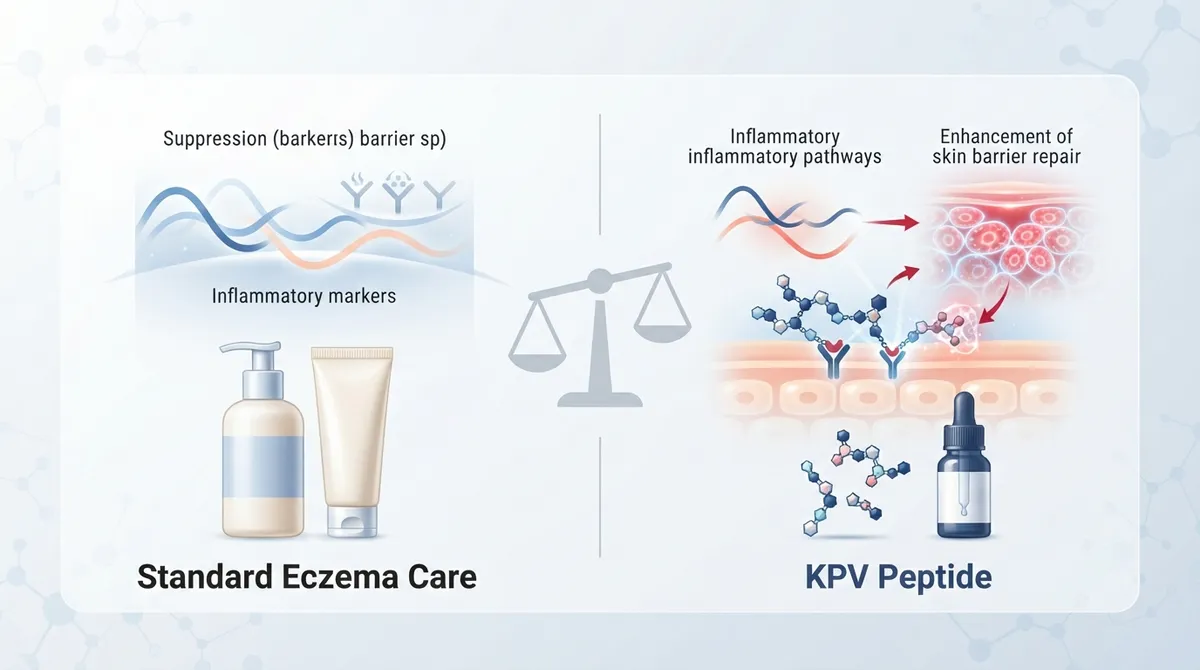
KPV stands for lysine-proline-valine. It is a small peptide fragment taken from a larger hormone called alpha-melanocyte-stimulating hormone, or α-MSH. Researchers first became interested in KPV because it seemed to calm inflammation in lab studies, separate from the hormone's other effects.
Because eczema, also called atopic dermatitis, is an inflammatory skin condition, some wellness companies now market KPV creams and supplements as a natural fix. The idea sounds appealing. But interest from researchers does not mean a product is proven safe or effective for people.
The Proposed Mechanism Behind KPV
Scientists believe KPV may work by blocking certain inflammatory signals in the body, including a pathway called NF-κB and a protein called interleukin-1β. Both play a role in skin inflammation and flare-ups.
This mechanism has mostly been studied in cell cultures and animal models of dermatitis, not in large human trials. That distinction matters a great deal when you are deciding whether to try a new product on your skin.
KPV vs. Established Eczema Treatments: How Do They Compare?
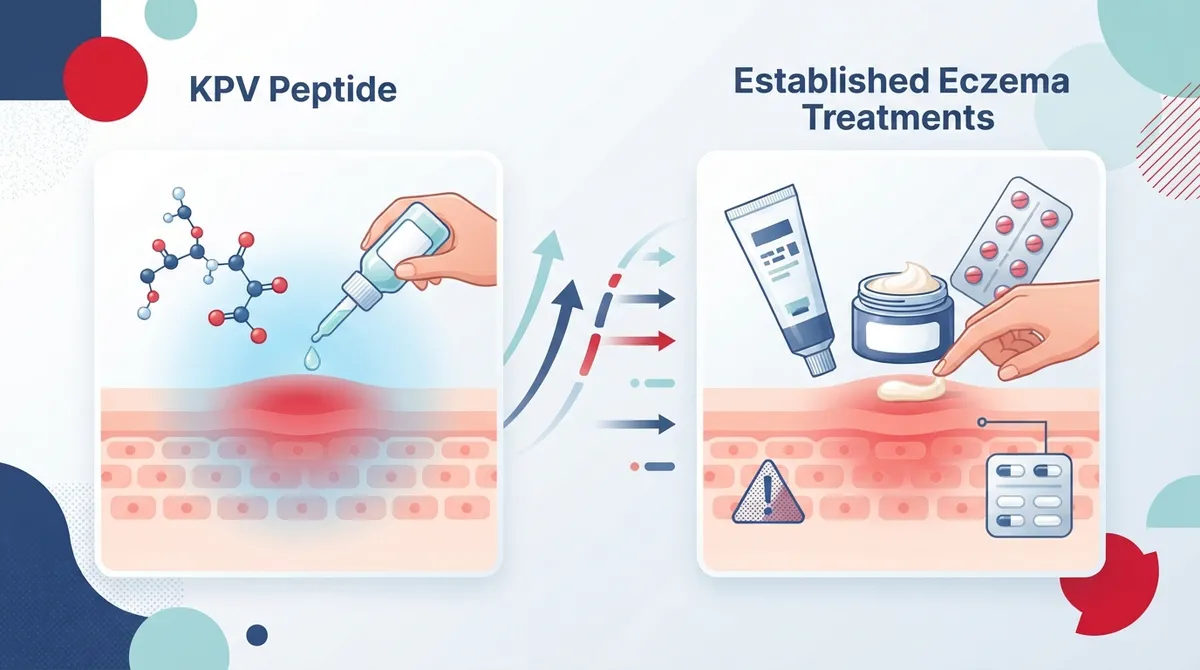
To understand where KPV really stands, it helps to place it side by side with treatments your primary care provider may already recommend. The table below compares KPV to standard, evidence-based eczema care.
|
Factor |
KPV Peptide |
Standard Eczema Treatments |
|---|---|---|
|
FDA Approval Status |
Not approved for eczema or any skin condition |
Many topical steroids and moisturizers are FDA-approved or recognized as safe |
|
Human Clinical Trials |
No large, peer-reviewed, controlled human trials found |
Backed by decades of controlled studies using validated scales like EASI and SCORAD |
|
Skin Absorption |
Passive penetration through human skin reported below detectable levels in lab testing |
Formulated to penetrate skin at effective, measured doses |
|
Safety Data |
Limited human safety information, including allergy and contamination risks |
Well-documented side effect profiles and dosing guidelines |
|
Regulatory Oversight |
No FDA-recognized monograph for KPV free base or KPV acetate |
Regulated manufacturing and quality standards |
This comparison shows a clear pattern. Standard eczema care has passed rigorous testing. KPV has not, at least not yet, reached that same level of proof in humans.
What Does the Research Actually Say About KPV for Eczema?
It is important to be honest about what current evidence shows and what it does not. Here is a clear breakdown of the research landscape.
- Cell and animal studies exist. Some laboratory research and animal models of dermatitis show reduced inflammation markers after KPV exposure.
- No large human trials have been found. Reviewed evidence did not identify a well-powered, randomized, controlled trial proving KPV helps eczema in people.
- Skin delivery is a major hurdle. One lab study found that KPV barely crossed dermatomed human skin on its own. Passive diffusion fell below the limit of detection.
- Microneedling changed the numbers, but only in a lab setting. With microneedling, delivery rose to about 4.4 micrograms per square centimeter per hour. That is a controlled experimental setup, not a real-world compounded cream.
- FDA briefing materials found no proof. Regulatory review found no clinical evidence in humans for KPV products used for wound healing or inflammation, and safety data such as immune response and peptide clumping were missing.
In short, the science behind KPV eczema relief is still in early stages. It has not moved from the lab into proven, real-world treatment.
Why Skin Penetration Matters So Much
A cream only works if the active ingredient actually gets into the skin where inflammation lives. If KPV struggles to pass through skin on its own, a compounded cream sold online may deliver little to no real dose.
This is one of the biggest gaps between marketing claims and lab reality. Without solid, repeatable human data, it is hard to know if any given KPV product does anything at all.
Is Topical KPV Cream Safe to Try?
Safety is just as important as effectiveness, and here KPV again falls short of standard care. Several questions remain unanswered by current research:
- Allergic reactions. It is not clear how often people may react to KPV peptides applied to broken or irritated skin.
- Product contamination. Compounded peptides are not always tested to the same standard as FDA-approved drugs.
- Peptide aggregation. Peptides can clump together in storage, which may change how they act on skin or in the bloodstream.
- Absorption into the body. If KPV enters the bloodstream through broken skin, its wider effects are not well studied.
- Drug interactions. There is little research on how KPV might interact with steroids or other eczema medications.
- Pregnancy and breastfeeding safety. No reliable safety data exists for these groups.
Because of these gaps, KPV should not replace treatments your doctor has already prescribed. If you are managing a chronic skin condition, sudden changes to your routine deserve medical guidance first.
What Actually Works for Eczema Right Now?
While KPV remains investigational, primary care and dermatology already offer proven tools for eczema management. A good treatment plan usually includes several layers of care working together.
Core Steps in Evidence-Based Eczema Care
- Daily moisturizing. Thick, fragrance-free moisturizers help repair the skin barrier and reduce flare frequency.
- Trigger avoidance. Identifying and limiting exposure to soaps, fabrics, stress, or allergens that worsen symptoms.
- Topical anti-inflammatory therapy. Prescription creams, when used correctly, calm active flare-ups quickly and safely.
- Infection management. Scratched or cracked skin can become infected, requiring targeted treatment.
- Specialist referral. Persistent, severe, or unclear cases often benefit from a dermatology evaluation.
This structured approach has years of clinical evidence behind it, unlike KPV, which is still confined mostly to lab studies. Our physicians at InCare regularly help patients build personalized plans using this exact framework.
When Should You See a Doctor About Eczema?
Some eczema symptoms are manageable at home with basic moisturizing and gentle skin care. Others need a professional evaluation. Consider scheduling a visit if you notice any of these signs:
- Eczema that keeps spreading despite over-the-counter treatment
- Signs of skin infection, such as warmth, pus, or increasing redness
- Sleep loss due to intense itching
- Flare-ups that interfere with work, school, or daily routines
- Uncertainty about whether it is eczema or another skin condition
A trained provider can confirm your diagnosis and rule out other causes of skin irritation. This step matters because treating the wrong condition wastes time and may make symptoms worse.
How InCare Approaches Skin and Whole-Body Wellness
At InCare, we believe good skin health starts with good overall health. Our team looks beyond the surface to understand what may be driving inflammation, whether that is diet, stress, hormones, or an underlying condition. We combine this whole-body view with DNA gene testing, body composition analysis, and personalized primary care to help patients feel their best.
For patients dealing with stubborn skin issues, our providers in Tampa and Riverview can evaluate your symptoms, discuss proven treatment options, and refer you to dermatology if needed. We also offer IV hydration and vitamin therapy for patients looking to support their skin and immune health from the inside out.
Patients across the Tampa Bay area have shared their experiences with our care team, and you can visit us on Google — InCare to read real reviews from people we have helped. We are proud of our reputation for friendly, attentive care, and we would love to help you find real answers for your skin concerns.
Staying Informed: Follow the Evidence, Not the Hype
New peptides and wellness trends appear online every year, and it is easy to feel pressure to try the newest thing. But real health decisions should rest on solid evidence, not social media buzz. You can follow our team on Instagram, connect with us on Facebook, or check out quick health tips on TikTok as we share updates on emerging wellness topics, always grounded in what the science actually supports.
If you are dealing with eczema, chronic dryness, or ongoing skin irritation, do not wait for unproven products to work. Reach out to our team to get in touch with our care providers, or go ahead and schedule your visit today to build a treatment plan backed by real medical evidence.
FAQs
Q: Does KPV actually help eczema or atopic dermatitis?
A: Current research on KPV for eczema comes mainly from cell and animal studies, not large human trials. No adequately powered, peer-reviewed clinical trial has confirmed that KPV effectively treats eczema in people.
Q: Is KPV peptide FDA-approved for eczema relief?
A: No. KPV is not FDA-approved for eczema, atopic dermatitis, or any other skin condition. FDA briefing materials found no monograph and no approved drug product containing KPV.
Q: Does topical KPV cream actually penetrate the skin?
A: Lab research suggests passive KPV penetration through human skin is very low, often below detectable levels. This raises real questions about whether standard compounded creams deliver a meaningful dose.
Q: Can KPV replace prescribed eczema treatments like topical steroids?
A: No. KPV should not replace treatments prescribed by your doctor. Established therapies like moisturizers, topical anti-inflammatories, and trigger avoidance have far more supporting evidence.
Q: When should I see a doctor about my eczema instead of trying new products?
A: See a primary care provider or dermatologist if your eczema spreads, shows signs of infection, disrupts sleep, or does not improve with basic care. Early evaluation helps prevent complications and confirms the right diagnosis.