
Key Takeaways
- KPV peptide efficacy in humans remains unproven—all evidence comes from animal studies and lab dishes, with zero well-controlled human trials demonstrating safety or effectiveness for any medical condition.
- KPV is not FDA-approved, has no established human dosing guidelines, and online products lack quality control, sterility testing, and purity verification, creating unknown safety and contamination risks.
- Proven anti-inflammatory treatments offer exact dosing, known side effect profiles, FDA manufacturing oversight, and doctor monitoring—none of which exist for KPV, making them substantially safer alternatives.
- Before considering KPV, discuss it openly with your doctor by providing the exact product name, source, and reason for interest to assess drug interactions and explore evidence-based treatment options.
Wellness patients across Tampa and Riverview are asking their doctors about KPV peptide efficacy after seeing bold claims online. Social media posts promise this experimental peptide can calm gut inflammation, clear skin conditions, and speed healing. But what does the actual science say? This article breaks down what KPV is, what the research shows, and how it compares to primary care approaches with real human evidence behind them.
If you are considering KPV or any research peptide, understanding the gap between animal studies and proven human treatments matters. It could protect your health and your wallet. Let's look at the facts so you can make an informed decision with your doctor.

What Is KPV Peptide?
KPV stands for lysine-proline-valine. It is a tiny three-amino-acid fragment taken from a larger hormone called alpha-melanocyte-stimulating hormone (alpha-MSH). Scientists first became curious about KPV because of its possible anti-inflammatory effects.
Researchers believe KPV may work by calming certain inflammatory signals in the body, including a pathway called NF-kB. It may also lower some pro-inflammatory cytokines and interact with gut transport systems like PepT1. These are interesting mechanisms, but interesting is not the same as proven.
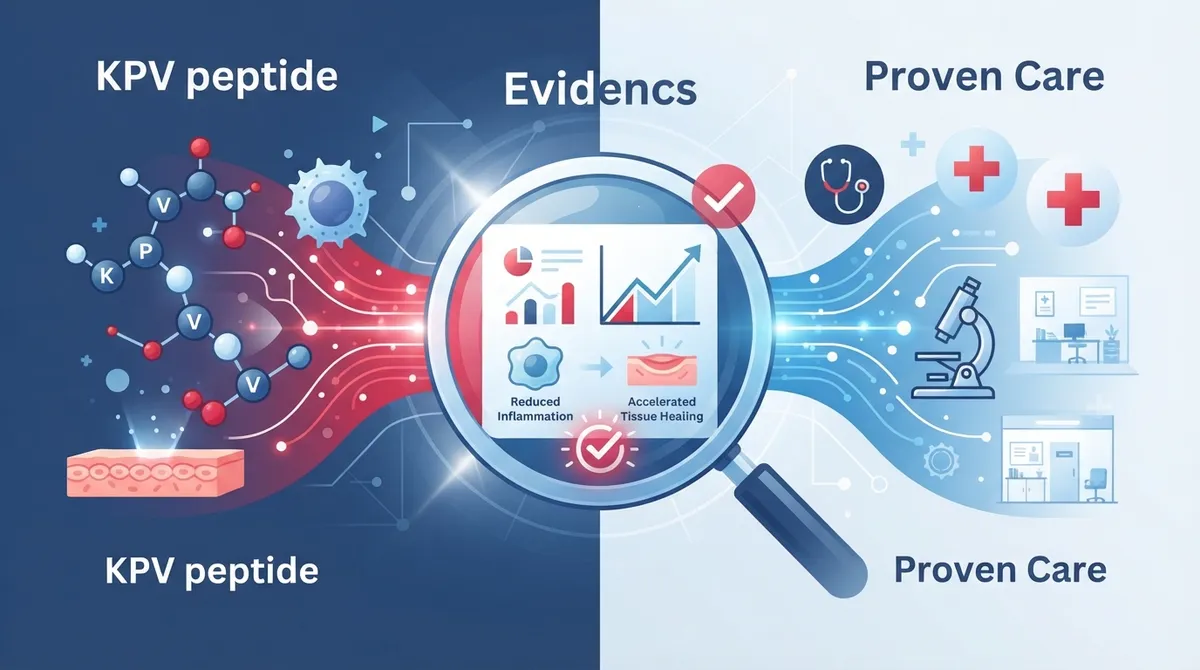
KPV Peptide Efficacy: What the Research Actually Shows
Most of what we know about KPV comes from lab dishes and animal studies, not people. Rodent models of colitis are the most common source of efficacy data. These studies are useful for generating ideas, but they cannot tell us how KPV works in a human body.
There is currently no well-controlled, randomized, peer-reviewed human trial proving that KPV works for any medical condition. This is a critical point. Many online sellers imply KPV is backed by strong science, but the reviewed literature does not support that claim for human use.
Common Claims vs. Current Evidence
Here is how popular claims about KPV stack up against what real research supports:
|
Claim |
Evidence Level |
What This Means for You |
|---|---|---|
|
Reduces gut inflammation (IBD, colitis) |
Animal studies only |
Not proven safe or effective in humans |
|
Improves acne, eczema, rosacea |
Cell and animal data |
No human skin trials confirm this |
|
Speeds wound healing |
Preclinical only |
No clinical protocol exists |
|
Supports weight loss or metabolism |
No direct evidence found |
Not a supported use |
|
Safe for repeated or long-term use |
Data lacking |
Safety profile is unknown |
Is KPV FDA Approved or Legal in the United States?
KPV has no FDA-approved product, no approved medical use, and no official dosing guideline. It is generally described in regulatory sources as a research peptide rather than an approved medicine. This means it has not passed the safety and effectiveness testing that approved drugs require.
Regulatory status can shift over time, so it is worth checking current FDA guidance before considering any peptide product. An advisory committee discussion or a change in a review category does not equal FDA approval. Patients should not assume a peptide is safe just because it is easy to buy online.
KPV vs. Proven Anti-Inflammatory Care: A Direct Comparison
When you compare KPV to established primary care treatments for inflammation, the difference in evidence is stark. Here is a side-by-side look:
- Human clinical trials: Proven anti-inflammatory treatments have gone through years of controlled human testing. KPV has not.
- Dosing standards: Approved medications have exact, tested dosing schedules. KPV has no established human dose.
- Safety monitoring: Approved drugs come with known side effect profiles and monitoring plans. KPV's long-term safety data is limited or missing.
- Regulatory oversight: FDA-approved treatments are manufactured under strict quality controls. Peptide products sold online often lack that oversight.
- Insurance and medical support: Proven treatments can be prescribed and monitored by your doctor. KPV cannot be responsibly prescribed as a treatment today.
For a deeper look at how KPV stacks up against standard anti-inflammatory approaches, see this comparison of KPV vs. traditional anti-inflammatories.
Why Product Quality and Safety Matter
Many products marketed online as KPV are not regulated. This raises several concerns:
- Uncertain identity: You may not actually be getting KPV at the stated purity or concentration.
- Sterility risks: Injectable products made without proper quality control can carry contamination risks.
- Storage problems: Peptides can break down if not stored correctly, changing their safety profile.
- No dosing standard: Without an established human dose, you are essentially guessing at safe amounts.
- Unknown interactions: KPV's interaction with other medications, supplements, or health conditions is not well studied.
This is why primary care doctors encourage patients to be upfront about any nonprescription peptide use. Your provider needs to know the product name, source, and route of administration to help keep you safe.
How to Talk to Your Primary Care Clinician About KPV
Bringing up peptide use with your doctor should feel comfortable, not intimidating. Here are steps to guide that conversation:
- Write down exactly what product you are using or considering, including the brand and source.
- Share your reason for interest, whether it is inflammation, skin concerns, or general wellness.
- Ask your doctor what proven options exist for your specific concern.
- Discuss any current medications or conditions that could interact with a peptide.
- Request monitoring or lab work if you choose to continue any experimental product on your own.
A trusted primary care team can help you weigh the real risks and benefits, rather than relying on marketing claims. If you are searching for a doctor who takes wellness trends seriously while grounding advice in evidence, our providers are ready to help.
What InCare Offers Instead: Evidence-Based Wellness Optimization
At InCare, we understand why patients are curious about peptides and cutting-edge wellness tools. That is exactly why we offer services backed by real clinical support and measurable results. Rather than guessing with unregulated products, you can explore options that come with medical oversight.
- DNA gene testing to understand your personal health risks and needs
- Body composition analysis using advanced 3D imaging
- IV hydration and vitamin drips for targeted nutrient support
- Medically supervised weight loss programs tailored to your body
- Cancer screenings for early detection and peace of mind
- Peptide therapy consultations guided by licensed medical professionals
Our team, including Dr. Pramjeet Ahluwalia and Dr. Naveen Paddu, focuses on whole-body health using tools with real clinical backing. This approach protects you from the guesswork that comes with unregulated peptide products.
Red Flags to Watch For When Researching Peptides
Not every wellness claim online is trustworthy. Watch for these warning signs before trying any peptide product:
- Claims that a peptide "cures" or "reverses" a serious disease
- No mention of FDA status or regulatory oversight
- Sellers who discourage you from talking to a doctor
- Missing third-party testing or purity certificates
- Pressure tactics like limited-time discounts on health products
If a product sounds too good to be true, it likely is. Genuine medical advances go through rigorous testing before reaching patients, and that process takes time for good reason.
The Bottom Line on KPV Peptide Efficacy
The honest answer is that KPV peptide efficacy in humans remains unproven. Laboratory and animal data are hypothesis-generating, not conclusive. Until well-designed human trials exist, KPV should be viewed as investigational, not a replacement for evidence-based primary care.
If you are dealing with inflammation, digestive issues, skin conditions, or general wellness goals, a personalized evaluation with a licensed clinician is the safest starting point. Our patients often share their experiences on Google reviews for our InCare locations, and many mention how much they value having real answers instead of guesswork. You can also follow us on Facebook, Instagram, and TikTok for wellness updates grounded in real science.
Take the Next Step Toward Evidence-Based Wellness
Curiosity about new peptides is understandable, but your health deserves care backed by real evidence. Whether you are in Tampa, Riverview, or nearby, our team can help you sort fact from marketing hype. We serve patients through both our Tampa and Riverview locations, as well as virtual visits for busy schedules.
Ready to talk with a doctor who values science over hype? Book your appointment today and get personalized guidance on inflammation, wellness optimization, and peptide safety. You can also reach out to our team with any questions before your visit.
FAQs
Q: What is KPV peptide and how is it supposed to work?
A: KPV is a three-amino-acid fragment derived from alpha-MSH, studied for possible anti-inflammatory effects. Researchers believe it may influence inflammatory pathways like NF-kB, but this mechanism is based on preclinical research, not confirmed human outcomes.
Q: Is KPV peptide effective for inflammation or inflammatory bowel disease?
A: Current evidence comes mainly from rodent colitis studies, which cannot establish efficacy in humans. No well-controlled human trials have proven KPV effective for inflammatory bowel disease or any other condition.
Q: Is KPV peptide FDA approved or legal to use in the United States?
A: KPV has no FDA-approved product or approved medical indication. It is generally classified as a research peptide, and regulatory status should always be verified before considering its use.
Q: What are the side effects and risks of KPV peptide?
A: Human safety data for KPV are limited, especially for repeated dosing and long-term use. Risks also include product quality issues, since many online peptide sellers lack sterility and purity testing.
Q: How should patients discuss KPV or other research peptides with a primary-care clinician?
A: Bring the exact product name, source, and intended use to your appointment. Your primary care doctor can then assess interactions, discuss proven alternatives, and help you make a safer, more informed decision.