
Key Takeaways
- KPV is an experimental tripeptide with no published human clinical trials proving safety or effectiveness for IBD, ulcerative colitis, or Crohn's disease; all evidence comes from lab cells and mouse models only.
- Established IBD medications have undergone rigorous human clinical trials with known dosing and safety profiles, while KPV products sold online lack FDA review and have unknown purity and contamination risks.
- KPV appears to reduce inflammation by blocking NF-κB and MAP kinase pathways in lab studies, but calming inflammation in a dish is fundamentally different from safely treating chronic illness in real patients.
- Marketing claims linking KPV to IBS, leaky gut, or general digestive wellness exceed current research scope, which focused specifically on chemically-induced colitis in mice, not human digestive health.
- Researchers are developing nanoparticle and hydrogel delivery systems to protect KPV from stomach acid and increase colon delivery, but these remain in animal testing and have not been translated to human trials.
- If experiencing digestive symptoms or gut inflammation, schedule a primary care visit for proper diagnosis and evidence-based treatment rather than relying on unproven peptides marketed online.
Gut health is a hot topic in wellness circles today. Many people search online for new ways to calm inflammation and support digestion. One name that keeps popping up is KPV, a small peptide studied in gut inflammation research. But what does the science actually say? This article breaks down kpv gastroenterology research in plain language, so you can separate real evidence from hype.
At InCare, patients across Tampa and Riverview often ask about trending peptides and supplements they find online. Our goal is to give you honest, science-based answers. If you have digestive symptoms or gut concerns, a conversation with a trained primary care provider is always the safest first step.
What Is KPV?
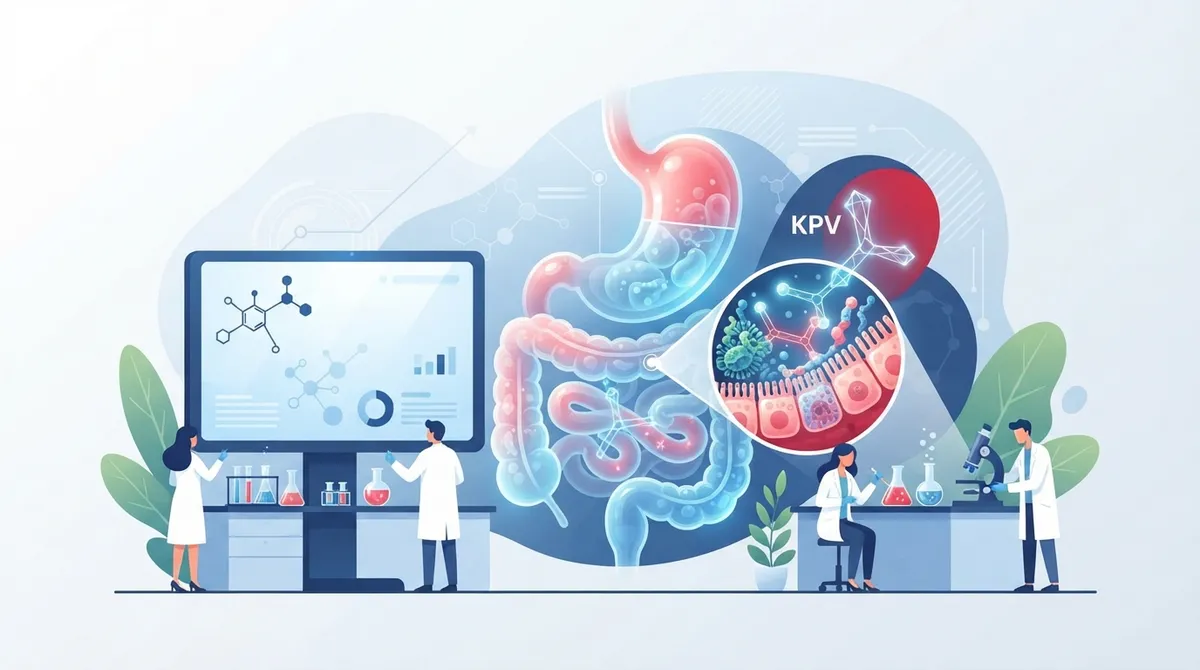
KPV stands for lysine-proline-valine. It is a tiny chain of three amino acids, known as a tripeptide. This peptide comes from a larger hormone called alpha-melanocyte-stimulating hormone, or α-MSH. Researchers became interested in KPV because it seemed to calm inflammation in lab studies.
Gastroenterology researchers have focused mostly on KPV's effect on gut inflammation. This includes conditions like inflammatory bowel disease (IBD), which covers ulcerative colitis and Crohn's disease. The idea is simple: if KPV can lower inflammation in the gut, it might one day help people with these conditions.

How KPV Gastroenterology Research Began
Most of the key studies on KPV came out between 2008 and 2017. These early studies were done in labs, using cells and mice, not people. This is an important detail. Lab and animal research is a good first step in science. But it does not prove something works safely in humans.
Key Early Studies
Here are the main research milestones in KPV gastroenterology research:
- 2008 Gastroenterology study: Researchers led by Dalmasso found that KPV entered inflamed gut cells through a transporter called PepT1. Oral KPV reduced inflammation in two mouse models of colitis, called DSS and TNBS models.
- 2008 Kannengiesser study: This separate team found similar anti-inflammatory effects in two more mouse models. Mice treated with KPV had less inflammation, better weight recovery, and lower markers of gut damage.
- 2017 nanoparticle study: Scientists tested a special delivery system for KPV using nanoparticles and hydrogels. This helped protect KPV from breaking down before it reached the colon. Results showed better mucosal protection and lower inflammation markers in mice.
- 2026 prodrug delivery study: A newer experimental study found a modified form of KPV built up in the colon at nearly four times higher levels than plain KPV. It worked at a much lower dose. This is still early animal research, not proof of human safety or effectiveness.
These studies are interesting to scientists. They show KPV has real biological effects in lab settings. But none of them prove KPV is a safe or effective treatment for humans with gut disease.
How Does KPV Work in the Gut?
To understand kpv gastroenterology research, it helps to know a bit about how KPV interacts with cells.
The PepT1 Transporter
KPV appears to enter intestinal and immune cells through a transporter called PepT1. This transporter normally moves small protein pieces (peptides) into cells. Interestingly, PepT1 levels go up in the colon during inflammation. This means KPV might be able to target inflamed tissue more directly than healthy tissue, at least in lab models.
Calming Inflammatory Signals
In cell and animal studies, KPV appeared to block a signaling pathway called NF-κB. This pathway drives many inflammatory responses in the body. KPV also seemed to reduce MAP kinase activity, another inflammation pathway. As a result, levels of inflammatory proteins like TNF-α, IL-1β, and IL-6 went down in treated cells and animals.
These are the same inflammatory markers doctors track in patients with IBD. That is why researchers found KPV so interesting for gut disease. However, calming inflammation in a lab dish is very different from safely treating a chronic illness in real patients.
Can KPV Treat Ulcerative Colitis or Crohn's Disease?
This is the question most people really want answered. The honest answer, based on current evidence, is no. There is no published large-scale human clinical trial proving KPV works for IBD, colitis, or Crohn's disease.
All of the strong evidence for KPV comes from:
- Cultured intestinal and immune cells in a lab
- Chemically induced colitis in mice (DSS and TNBS models)
- Immune-based colitis models in mice (CD45RB-high transfer models)
- Experimental nanoparticle and hydrogel delivery systems, still in animal testing
Mouse models are useful tools. They help scientists understand biology. But mice are not humans. Many treatments that work well in mice fail in human trials, or turn out to have side effects that mice studies could not predict. This is a normal part of the research process, and it is why KPV is still considered investigational.
KPV vs. Established IBD Treatments
People managing IBD often already use proven medical treatments. These include prescription anti-inflammatory drugs, immune-modulating medications, and biologic therapies. These treatments have gone through years of human clinical trials. They have known safety profiles and dosing guidelines approved by medical regulators.
KPV has none of this. The table below shows a simple comparison.
|
Factor |
Established IBD Medications |
KPV (Research Peptide) |
|---|---|---|
|
Human clinical trials |
Yes, multiple large trials |
None published to date |
|
FDA-reviewed for IBD |
Yes, approved options exist |
No approved use for IBD |
|
Known dosing |
Established and monitored |
Not established in humans |
|
Safety data |
Extensive, tracked over years |
Very limited, mostly animal data |
|
Physician oversight |
Standard part of treatment |
Not part of standard care |
This is why primary care providers do not recommend replacing prescribed IBD therapy with KPV products. Doing so could allow inflammation to worsen without proper monitoring.
Could KPV Help With IBS, Leaky Gut, or General Gut Health?
Many wellness products marketed online claim KPV can help with irritable bowel syndrome (IBS), leaky gut, or general digestive wellness. These claims go beyond what the current research supports.
The studies on KPV focused specifically on colitis models in mice, not IBS or general gut health in humans. There is no solid human data connecting KPV to IBS symptom relief or improved gut lining function. If you are dealing with bloating, irregular bowel habits, or ongoing digestive discomfort, it is worth having a real conversation with a doctor rather than trying unproven peptides.
A primary care visit can help identify the actual cause of your symptoms. This might include food sensitivities, stress, thyroid issues, or other treatable conditions. Learn more about primary care services designed to look at your whole health picture, not just one symptom.
Why Are Nanoparticles and Hydrogels Being Studied for KPV?
One challenge with KPV is that it breaks down quickly in the digestive tract. Stomach acid and enzymes can destroy small peptides before they reach the colon, where inflammation happens in IBD.
To solve this, researchers have tested:
- Hyaluronic-acid-coated nanoparticles designed to protect KPV
- Hydrogel formulations made from chitosan and alginate
- Prodrug versions of KPV that only activate in inflamed tissue
These delivery systems aim to get more KPV to the right place in the gut, using a lower dose. The 2026 prodrug study mentioned earlier is a good example. It showed nearly four times more KPV reaching the colon compared to the plain peptide. Again, this is animal research. It has not been tested in human clinical trials.
Is KPV Safe to Take Orally or by Injection?
This is a common question, and the honest answer is that safety has not been established in humans. Most available data comes from cell cultures and mice, at doses measured in nanomolar concentrations for lab experiments. These numbers cannot be safely translated into a human dose.
Unregulated KPV products sold online are not reviewed by the FDA for gut health use. Purity, dosing accuracy, and contamination risks are unknown for many of these products. Anyone considering a peptide product should talk with a healthcare provider first, especially if they have an existing digestive condition or take other medications.
What Should You Do Instead?
If you are dealing with digestive symptoms, gut inflammation, or a diagnosed condition like IBD, here are practical steps that are backed by real clinical evidence:
- Schedule a primary care visit. A thorough exam and history can identify the real cause of your symptoms.
- Ask about proper testing. Bloodwork, stool studies, or referral for imaging can clarify what is happening in your gut.
- Discuss proven treatment options. Established medications and lifestyle changes have real clinical trial data behind them.
- Review your whole-body health. Services like DNA gene testing and body composition analysis can offer helpful insights into your overall wellness picture.
- Stay cautious with unregulated peptides. If a product sounds too promising, verify the claims against real published research before use.
InCare's approach centers on evidence-based primary care combined with modern wellness tools. Our providers, including those featured on our providers page, take time to review your symptoms and history before recommending any treatment path.
The Bigger Picture on Gut Health and Prevention
Gut inflammation does not happen in isolation. It connects to diet, stress, sleep, and even chronic disease risk. A comprehensive wellness visit can look at these factors together, rather than chasing a single trending compound.
Preventive care matters here. Routine cancer screening and general wellness visits can catch problems early, long before they become serious. If you are new to primary care or have not had a checkup recently, understanding what happens during an annual wellness visit can help you feel prepared.
For patients managing ongoing conditions, coordinated care also matters. Fragmented visits across different providers can lead to missed details. Learn why coordinated care often wins over fragmented care when it comes to long-term gut and metabolic health.
Following Trusted Sources on Wellness Trends
Peptides like KPV often trend on social media before real clinical evidence catches up. It helps to follow accounts that explain the science honestly. You can find helpful wellness updates and clinic news on Facebook, Instagram, and Tik Tok. These platforms can be a good starting point, but they should never replace a real conversation with your doctor.
Patients across Tampa and Riverview have shared their experiences with InCare, and you can visit us on Google — InCare to read reviews and see what others say about their care journey.
Conclusion
KPV gastroenterology research is a genuinely interesting area of science. Lab and animal studies suggest this small peptide can calm certain inflammatory pathways linked to gut disease. But right now, KPV remains an experimental research compound. It is not an approved or proven treatment for IBD, ulcerative colitis, Crohn's disease, IBS, or general gut health in humans.
If you are struggling with digestive symptoms or want a real plan for gut health, do not rely on unproven peptides alone. Our team at InCare in Tampa and Riverview is ready to help you build a science-based path forward. Reach out to our team today or book your appointment now to start a conversation about your digestive health with a provider who listens.
FAQs
Q: What is KPV and how is it related to gastroenterology?
A: KPV is a small peptide made of three amino acids: lysine, proline, and valine. Gastroenterology researchers study it because lab and animal tests show it may calm gut inflammation linked to inflammatory bowel disease.
Q: Can KPV treat ulcerative colitis or Crohn's disease?
A: No. There is no published human clinical trial proving KPV treats ulcerative colitis or Crohn's disease. All current evidence comes from cell cultures and mouse models, not human patients.
Q: Has KPV been tested in human clinical trials for IBD?
A: No large-scale human clinical trial has confirmed KPV's safety or effectiveness for IBD. The strongest research remains preclinical, based on lab and animal studies from 2008 through 2026.
Q: Is KPV safe to take orally or by injection?
A: Safety in humans has not been established. Available data comes from nanomolar-level lab experiments and animal dosing, which cannot be safely applied to human use without further research.
Q: Could KPV help with IBS or general gut health?
A: Current research does not support using KPV for IBS or general digestive wellness. Studies have focused narrowly on colitis models in mice, not broader gut health claims made in wellness marketing.