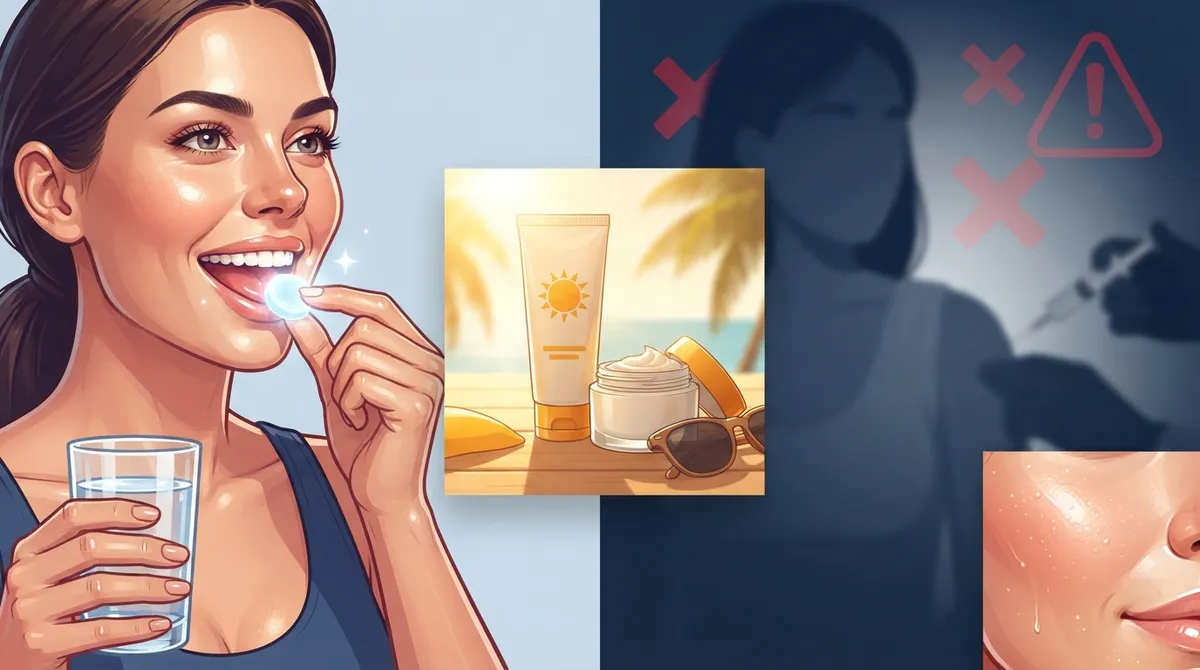
Key Takeaways
- Oral collagen peptides show more consistent evidence than topical peptides, with studies demonstrating 20% reduction in eye wrinkles and improvements in hydration, elasticity, and skin texture after 8-12 weeks of use.
- Avoid unregulated injectable peptides sold online as 'research chemicals'—their purity and sterility are unverified, carrying serious risks including infection and allergic reactions without medical oversight.
- Not all peptide products are equal; effectiveness depends on peptide sequence, concentration, molecular weight, stability, and delivery system, so a branded peptide's study results don't guarantee other products will work the same way.
- Start with skincare fundamentals like sunscreen, moisturizer, and treating underlying skin conditions before adding peptides, as no serum can undo years of sun damage or replace basic skin health habits.
- Patch test new peptide products on your inner arm first and introduce them gradually to track skin responses, especially if you have sensitive skin or eczema that could trigger irritation or flare-ups.
- Sleep, hydration, nutrition, and stress management play a bigger role in skin aging than peptide products, so pursue peptides alongside a whole-body wellness approach rather than as a standalone solution.
Skincare aisles and wellness clinics alike are buzzing about peptides. You may have seen serums promising firmer skin or heard about collagen powders claiming to erase fine lines. But what do peptides actually do, and are they worth adding to your routine? At InCare, we believe good skin health starts with real information, not hype. This guide breaks down what peptides can and cannot do, backed by current research, so you can make a smart choice for your skin and your health.
Whether you are a busy parent squeezing in a wellness visit, a young professional exploring proactive health options, or someone simply tired of confusing skincare claims, this article gives you a clear, doctor-informed look at peptides for skin health. We will also cover safety concerns, especially around unregulated injectable peptides, and how a primary care visit can help you build a skin health plan that actually works.
What Are Peptides, and Why Are They in Skincare?
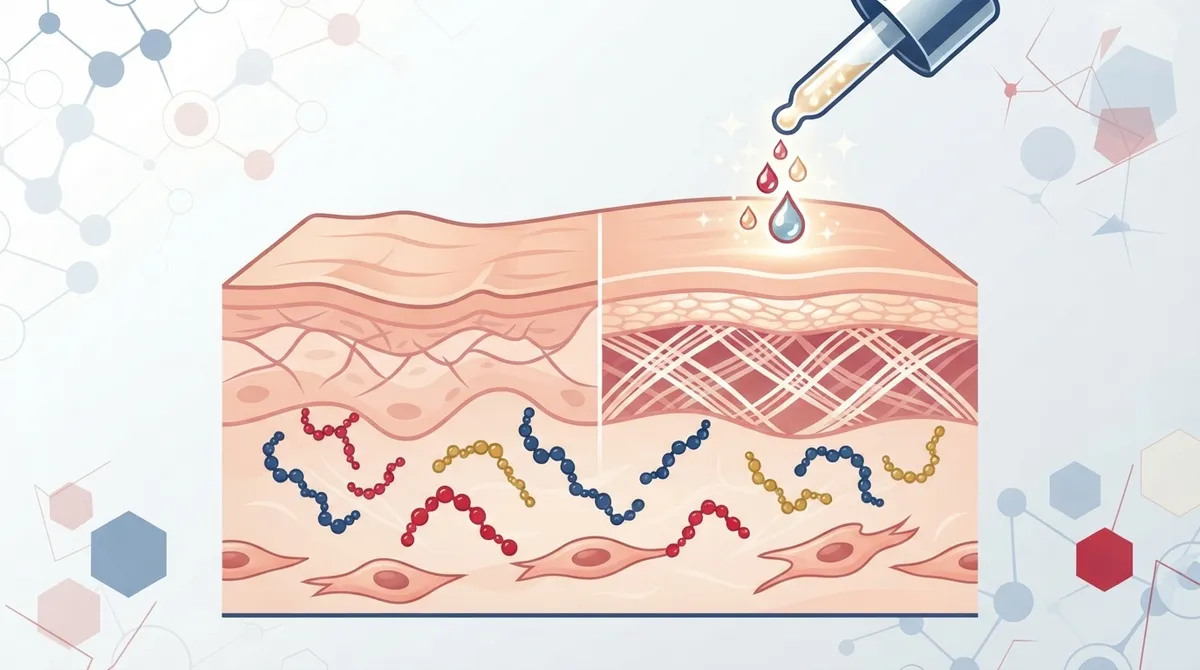
Peptides are short chains of amino acids. Amino acids are the building blocks of proteins like collagen and elastin, which keep skin firm and smooth. When peptides are applied to skin or taken as supplements, the idea is that they signal your body to produce more of these proteins.
There are several types of peptides used in skin health products:
- Signal peptides: These may tell skin cells to make more collagen and support the extracellular matrix, the scaffolding that keeps skin structured.
- Carrier peptides: Copper tripeptide-1 is a common example. It may help deliver minerals to skin cells and support wound repair and antioxidant activity.
- Neurotransmitter-modulating peptides: These are designed to relax facial muscles slightly, similar in concept to how injectable treatments work, but through topical use.
- Oral collagen peptides: These are consumed as supplements. Once digested, they break down into amino acids and small peptides that may influence collagen production from the inside.
It sounds promising in theory. But lab results do not always match what happens on real human skin. That gap between mechanism and outcome is exactly why primary care providers encourage patients to look at the evidence carefully.

What Does the Research Actually Show?
The science on peptides for skin health is growing, but it is still considered preliminary. A 2024 systematic review indexed in PubMed looked at multiple studies on topical peptides and found possible improvements in fine lines, wrinkles, elasticity, skin texture, and thickness. Some studies even hinted at benefits for wound healing. However, the review authors were clear that the evidence base is still developing and inconsistent across products.
Oral collagen peptides have some more consistent findings, particularly for skin hydration and elasticity. A 2023 randomized controlled trial found that low-molecular-weight oral collagen peptides improved skin roughness, wrinkle depth, elasticity, hydration, and brightness after 12 weeks compared to a placebo. No product-related side effects were reported in that study.
An older, frequently cited trial involved 114 women between ages 45 and 65 who took 2.5 grams of collagen peptides daily for 8 weeks. Researchers reported about a 20% reduction in eye-wrinkle volume compared to placebo. That is a meaningful result, but it is important to remember this was one specific formulation, over a short time period, and some of these studies have industry funding that could influence outcomes.
Why Results Vary So Much
Not all peptide products are created equal. Differences in the following factors can make one product effective and another useless:
- Peptide sequence and molecular structure
- Concentration used in the formula
- Molecular weight (smaller molecules often absorb better)
- Stability of the ingredient once exposed to air and light
- Delivery system, such as serums, creams, or supplements
- Quality and length of the clinical study behind the product
This means you cannot assume that because one branded peptide showed results in a study, every peptide product on the shelf will work the same way. This is where guidance from a wellness-focused clinic becomes valuable, especially for patients who want results without wasting money on ineffective products.
Topical Peptides vs. Oral Collagen: What Is the Difference?
Patients often ask whether they should apply peptides directly to their skin or take them as a supplement. The honest answer is that both approaches have different strengths, and neither is a magic fix.
|
Feature |
Topical Peptides |
Oral Collagen Peptides |
|---|---|---|
|
Application |
Applied directly to skin (serums, creams) |
Taken as capsules or powder |
|
Best Evidence For |
Fine lines, texture, elasticity, wound support |
Hydration, elasticity, skin brightness |
|
Time to See Results |
Weeks to months |
Typically 8 to 12 weeks |
|
Common Side Effects |
Irritation, redness, acneiform reactions |
Generally well tolerated; GI upset possible |
|
Regulation Level |
Cosmetic; not FDA-approved for efficacy |
Dietary supplement; different standards than drugs |
Neither category is regulated the same way medications are. In the United States, cosmetic products generally do not need FDA approval to prove they work before hitting the market. Supplement claims follow different rules than drug claims. That is why it helps to talk with a clinician who can help you separate marketing language from real evidence.
How to Safely Add Peptides to Your Skin Health Routine
If you want to try peptide skincare or supplements, here is a practical approach to reduce risk and improve your odds of seeing results:
- Start with the basics first. Sunscreen, daily moisturizer, and treating any underlying skin conditions matter more than any peptide product. No serum can undo years of sun damage.
- Patch test new products. Apply a small amount to your inner arm for a few days before using it on your face, especially if you have sensitive or eczema-prone skin.
- Introduce products gradually. Add one new peptide product at a time so you can track how your skin responds.
- Check for interactions. Peptides can generally be used with retinoids, vitamin C, and exfoliating acids, but layering too many active ingredients at once can cause irritation. Space out application times if needed.
- Set realistic expectations. Clinical improvements, when they happen, are usually modest and take weeks to months to show up.
- Talk to your doctor before starting oral collagen supplements if you are pregnant, breastfeeding, have kidney or liver disease, follow a restricted diet, or already take multiple supplements.
These steps apply to over-the-counter topical peptides and reputable oral collagen supplements. They do not apply to unregulated injectable peptides, which carry a different level of risk.
The Risks of Injectable and "Research" Peptides
Some websites sell injectable peptides marketed for skin rejuvenation, often labeled as "research chemicals." These products are not the same as FDA-approved cosmetic ingredients or regulated supplements. Their purity, dosing accuracy, and sterility are often unverified.
Using unsupervised injectable peptides carries real risks, including infection, allergic reaction, and unpredictable effects since dosing is not standardized. If you are interested in peptide therapy for skin, anti-aging, or overall wellness, it should be done through a licensed medical provider who can evaluate your health history and monitor your progress. Our team offers guidance on peptide therapy in Tampa so patients can explore these options safely, with proper medical oversight rather than guesswork.
Common Side Effects to Watch For
Most topical peptide products are well tolerated by the skin. Still, some people experience:
- Mild irritation or redness
- Allergic or contact dermatitis
- Acne-like breakouts
- Increased sensitivity when combined with other active ingredients
If you notice ongoing irritation, stop using the product and consult a healthcare provider. This is especially important for patients with existing skin conditions like eczema or rosacea, where certain ingredients can trigger flare-ups.
Why Skin Health Deserves a Whole-Body Approach
Peptides might offer modest cosmetic benefits, but they are not a substitute for basic health habits that support skin from the inside out. Sleep, hydration, nutrition, and stress management all play a bigger role in how your skin ages than most products on the market.
At InCare, we look at skin health as part of your overall wellness picture. A wellness visit can help identify underlying issues, like hormonal imbalances or nutrient deficiencies, that affect your skin. Our DNA gene testing services can also give insight into how your body processes collagen and responds to environmental stress, which may inform which skin health strategies are worth trying.
For patients pursuing broader wellness goals, our IV hydration and vitamin drips support hydration and nutrient levels that contribute to healthier-looking skin, alongside topical or oral peptide use if appropriate for you.
Questions to Ask Before You Buy
Before purchasing any peptide product, ask yourself these questions:
- Does this brand disclose the exact peptide sequence and concentration used?
- Is there published research on this specific ingredient, not just peptides in general?
- Does the company make claims that sound too good to be true, like "reverses aging" or "replaces medical treatment"?
- Is this an injectable product sold without a prescription or medical oversight?
If the answer to that last question is yes, it is best to avoid the product and speak with a licensed provider instead.
How InCare Supports Your Skin and Wellness Goals
Our clinics in Tampa and Riverview combine primary care expertise with advanced wellness services, so you get science-based guidance instead of confusing marketing claims. Whether you are curious about peptide skincare, thinking about collagen supplements, or interested in medically supervised peptide therapy, our providers can walk you through the evidence and help you choose an approach that fits your health history and goals.
Patients consistently share positive experiences with our team, and you can visit us on Google — InCare to read what others are saying about their visits. You can also follow our latest wellness tips and clinic updates on Facebook, Instagram, and TikTok for practical, easy-to-understand health content.
Final Thoughts on Peptides for Skin Health
Peptides are not a miracle cure, but they may offer modest, real benefits when chosen carefully and used consistently. The strongest evidence points to improvements in hydration, elasticity, and skin texture rather than dramatic wrinkle reversal. Topical peptides and oral collagen supplements are generally safe for most people, but injectable or unregulated "research" peptides carry risks that are not worth taking without medical supervision.
If you want a personalized plan for your skin and overall health, our team at InCare is ready to help. Reach out to our team today to discuss your skin health goals, or schedule your visit now to start building a wellness plan that actually works for you.
FAQs
Q: Do peptides actually improve skin health or reduce wrinkles?
A: Current research suggests peptides may offer modest improvements in hydration, elasticity, and skin texture. A 2024 systematic review found preliminary evidence for reduced fine lines and wrinkles, but results vary widely by product and formulation. Peptides should be viewed as a helpful addition to your skincare routine, not a guaranteed fix.
Q: What is the difference between topical peptides and oral collagen peptides?
A: Topical peptides are applied directly to the skin and may support collagen production and wound repair at the surface level. Oral collagen peptides are digested and broken down into amino acids that may influence fibroblast activity from within the body. Evidence for oral collagen tends to be more consistent for hydration and elasticity.
Q: Are copper peptides safe for sensitive or acne-prone skin?
A: Copper peptides like copper tripeptide-1 are generally well tolerated, but they can cause irritation or acne-like reactions in some people. Patch testing before full use is a smart precaution, especially for those with sensitive or eczema-prone skin.
Q: How long does it take for peptide skincare or collagen supplements to work?
A: Most clinical studies show measurable changes after 8 to 12 weeks of consistent use, not days. Results tend to be gradual, with hydration and elasticity improving before any visible changes in wrinkle depth.
Q: Are injectable or compounded peptides safe for skin rejuvenation?
A: Injectable or so-called research peptides sold online are not the same as regulated cosmetic or supplement products. Their purity, dosing, and sterility are often unverified, so they should only be considered under the supervision of a licensed medical provider.