Key Takeaways
- Fatigue is nonspecific and often caused by poor sleep, sleep apnea, depression, stress, medications, alcohol, anemia, or thyroid disease, so low testosterone should never be assumed.
- A low T diagnosis requires compatible symptoms plus consistently low levels, confirmed with two separate early-morning total testosterone tests (cutoff below 300 ng/dL).
- About 30% of men with an initially low testosterone result may test normal on repeat testing, which is why confirmation is required before any treatment decision.
- Be wary of any clinic that prescribes testosterone after one test, without labs, or without discussing risks, alternatives, and follow-up monitoring.
- Testosterone replacement therapy can suppress sperm production, so men planning to father children soon should disclose fertility goals before starting treatment.
- Seek emergency care for chest pain, severe shortness of breath, fainting, or self-harm thoughts, and avoid self-diagnosing or starting testosterone based on symptoms alone.
Waking up tired, dragging through the afternoon, and losing your drive can wear down any busy adult. Many men search online for a fatigue and low T clinic in Tampa and expect a quick answer. The truth is more careful than that. Fatigue is a common symptom with many possible causes, and low testosterone is only one of them. A good clinic does not assume the answer. It looks at the full picture first.
This guide explains how to find the right care in 2026. You will learn how low testosterone is diagnosed, what else can cause constant tiredness, and what to expect during an evaluation. You will also see how to judge a clinic, what treatment involves, and when to seek urgent help. Whether you are a busy parent, a high-performing professional, or a young adult focused on prevention, the steps below will help you ask better questions and get safer, more useful care.

Why Fatigue Does Not Always Mean Low Testosterone
Fatigue is a nonspecific symptom. It does not prove that testosterone is low. Many everyday conditions drain energy, and several of them look a lot like low T.
Common contributors to ongoing tiredness include:
- Short or broken sleep
- Sleep apnea
- Depression, anxiety, or chronic stress
- Medication side effects
- Heavy alcohol use
- Anemia
- Thyroid disease
- Diabetes and other chronic conditions
This is why a primary care approach matters. A clinician who reviews your whole health history is more likely to find the real cause. Skipping that step can lead to the wrong treatment and months of lost time. If you want a broader look at this kind of care, read about 12 ways InCare combats fatigue for good in 2026.
Symptoms That May Point to Low Testosterone
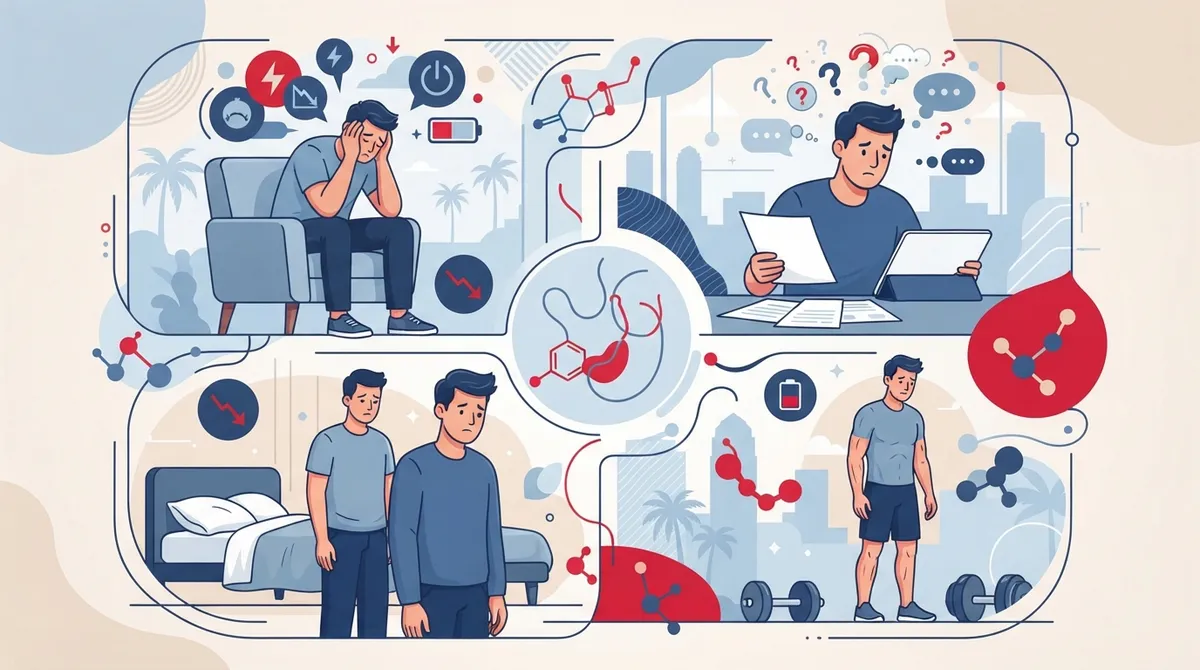
Low testosterone, also called male hypogonadism, tends to cause a cluster of symptoms rather than one problem alone. Fatigue may appear alongside other changes. Major guidelines say a diagnosis requires compatible symptoms or signs together with consistently low blood levels.
Symptoms often linked to low T include:
- Low sex drive or fewer morning erections
- Reduced energy and motivation
- Loss of muscle mass or strength
- Increased body fat
- Low mood or trouble concentrating
- Reduced bone density over time
Having one or two of these does not confirm a problem. Many of them overlap with sleep loss, stress, and weight gain. That overlap is exactly why testing and clinical judgment both matter. You can also explore how to support healthy testosterone production at 40 and beyond for lifestyle context.
How Low Testosterone Is Properly Diagnosed
Diagnosis rests on two parts: your symptoms and your lab results. Neither one is enough alone. The American Urological Association (AUA) uses a total testosterone level below 300 ng/dL as a reasonable cutoff. A low number by itself still does not make the diagnosis.
The Endocrine Society reports that about 30% of men with an initially low result may have a normal result on repeat testing. That statistic is the main reason confirmation is required before any treatment decision.
|
Step |
What Happens |
Why It Matters |
|---|---|---|
|
1. Clinical review |
Symptoms, sleep, mood, medications, alcohol use, and history are discussed |
Finds other causes of fatigue |
|
2. First morning blood test |
Total testosterone drawn early in the morning |
Levels are highest in the morning |
|
3. Repeat morning test |
A second, separate early-morning measurement |
Confirms the result is consistent |
|
4. Extra testing if needed |
Free testosterone or SHBG may be checked for borderline results |
Improves interpretation |
|
5. Cause evaluation |
Looks for testicular, pituitary, medication, or health-related causes |
Guides the right treatment |
The AUA recommends two separate early-morning total testosterone measurements. The Endocrine Society recommends repeat fasting morning testing with an accurate assay. Free testosterone can help when total testosterone is borderline or when sex hormone-binding globulin (SHBG) may change how results should be read.
How to Find the Right Fatigue and Low T Clinic in Tampa
Choosing a clinic takes a little homework. Marketing pages often promise fast energy and big results. Those claims are not a replacement for an individual medical evaluation. Use the steps below to separate careful care from sales pitches.
- Confirm the clinicians are licensed. Look for physicians or advanced practitioners who can explain their training and credentials. You can review InCare's providers as an example of how a clinic should present its team.
- Look for a broad fatigue workup. The clinic should ask about sleep, mood, medications, and other medical conditions, not only hormones.
- Expect repeat morning testing. A clinic that prescribes after one test or without labs is a red flag.
- Ask about risks and alternatives. You should hear about benefits, side effects, and options other than medication.
- Check for follow-up monitoring. Good care continues after the first visit.
- Ask about fertility goals. The clinic should raise this topic before any treatment starts.
A clinic built on primary care has a real advantage here. It can check your blood pressure, screen for diabetes, and review your medicines in one place. To learn more about this model, see whether primary care doctors can order hormone testing and discuss TRT.
What to Expect at Your First Evaluation
A strong first visit feels thorough, not rushed. Plan to share your story in detail, since symptoms and timing guide every next step.
A clinician evaluating fatigue may review:
- When your symptoms started and how they have changed
- Sleep habits, snoring, and daytime sleepiness
- Mood, stress, and mental health
- Prescription and over-the-counter medicines
- Alcohol and substance use
- Past medical conditions and family history
- A physical examination
From there, tests are chosen for your situation. They may include a complete blood count to check for anemia, thyroid tests, blood sugar or A1C, and the morning testosterone panel described above. Some clinics also offer advanced tools. For example, InCare offers DNA gene testing and body composition analysis as part of a whole-body wellness approach. These add context, but they do not replace the core steps of symptom review and repeat hormone labs.
What Testosterone Replacement Therapy Is and Is Not
Testosterone replacement therapy (TRT) treats appropriately diagnosed testosterone deficiency. It is not a general energy boost or an anti-aging shortcut. If your levels are normal, TRT is not the right tool for tiredness.
When TRT is considered, a responsible clinic will discuss:
- Possible benefits, such as improved sex drive, energy, and mood in men with confirmed deficiency
- Possible risks and side effects
- Alternatives to medication
- Your fertility goals
- A plan for ongoing monitoring
Fertility deserves special attention. Testosterone treatment can suppress sperm production. It is generally unsuitable for men who want to father a child in the near term. If that is a goal, tell your clinician at the start so other options can be explored.
For a plain-language overview, review what testosterone replacement therapy is at InCare. You can also compare approaches in TRT vs. peptide therapy vs. hormone replacement therapy.
Other Causes a Good Clinic Should Check
Treating the wrong problem wastes time. A thorough clinic looks beyond hormones. Two areas deserve special mention for men in Tampa who feel constantly tired.
Sleep Problems
Sleep apnea is a frequent and often missed cause of daytime fatigue. It can also lower testosterone levels, which makes the picture even more confusing. If you snore, wake unrefreshed, or feel sleepy while driving, ask about screening. Read more about finding a sleep apnea doctor in Tampa.
Metabolic Health and Weight
Excess weight, insulin resistance, and diabetes can all drain energy. They can also lower testosterone. Addressing them may improve how you feel, sometimes without any hormone treatment at all. A clinic with a medical weight loss program and tools like metabolic breath analysis can connect these dots.
Why a Primary Care Clinic Is a Smart Starting Point
Many people look for a stand-alone low T clinic first. A primary care and wellness practice offers a wider safety net. It can rule out other causes, order the right labs, manage related conditions, and refer you to a specialist if needed. That continuity matters for men juggling work, family, and limited free time.
InCare is a personalized healthcare clinic that pairs modern technology with medical expertise. With locations in Tampa and Riverview, it offers primary care, urgent care, and advanced wellness services under one roof. It also offers virtual visits for patients who prefer telemedicine. Patients can see the clinic's high marks and read feedback by visiting InCare on Google. If hormone health is your main concern, you can also explore testosterone care in Riverview and testosterone clinic options in Tampa.
For the clearest view of how a modern clinic is run, follow its updates on Instagram and Facebook, where the team shares wellness news and patient education. You can also find short health explainers on TikTok.
When Fatigue Needs Urgent Attention
Most fatigue is not an emergency, but some symptoms are. Do not wait for an appointment if you have chest pain, severe shortness of breath, fainting, or thoughts of self-harm. Seek emergency help right away. For less severe but sudden illness, urgent care can help the same day.
Persistent, severe, or worsening fatigue also deserves a medical visit. Avoid self-diagnosing or starting testosterone based on symptoms or a single test result. A clear plan built on proper testing protects both your health and your wallet.
Your Next Step Toward Answers
The best fatigue and low T clinic in Tampa is one that listens first, tests carefully, and treats only what the evidence supports. Look for licensed clinicians, a broad fatigue workup, repeat morning testing, honest talk about risks, and steady follow-up. InCare brings those pieces together in a personalized primary care setting built around prevention and whole-body health.
Ready to find out what is behind your tiredness? Book Now to schedule an evaluation, or contact the InCare team with questions. Call 813-553-3330 to speak with the clinic directly, and take the first step toward real answers in 2026.
FAQs
Q: Can low testosterone cause fatigue, and what other symptoms are associated with it?
A: Yes, low testosterone can contribute to fatigue, but it rarely appears alone. It is often paired with low sex drive, reduced muscle mass, increased body fat, and low mood. Because many other conditions cause the same symptoms, testing and a clinical evaluation are needed to confirm the cause.
Q: How is low testosterone diagnosed, and how many blood tests are needed?
A: Diagnosis requires compatible symptoms plus consistently low blood levels. The American Urological Association recommends two separate early-morning total testosterone measurements, with a reasonable cutoff below 300 ng/dL. Free testosterone may be added when results are borderline.
Q: What time of day should testosterone be tested?
A: Testosterone should be tested early in the morning, when levels are naturally highest. The Endocrine Society also recommends repeat fasting morning testing with an accurate assay. Testing at other times can give misleading results.
Q: What should I expect at a fatigue and low testosterone clinic in Tampa?
A: Expect a detailed review of your symptoms, sleep, mood, medications, and medical history, followed by a physical exam and targeted lab tests. A reliable clinic will confirm low testosterone with repeat morning testing before discussing treatment. It should also explain risks, alternatives, fertility effects, and follow-up monitoring.
Q: Can testosterone therapy affect fertility?
A: Yes, testosterone treatment can suppress sperm production and is generally unsuitable for men who want to have children in the near term. Tell your clinician about any fertility goals before starting. Ongoing monitoring is also needed while on therapy.