
Key Takeaways
- No peptide has been proven to slow, stop, or reverse human aging; most anti-aging claims come from animal studies or lab research, not human trials.
- BPC-157, one of the most marketed peptides, has no published human safety studies—35 of 36 reviewed studies were animal-only, making it essentially untested in humans.
- Topical and oral skin peptides show only modest benefits (improved hydration and small wrinkle reduction), while injectable peptides marketed for whole-body anti-aging lack meaningful clinical evidence.
- Before trying any peptide, verify FDA approval status, request human clinical trial data, and discuss your full health history with a primary care provider rather than purchasing unregulated products online.
Walk into any wellness clinic today and you will hear about peptides for aging. Ads promise smoother skin, more energy, and longer life. But what do these small protein chains actually do? And are they safe? Before you spend money on peptide therapy, you need real facts, not marketing hype.
At InCare, our primary care teams in Tampa and Riverview see patients every week who have questions about peptides. Some have already tried unregulated products bought online. Others simply want to know if peptides can help them age well. This guide breaks down what the science actually shows, so you can make a smart, safe choice with your doctor.
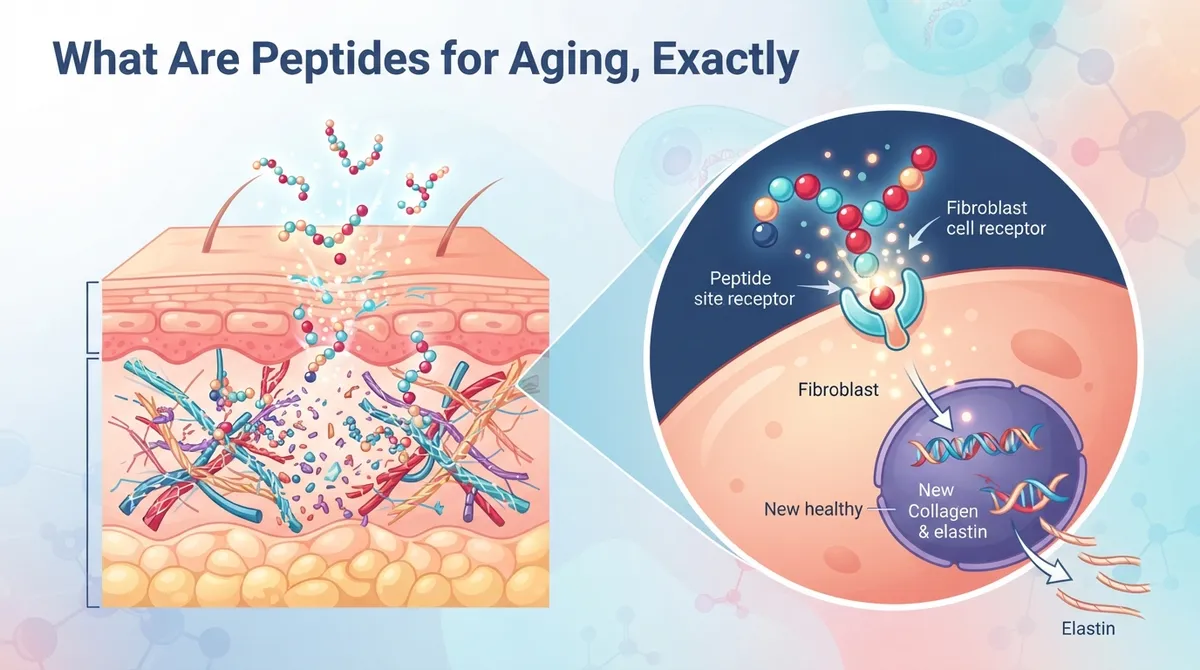
What Are Peptides for Aging, Exactly
Peptides are short chains of amino acids, the building blocks of protein. Your body makes thousands of them naturally. They help control hormones, repair tissue, and support your immune system.
The term "peptides for aging" covers a huge range of products. Some are FDA-approved medicines. Others are unregulated compounds sold online with big promises and little proof. This is where things get confusing for patients.
Common peptides marketed for anti-aging purposes include:
- BPC-157, often promoted for tissue repair and gut health
- TB-500 or thymosin beta-4 fragments, marketed for healing and recovery
- Epitalon, claimed to affect telomeres and lifespan
- MOTS-c, promoted for metabolic and mitochondrial support
- CJC-1295 and ipamorelin, marketed as growth hormone boosters
- GHK-Cu, a copper peptide used in some skin products
Most of these compounds lack strong human research. A 2026 review in Frontiers in Aging found that non-approved agents like epitalon, GHK-Cu, BPC-157, TB-500, CJC-1295, and ipamorelin have limited clinical evidence. Long-term safety data is also missing for most of them.

The Truth About Anti-Aging Claims
Here is the most important fact: no peptide has been proven or approved to slow, stop, or reverse human aging. Claims about longer lifespan, telomere repair, or full body rejuvenation come mostly from lab studies, animal research, or small early human trials.
This does not mean all peptides are useless. Some FDA-approved peptide medicines have strong evidence for specific health conditions. Semaglutide and tirzepatide are good examples. Both have solid research behind them for diabetes and weight management. But their approval for those conditions does not mean they work as general anti-aging treatments.
The gap between approved medicine and wellness marketing is where most confusion happens. A drug approved for one condition gets marketed for something else entirely, often without proof it works that way.
What About BPC-157 Specifically
BPC-157 deserves special attention because it is so widely marketed. A safety review by ECRI and the Institute for Safe Medication Practices looked at 36 published studies. Thirty-five were done in animals. Not one published Phase 1 human safety study or controlled human trial was found.
This means we simply do not know how BPC-157 behaves in the human body over time. Patients considering this compound should understand they are essentially untested subjects, not participants in proven medical therapy.
Skin Peptides Versus Systemic Anti-Aging Peptides
Not all peptide claims carry equal weight. There is a real difference between topical or oral skin peptides and injectable peptides marketed for whole-body anti-aging.
A 2026 systematic review published in Frontiers in Medicine analyzed 19 randomized controlled trials involving 1,341 participants. The researchers looked at oral and topical peptides for skin aging. Results showed:
|
Skin Measure |
Study Findings |
|---|---|
|
Hydration |
Improved in most trials |
|
Skin brightness |
Modest improvement noted |
|
Wrinkle depth |
Small pooled reduction |
|
Elasticity |
Inconsistent results |
|
Skin density |
Inconsistent results |
These modest skin benefits should not be confused with claims about injectable peptides reversing aging throughout the body. The evidence simply does not support that leap. Our peptide therapy team in Tampa can help you understand which claims are backed by real research.
How to Evaluate a Peptide Before Trying It
If you are considering peptide therapy for aging, follow these steps before moving forward:
- Ask if the peptide is FDA-approved for a specific medical condition, or if it is sold as "research use only"
- Request to see human clinical trial data, not just animal studies or lab results
- Check where the product comes from and whether it is compounded, tested, and properly labeled
- Discuss your full medical history, including cancer history, kidney and liver function, and current medications
- Ask your provider about proven alternatives that address your actual health goals
- Confirm the clinic offers ongoing monitoring, not just a one-time injection or prescription
This process protects you from wasting money on unproven products and, more importantly, protects your health. A qualified primary care provider can walk through each of these steps with you during a wellness visit or dedicated consultation.
Why Product Quality Is a Real Concern
Many peptides sold online carry serious risks beyond the question of whether they work. Compounded or unregulated peptide products can have problems with:
- Sterility, which raises infection risk with injectable products
- Potency, meaning the actual dose may not match the label
- Contamination from improper manufacturing
- Incorrect labeling of ingredients or concentrations
- Poor storage conditions that degrade the product
Products labeled "for research purposes only" are not meant for human use. Yet many wellness sellers market them directly to consumers anyway. This labeling should be a red flag, not something to ignore.
What a Primary Care Clinician Should Evaluate
A responsible provider does not just hand out peptides because a patient asks. Instead, they should evaluate several factors first, including your health goals, current medications, pregnancy status, and any history of cancer. Kidney and liver function matter too, since many compounds are processed through these organs.
Your provider should also assess your cardiometabolic risk factors, such as blood pressure, cholesterol, and blood sugar levels. Finally, they should discuss whether you are open to monitored, evidence-based alternatives instead of jumping straight to unproven therapies.
This kind of thorough evaluation is a normal part of primary care at InCare. Our providers, including Dr. Naveen Paddu and Dr. Pramjeet Ahluwalia, take time to understand your full health picture before recommending any treatment path.
Proven Strategies That Actually Support Healthy Aging
Before considering experimental peptides, it makes sense to focus on strategies with strong, long-term evidence behind them. These approaches consistently show results in real-world studies:
- Regular exercise, especially resistance training to preserve muscle mass
- Consistent, quality sleep of seven to nine hours per night
- Quitting smoking and limiting alcohol intake
- Staying current on vaccinations appropriate for your age
- Eating a balanced diet rich in whole foods
- Managing blood pressure and cholesterol levels
- Preventing or managing diabetes through lifestyle and medication
- Using sun protection daily
- Getting age-appropriate cancer screenings on schedule
A review of peptides for healthy aging found that GLP-1 receptor agonists have the most mature human outcomes data among longevity-relevant peptide classes. Meanwhile, most peptides marketed at longevity clinics remain supported mainly by early-phase or preclinical evidence. This distinction matters when deciding where to invest your time and money.
Where Peptide Evidence Stands Today
|
Peptide Type |
Evidence Level |
Regulatory Status |
|---|---|---|
|
Semaglutide, Tirzepatide |
Strong for approved conditions |
FDA-approved for diabetes/obesity |
|
Oral/Topical Collagen Peptides |
Modest evidence for skin hydration |
Sold as cosmetics/supplements |
|
BPC-157 |
Almost entirely animal studies |
Not FDA-approved; often sold as research chemical |
|
Epitalon, MOTS-c, CJC-1295, Ipamorelin |
Limited clinical evidence |
Not FDA-approved for anti-aging use |
This table shows why context matters so much. Some peptides carry real, well-tested medical value. Others remain largely unproven despite aggressive marketing.
Making an Informed Decision With Your Doctor
The safest path forward starts with an honest conversation. Bring your questions about peptides for aging to a licensed primary care provider who can review the actual research with you. Ask specifically about evidence, safety data, and whether any proposed peptide fits an approved medical use.
At InCare, our team of providers offers this kind of guidance across our Tampa and Riverview locations. We combine DNA gene testing, body composition analysis, and thorough primary care evaluations to help you build a wellness plan based on evidence, not hype. You can also learn more about our approach through our practice and see patient experiences on our Facebook page or Instagram.
Many patients also follow our updates on TikTok, where we share simple, honest health information. You can also visit us on Google — InCare to read reviews from patients across the Tampa Bay area.
Conclusion: Choose Evidence Over Hype
Peptides for aging remain one of the most talked-about topics in wellness today, but talk does not equal proof. Some peptides have real, tested medical value for specific conditions. Many others marketed for anti-aging lack basic human safety data. The smartest approach combines healthy skepticism with expert guidance.
Before trying any peptide product, talk with a primary care provider who can review your health history and the actual science behind each option. If you are ready to explore safe, evidence-based wellness strategies for healthy aging, schedule your appointment with InCare today and get answers built on real medical evidence, not marketing claims.
FAQs
Q: Do peptides actually work for aging and longevity?
A: Most peptides marketed for aging lack strong human evidence. Some FDA-approved peptide medicines, like semaglutide, have solid research for specific conditions, but no peptide is proven to slow or reverse aging itself. Claims about longevity often come from animal or lab studies, not human trials.
Q: Which peptides are FDA-approved, and which are only experimental?
A: Semaglutide and tirzepatide are FDA-approved for diabetes and obesity, backed by extensive clinical trials. Peptides like BPC-157, epitalon, and MOTS-c are not FDA-approved and remain experimental, with most evidence coming from animal research rather than controlled human studies.
Q: Are BPC-157, TB-500, epitalon, MOTS-c, CJC-1295, or ipamorelin safe?
A: These compounds have limited clinical evidence and important safety gaps. For BPC-157 specifically, a 2026 safety review found 35 of 36 studies were done in animals, with no published human safety trials identified. This makes their long-term safety in people largely unknown.
Q: Can collagen peptides reduce wrinkles or improve skin elasticity?
A: A 2026 systematic review of 19 randomized trials found oral and topical peptides can modestly improve skin hydration, brightness, and wrinkle depth. However, effects on elasticity and skin density were inconsistent across studies, so results vary by individual.
Q: How should I evaluate peptide therapy with my primary care doctor?
A: Ask about FDA approval status, request human clinical trial data, and discuss your full medical history including cancer risk and organ function. A qualified provider should also explore proven, evidence-based alternatives before recommending any experimental peptide.