

Key Takeaways
- Get a 25(OH)D blood test before supplementing if you have risk factors like age over 70, darker skin, limited sun exposure, or digestive conditions that affect nutrient absorption.
- Do not start vitamin K2 supplements if you take warfarin or blood thinners without consulting your prescriber first, as vitamin K can disrupt anticoagulant treatment.
- Stay within the safe upper limit of 4,000 IU (100 mcg) daily of vitamin D3 from all sources combined; higher doses require clinical supervision and monitoring.
- Combined D3 and K2 supplements lack conclusive evidence for preventing fractures or heart disease in healthy adults despite marketing claims about bone and artery health.
- Review your diet and medicines with a clinician before buying a combined supplement; most healthy adults can get adequate vitamin D from fatty fish, eggs, fortified foods, and sun exposure.
- Take vitamin D with a fat-containing meal for better absorption, choose products with third-party testing seals, and inform all healthcare providers about any supplements you use.
Walk down any supplement aisle in 2026 and you will see bottles that pair vitamin D3 with vitamin K2. The labels promise stronger bones, healthier arteries, and better aging. Many busy adults and parents wonder if a vitamin D3 K2 supplement deserves a spot in their daily routine.
The honest answer is: it depends. These two nutrients do play real roles in the body. But the research does not show that everyone needs them together. The best choice starts with your diet, your health history, your medicines, and sometimes a simple blood test.
This guide walks you through a clear, step-by-step process. You will learn what each nutrient does, how to check your vitamin D status, what doses are considered safe, and who should be careful. You will also learn when to talk with a primary care clinician before you buy.
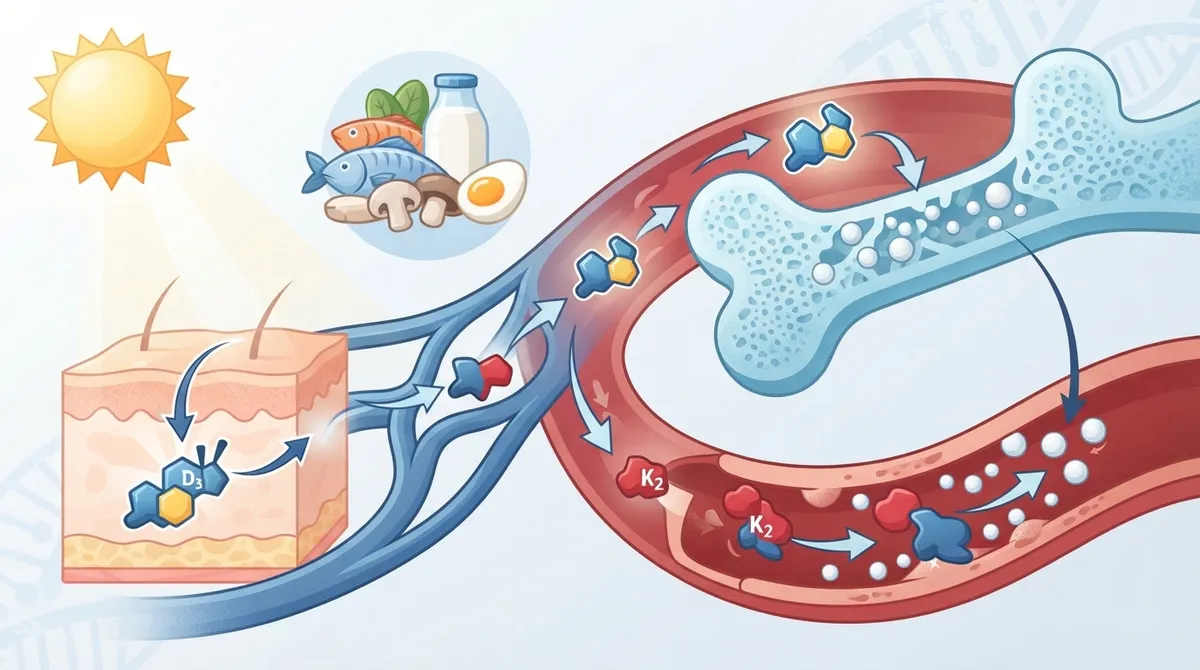
What Vitamin D3 and K2 Actually Do
Vitamin D3, also called cholecalciferol, helps your body absorb calcium. That makes it important for bone health. Your skin makes vitamin D when it meets sunlight, and you also get small amounts from food and supplements.
Vitamin K2 is a form of vitamin K. It helps activate proteins involved in blood clotting and bone metabolism. Because both nutrients touch bone and calcium handling, supplement makers often sell them as a pair.
Here is the key point. Each nutrient has a known job. But those jobs do not prove that everyone needs a combined pill. A product can sound logical and still lack strong proof of added benefit for the general public.
Quick Comparison of the Two Nutrients
|
Feature |
Vitamin D3 |
Vitamin K2 |
|---|---|---|
|
Main role |
Supports calcium absorption and bone health |
Helps activate proteins tied to clotting and bone metabolism |
|
How it is checked |
Blood test for 25-hydroxyvitamin D [25(OH)D] |
No routine blood test in standard care |
|
Main safety concern |
Too much can raise blood calcium |
Can interact with warfarin and similar blood thinners |
|
Common sources |
Sunlight, fatty fish, fortified foods, supplements |
Fermented foods, certain cheeses, egg yolks, supplements |
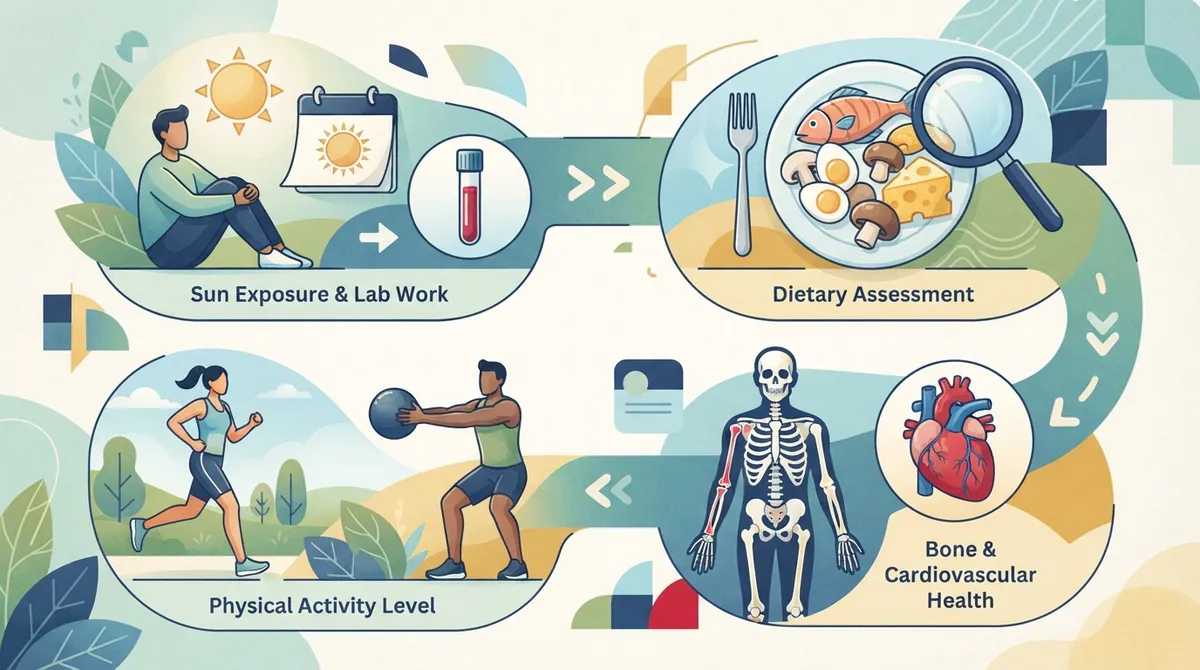
Step-by-Step: How to Decide if You Need a Vitamin D3 K2 Supplement
Use the steps below as a practical checklist. They mirror how a primary care team thinks through the question.
- Review your diet and sun habits. Do you eat fish, eggs, and fortified milk or cereal? Do you spend time outdoors? Low intake and limited sun can raise your risk of low vitamin D.
- List your risk factors. Older age, darker skin, limited sun exposure, certain gut conditions, and kidney or liver disease can all affect vitamin D levels.
- Check your medicines. Some drugs change how your body handles vitamins. Blood thinners like warfarin are the biggest concern for vitamin K.
- Ask about a blood test. A 25(OH)D test shows your current vitamin D status. Your clinician can interpret it in the context of your health.
- Choose a dose that fits your needs. Stay within safe limits unless a clinician prescribes more for a diagnosed problem.
- Recheck when advised. If you take higher doses to correct a low level, follow-up testing keeps you safe.
Step 1 and 2: Look at Diet, Sun, and Risk Factors
Most healthy adults can get a fair amount of vitamin D from food and sunlight. Yet many people in modern life spend long hours indoors. In Florida, sunshine is plentiful, but sunscreen use, indoor work, and shorter outdoor time can still limit vitamin D production.
Think through your week. How often do you eat fatty fish, eggs, or fortified foods? Do you work indoors most days? Answering these questions gives you a rough sense of your intake.
Who May Be More Likely to Have Low Vitamin D
- Adults over age 70, whose skin makes less vitamin D
- People with darker skin, who make less vitamin D from the same sun exposure
- People who cover most of their skin outdoors or rarely go outside
- People with digestive conditions that limit nutrient absorption
- People with kidney or liver disease
These factors raise the chance of low levels. They do not guarantee it. That is why testing and clinical judgment matter more than guessing.
Step 3: Review Your Medicines Before You Add Vitamin K2
This step protects your safety. Vitamin K plays a part in blood clotting. Warfarin and similar blood thinners work by managing that clotting process. If you take one of these drugs, a sudden change in vitamin K intake can disrupt your treatment.
If you use warfarin or a related anticoagulant, do not start, stop, or change a K2 supplement on your own. Talk with your prescriber or anticoagulation clinic first. Steady vitamin K intake is important for people on these medicines.
Also share your full list of prescriptions, over-the-counter products, and supplements with your care team. A short medication review can prevent problems that are easy to avoid.
Step 4: Ask About a Vitamin D Blood Test
Vitamin D status is measured with a blood test for 25-hydroxyvitamin D, often written as 25(OH)D. The NIH Office of Dietary Supplements reports that a level below 12 ng/mL (30 nmol/L) points to a risk of deficiency. A level of 20 ng/mL (50 nmol/L) or higher is sufficient for most people.
National professional groups do not recommend routine vitamin D screening for all healthy people. Testing makes the most sense when you have symptoms, risk factors, a related health condition, or medicines that affect vitamin D. Your clinician will read the number alongside your overall picture.
This is where a primary care visit adds real value. Instead of buying a supplement based on a label, you get a result tied to your own body. If you live in the Tampa Bay area, our primary care team can review your history and decide if testing fits your situation.
Step 5: Know the Safe Dose Ranges
Dose matters. More is not better with vitamin D. The U.S. recommended dietary allowance for adults is generally 600 IU (15 mcg) daily through age 70 and 800 IU (20 mcg) daily after age 70. The adult tolerable upper intake level is 4,000 IU (100 mcg) per day from all sources, including food and supplements.
Clinicians sometimes prescribe higher short-term doses to correct a diagnosed deficiency. That should happen under supervision, with monitoring. Do not copy those higher doses from the internet or from a friend.
Dose Reference for Adults
|
Measure |
Amount |
Notes |
|---|---|---|
|
RDA, ages 19 to 70 |
600 IU (15 mcg) daily |
Covers needs of most healthy adults |
|
RDA, over age 70 |
800 IU (20 mcg) daily |
Higher need as skin production drops |
|
Upper limit |
4,000 IU (100 mcg) daily |
From all sources combined |
|
Treatment doses |
Set by a clinician |
Short-term, with monitoring |
When you read a supplement label, add up the vitamin D from every product you take. Many multivitamins, calcium products, and fortified foods also contain it. It is easy to pass the upper limit without noticing.
What the Evidence Really Says About Bones and Arteries
Marketing for a vitamin D3 K2 supplement often points to bone strength and artery health. Here is what the research supports and what it does not.
Some studies show promising changes in bone-related measures. For example, a meta-analysis of eight randomized trials with 971 participants found that combined vitamin K and D supplementation increased total bone mineral density and lowered undercarboxylated osteocalcin. These are helpful signals. But they are surrogate outcomes. They do not prove that the combination prevents fractures or other real-world events.
The same caution applies to heart and blood vessel claims. Evidence that taking D3 and K2 together prevents cardiovascular disease or vascular calcification in the general population is not conclusive. A supplement should not replace blood pressure checks, cholesterol management, or other proven care.
What You Can and Cannot Expect
- Reasonable: Correcting a documented low vitamin D level can support bone health.
- Uncertain: Combined D3 and K2 may improve some bone markers, but fracture prevention is not proven for everyone.
- Not supported: Using the pair as a proven treatment for heart disease or artery calcification.
Step 6: Watch for Too Much Vitamin D
Vitamin D is fat soluble, so extra amounts can build up in the body. Too much can cause high blood calcium. In severe cases, it may lead to kidney injury, abnormal heart rhythm, or other serious problems.
High-dose or long-term use should be guided by a clinician. Take extra care if you have kidney disease, a history of high calcium, or take medicines that interact with vitamin D. Early warning signs of high calcium can include nausea, constant thirst, frequent urination, weakness, and confusion. If you notice these, stop the supplement and call your clinician.
Practical Tips if You Choose a Combined Supplement
If your clinician agrees that a D3 and K2 product makes sense, a few habits help you use it well.
- Pick a product that lists exact amounts of D3 and K2 on the label.
- Look for third-party testing seals from independent labs.
- Take vitamin D with a meal that contains some fat to improve absorption.
- Keep your intake steady from day to day, especially for K2.
- Tell every provider you see about the supplement.
- Do not stack several products that each contain vitamin D.
Remember that supplements are an addition to care, not a replacement. Balanced meals, regular movement, enough sleep, and routine checkups matter just as much.
How Primary Care Supports Smarter Supplement Choices
A supplement decision works best as a shared one. At InCare, we look at the whole picture. That includes your history, your family risks, your lab work, and your goals. A yearly wellness visit is a natural time to talk about vitamins and ask about testing.
For patients who want a deeper, data-driven look at their health, InCare also offers tools such as DNA gene testing and body composition analysis. These services help build a personal plan rather than a one-size-fits-all routine. If you manage several prescriptions, our guide to prescription management can help you keep your medicines and supplements organized.
Families benefit too. Busy parents often juggle many schedules, and a single trusted clinic can simplify care for every age. Our comprehensive primary care approach is built for that kind of convenience. You can see what patients say about us when you read InCare reviews on Google, where we hold a 4.8 out of 5 rating.
You can also follow our health tips and clinic updates on Instagram, Facebook, and TikTok.
When to Talk to a Clinician First
Some situations call for a conversation before you start any new vitamin. Reach out to your care team if any of these apply to you:
- You take warfarin or another blood thinner
- You have kidney disease, liver disease, or a history of high calcium
- You are pregnant, breastfeeding, or planning pregnancy
- You take several prescription medicines
- You have symptoms such as bone pain, muscle weakness, or frequent fractures
- You want to give supplements to a child
A short visit can save you money and prevent avoidable risks. It also helps you avoid taking products you do not need.
Final Thoughts: Make a Choice Based on Evidence
A vitamin D3 K2 supplement can be a smart choice for some people. It is most useful when it corrects a documented or likely shortfall. It is not a proven cure for heart disease, and it is not a must-have for every healthy adult.
Start with your diet, your risk factors, and your medicines. Ask about a 25(OH)D blood test when it makes sense. Stay within safe dose limits. Be extra careful with vitamin K if you use a blood thinner. Most of all, partner with a clinician who knows your history.
Ready to build a supplement plan that fits your body? Book your visit with InCare in Tampa or Riverview, or contact our team with questions. We will help you choose what is safe, useful, and right for you.
FAQs
Q: What are vitamin D3 and K2 supplements used for?
A: Vitamin D3 supports calcium absorption and bone health, while vitamin K2 helps activate proteins involved in blood clotting and bone metabolism. They are often sold together, but the evidence does not show that everyone needs the combination. Use is best guided by your diet, risk factors, and lab results.
Q: Do I need to take vitamin K2 with vitamin D3?
A: Not necessarily. The roles of each nutrient do not prove that everyone benefits from taking them together. A clinician can help you decide based on your intake, health history, and medicines.
Q: What is a safe daily dose of vitamin D3 for adults?
A: The recommended dietary allowance is generally 600 IU (15 mcg) daily through age 70 and 800 IU (20 mcg) after age 70. The adult upper limit is 4,000 IU (100 mcg) daily from all sources. Higher doses should only be taken under clinician guidance.
Q: Can I take vitamin K2 if I use warfarin or another blood thinner?
A: Do not start, stop, or change a K2 supplement without speaking to your prescriber or anticoagulation clinic first. Vitamin K can interact with warfarin and similar medicines. Consistent vitamin K intake is important for people on these drugs.
Q: Should I get my vitamin D level tested before taking a supplement?
A: Routine screening is not recommended for all healthy people, but testing is helpful if you have symptoms, risk factors, or related conditions. The 25(OH)D blood test shows your current status. Your clinician can interpret the result in the context of your overall health.


