
Key Takeaways
- Tirzepatide activates two hormone pathways (GIP and GLP-1) versus semaglutide's single pathway (GLP-1), resulting in significantly greater average weight loss: 20.2% versus 13.7% in head-to-head trials.
- In the SURMOUNT-5 trial, tirzepatide users lost an average of 22.8 kg (50.3 lb) compared to semaglutide users' 15.0 kg (33.1 lb) over 72 weeks, though individual results vary based on genetics, sleep, stress, and lifestyle factors.
- Both medicines share common side effects (nausea, diarrhea, constipation, vomiting) and serious warnings about thyroid tumors, pancreatitis, and gallbladder disease, requiring prescriber oversight and are not interchangeable.
- Choose semaglutide if you have established cardiovascular disease or want a well-studied option; choose tirzepatide if you want maximum average weight loss or have moderate-to-severe sleep apnea.
- Weight regain commonly occurs after stopping either medicine, making long-term maintenance plans essential including protein-rich meals, strength training, good sleep, and regular clinical follow-up rather than treating as short-term fixes.
- Never switch between medicines without prescriber guidance—doses do not convert directly between semaglutide and tirzepatide, and insurance coverage depends on the specific brand and approved indication.
If you are exploring weight management options in 2026, you have likely heard two names again and again: semaglutide and tirzepatide. Both are weekly injections. Both help adults lose weight. So what is the difference between semaglutide and tirzepatide, and how do you decide which one fits you?
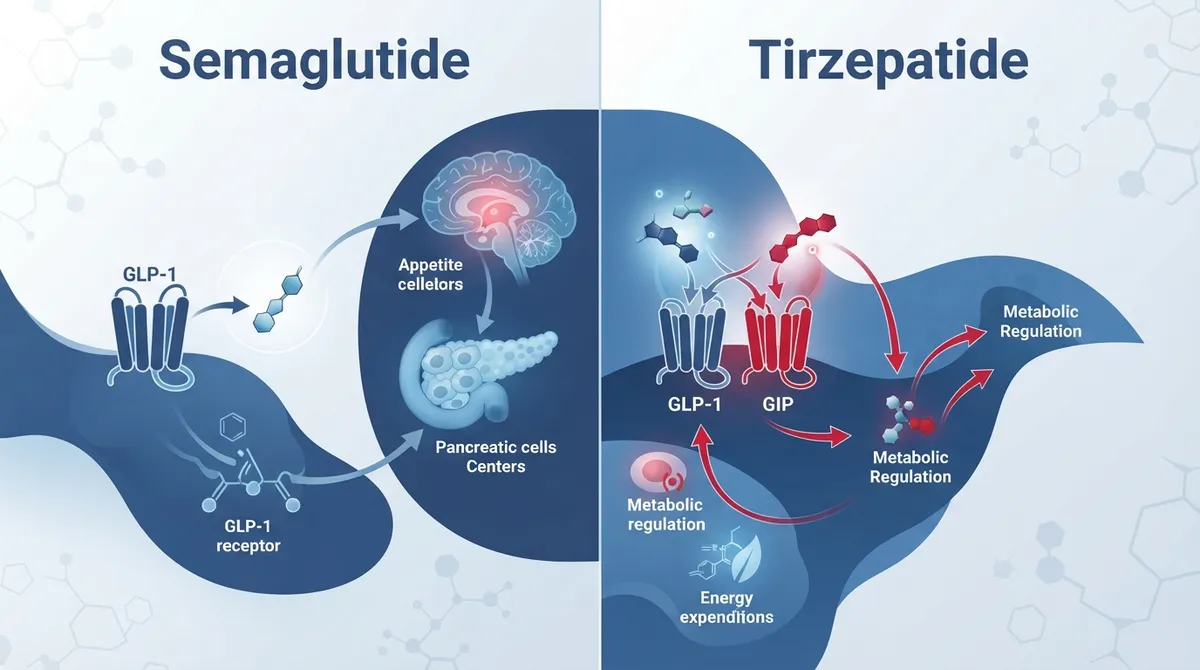
The short answer is this. Semaglutide activates one gut hormone receptor, called GLP-1. Tirzepatide activates two, called GIP and GLP-1. That difference shapes how much weight people lose on average, how they feel, and who may be a good candidate.
Still, the best choice is never just about numbers. Your health history, goals, budget, and tolerance for side effects all matter. This guide walks you through the key differences step by step. You will learn how each medicine works, what the research shows, and how to talk with a clinician about your options.
What Is the Difference Between Semaglutide and Tirzepatide?
Both medicines are prescription incretin-based drugs. They are given by weekly injection under the skin. Both are meant to be used with a reduced-calorie eating plan and more physical activity. They are not supplements, and they are not interchangeable.
The main difference between semaglutide and tirzepatide is how they work in the body:
- Semaglutide mimics GLP-1, a hormone that helps you feel full, slows stomach emptying, and supports healthy blood sugar.
- Tirzepatide mimics both GLP-1 and GIP. GIP is another gut hormone that may add to appetite control and how the body handles sugar and fat.
Because tirzepatide targets two pathways, it is often called a dual agonist. Semaglutide is a single agonist. This is the core of what separates the two drugs.
Brand Names Matter
Brand names can be confusing, so here is a simple guide. Each brand is approved for a specific purpose.
|
Active Ingredient |
Brand |
Main FDA-Approved Focus |
|---|---|---|
|
Semaglutide |
Wegovy |
Chronic weight management; reducing major cardiovascular events in certain adults with obesity and heart disease |
|
Semaglutide |
Ozempic |
Type 2 diabetes and related risk reduction |
|
Tirzepatide |
Zepbound |
Chronic weight management; moderate-to-severe obstructive sleep apnea in adults with obesity |
|
Tirzepatide |
Mounjaro |
Type 2 diabetes |
Labels can change, so your clinician should confirm current FDA labeling before prescribing. Coverage and approval often depend on the exact brand and indication.

How to Compare Semaglutide and Tirzepatide Step by Step
Use this simple process to sort through the differences. It mirrors the way a primary care clinician would walk through the decision with you.
- Confirm your goal. Are you managing weight, blood sugar, sleep apnea, heart risk, or a mix?
- Review the mechanism. Understand single versus dual hormone action.
- Look at the head-to-head evidence. Compare average results from the best available trial.
- Check safety and side effects. Make sure you are a good candidate.
- Consider access and cost. Insurance, brand approval, and budget affect what is realistic.
- Plan for the long term. Decide how you will keep results after the first year.
The sections below cover each step in more detail.
Step 1: Understand How Each Medicine Works
GLP-1 and GIP are called incretin hormones. Your gut releases them after you eat. They tell the brain you are full, signal the pancreas to release insulin, and slow how fast food leaves the stomach.
Semaglutide copies GLP-1 only. That is often enough to reduce hunger and cravings. Many people notice smaller portions and fewer food thoughts within the first weeks.
Tirzepatide copies GLP-1 and GIP. Researchers believe the added GIP action may improve how the body handles sugar and fat. It may also help with appetite and tolerability in some people. The exact reasons are still being studied.
For you, the takeaway is simple. Both medicines reduce appetite and support weight loss. Tirzepatide adds a second hormone pathway, which may explain why its average results are stronger in head-to-head testing.
Step 2: Review the Head-to-Head Research
The strongest direct comparison is the SURMOUNT-5 trial, reported in 2025. It was a 72-week, randomized, open-label trial. It included 751 adults with obesity or overweight plus a weight-related condition. None of them had diabetes.
Here is what the trial found at the highest tolerated doses:
|
Measure at 72 Weeks |
Tirzepatide |
Semaglutide |
|---|---|---|
|
Average body-weight change |
-20.2% |
-13.7% |
|
Average weight lost |
22.8 kg (50.3 lb) |
15.0 kg (33.1 lb) |
|
Lost at least 15% of body weight |
64.6% |
40.1% |
|
Average waist reduction |
18.4 cm |
13.0 cm |
These numbers favor tirzepatide. On average, people on tirzepatide lost more weight and more inches from the waist.
However, these are group averages, not promises. Individual results vary a lot. Some people respond very well to semaglutide. Others may do better on tirzepatide. Genetics, sleep, stress, diet quality, activity level, and medical conditions all play a role.
Step 3: Know the Side Effects and Safety Warnings
The side effect profiles of the two medicines are broadly similar. In the head-to-head trial, most adverse events were mild to moderate. They mostly occurred while doses were being increased.
Common Side Effects
Both medicines commonly cause stomach and digestive symptoms, especially early on:
- Nausea
- Diarrhea
- Constipation
- Vomiting
In the trial summary, stomach-related side effects led to stopping treatment in 2.7% of tirzepatide users and 5.6% of semaglutide users. Small portions, slower eating, and avoiding greasy meals can help. Your clinician can also adjust the pace of your dose increases.
Important Warnings
Both medicines carry serious label warnings. Your clinician will review these with you:
- Thyroid C-cell tumors. Both have a boxed warning based on rodent findings. They are not for people with a personal or family history of medullary thyroid carcinoma or MEN 2.
- Pancreatitis and gallbladder disease. Report severe belly pain right away.
- Dehydration and kidney strain. Vomiting or diarrhea can lead to fluid loss.
- Low blood sugar. The risk rises when used with insulin or certain diabetes medicines.
Neither drug is right for everyone. Pregnancy plans, other medicines, and diabetes status all matter. This is why medical supervision is essential. You can learn more about semaglutide side effects patients must know and tirzepatide side effects before your visit.
Step 4: Match the Medicine to Your Health Profile
No single medicine is best for everyone. A good prescriber looks at the full picture. Here is how different profiles may guide the choice.
Semaglutide May Be a Good Fit If
- You want a well-studied option with proven heart benefits in certain adults.
- You have established cardiovascular disease with overweight or obesity.
- You are an adolescent aged 12 or older who qualifies for Wegovy.
- Cost or coverage favors a semaglutide product.
Tirzepatide May Be a Good Fit If
- You want the greatest average weight loss based on head-to-head data.
- You have obesity with moderate-to-severe obstructive sleep apnea.
- You did not reach your goals on semaglutide and your clinician suggests a change.
- Your coverage or access favors a tirzepatide product.
These are general guides only. Your own history, medicines, and goals decide the final plan. If you want a deeper look at each drug, read our guides on what semaglutide is and what tirzepatide is.
Step 5: Consider Dosing, Access, and Cost
Both medicines are injected once a week. Both start at a low dose and increase slowly. This gradual approach improves comfort and lowers the risk of stomach upset. The right pace depends on the product label, how you respond, and how you feel.
Never switch medicines or combine them on your own. Moving from one to the other requires a prescriber's guidance. Doses do not simply convert one-to-one.
Cost and coverage can decide what is practical. Some plans cover one brand but not another. Coverage may also depend on whether the use is for weight, diabetes, or another approved purpose. Our guide to weight loss injections cost in 2026 explains what to expect. If you are weighing both options side by side, this breakdown of semaglutide vs tirzepatide can help.
Step 6: Plan for Life After the First Year
This step is often skipped, yet it matters a great deal. Weight regain can occur after stopping either medicine. These drugs work best as part of a long-term plan, not a short-term fix.
A strong plan usually includes:
- Protein-rich meals to protect lean muscle
- Regular strength training and daily movement
- Good sleep and stress management
- Regular follow-up visits to track progress and side effects
- A clear plan for maintenance, dose changes, or tapering
Tools like body composition tracking and metabolic testing can show whether you are losing fat or muscle. You can learn how body composition analysis and metabolic breath analysis support a smarter plan.
Why Medical Supervision Makes the Difference
Semaglutide and tirzepatide are powerful prescription medicines. They are not something to guess about or buy from unverified sources. A primary care clinician can review your medical history, check your labs, and watch for side effects. They can also adjust your dose and build a plan around your life.
This is where InCare's weight loss program stands out. InCare combines primary care expertise with advanced tools like AI-powered body composition tracking, metabolic breath analysis, and DNA gene testing. That means your plan is based on your biology, not a one-size-fits-all approach. With locations in Tampa and Riverview, plus virtual visits, care fits busy schedules. Patients also share their experiences on Google, and you can read InCare reviews on Google to see what care looks like.
You can also follow InCare for health tips on Instagram, TikTok, and Facebook. For a broader view of how GLP-1 medicines fit into care, see 8 ways GLP-1 medications transform weight loss in 2026.
Quick Comparison: Semaglutide vs Tirzepatide
|
Feature |
Semaglutide |
Tirzepatide |
|---|---|---|
|
Hormone targets |
GLP-1 |
GIP and GLP-1 |
|
How it is given |
Weekly injection |
Weekly injection |
|
Weight-loss brand |
Wegovy |
Zepbound |
|
Diabetes brand |
Ozempic |
Mounjaro |
|
Average weight change (72 weeks, head-to-head) |
-13.7% |
-20.2% |
|
Boxed thyroid warning |
Yes |
Yes |
|
Extra approved uses |
Reducing major cardiovascular events in certain adults |
Moderate-to-severe obstructive sleep apnea in adults with obesity |
Conclusion: Make the Choice With a Clinician You Trust
So, what is the difference between semaglutide and tirzepatide? Semaglutide acts on one hormone pathway. Tirzepatide acts on two. In the best head-to-head trial, tirzepatide produced greater average weight loss. Even so, the right medicine depends on your health, goals, safety profile, and access.
Do not choose based on headlines alone. A personalized plan, regular monitoring, and lifestyle support are what turn a prescription into lasting results.
Ready to find out which option fits you? Book your weight loss consultation with InCare today, or contact our team with questions. We will help you build a safe, science-backed plan that fits your life.
FAQs
Q: What is the main difference between semaglutide and tirzepatide?
A: Semaglutide activates the GLP-1 receptor only, while tirzepatide activates both GIP and GLP-1 receptors. This dual action is the main reason tirzepatide produced greater average weight loss in head-to-head research. Both are weekly prescription injections that require clinician oversight.
Q: Which leads to more weight loss, semaglutide or tirzepatide?
A: In the 72-week SURMOUNT-5 trial of adults without diabetes, tirzepatide produced an average weight loss of 20.2%, compared with 13.7% for semaglutide. These are group averages, not guaranteed individual results. Your response may differ based on your health, habits, and dose tolerance.
Q: Can you switch from semaglutide to tirzepatide, or take them together?
A: Switching should only happen under a prescriber's guidance, because doses do not convert directly between the two medicines. They should not be combined. Your clinician will decide the right starting dose and monitor your response and side effects.
Q: What is the difference between Wegovy and Ozempic, or Zepbound and Mounjaro?
A: Wegovy and Zepbound are the weight-management brands of semaglutide and tirzepatide, respectively. Ozempic and Mounjaro are the type 2 diabetes brands. Approval and insurance coverage depend on the specific product and indication.
Q: What happens to weight after stopping semaglutide or tirzepatide?
A: Weight regain can occur after stopping either medicine, which is why long-term planning matters. A maintenance strategy with nutrition, strength training, and regular follow-up helps protect your results. Your clinician can guide any dose changes or tapering.