
Key Takeaways
- FDA-approved peptides like semaglutide and tirzepatide have undergone large clinical trials, while research peptides like BPC-157 and TB-500 lack human trial evidence and carry unknown safety risks.
- A safe peptide protocol requires full health assessment, lab testing, screening for contraindications, FDA-approved dosing schedules, and regular follow-up visits—not self-directed online purchases.
- Compounded peptides bypass FDA review and quality checks; the FDA recorded nearly 1,700 adverse events for compounded semaglutide and tirzepatide, often from dosing errors and confusion.
- Peptides work best as part of comprehensive health care including nutrition, exercise, sleep, mental health support, and preventive screening—not as standalone treatments.
- Ask your provider these critical questions: Is it FDA-approved for your condition? What labs are needed? Where does it come from? Marketing claims like 'reverses aging' without clinical evidence are red flags.
Peptide treatments have become one of the most talked-about topics in wellness clinics across Tampa and Riverview. Patients hear about weight loss injections, recovery peptides, and anti-aging protocols on social media every day. But what does a safe, medically sound peptide protocol actually look like? This guide breaks down what peptide protocols mean in primary care, which peptides have real FDA approval, and how to protect your health while pursuing your wellness goals.
If you are exploring peptide therapy options in Tampa, understanding the difference between approved medicine and unproven research chemicals is the first step toward smarter, safer care.

What Are Peptide Protocols in Primary Care?
A peptide protocol is not one single treatment. It is a full plan built around a specific peptide medication. This plan includes checking if you qualify, starting at the right dose, watching for side effects, and adjusting your care over time.
The term is not an official medical category. Instead, it describes how a clinician manages your care from the first visit through ongoing follow-up. A good protocol includes these steps:
- A full health review, including your medical history and current medications
- Lab testing to check for conditions that may affect treatment
- Screening for reasons you should not use a specific peptide
- A starting dose based on approved product guidelines
- Slow dose increases, watched closely by your provider
- Regular check-ins to track weight, blood sugar, blood pressure, and symptoms
- Support with nutrition, exercise, sleep, and mental health
This structured approach is very different from buying a peptide online and injecting it without medical guidance. At InCare, this process is built into every weight loss and wellness plan.
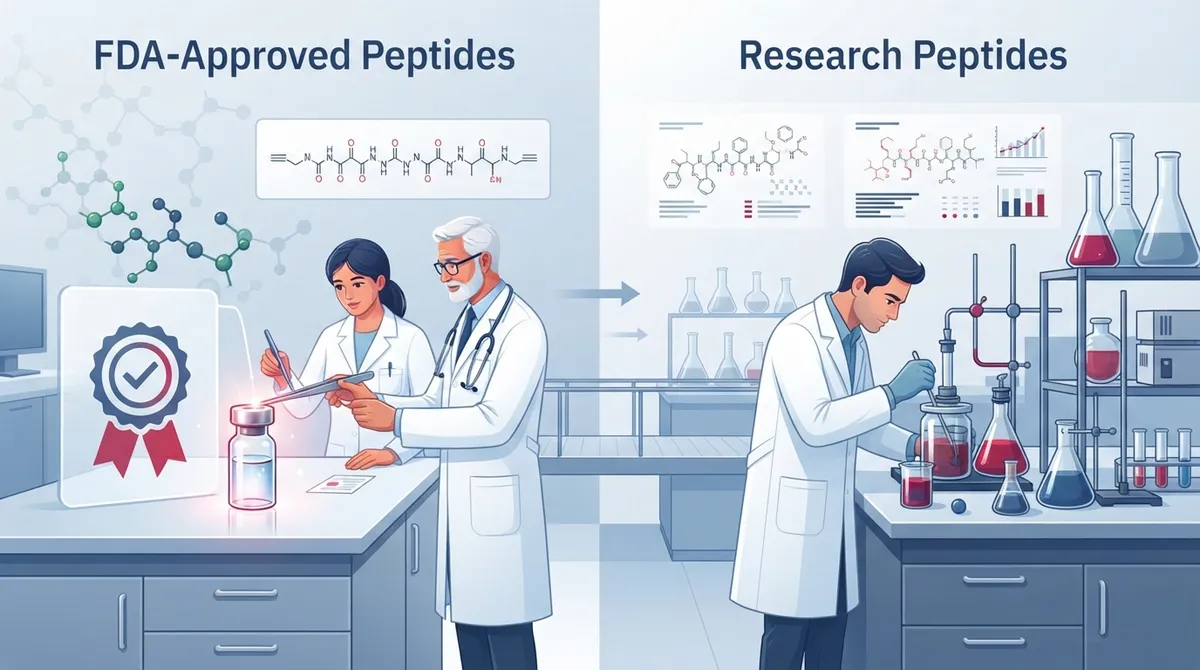
FDA-Approved Peptides vs. Research Peptides
Not all peptides are equal under the law. Some have gone through years of clinical trials. Others have not been tested in large human studies at all. Knowing the difference protects your safety and your wallet.
FDA-Approved Peptide Medicines
The strongest evidence exists for peptide drugs that the FDA has reviewed and approved for specific health conditions. These medicines have been tested in large clinical trials before reaching the market.
|
Peptide Medication |
Brand Name Examples |
Approved Use |
|---|---|---|
|
Semaglutide |
Wegovy, Ozempic |
Type 2 diabetes, chronic weight management |
|
Tirzepatide |
Zepbound, Mounjaro |
Type 2 diabetes, chronic weight management |
|
Liraglutide |
Saxenda, Victoza |
Type 2 diabetes, weight management |
|
Dulaglutide |
Trulicity |
Type 2 diabetes |
|
Exenatide |
Byetta, Bydureon |
Type 2 diabetes |
|
Pramlintide |
Symlin |
Diabetes management |
FDA approval is very specific. It applies to one exact product, one dose, one delivery method, and one approved use. A peptide approved for diabetes is not automatically safe or effective for muscle building, anti-aging, or general wellness, even if a clinic markets it that way.
Research Peptides Without FDA Approval
Many peptides sold at wellness clinics are not approved for general human use. These include BPC-157, TB-500, thymosin-based products, MOTS-c, epitalon, Semax, and ipamorelin. Evidence for these compounds often comes from lab studies or animal research, not large human trials.
This does not mean every unapproved peptide is dangerous. It means the evidence is limited, and patients should ask hard questions before trying them. Learn more about the science behind these compounds in our guide to what peptides are and how they work.
Why Compounded Peptides Need Extra Caution
Compounded medications are made by pharmacies to fit a patient's specific needs. They are not reviewed by the FDA before they reach the market. This means there is no official check on their safety, strength, or purity before they are sold.
Recent data shows why this matters. As of May 31, 2026, the FDA reported 990 adverse-event reports linked to compounded semaglutide. Compounded tirzepatide had more than 730 reports. These numbers may actually be lower than the real total, since reporting rules vary by state and pharmacy type.
Common problems reported include:
- Dosing errors caused by confusing concentrations between products
- Patients using insulin syringes instead of the correct device
- Confusion between milligrams, milliliters, and syringe units
- Hospitalizations linked to incorrect dosing
If you are considering a compounded peptide, ask your provider about the pharmacy's quality controls, where the ingredients come from, and how the product is tested for sterility and strength. A trustworthy clinic will answer these questions clearly.
How to Start a Safe Peptide Protocol
Whether you are interested in GLP-1 therapy for weight loss or curious about recovery peptides, the process should always begin with your primary care provider. Here is what a responsible path looks like.
Step 1: Get a Full Health Assessment
Your provider should review your full medical history. This includes past surgeries, current medications, family health history, and any conditions like thyroid disease, pancreatitis, or kidney problems. This step is not optional. It is how your doctor decides if a peptide is right for you.
Step 2: Complete Lab Testing
Blood work often includes kidney function, liver function, blood sugar, and cholesterol. These results help your doctor spot risks before you start treatment. InCare's DNA gene testing can also add helpful insight into how your body may respond to certain treatments.
Step 3: Discuss Contraindications
Some patients should not use certain peptides. For example, GLP-1 medications carry warnings for people with a personal or family history of certain thyroid cancers. Your provider needs to screen for these issues before writing a prescription.
Step 4: Follow an Approved Dosing Schedule
Dose increases should follow the official prescribing information for that exact product. This is not something a clinic should invent on its own. Following the approved schedule lowers your risk of stomach problems, low blood sugar, and other side effects.
Step 5: Attend Follow-Up Visits
Regular visits let your provider track your weight, blood pressure, blood sugar, and side effects. These visits also give you a chance to ask questions and adjust your plan as needed.
Common Side Effects and Monitoring Needs
GLP-1 based peptide protocols are generally well tolerated, but side effects do happen. Understanding them helps you know what is normal and what needs a call to your doctor.
- Nausea, especially during dose increases
- Constipation or diarrhea
- Reduced appetite
- Fatigue during the first few weeks
- Rare but serious risks like pancreatitis or gallbladder issues
Staying hydrated, eating smaller meals, and reporting symptoms early can help manage these effects. Some patients also benefit from IV hydration therapy to support energy and recovery during treatment.
Questions to Ask Before Starting Any Peptide Protocol
Before agreeing to any peptide treatment, ask your provider these key questions:
- Is this peptide FDA-approved for my specific condition?
- What lab tests do I need before starting?
- What side effects should I watch for?
- How often will I need follow-up visits?
- Where does this medication come from, and is it tested for quality?
- What happens if I miss a dose or need to stop treatment?
A clinic that welcomes these questions and answers them clearly is one you can trust. Marketing terms like "detox," "reverses aging," or "builds muscle without risk" should never replace real clinical evidence and honest conversation.
Why Whole-Body Care Matters More Than the Peptide Alone
No peptide works in isolation. The best outcomes happen when treatment is paired with good nutrition, regular movement, quality sleep, and mental health support. This is true whether you are managing diabetes, working on weight loss, or exploring wellness optimization.
InCare's approach combines primary care with tools like body composition analysis and metabolic breath analysis to build a complete picture of your health. This helps your provider create a peptide protocol that fits your actual needs, not a one-size-fits-all plan.
Preventive care also plays a role. Regular cancer screenings and wellness visits help catch problems early, long before they become serious. Peptide treatment should always be one part of a bigger health strategy, not a stand-alone fix.
Choosing the Right Clinic for Peptide Protocols
Not every wellness clinic follows the same standards. When choosing where to start a peptide protocol, look for these signs of quality care:
- Providers who explain FDA approval status honestly
- Clear lab testing and screening before treatment starts
- Transparent pricing with no pressure tactics
- A team that monitors your progress over time
- Willingness to say no if a peptide is not right for you
InCare's team, including providers like Dr. Naveen Paddu and Dr. Pramjeet Ahluwalia, brings this level of care to patients across Tampa and Riverview. You can also read what real patients say by visiting our InCare location on Google, where the clinic holds a strong reputation for honest, patient-first care.
Many patients also follow InCare on Facebook and Instagram for wellness tips, or check out short educational videos on TikTok to learn more about safe treatment options before their first visit.
Take the Next Step Toward Safer Peptide Care
Peptide protocols can offer real benefits when they are built on evidence, careful screening, and ongoing medical support. The key is working with a provider who explains your options honestly and puts your safety first. If you are ready to explore whether a peptide-based treatment fits your health goals, our team at InCare is here to help. Schedule your appointment today and start your journey with a plan built around your unique needs, or reach out to our team with any questions before you begin.
FAQs
Q: What are peptide protocols in primary care and wellness?
A: Peptide protocols are individualized treatment plans built around a peptide medication. They include patient screening, lab testing, dosing schedules, monitoring, and follow-up care rather than a single standardized treatment.
Q: Which peptide medications are FDA approved for weight loss or diabetes?
A: FDA-approved options include semaglutide (Wegovy, Ozempic), tirzepatide (Zepbound, Mounjaro), liraglutide (Saxenda), dulaglutide, exenatide, and pramlintide. Each is approved for specific indications like type 2 diabetes or chronic weight management.
Q: Are BPC-157, TB-500, MOTS-c, or ipamorelin FDA approved?
A: No, these peptides are not FDA-approved for general human use. Evidence for these compounds mostly comes from laboratory or animal studies rather than large human clinical trials.
Q: Are compounded semaglutide and tirzepatide safe and legal?
A: Compounded versions are not FDA-approved and are not reviewed for safety or quality before sale. The FDA has recorded nearly 1,700 combined adverse-event reports for compounded semaglutide and tirzepatide as of May 2026, so patients should discuss risks carefully with their provider.
Q: How often should a patient be monitored during a peptide protocol?
A: Monitoring frequency depends on the medication and the patient's response, but most protocols include regular check-ins to track weight, blood sugar, blood pressure, and side effects, especially during dose increases.